A whirlwind trip to Toyko

With our Japan adventure drawing to an end we had one destination left to explore: Tokyo! After an 8 hour train journey taking most of the morning and afternoon, Claire headed out to stretch her legs on a jog around the local Kinuta park before we spent the evening planning our Tokyo itinerary. We had left ourselves 3 days to explore Japans capital but had not counted on the appearance of Typhoon Hagibis which was due to arrive on Saturday and was sounding increasingly dangerous (even our parkrun had been cancelled!!). As a result we were keen to see as much as possible on the Friday, and ensure our safety on the Saturday by changing our accommodation to minimise travel (and as the Airbnb host we had originally booked with wasn’t sure if the house would stand up to a Typhoon!).

Next morning, our first stop was Shibuya Crossing, which is considered to be the busiest (and most neon) junction in Toyko. To be honest, it looked very similar to many of the other crossing in the city! Claire also wanted to see a statue of a dog called Hachiko who walked himself to the station to meet his owner every day, and continued to do so 10 years after his owner died.
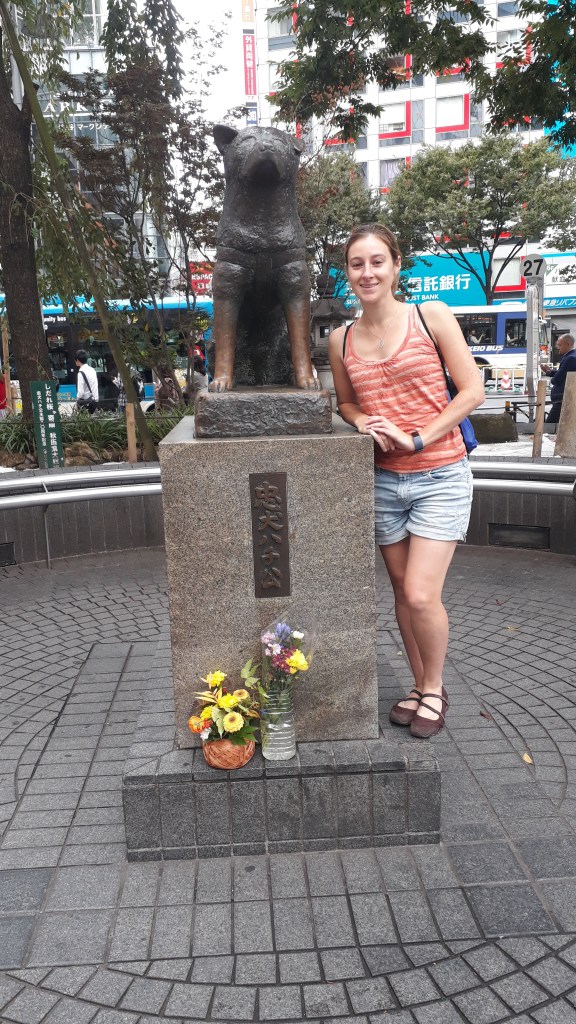
A faithful friend

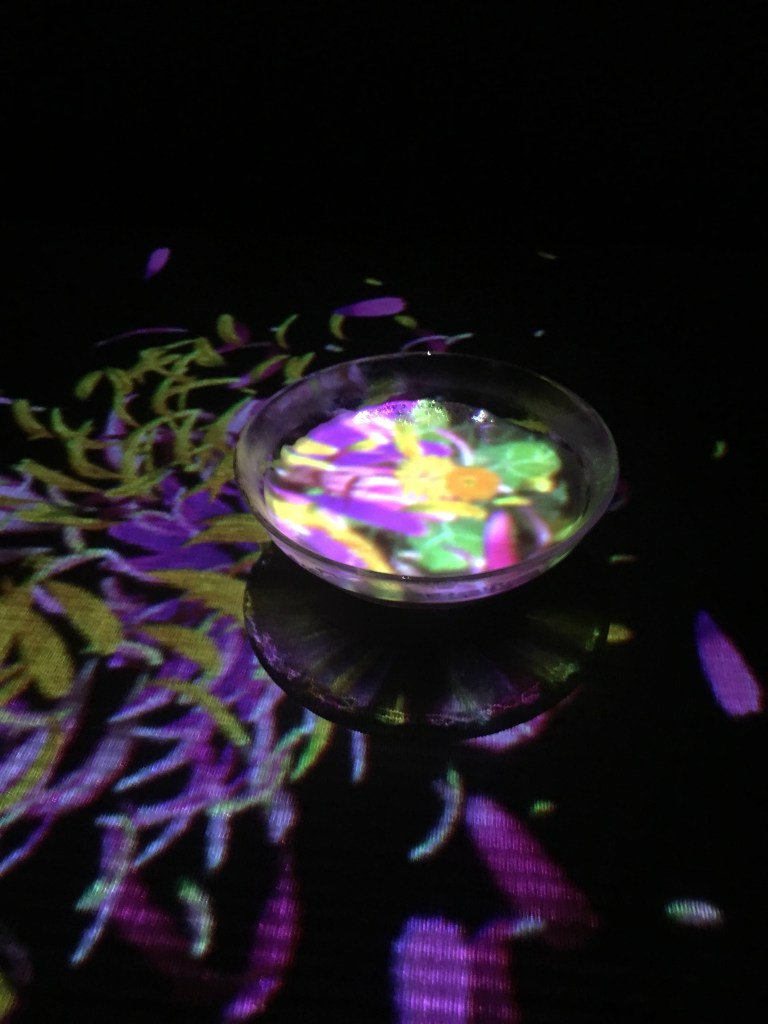
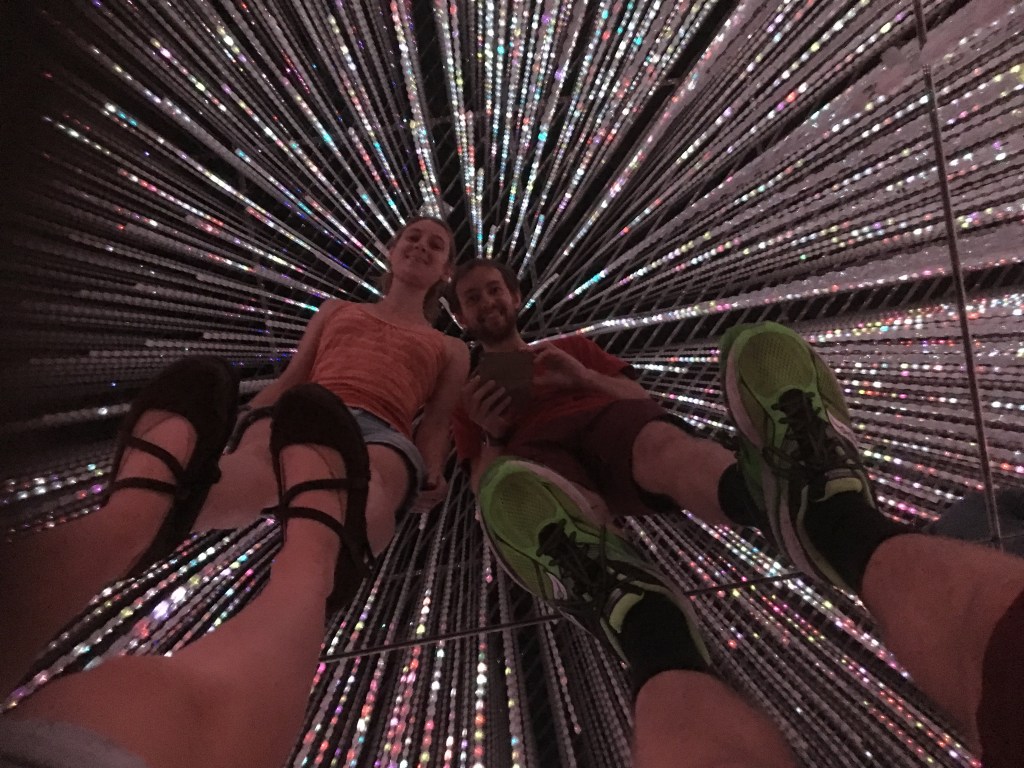
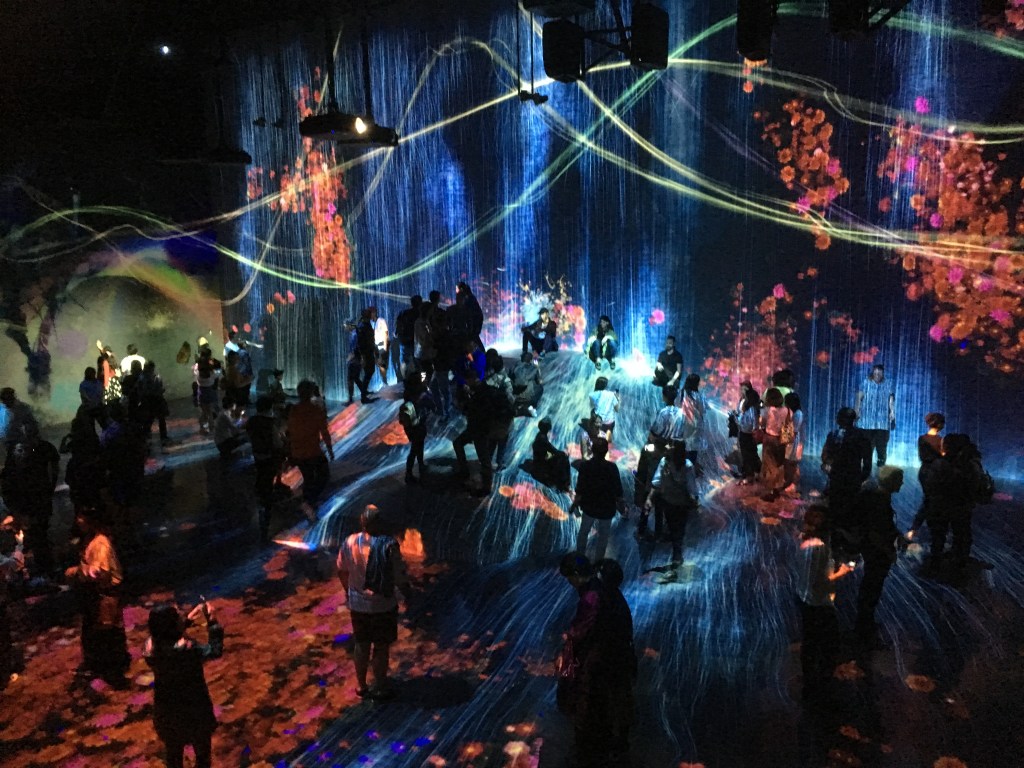
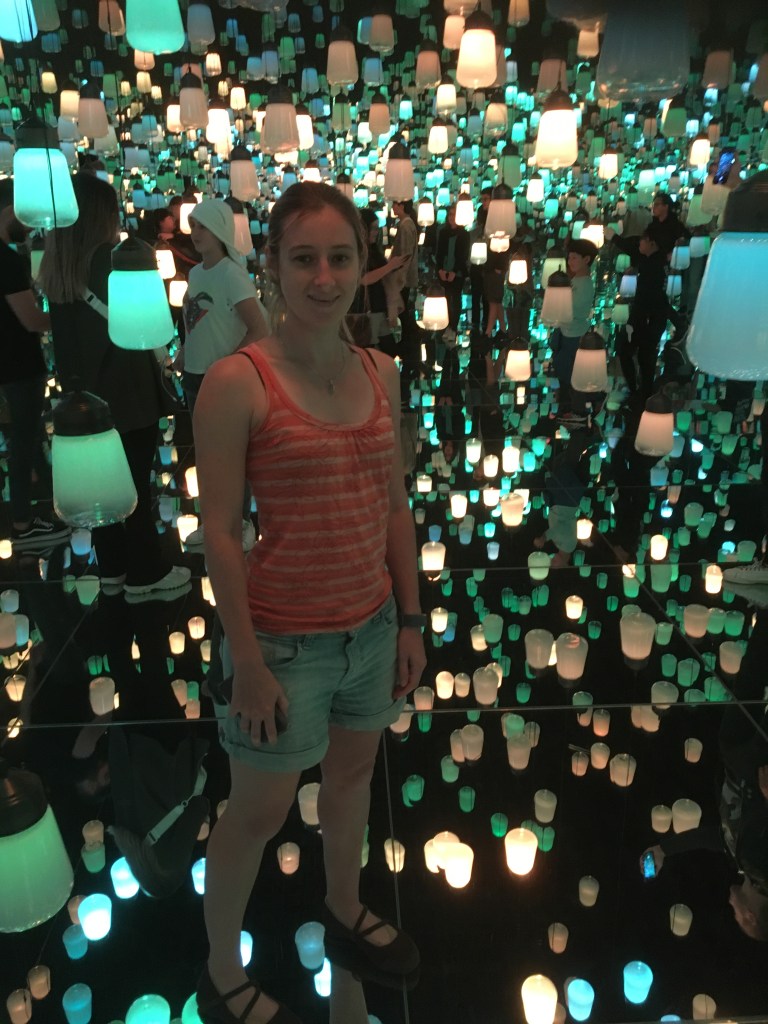
Our main event of the morning was a reunion with David and Alicia with a trip to TeamLab Borderless in the Toyko dock area (Palette Town). This new addition to Toyko’s tourist attractions is an art gallery with a difference; the interactive light displays literally wander around the gallery and fully immerse you in the artworks. We spent a fantastic late morning here with the climbing wall, flying nest and crystal room being particular highlights and rounded it off with a Japanese tea experience like no other!
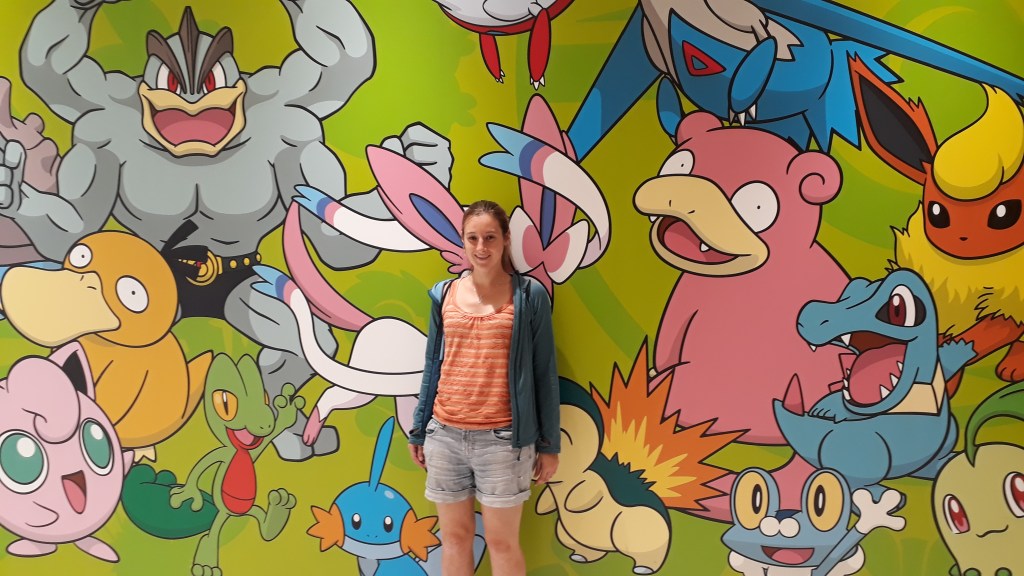
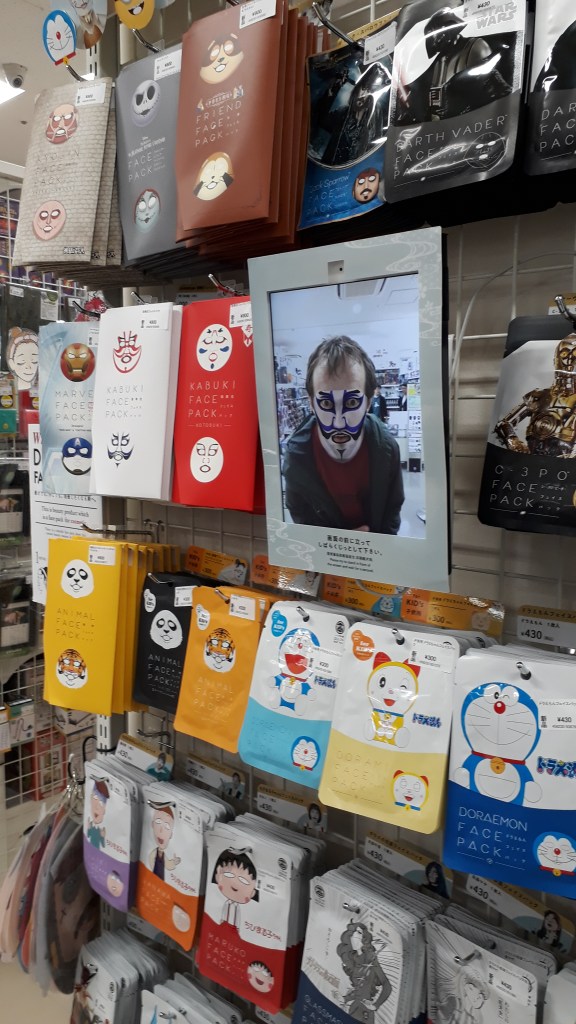
After a late lunch, we said goodbye to David and Alicia (who needed to get to Osaka pre typhoon) and headed out to explore the streets of Toyko alongside some unique holiday shopping; key destinations including the Rugby World Cup shop, the Pokémon Centre and anime city (aka Akihabara region of Tokyo).
Sadly, concern over the impeding typhoon meant we decided to forego a night out in the city (we knew trains were starting to be cancelled at some point the next morning and didn’t want to get stranded). This meant that by 9am on Saturday we had already arrived at our hotel for the night with our plan to hunker down in the hotel lobby until check in and watch the storm roll by. The slight excitement at being witness to a future GCSE geography case study only lasted the first hour.

At 11am we were already getting itchy feet and the weather outside was essentially a British October day (windy & wet but still manageable for a sturdy umbrella) so we went for a quick walk to stretch our legs and gather food supplies, keeping close to the hotel in case of a sudden worsening of the storm. At 5pm we had checked into our room, realised a) it was tiny b) the hotel did not have a bar. Needless to say, the 7/11 got another visit. At 7pm Claire was doing laps of the hotel. And by 10pm the storm had really started to kick off and Gareth panicked a bit when the hotel room started swaying thinking we were in for a scary night. Fortunately it was just an earthquake! This went unnoticed by Claire who was still doing laps. It was only a small 4 or 5 on the Richter scale, but high up on the 10th floor of a hotel it was definitely noticeable and left the light fitting swinging.
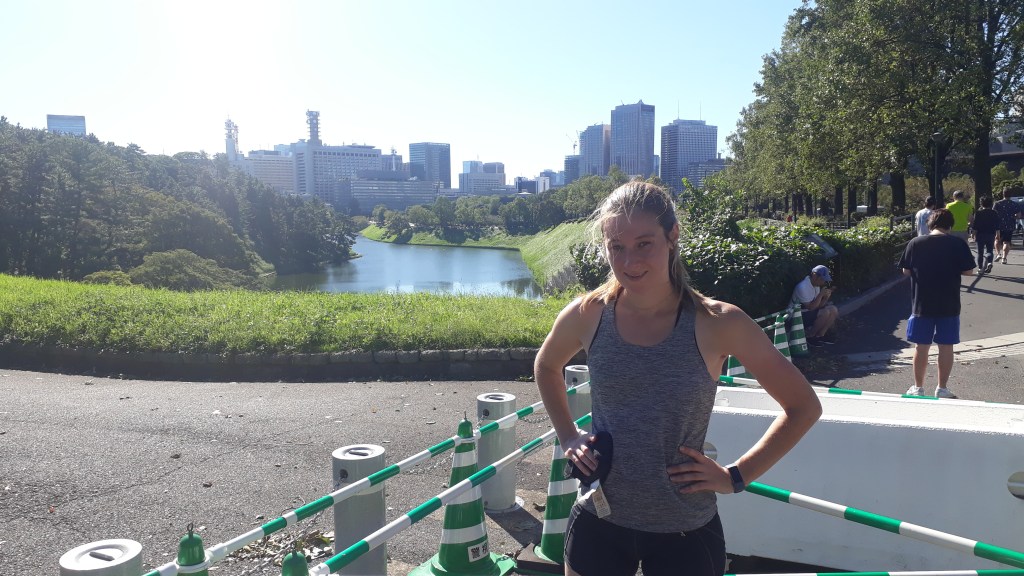
The Imperial Palace Run

By Sunday morning the winds had receded. Our area of Toyko had got off very lightly compared to other more coastal areas, with little evidence of the night’s drama apart from the odd blown over bin. So, not to miss out on our final day in Japan, we headed out on a sightseeing run to the popular 5k circuit of the Imperial Palace gardens. We decided to follow this up with a walk through the city to the Toyko tower. This mix of slick city skyscrapers, Japanese gardens, temples and a bright orange and white Eiffel tower was the good way to sum up the many faces of Japan we had experienced over the last 3 weeks.
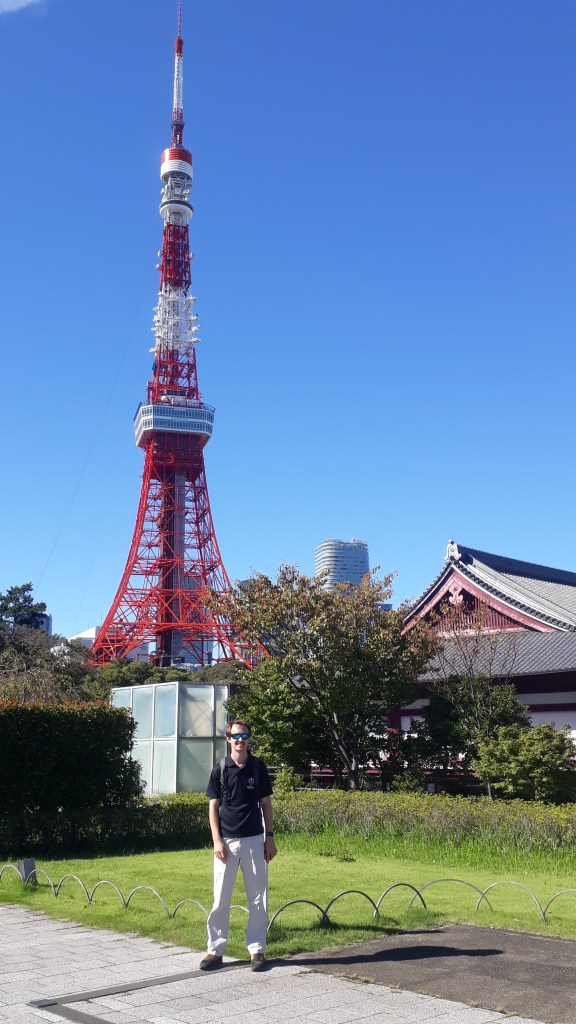
Tokyo Tower

Japan Summary

  • Best food:
    • Claire – The homecooked Japanese feast on day 2 of the Kumano Kodo;
    • Gareth – That feast does take some beating, but I also really enjoyed a couple of the smaller restaurants where we could be a bit adventurous including Yakitori in Kyoto as well as Sakigake at Mount Fuji.
  • Best experience:
    • Claire – the hilltop of monkey overlooking Kyoto;
    • Gareth – the Kumano Kodo was a really enjoyable walking experience and it gave me a great sense of achievement for completing it too.
  • Favourite day:
    • Claire – The Kii Peninsular day because it started with disappointment that our boat trip had been cancelled but turned into a fantastic day seeing an amazing coastline on electric bikes and ended meeting up with my brother;
    • Gareth – Although I really enjoyed going to Watch Wales play Fiji live, I think my favourite day was probably watching them beat Australia in the bar in Osaka, coupled with going out for Karaoke afterwards with our random friends. I think the Fiji game was a bit too stressful and just gets pipped.
  • Biggest disappointment:
    • Both – parkrun in Tokyo being cancelled,
    • Gareth – not getting to try Kobe beef.
  • Weirdest thing about Japan:
    • Claire – the toilets! Along with automatic lid opening and flushing they also come with music, heated seats and bottom washing!
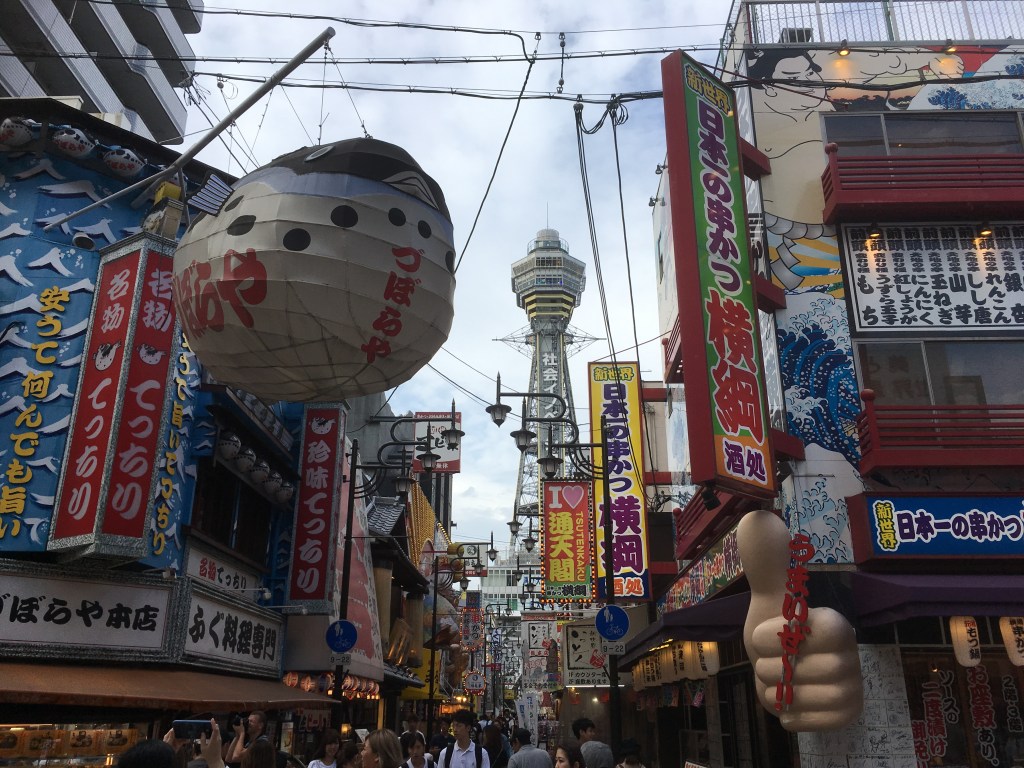
    • Gareth – The crazy street art in the Shin-sekai area of Osaka that we stayed in was something to behold. In particular the giant cartoon whale that hung over an intersection!

If our blogs are giving you itchy feet then please check out our friend Erick’s website who has set up his own tour company IncasPath in Cusco, Peru. He’s a really friendly guy and probaly the best tour guide we’ve ever had. We completed the Salkantay pass with him to Machu Picchu four years ago and have had the travel bug ever since!!!! http://www.incaspath.com
Japan’s Southern Islands

Probably the most rushed section of our tour around Japan; we had 3 days to explore the two main Southern Islands of Japan, Shikoku and Kyushu!

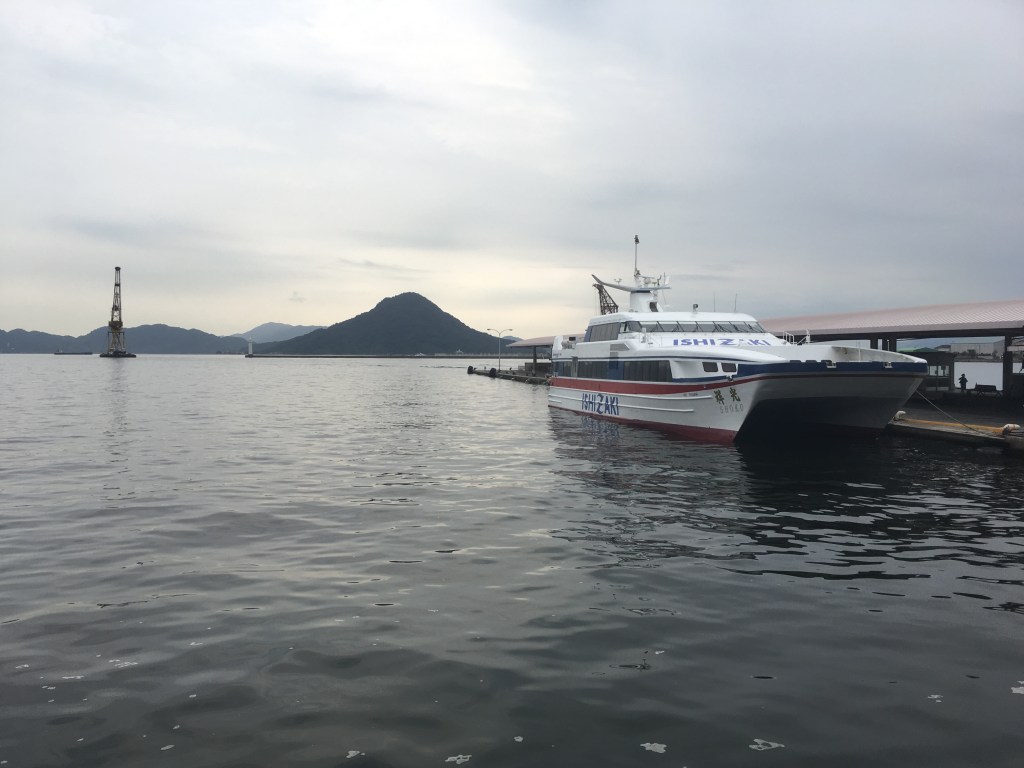
We decided that a ferry ride across Japans inland sea would be a good way to see some more of the coastline so took the fast ferry across from Hiroshima port to the port of Takahma on Shikoku and then a local train into the city of Matsuyama, which was only a short journey away. The scenery was beautiful as we passed by many small islets, with bridges linking some of the bigger ones together.

The ferry to Shikoku with some of the islands in Hiroshima Harbour

Matsuyama is best known among Japanese tourists as the home of Dogo Onsen, one of Japan’s oldest and most famous set of hot spring baths. Located to the north east of the city, they have been visited by Emperors and written about in Japanese literature.

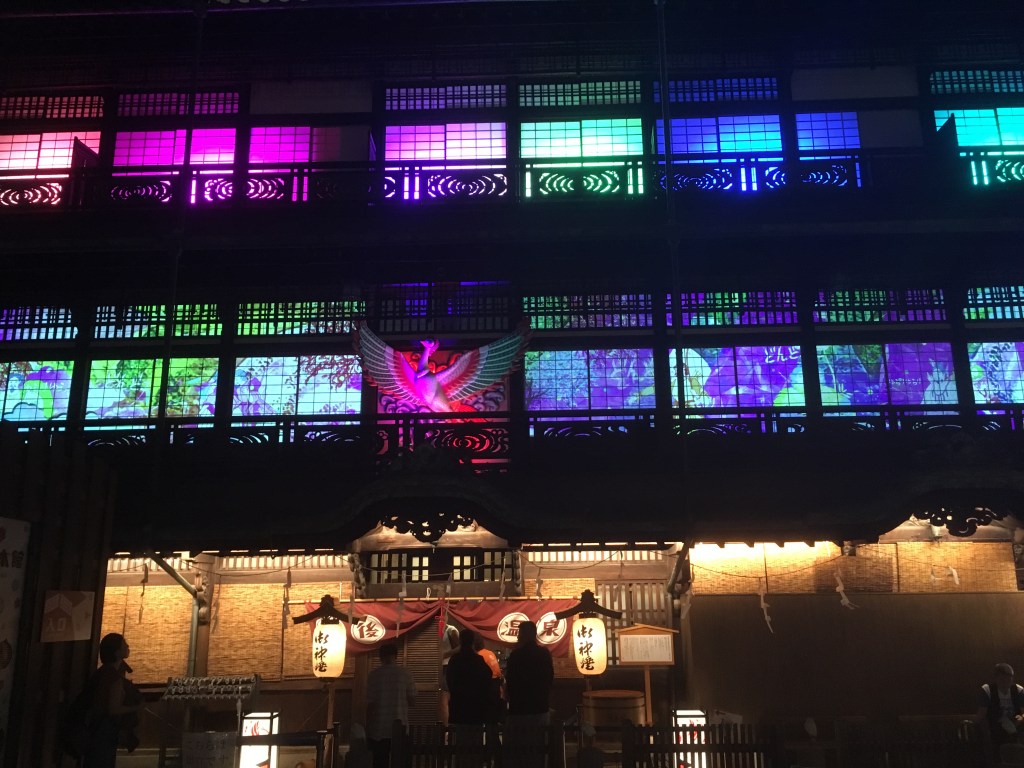
Dogo Onsen lights display as we left our traditional Japanese bathing experience!

The baths are split into different classes of bathing experience, with the highest level reserved only for the Emperor himself. That evening we went in the equivalent of third class, the most basic, and had the “traditional” experience in naked baths separated for men and for women. It was an interesting experience (the Japanese treated it as somewhere to have a chat – a bit like going to the pub), but we definitely left cleansed and a little more relaxed. On the way out it was dark and a spectacular light show was being projected onto the outside of the building. It looked as thought it was telling a well known story, but unfortunately not well known to either of us!

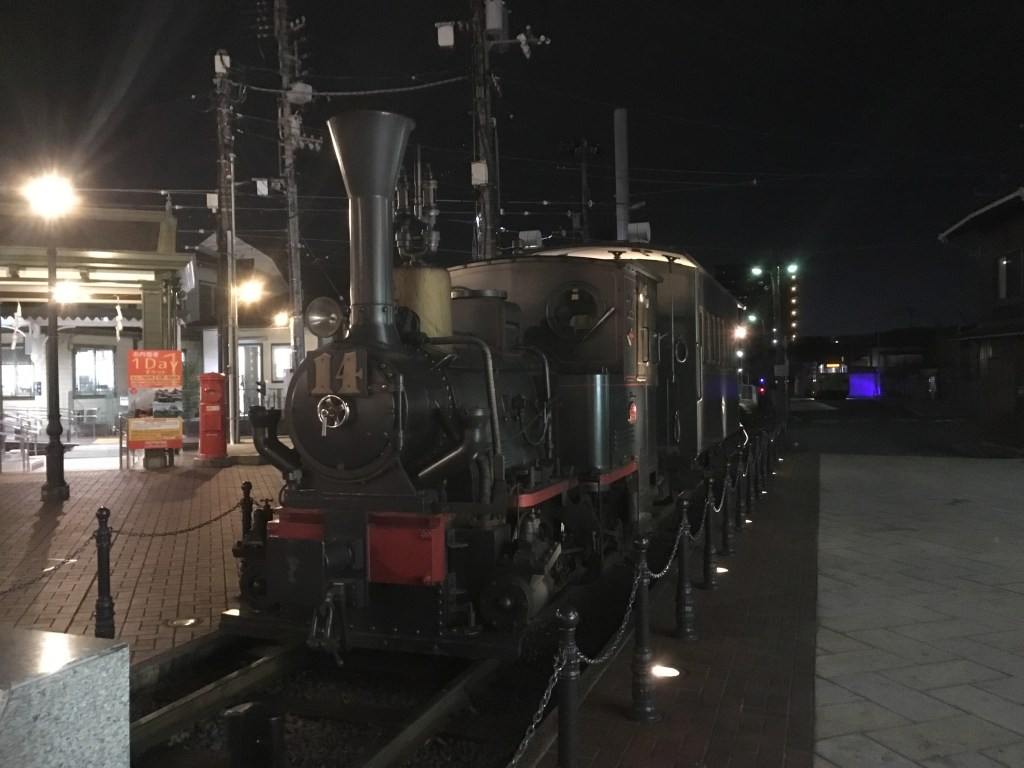
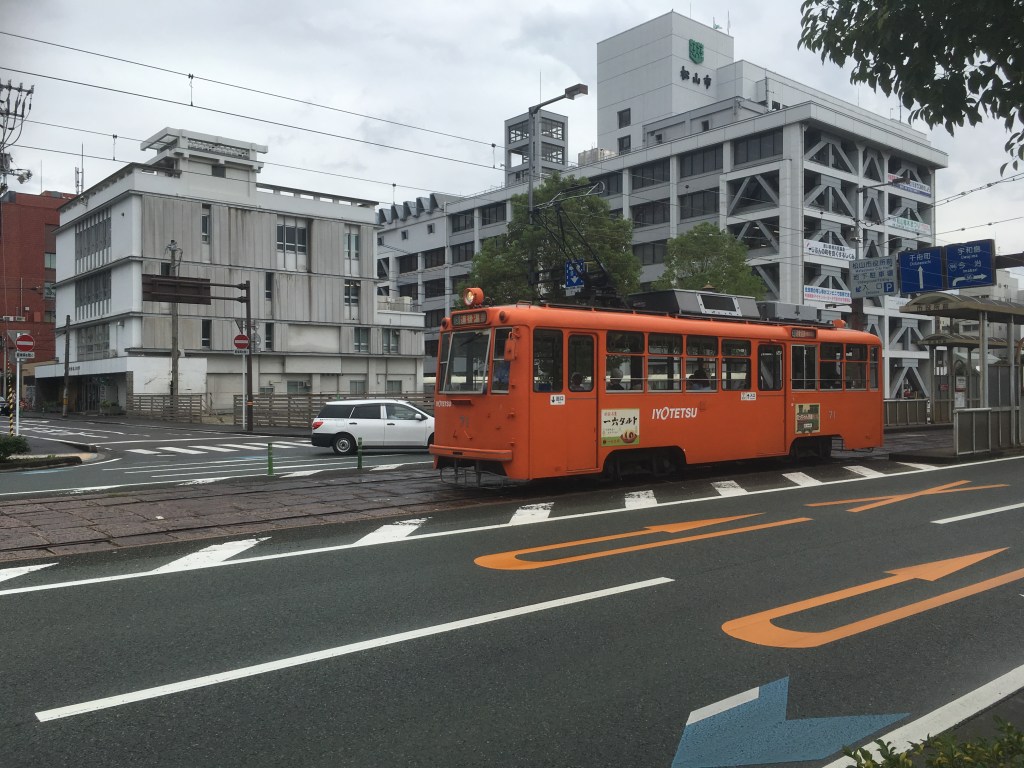
On our way back to the hotel, we spotted another of the things that the city is known for. One of the little “Bochtan” stream trains, that are used a few times a day on the city tram lines, was sat in a siding outside the tram station. Unfortunately, we weren’t able to ride on one, but it did make a change from the bright orange cars that make up the rest of the tram fleet.

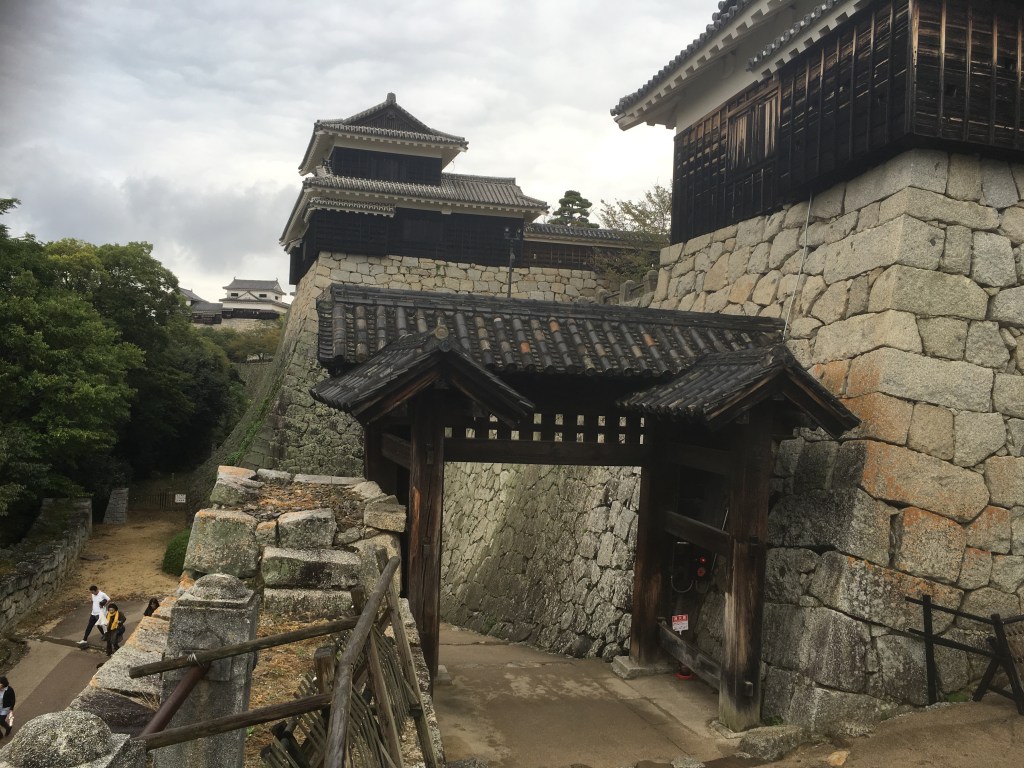
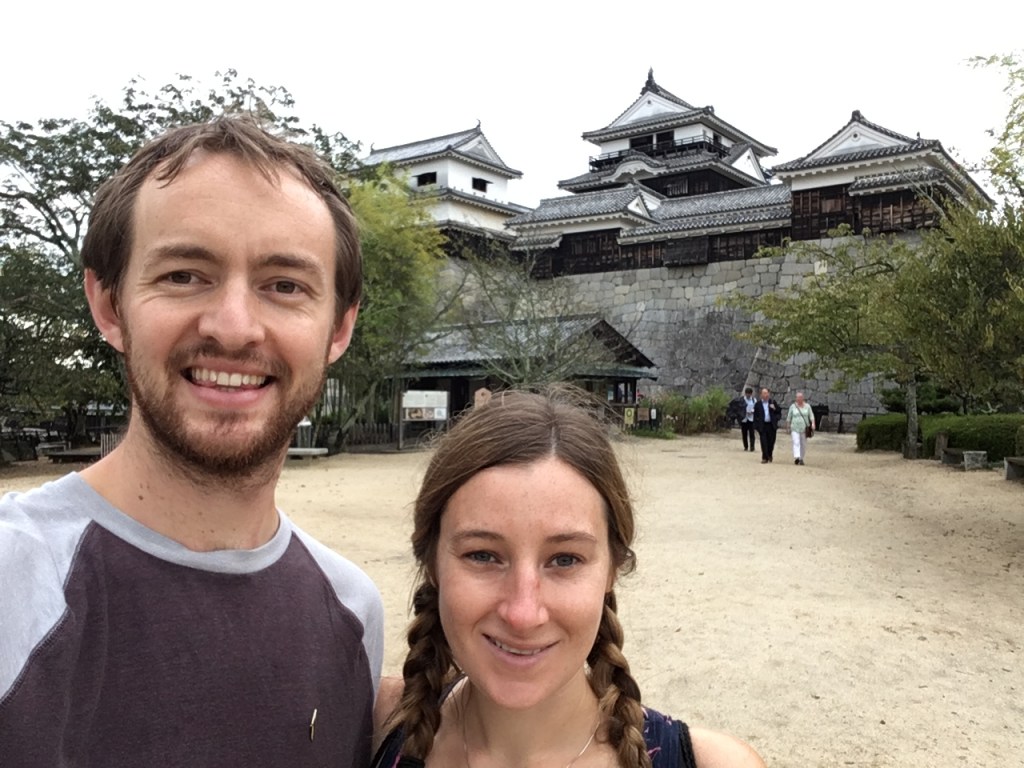
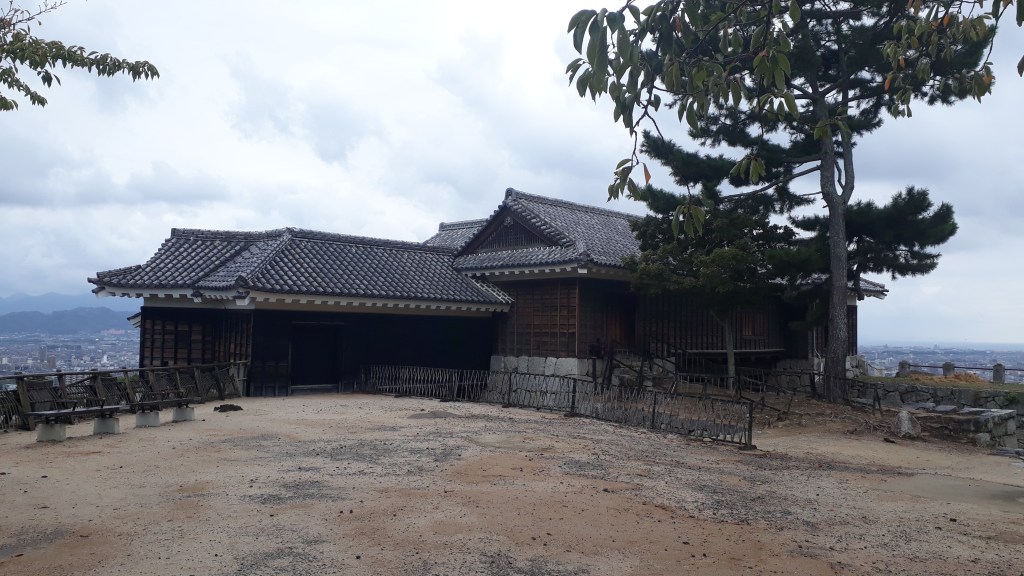
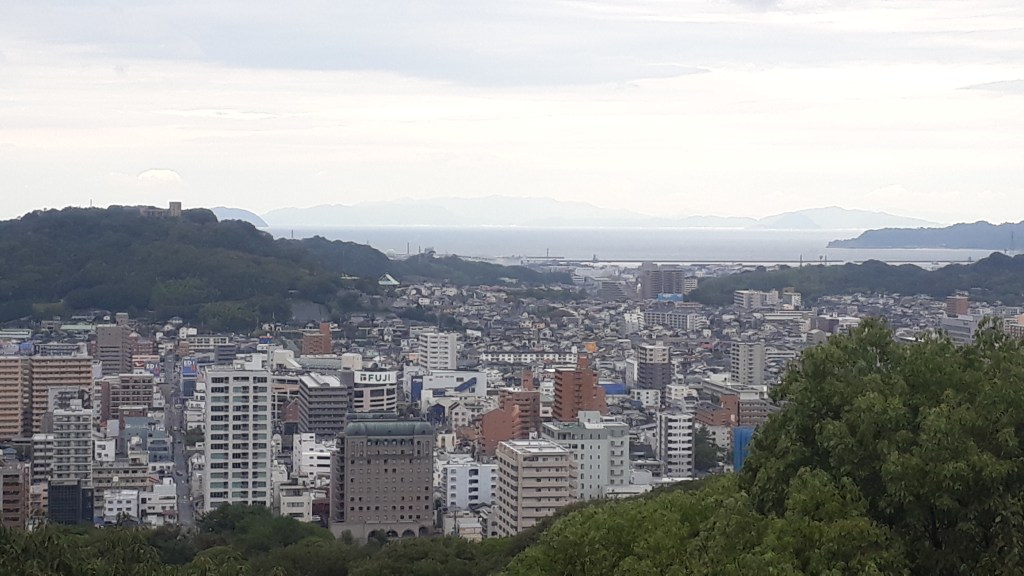
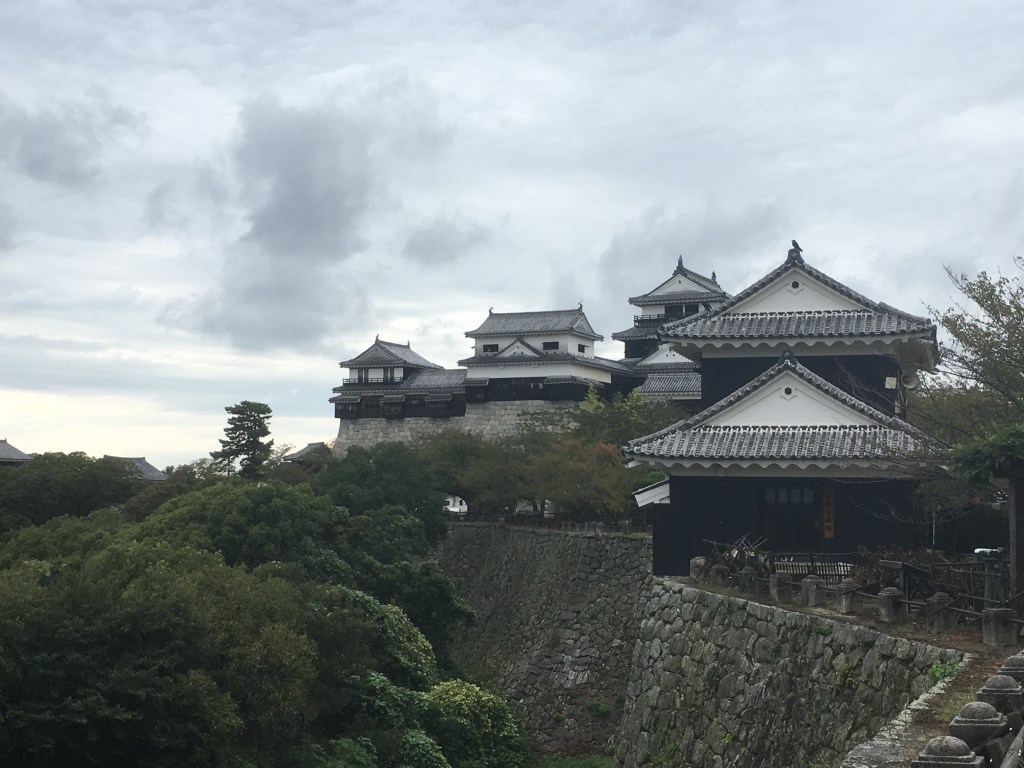
The next day we went up to Matsuyama castle, which was a hilltop large fortification, with loads of different stone walls, tiers, gates and towers and felt much more recognisable as a castle compared to some of the other wooden decorated structures we had seen. It was probably the most spectacular castles that we saw in Japan; more intricate and siege resistant than Osaka castle although maybe not quite as grand. We wished we had longer to explore but needed to catch a train to get to the west side of the island to catch our ferry to Kyushu. We almost had a repeat of our Vancouver Island ferry calamity, but fortunately just made the walk from the station to the ferry in time.

The journey across to Beppu Bay was also nice (but windy), with views of the coastline and a few smaller islands in between. A bus and another train later and we were in Nakatsu, our home for two nights while we watched the rugby.

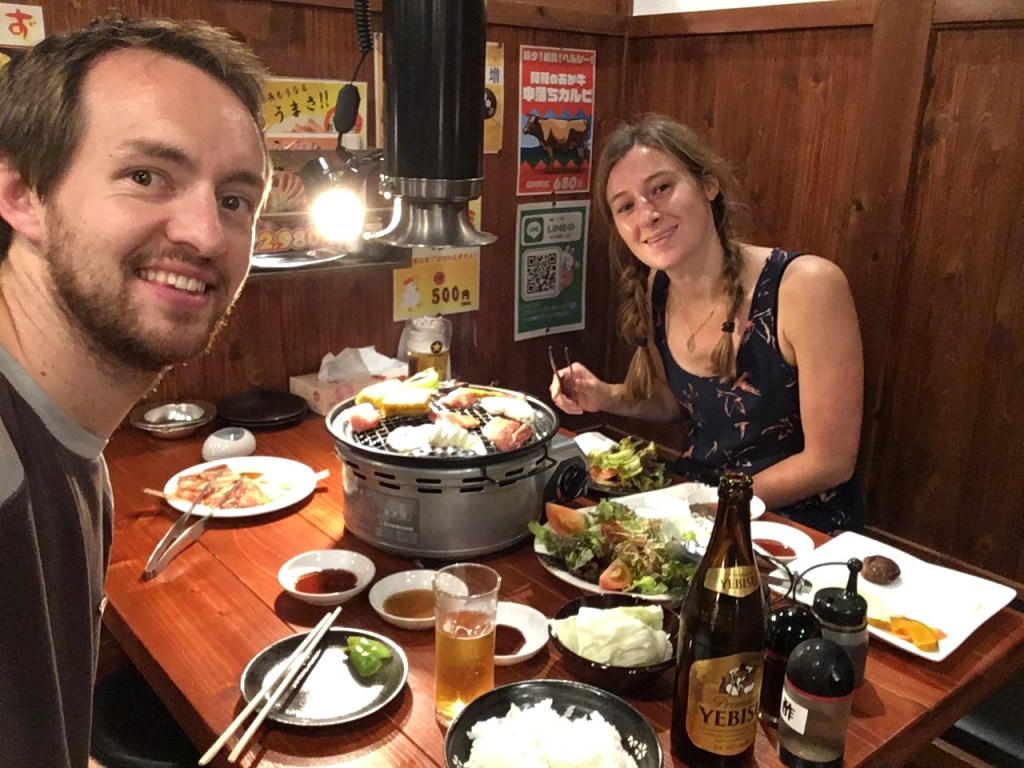
Dinner that evening was a good adventure, we wandered round the town looking for somewhere to eat and eventually found a Yakiniku restaurant. These are restaurants where you cook your own food over a mini BBQ and you order a selection of different dishes and are given some sauces to go with them. We went slightly overboard on the ordering (blame the language barrier) and ended up with a table full of food. It was very tasty and good fun too – helped by our enthusiastic and cheerful waiter.

A feast for two!

Next morning it was rugby day, but before we headed of to see Wales and Fiji battle it out, we decided to go to see some of the “Hells of Beppu”. A group of geothermal features near to the city of Beppu and in between our hotel and the Oita Stadium.

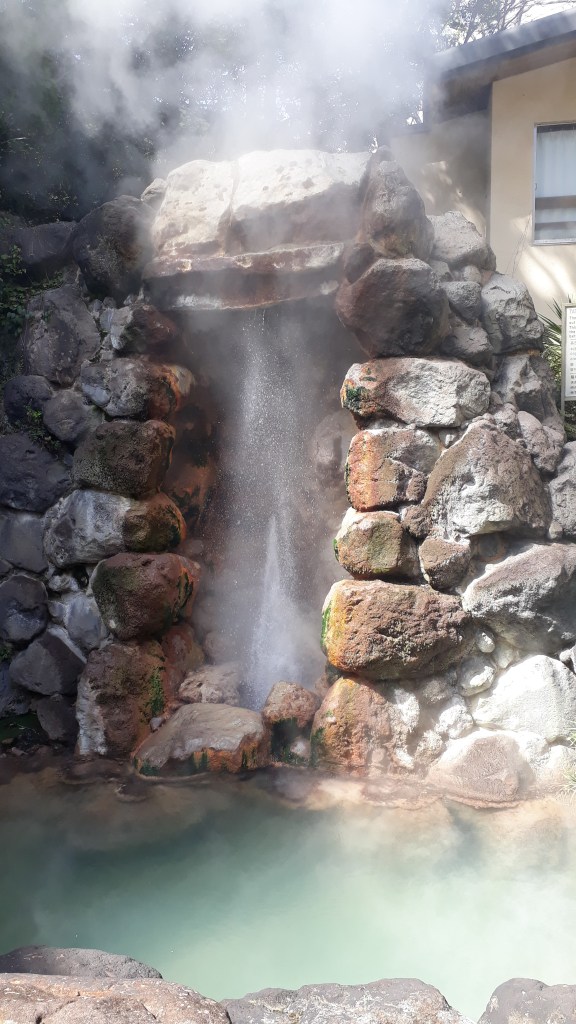
Tatsumaki Jigoku Hell: A boiling geyser bursting from the pool every 30 minutes

We only had time to see two of the seven hells, but picked the exciting ones. Tatsumaki Jigoku (the ‘spout hell’) was up first featuring a boiling hot geyser, which erupts every 30-40 minutes for about 6-10 minutes and we had got there just in time. A stone plate above the geyser stops it from reaching its full height, but protects passers by from being showered in boiling water.

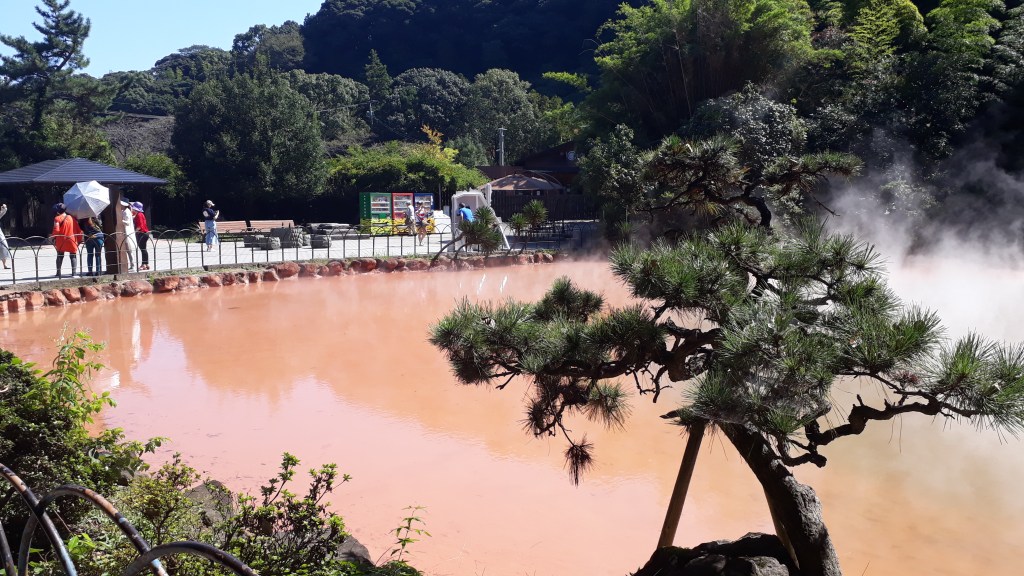
Chinoike Jigoku Hell: The devil’s pool!

The other hell we saw was Chinoike Jigoku or the “blood pond hell”, which is exactly that; a pond of hot, red water due to the local red clay sediment that dissolves within the bubbling pool. This one also featured a mini foot spa where we soaked our feet before setting off to warm up for ‘the main event’, in the Oita fanzone where we gorged on fried Chicken (a speciality on Kyushu island) and watched Argentina thrash USA in the first game of the day.

Watching USA vs Argentina at the Oita fanzone.

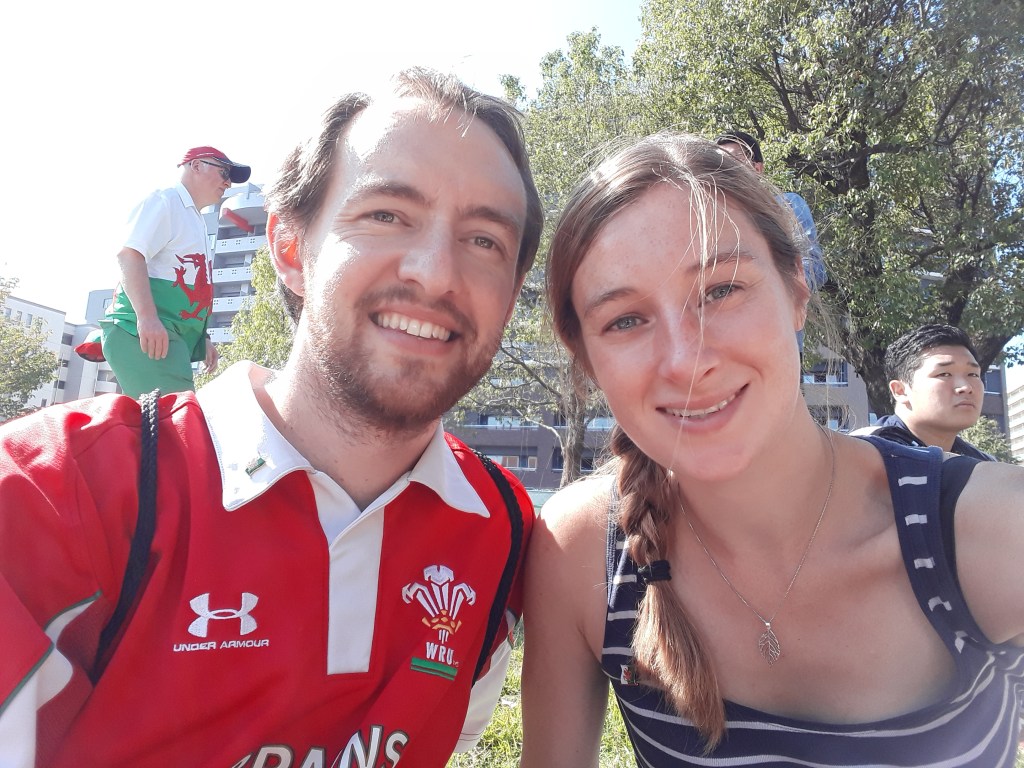
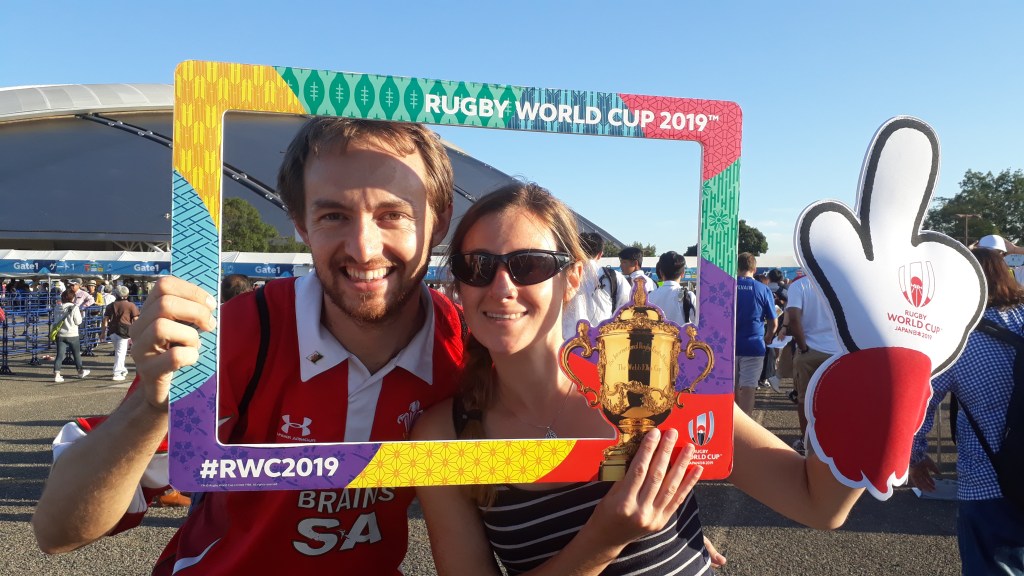
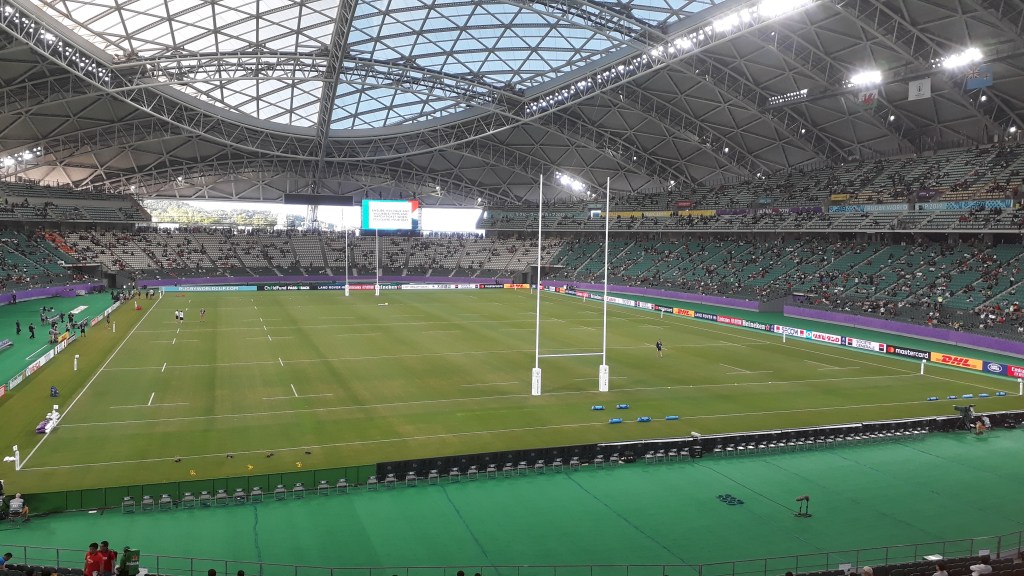
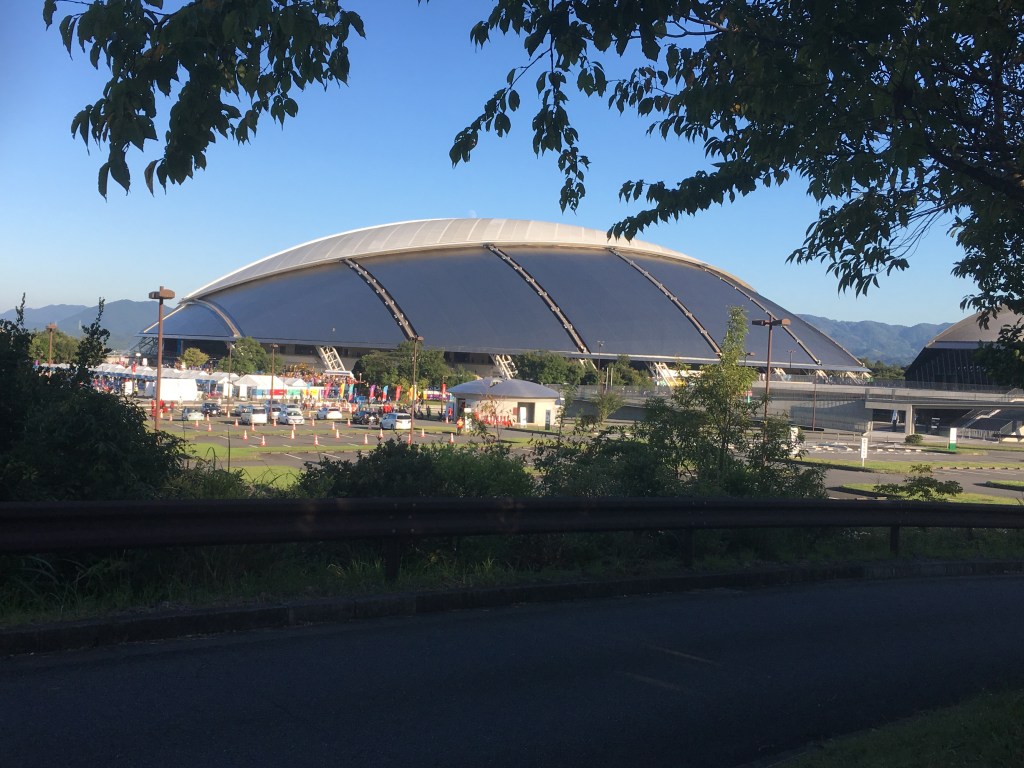
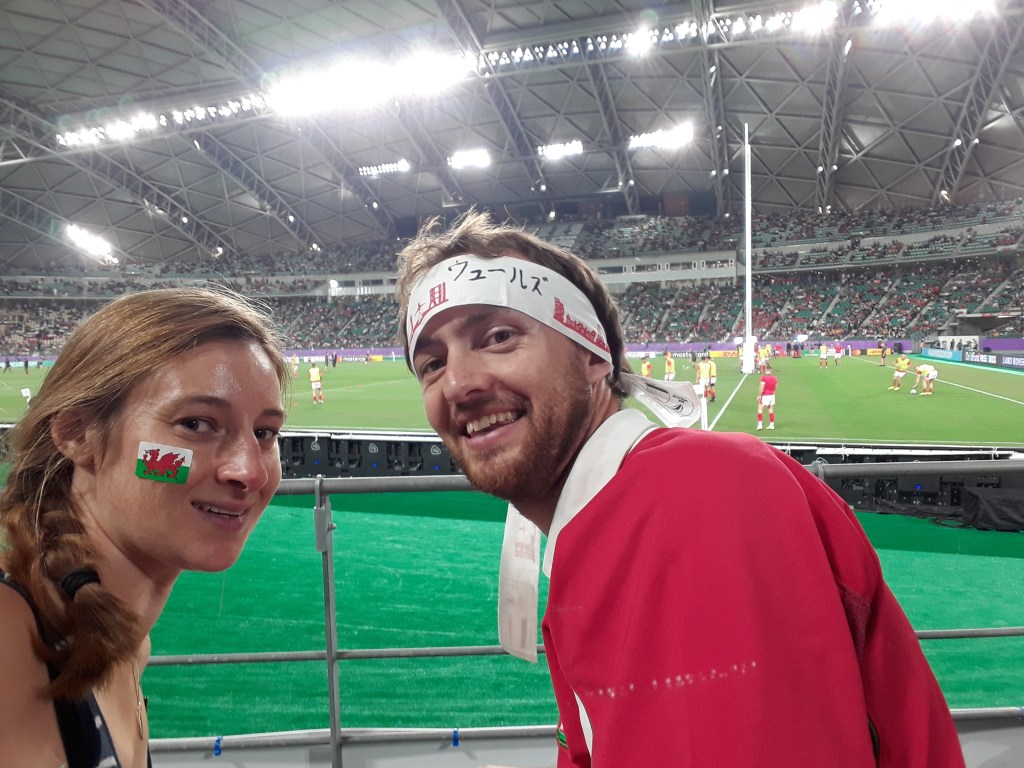
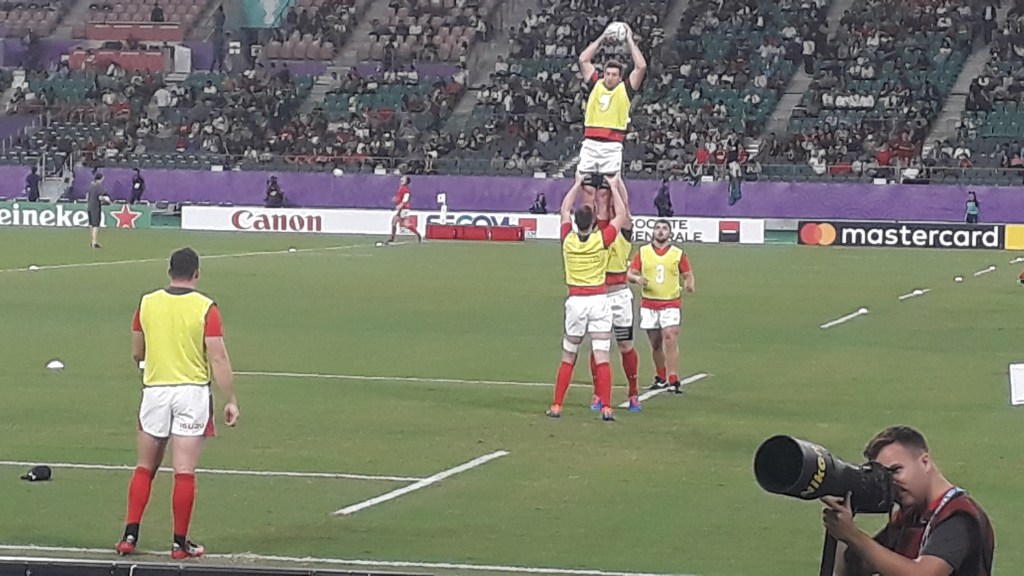
With the blow of the final whistle we were off on a shuttle bus to Oita stadium (with some very excited Welsh fans who tried to get the whole bus singing; only to be disappointed that most of the bus was Japanese) where we were absolutely delighted to find out that we had somehow managed to bag front row seats on the try line!! We spent the next 90 minutes exploring the stadium and watching Wales warm up right in front of us! The atmosphere was electric. The final hell of the day – for Gareth at least – was watching the first ten minutes of the rugby match, as Fiji were on fire and scored two tries (right in front of us). Fortunately Wales rallied and we enjoyed and exciting match with Wales triumphant in the end. Phew!

The game was a great spectacle with great fans from Wales, Fiji and Japan getting really into the game. The volunteers at the stadium are also worth mentioning, as they were enthusiastic, helpful and a splendid example of their country’s hospitality.

Hiroshima

Hiroshima is not an easy place to visit, and this is not an easy blog to write. However, by sharing stories of the devastation that atomic bombs cause Hiroshima aims to prevent a repeat of this tragedy.

After leaving Dave and Alisha in Shingu, we caught the train back around the Kii peninsula to Osaka and enjoyed the amazing coastline one last time, before arriving in Hiroshima the middle of the afternoon. After dropping off our bags at our hotel, we headed to the Hiroshima Peace Memorial Park. It is built around the hypocentre of the atomic bomb, which was dropped on the city on 6th August 1945 by the allied forces along with another on Nagasaki a few days later to end WWII. Prior to the bomb it was one of the busiest shopping and residential districts in the city. One single person from this entire district survived the attack (who was working in a concrete basement at the time).

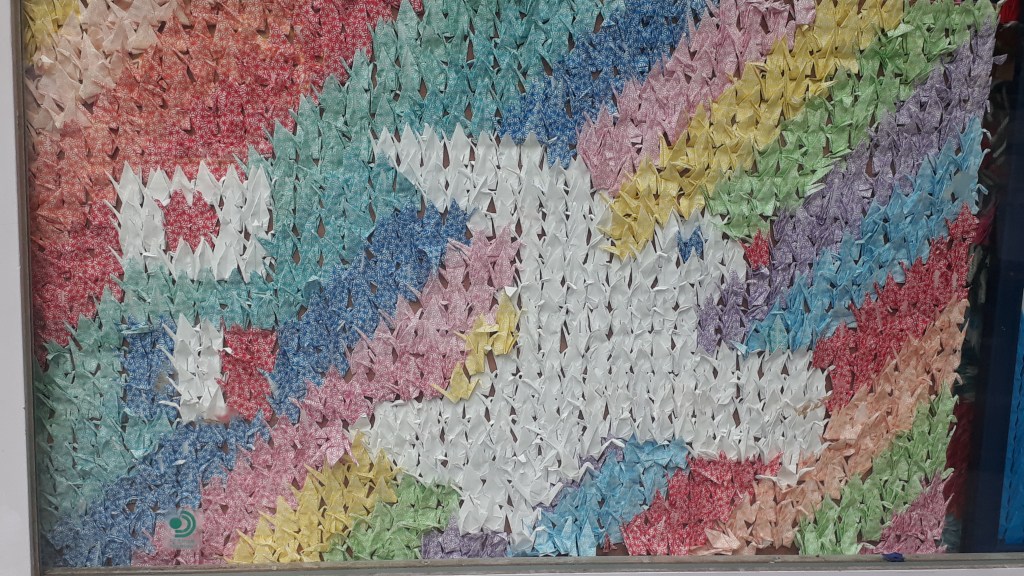
As you might expect, the park itself is a very tranquil place and conducive to reflection on what was an atrocious attack on the city and its people. We first visited the children’s peace memorial, which is dedicated to the children who died as a direct result of the atomic bomb and in the days, months and years following. There is a large display case, which contains folded paper cranes that have been sent to Hiroshima from children across Japan and the world to symbolise a commitment to peace.

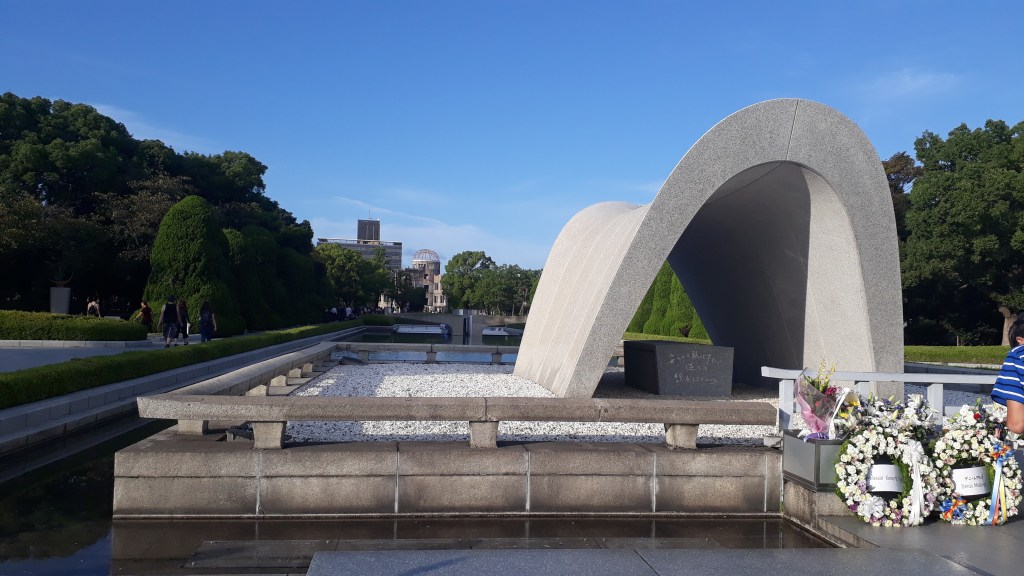
The Memorial Cenotaph with the Peae Flame and A-Bomb Dome in the background

Next we walked past the Peace Flame, which was first lit in 1964 and will burn until all nuclear bombs on earth are destroyed. At the other end of an ornamental pond is the Memorial Cenotaph, which contains the names of the known victims of the bomb and is covered by an arch shaped shelter, which is said to act as a shelter for their souls.

After this we went down into the Hiroshima National Peace Memorial Hall, which is underground and houses a 360 degree mural of the city after the bomb went off. It is made using 140,000 tiles, which is the same number as the estimated number of people who had died from the effects of the bomb at the end of 1945. It is a quite amazing scene of demolished structures with very few left standing.

The most difficult part of the day came when we visited the temporary exhibition on the way out of the hall. This was showing a video of drawings and artefacts produced that related to school children who had been killed by the bomb. A number of children had been assigned “demolition duties” by the Japanese government, which involved creating fire breaks in the event of a regular air raid. Many of these children were just starting their work when the bomb hit. No warning was made. The stories are too horrible to repeat, however they often were passed on from first responders who were able to talk to the children before they passed away. You can only imagine what a harrowing experience it must have been.

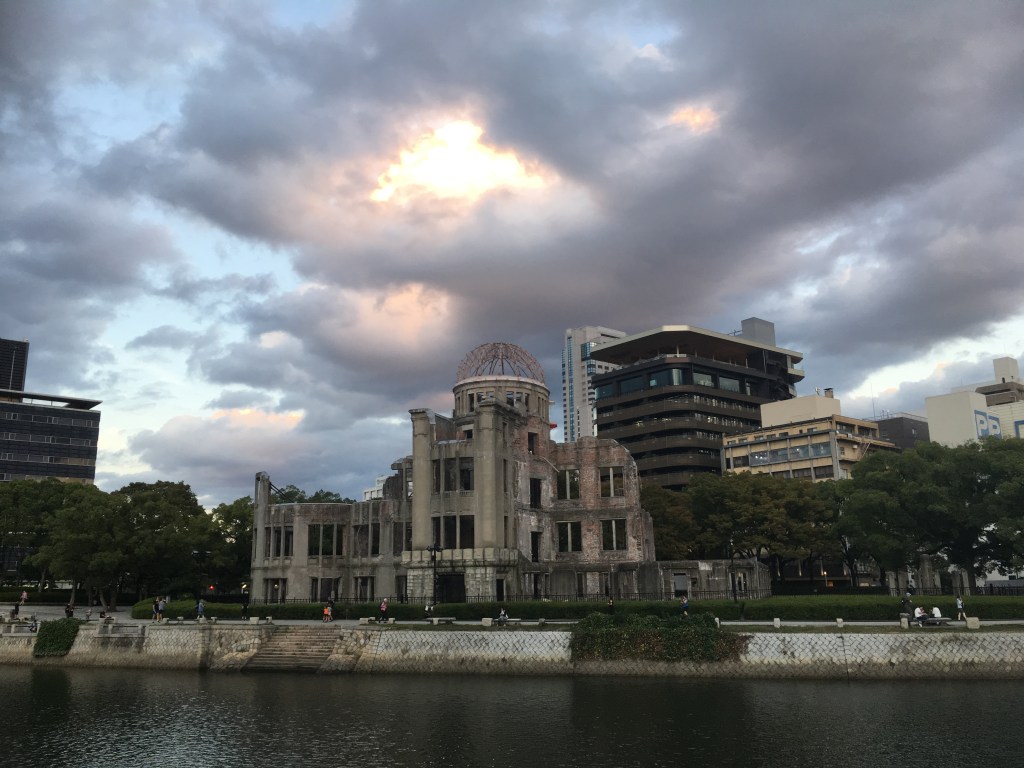
The “A-bomb Dome” stayed partially intact after the bomb hit despite being 100m from the hypocentre.

On our way back to our hotel, we passed the A-bomb Dome, the closest building to the hypocentre to remain partially standing after the bomb hit. It acts “as a historical witness that conveys the tragedy of suffering the first atomic bomb in human history and as a symbol that vows to faithfully seek the abolition of nuclear weapons and everlasting world peace”. It is a very haunting and moving structure.

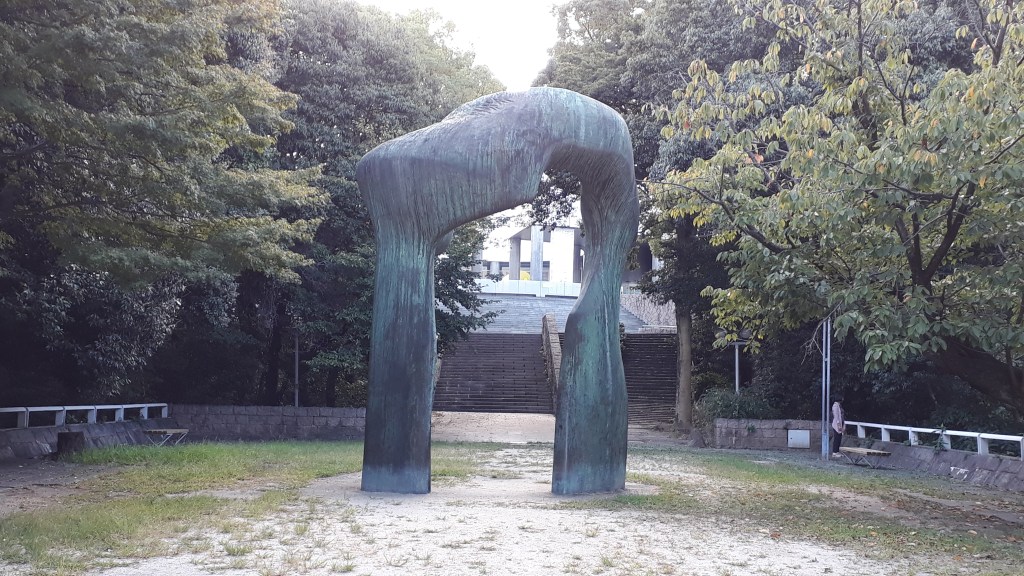
A statue in Hiyajima Park

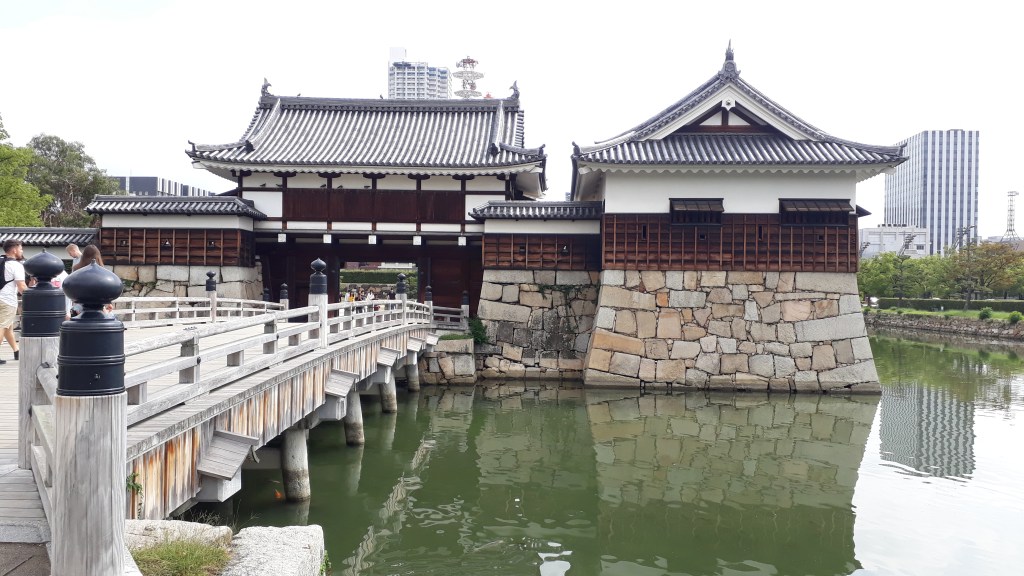
The next morning Claire went for a run around Hijiyama park, which covers a hillside to the East of the city and houses an art museum and many sculptures and statues, as well as having great views of the city. We then headed to Hiroshima castle, which was partly rebuilt following the atomic bomb and wandered around the grounds.

Hiroshima castle and moat

We spent the rest of the morning at the Hiroshima Peace memorial museum. This museum is a vivid account of the grotesque damage the atomic bomb caused the people of Hiroshima. It includes photos and artefacts of the victims and records of parents recounting the days of suffering their children went through before death.

The museum also includes artifacts recording the decisions & politics leading up to the bombing. The popular narrative is that the bombing was a necessary evil to successfully end the greater evil of WWII. Japan was looking like losing the war and already in surrender talks (but not giving in to allied demands). But the allies had spent billions of dollars spent on the atomic programme and had no demonstration of it’s power to justify the colossal expense. Despite protestations from the scientists developing the device a decision was made not to warn the people living in target cities to evacuate, and the signature of the UK prime minister and USA president authorising the attack that would lead to the deaths of 140,000 innocent people in 1945 alone.

The museum asks that visitors spread the word of the tragedy that took place in Hiroshima and encourage their friends and families to support de-nuclearization around the world. We hope that this blog has done just that. Although the city has rebuilt and now appears at first glance just like any other city in Japan, no-one should have to suffer in the way that the people of Hiroshima did.

Just one of 100’s of pictures created using cranes at the children’s peace memorial

Kumano Kodo Part 2: Kumano Nachi Taisha

Day 4 of our Kumano Kodo trek was the ‘big climb’ of the trip. All our guide books stated that you must begin the hike before 8am despite the day only being 14km. After our experience of the steep hot climb on day 1 we were prepared for a hard day. That meant an early morning bus back to where we had finished our third day in Koguchi, and warnings to David and Alicia to pack plenty of water.

At the beginning of our final day’s walk

What we had not been concerned about was finding our way given that the last 3 days the route had not caused us any problems. Soon after starting, we realised we had probably been focused on the wrong thing. The morning was warm, but not uncomfortably hot and the uphill path shaded and not too steep. We did however miss the first turning and walked off the wrong direction down the road! Despite our erroneous detour and one deliberate detour (another due to landslides), we made good progress and even saw another two snakes.

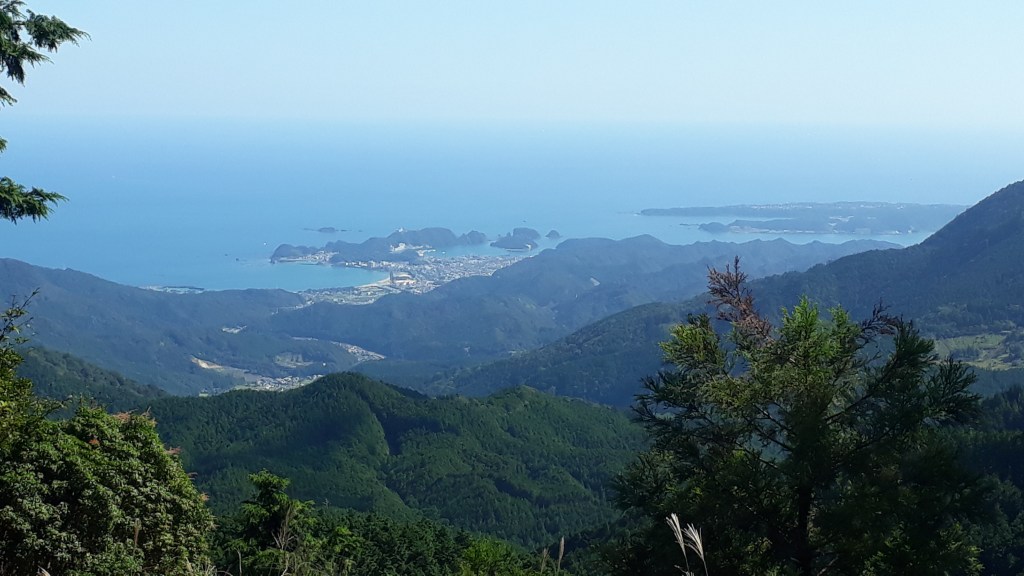
We spent the morning steadily gaining height but the tree cover prevented us from seeing much of the views. After lunch near a hillside stream and a final uphill section, the trees suddenly parted to reveal a glorious view across the mountains and down to the sea we had left that morning.

The view from the top of our trail

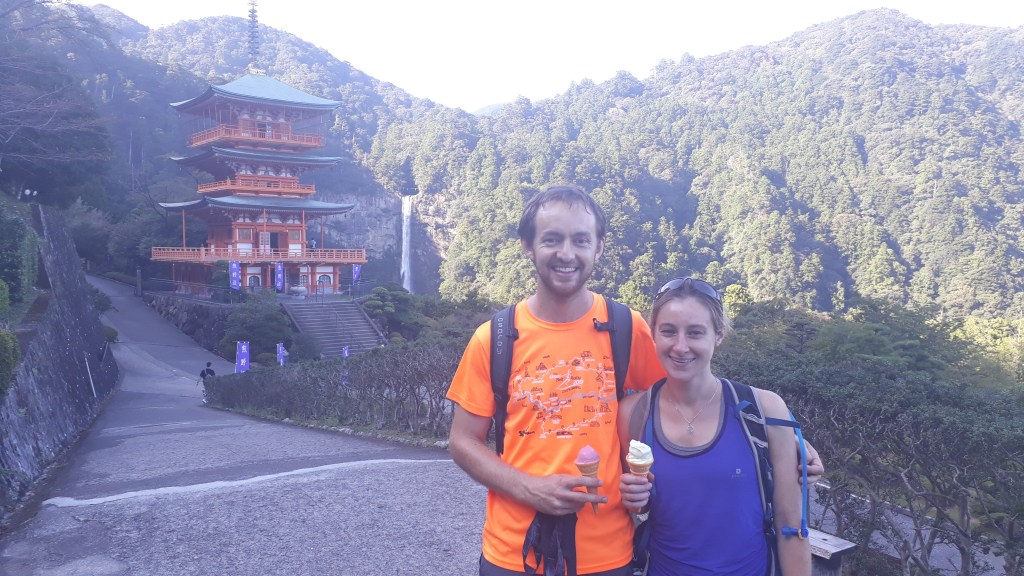
From this point on we slowly descended into the valley until we entered the outskirts of the Kumano Nachi Taisha complex.  The first thing we came across was a large abandoned playpark, which included the longest toboggan run any of us had ever seen! The temple includes a five storey pagoda overlooking the Nachi Falls (Japan highest waterfall), which is one of the best views on the whole trek.

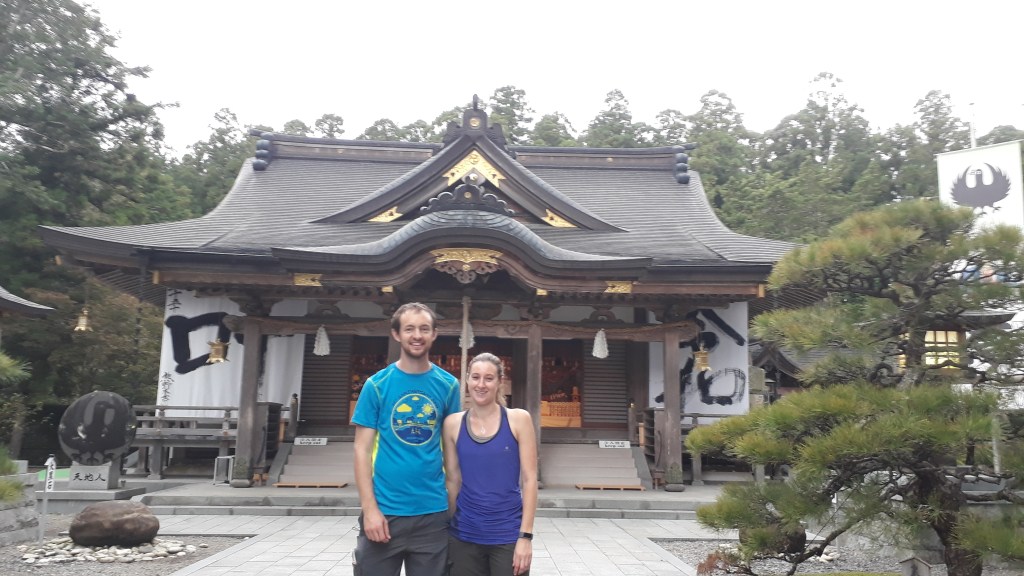
Made it to Kumano Nachi Taisha

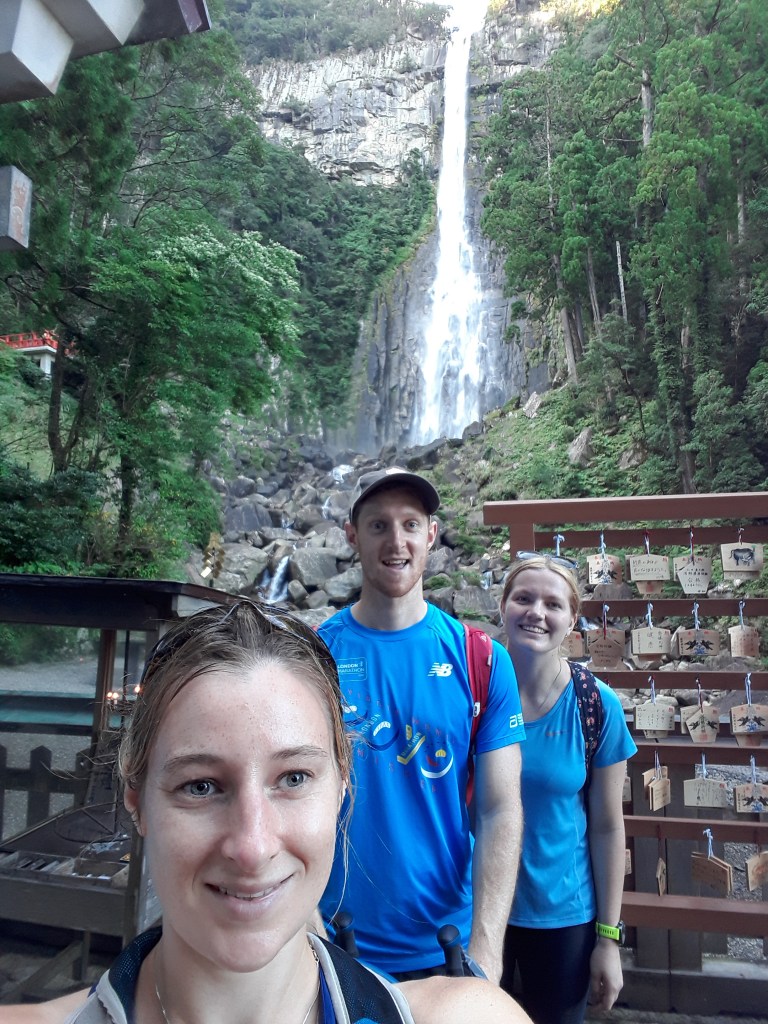
We felt very accomplished that we had completed the Kumano Kodo pilgrimage! We rewarded ourselves with icecream (naturally) and headed down to the waterfall to collect our final stamp (and a few photos of course).

The Nachi Falls – Japan’s highest waterfall

Then it was time to head back to Shingu for another evening of rugby (England v Argentina and Japan v Tonga – which was popular with the locals) before we said goodbye to David and Alicia (for now), ready to continue our journey south.

A detour to the Kii Peninsula coastline

Over the last 1000 years, walking wasn’t the only mode of transport used by pilgrims. The Shingu river provided an alternative mode of transport, and as a break to our hike (and to allow Claire’s brother to join us for the last day’s hike) we had booked a traditional boat trip down the river. Unfortunately concerns regarding the typhoon of the night before had caused our trip to be cancelled, which meant we had a bit of a hole in our itinerary.

We decided to head straight into Shingu (where we would be staying that night) to drop off our bags and head to the tourist information centre to look at some options for the day. Having missed out on our boat trip (and given that it was now a beautifully sunny day) Claire was still keen to try and get out on the water so we focused our search on locations where watersports might be possible for that afternoon. We settled for a trip south along the coast to Kushimoto at the very southern tip of the Kii Peninsula which we had heard had a stunning coastline, and offered canoeing along a nearby river along with bike hire.

One of the amazing views that inspired our detour.

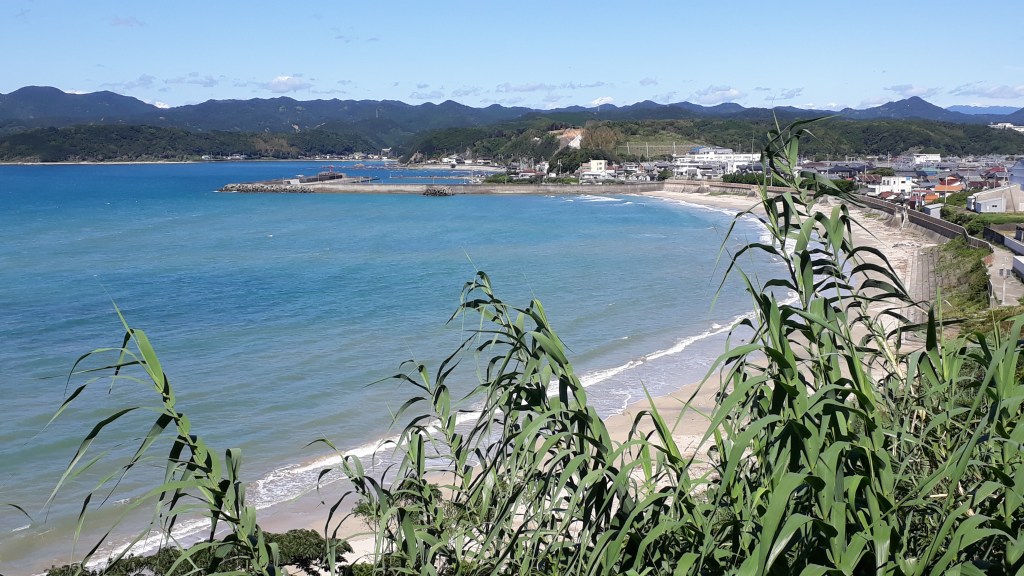
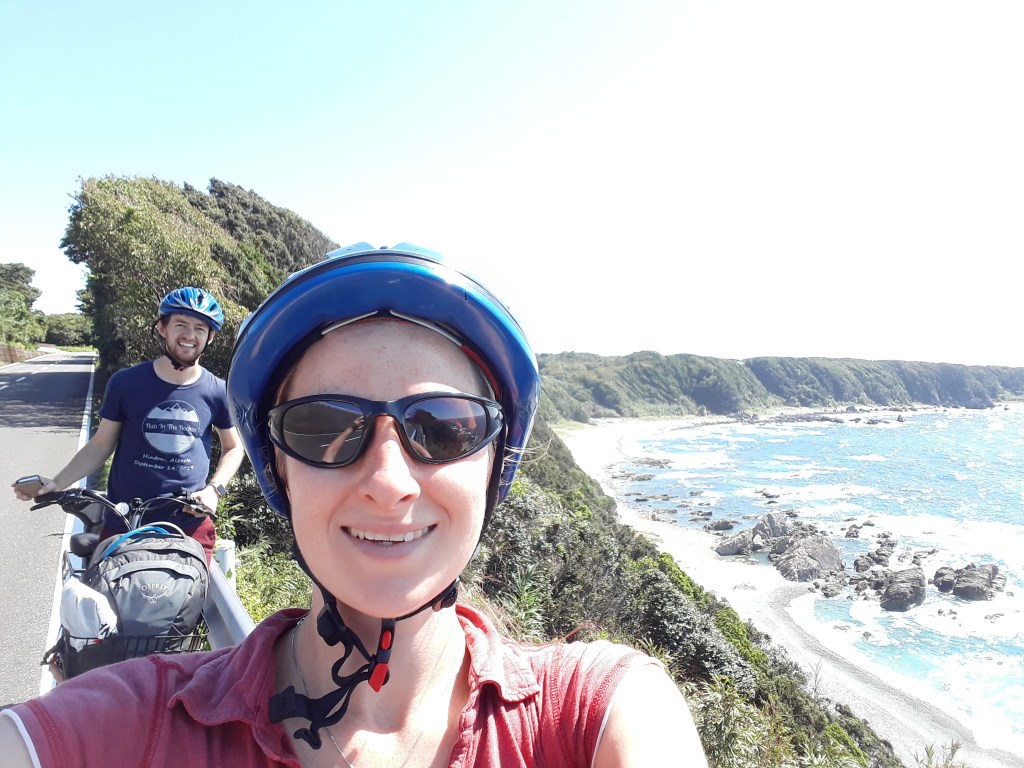
On the train journey there, we realised just how stunning this coastline was (why don’t more people rave about Japan’s coast?) and scrapped our canoeing plans in lieu of hiring electric bikes (it was very hot by this point and the coastline was hilly, plus they were the only option at the station) and heading out for a spin. It turns out that electric bike are one of the best things that have ever been invented; you can zoom uphill as well as down and trick yourself into thinking you’re an elite cyclist!

Cycling on the most southern peninsula on Honshu – amazing views

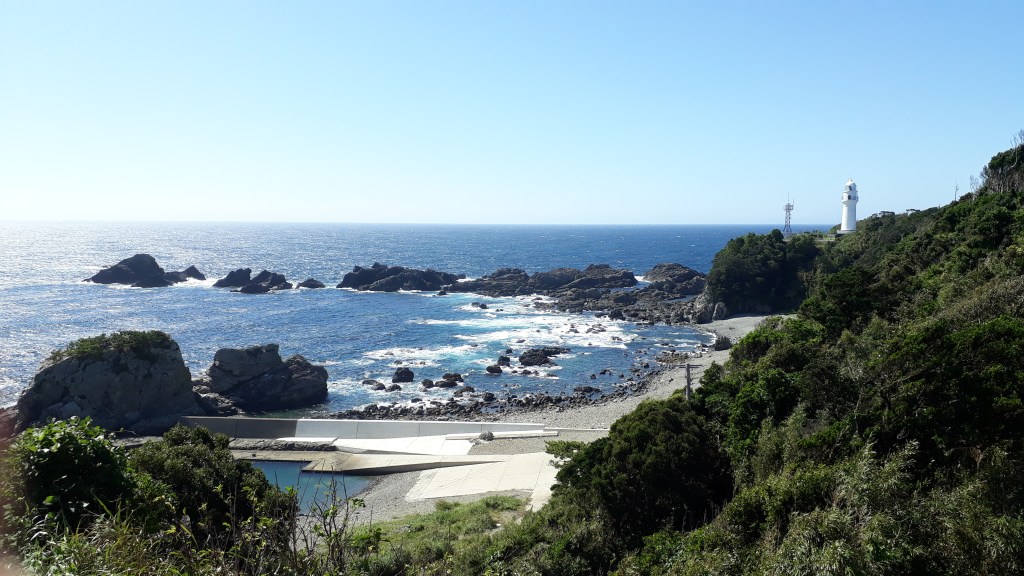
Our route took us past Shionomisake-todai Lighthouse and the most southern point of Honshu island (the main island of Japan). We looked out across the pacific to try and spot the next landmass (Papua New Guinea a mere 3,020 miles away) but could quite make it out!

Shionomisake-todai Lighthouse

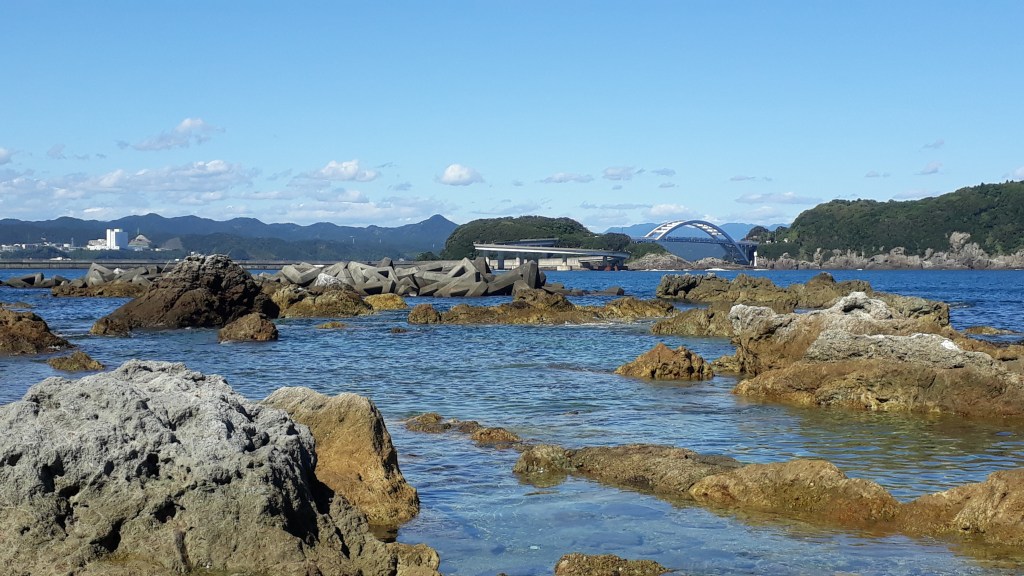
The cliffs and rocks along the shoreline were spectacular and it felt like we had the whole peninsular to ourselves. As we sat having our lunchtime picnic we spotted a loop-the-loop bridge connecting Kiio Island to the mainland which we then had to go over of course!

View across to Kiio Island

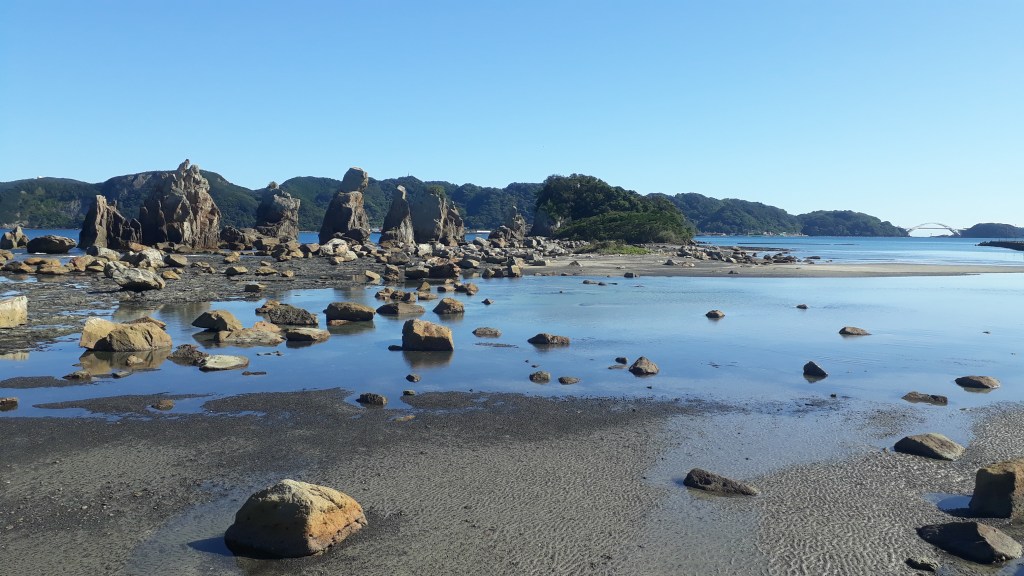
Our detour to the bridge left us with just enough time to go to the incredible Hashigui Rock formation that you can walk out to at low tide, when we happened to visit, before catching a train back to Shingu to meet David (Claire’s brother) and Alicia (his girlfriend).

Hashigui Rocks

After a quick trip to the Kumano Hayatama Taisha temple (our second of the three main Kumano temples), we spent the evening catching up and sharing travel tips, watching rugby and preparing for our final day of the Kumano-Kodo trail.

Kumano Hayatama Taisha temple with David and Alicia

The Kumano Kodo Pilgrimage Trail: Part 1

One of the first things we had planned for our world tour was a four day hike across the Kii peninsula, which is to the south of Kyoto and Osaka. Both of us had come across the Kumano Kodo pilgrimage trail independently in our research and we thought that it sounded like a great trip. The large network of routes on the peninsula have been used by pilgrims heading to the main temples at Hongu, Hatayama and Nachi for thousands of years. We picked to do the whole of the most popular Nakahechi Route (or the Imperial Route).

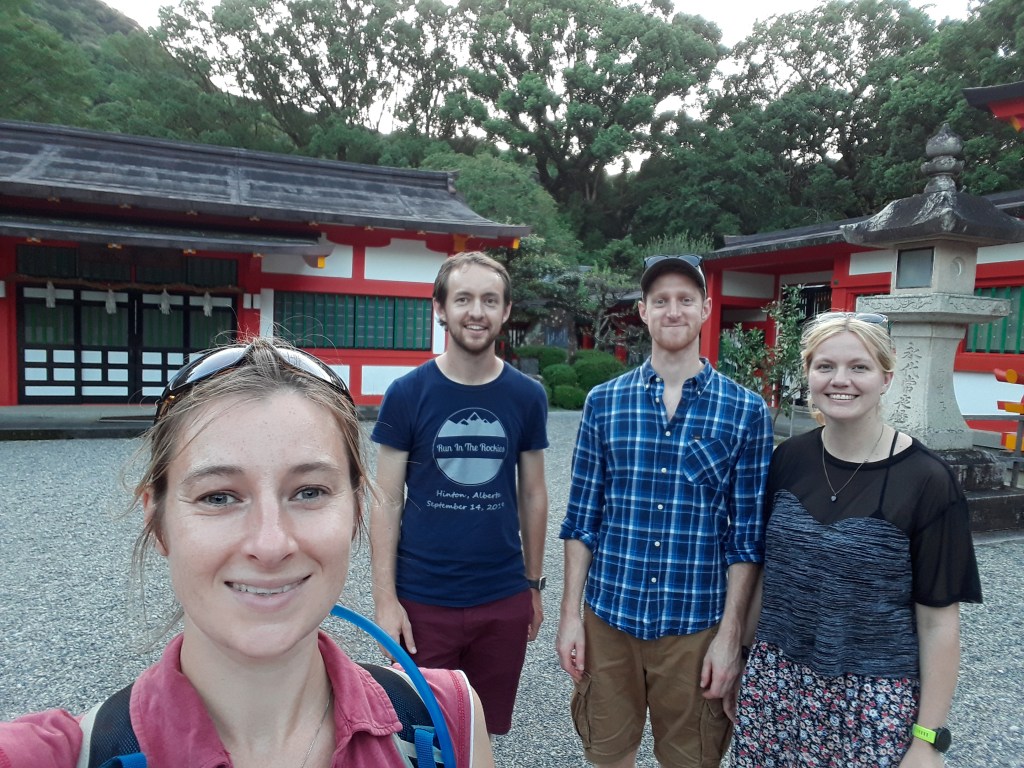
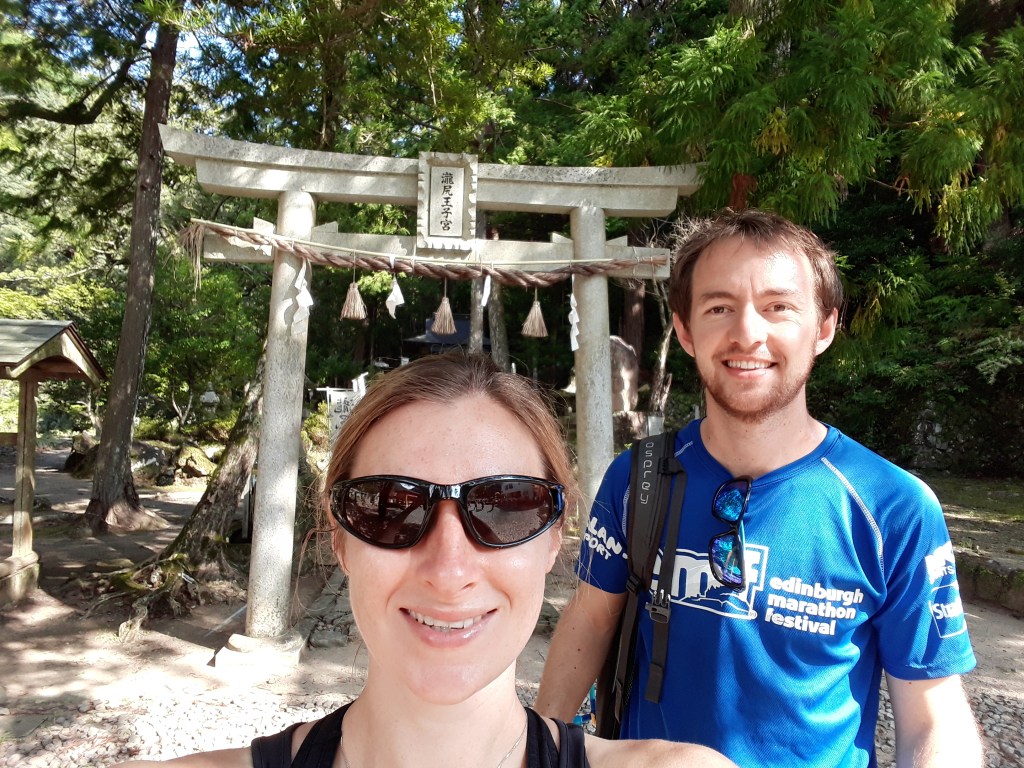
Starting out at Takijiri-oji – our first shrine

Booking the trip was a little more difficult. The only tourism company that books trips is called Kumano Travel. Rather than booking one trip in one go, you have to book all the different elements, accommodation, breakfast, lunch, baggage transfer, side trips all separately, but through the same website (sort of like a build your own trip). The website that you book through is also a little confusing at first too (probably because it has too much information – in a typically Japanese attempt to be helpful), but we eventually figured it out.

Fuelled with five Chiffon cakes from our Café owner host in Tanabe and after successfully working out how to use the public bus (there is a tutorial on the website!) we were ready to hit the start of the trail at Takijiri-oji. The start point, had a visitor centre and was the first shrine on our trip (“oji” means shrine). It was also the first place to pick up a stamp for the stamp books that we had picked up in Tanabe (essential for certification as a true pilgrim). Each stamp was kept in small boxes on pedestals, that looked like fancy bird tables and they formed good targets along parts of the walk.

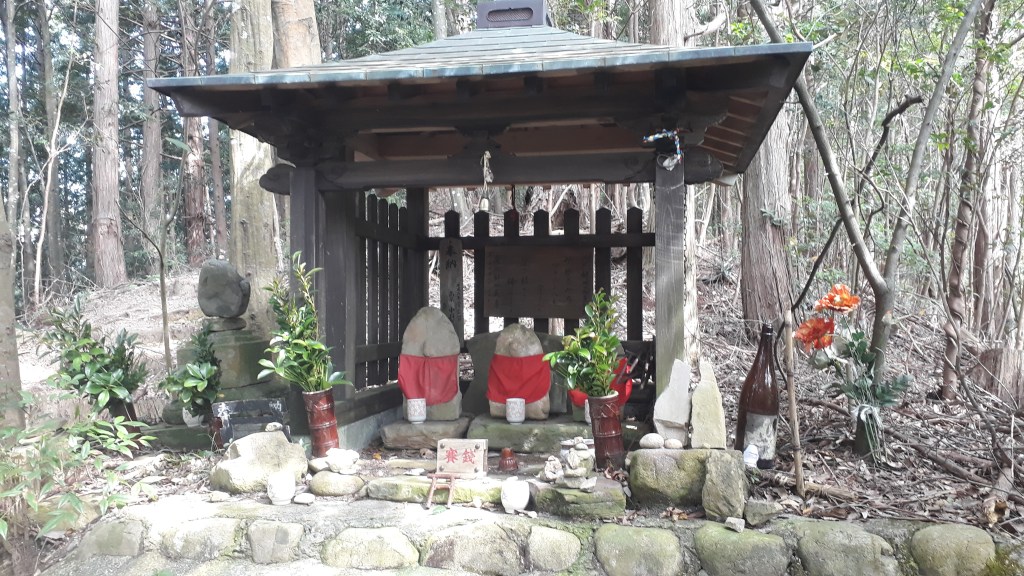
One of the many smaller shrines along the route, where people offered money and Sake. A lot of them looked like this – rocks with red aprons!

The day was hot and very humid and the start of the trail was steep uphill. With Drill Sergeant Piper setting the pace, we were soon sweating as if we’d just stepped out of the shower (well Gareth was at least). Along with shrines, we did have some other distractions from the heat along the way. The first was Tainai Kuguri (or “The Test of Faith”), which was a cave that gradually got smaller until a human sized hole at the end that you had to squeeze yourself through. We both managed it, despite a lot of other pilgrims seeming satisfied that their faith didn’t need testing and walking around!

Getting stamps is fun!

After just over a kilometre, we got caught behind a big school group, whose trail etiquette left a lot to be desired. Fortunately the track widened slightly and we managed to overtake them before the first view point of the day, which we enjoyed briefly, before heading on to keep ahead of the rabble.

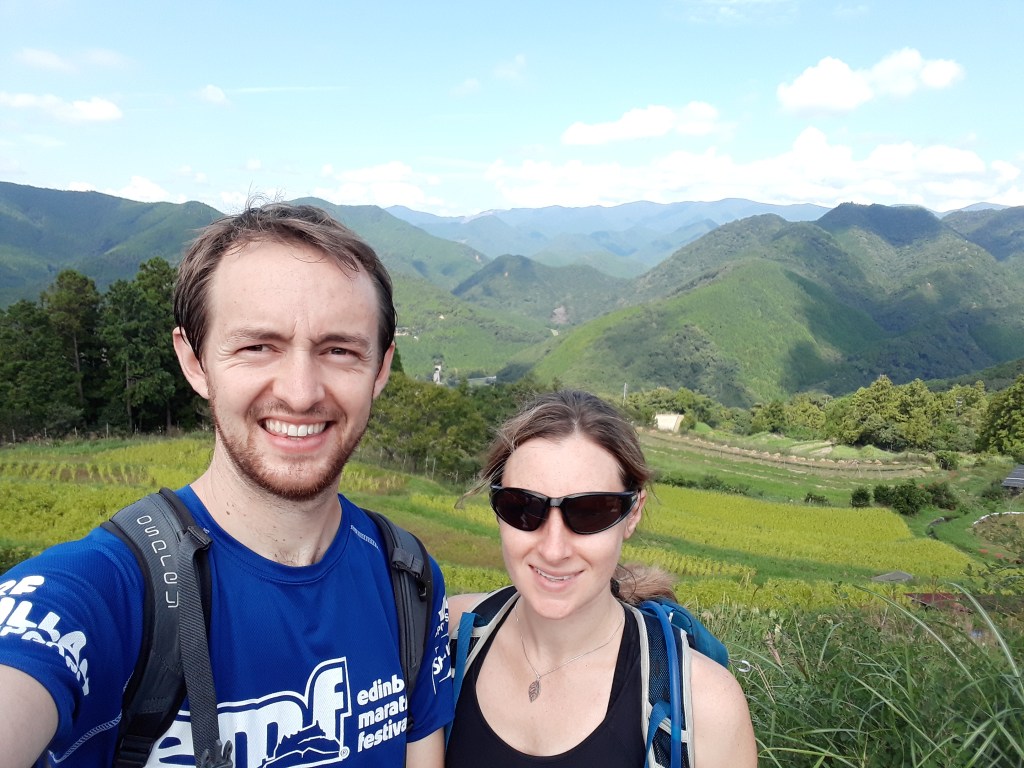
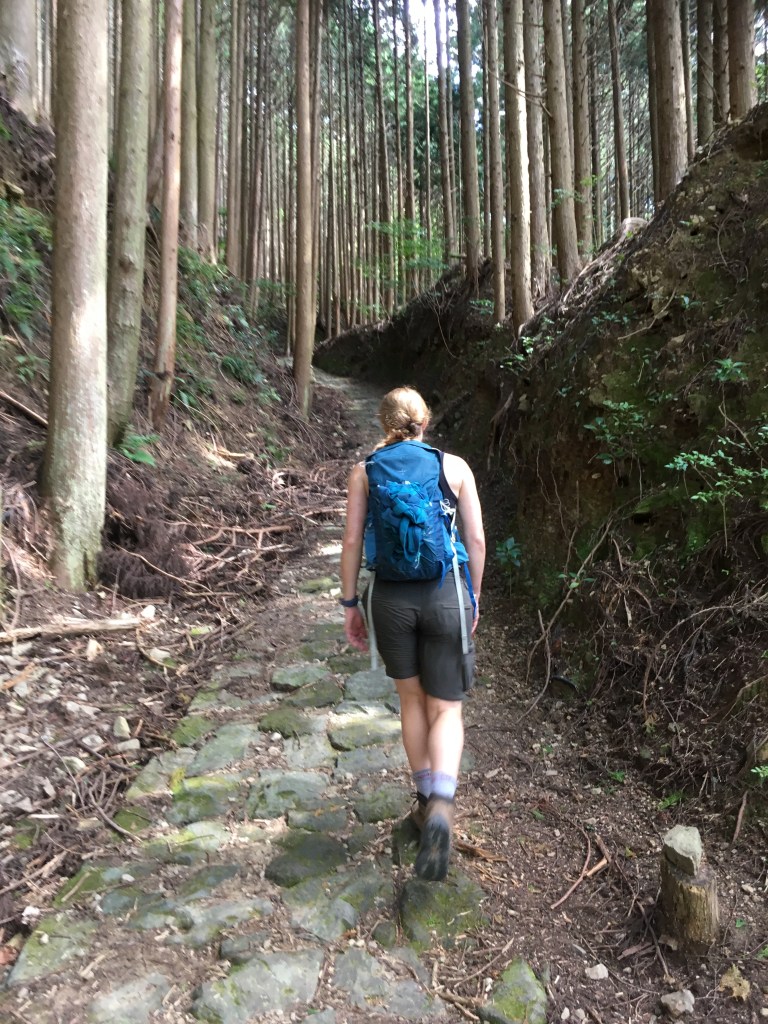
We were now out of the crowds on top of a ridge, which took us up and down as we travelled through the trees, with the sunlight creating shafts of light that made the forest look stunning. We dropped briefly into the village of Takahara, for another amazing view (and a stamp).

The view from just above Takahara

We then began a longer but shallower climb up through slightly denser forest. After passing a couple more shrines and a lunch stop at Uwadawa-jaya teahouse remains (not much left) we started to descend again into a valley and passed over the river.

Into the dark forest – looking out for the Gruffalo

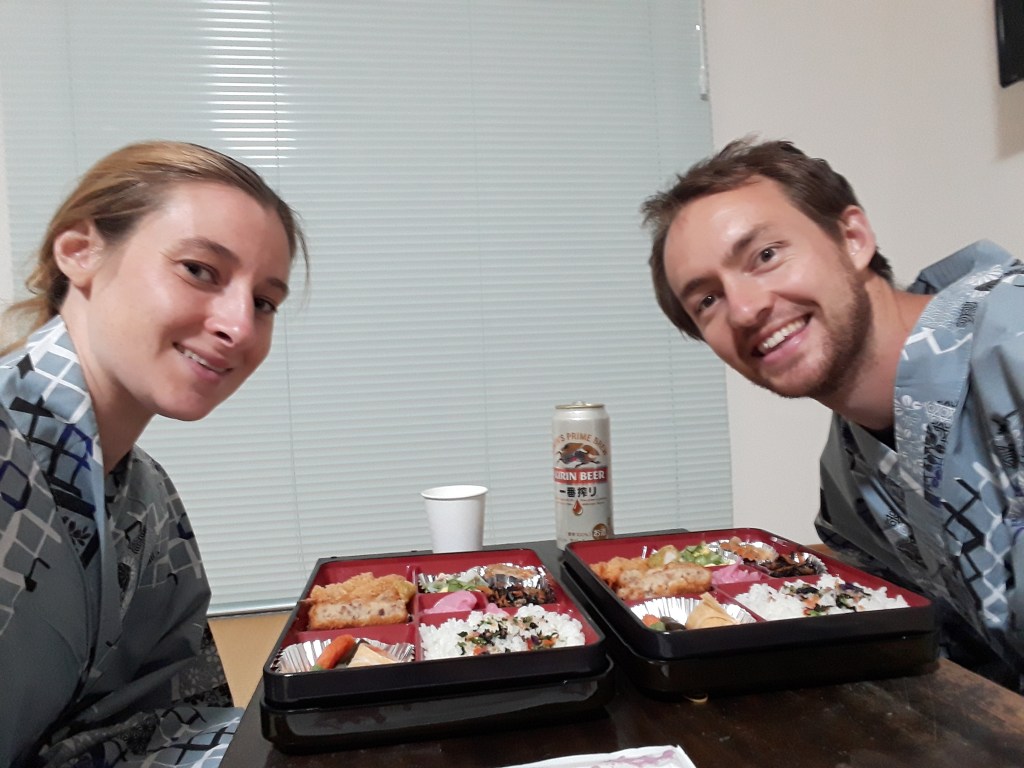
The rest of the afternoon was very pleasant with the main highlight being a view of the village of Chikatsuyu, where we would be staying the night, from the adjacent hillside. In cherry blossom season it much be even more spectacular. Our final stamp of the day (number 7) was on our way into the village and just next to where we needed to pick up the keys to our Minshuku (Japanese style B and B). We were very glad we arrived when we did as an hour later the heavens opened as a Typhoon passed by to the north. We had a relaxing evening which included a hand delivered supper from our host, which was a selection of Japanese style foods served in something called a Bento Box. It was delicious and we ate dressed in the traditional Japanese Kimonos that we had been supplied with.

Bento Boxes for dinner at Minshuku Momiji-no-sato

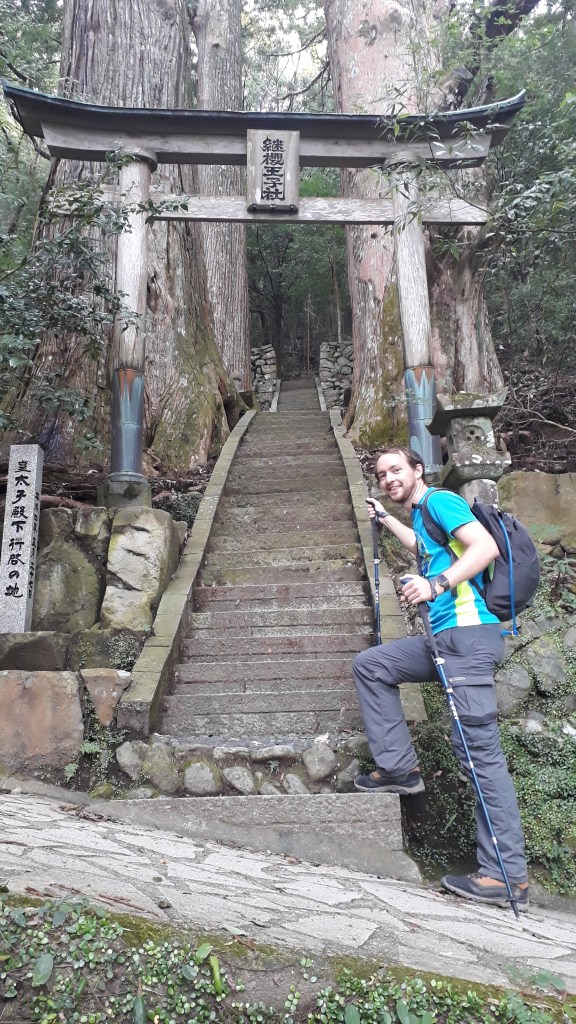
Day 2 was set to be a much longer day and we had found out from the previous day that although we were faster than most of the guides suggested the heat, slippery cobbles, steep hills and stopping for stamps, photos and views made some sections pretty slow going. With slightly cooler, cloudy conditions and sections of road making the uphill easier we made good progress. We stopped briefly to explore the first shrine, Tsugizakura-oji, which was built into the hillside and lined with tall pine trees and looked very impressive.

The steps up to Tsugizakura-oji were a pilgrimage in themselves

6.5km in, we got to a place where the path took a detour from the original route. In 2011 a Typhoon had caused landslides that had destroyed the path, so an alternative route over “Detour Pass” was found. It was not as well marked as the main path, which has markers every 500 meters and there was a peculiar section that was fenced off and the only way to get in was to go through a net, which opened like a secret door once you knew where to look. We assume that the fence was to keep the dinosaurs in, so we tried to get over the pass as quickly as we could!

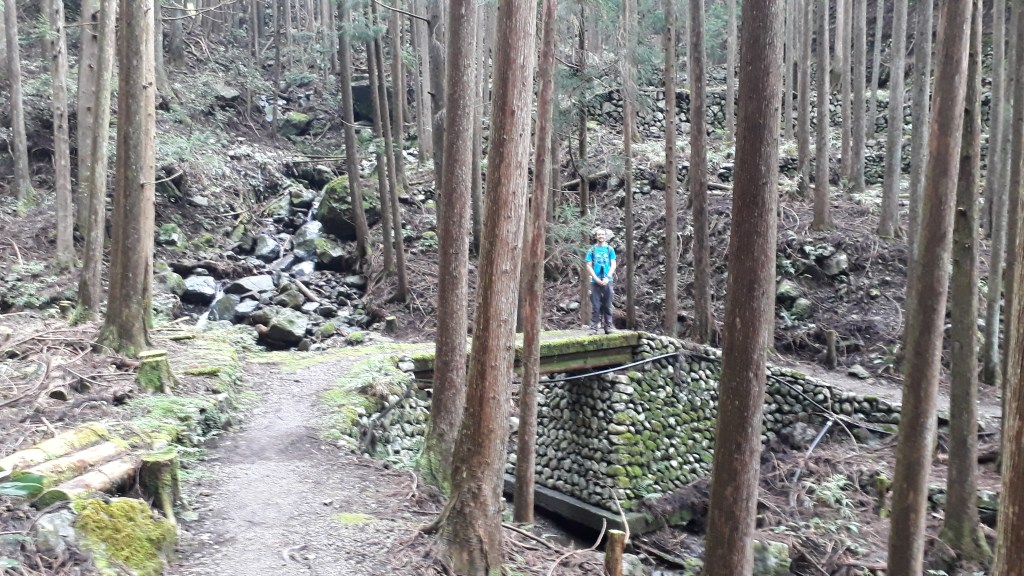
Back on the main trail Gareth posed on a bridge for a photo and as he did so spotted a sign that had been hidden by a rock from the other direction that denoted a short detour to a shrine (and more importantly another stamp)!

Bridge photo!

A bit further along, after descending the slightly slippery Mikoshi-toge Pass, we came to another detour, which this time was unexpected. Typhoon damage meant we would have to add extra distance on our walk and that we would have to do an out and back section of the trail if we wanted to get all of the stamps (which, of course, we did!). Having stopped at the very pleasant Hosshinmon-oji for lunch, we were back on more road until we got to the next shrine at Mixunomi-oji, which was supposed to heal aching backs. We both made donations at this one!

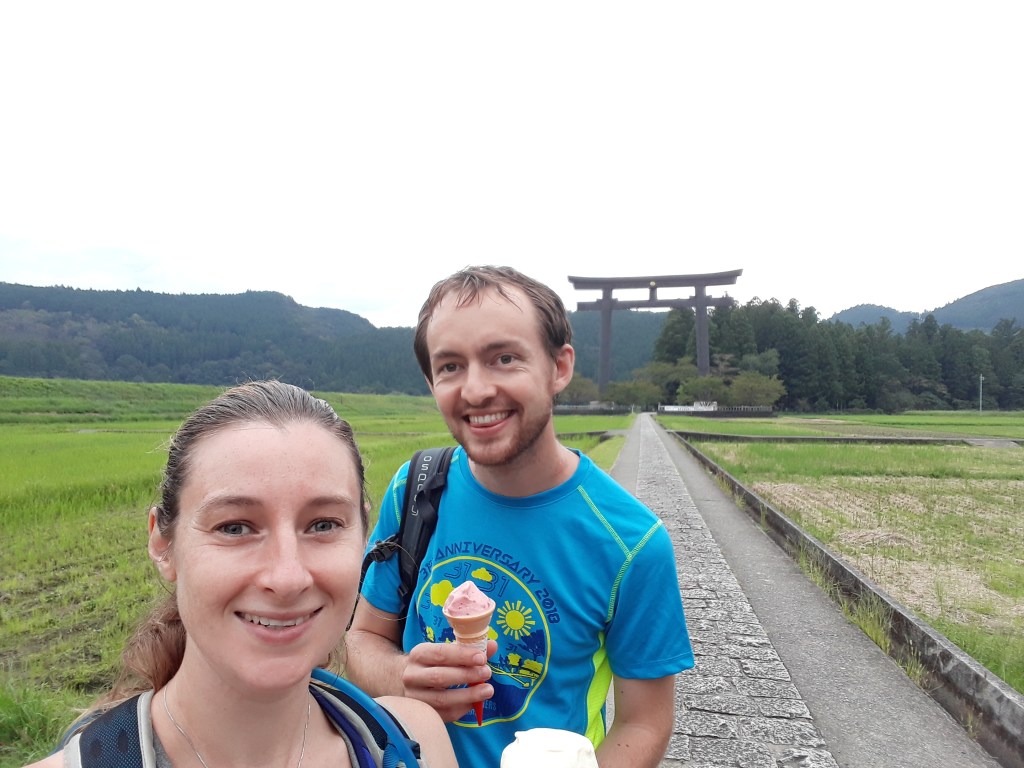
The afternoon was full of more great landscapes. At Fushiogami-oji we saw right down into the valley (and the hills beyond) we were aiming to arrive in at the end of the day (this was also the only tea house we saw on the route that wasn’t just the remains). Further along we got a stunning view of the Oyunohara Torii Gate, which is the largest in Japan. This was our first view of it, we would see it up close later and it looked even more impressive.

The view point to the Oyunohara Torii Gate

The Torii gate was part of the Kumano Hongu Taisha temple complex. As we entered the complex after our long walk, you could really get a sense of the awe all those pilgrims over the 1000’s of years have felt. For the first time we did the full Shinto ritual at the temple – it felt appropriate.

The shrine at Kumano Hongu Taisha where we completed one of the official pilgrimages.

The Kumano Hongu Taisha complex and giant Torii gate were so impressive that we spent a little too much time there (which may have also had something to do with Claire’s insistence that we needed an ice cream break). This meant that we had to race the daylight for the last 3km of our hike and finally arrived just as it got dark (turned out the sun sets very quickly in the hills!) to a fantastic minshuku in the Onsen (Japanese hot springs for bathing) village of Yunomine. After a soak in our own private onsen and a fantastic meal with about 1000 different plates we felt almost recovered after our long hike.

Oyunohara Torii Gate -Ice Creams!

Day 3 was originally planned to be a day where we could enjoy the onsen in the morning and then complete the short section of walk later in the day. But as a second typhoon was forecast for early afternoon, we decided to get going as quickly as possible to try and avoid it. The onsen would have to wait! Unfortunately Gareth’s walking poles forgot to join us for the bus ride to the beginning of the walk, which led to some interesting (eventually successful) jaglish phone calls to reunite them with the rest of our luggage transfer before we could get started on the trails again.

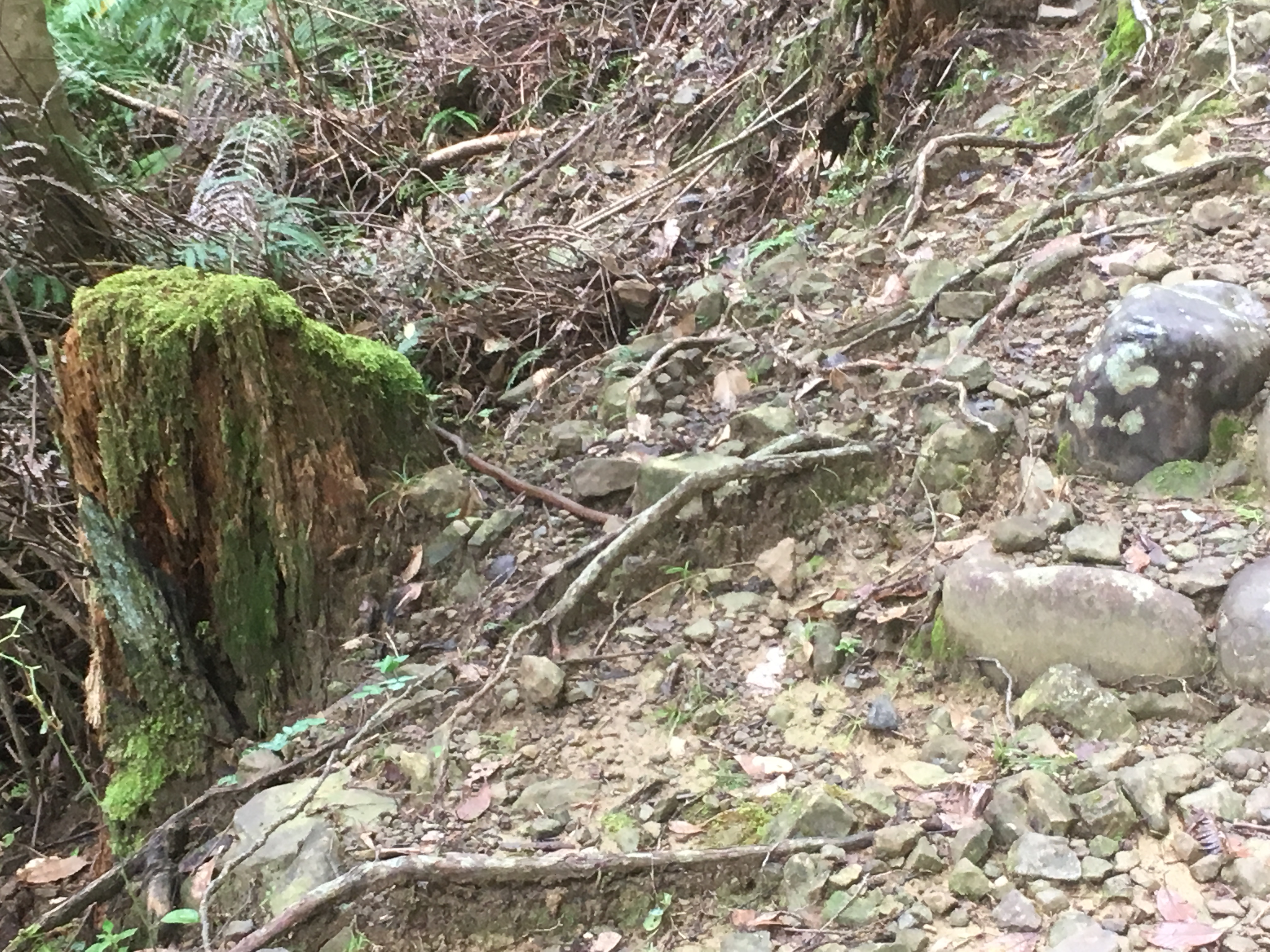
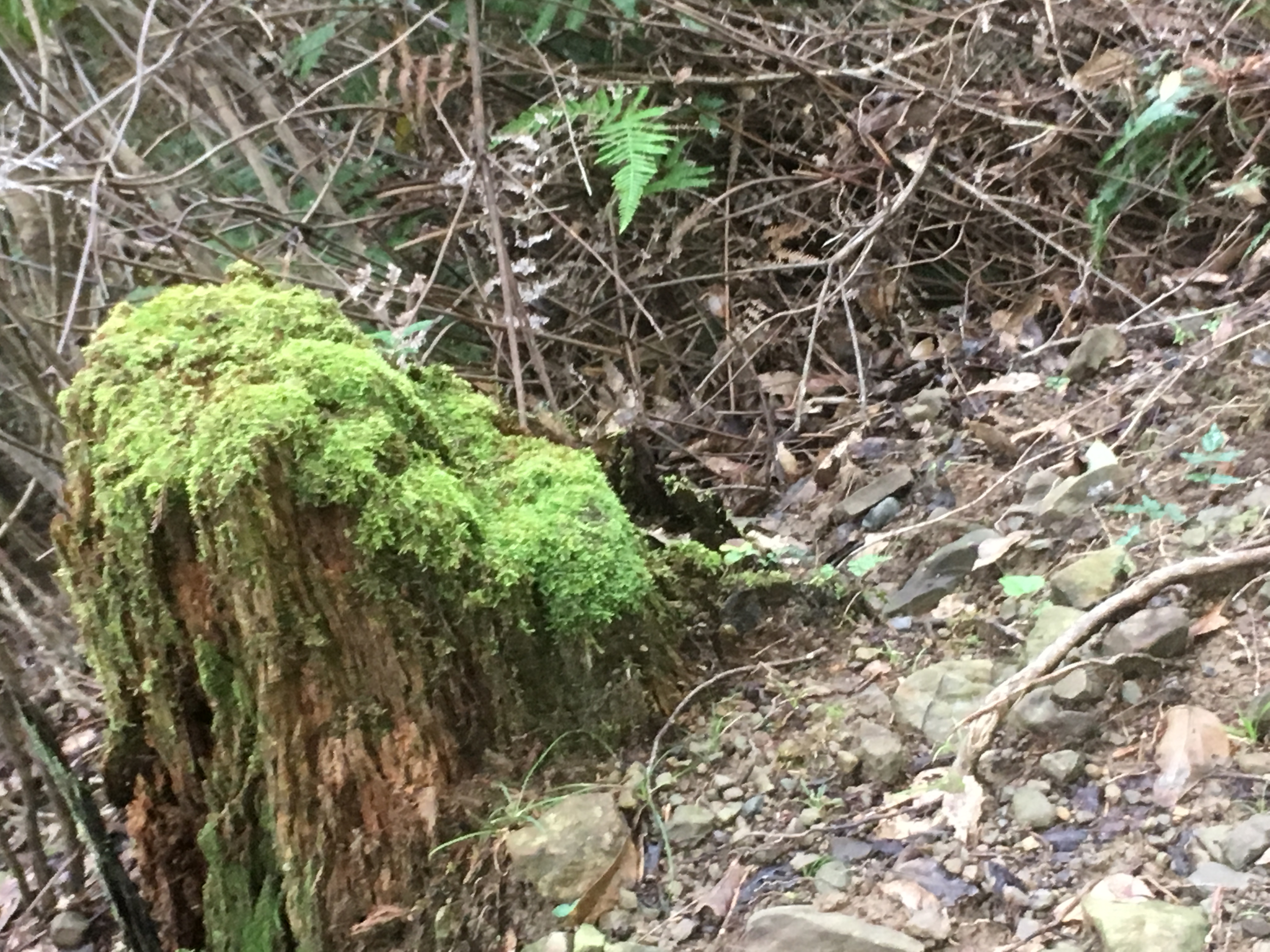
We eventually got going, and were heading uphill for the first half of the day. Claire was walking in front not paying particular attention, when Gareth suddenly shouted her to stop. Can you spot the difference in the photos below to see what Gareth had noticed (note that the photo on the right is more zoomed in – it’s OK it wasn’t poisonous and both it and we escaped unharmed).

For those that can’t tell the brown stick to the right of the mossy stump in the first picture is actually a snake that we disturbed from its morning sunbathe.

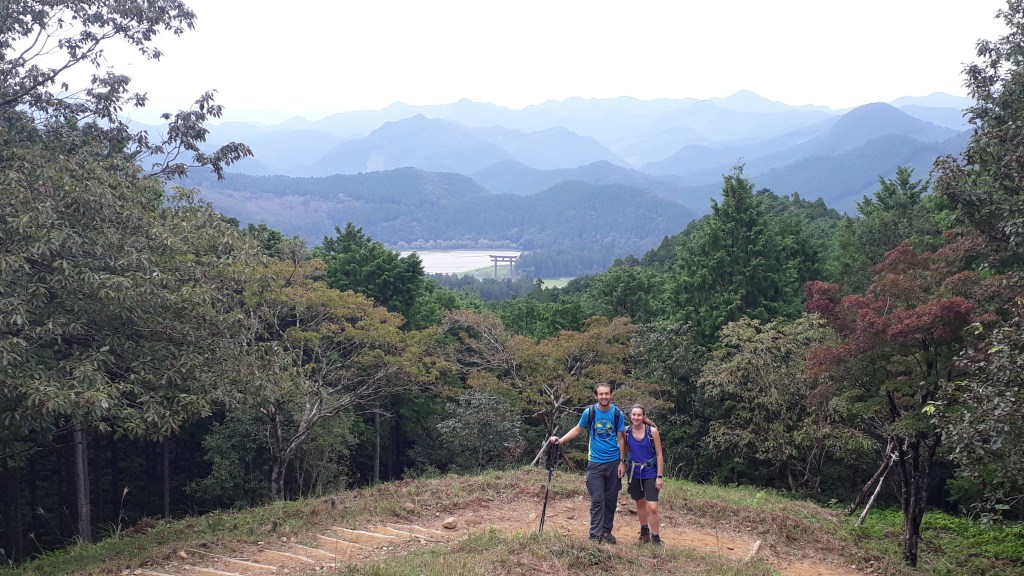
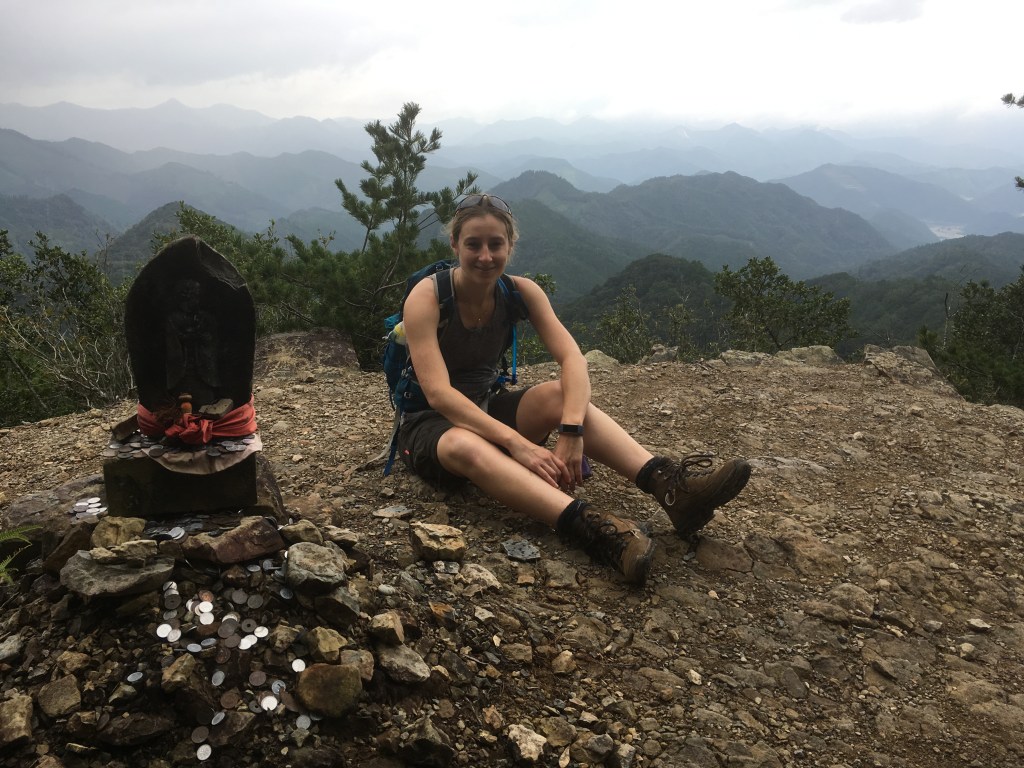
We walked in the trees all morning, aware that we were nearing the summit but never quite getting a view of our surroundings. That was until we reached the summit and the trees parted to reveal the spectacular ‘view of 36000 peaks’ across the Kumano mountains (in true Japanese fashion the sign was quick to confess that there isn’t actually 36000 of them!). Just as we took our final photo the clouds rolled in and the heavens opened – seems like we got here just in time!

The view of 36,000 peaks

Fortunately the rain was just a precursor to the typhoon rains and didn’t last and we spent the next few hours gradually losing altitude. While there was nice walking scenery, there were fewer highlightsthan on previous days, with only a couple of stamps and teahouse ruins. We did stop for a late-ish lunch at the last teahouse remains and there was a very fine view.

After that we had a steeper descent until we appeared out of the forest and over a river into Koguchi, a small village where the old school had been converted into accommodation for Kumano Kodo pilgrims. We enjoyed another onsen, and spent a relaxing evening listening to the driving rain outside.

Bridge over the river into Koguchi

A crazy 24 hours in Osaka

If you’re going to have a wild night out in Japan then Osaka is a good option. And we just happened to be heading here on the afternoon of the Wales vs Australia Game…

We arrived in Osaka mid afternoon, and after a walk through Tennoji Park (where the rugby fanzone was, but unfortunately not open that day as the match wasn’t in the city) to our hotel in the Shin-sekai district it became abundantly clear that we had entered a very different world to the temples and culture of Kyoto we had just left. The district contains the Tsuten-kaku tower, which is sort of like a futuristic Blackpool tower, that was built in the 50s and has been left to rust since. The lonely planet described the area as “cutting edge” a century ago, but now it “mixes down-on-its-heels with retro cool”. Quite apt! The parts of Osaka that we saw were pretty wild. Huge neon signs, random cartoon graphics exploding from every wall against back drop sounds of laughter and Pachinko (Casino) machines. The streets were alive!

The vibrant, wacky streets of Osaka.

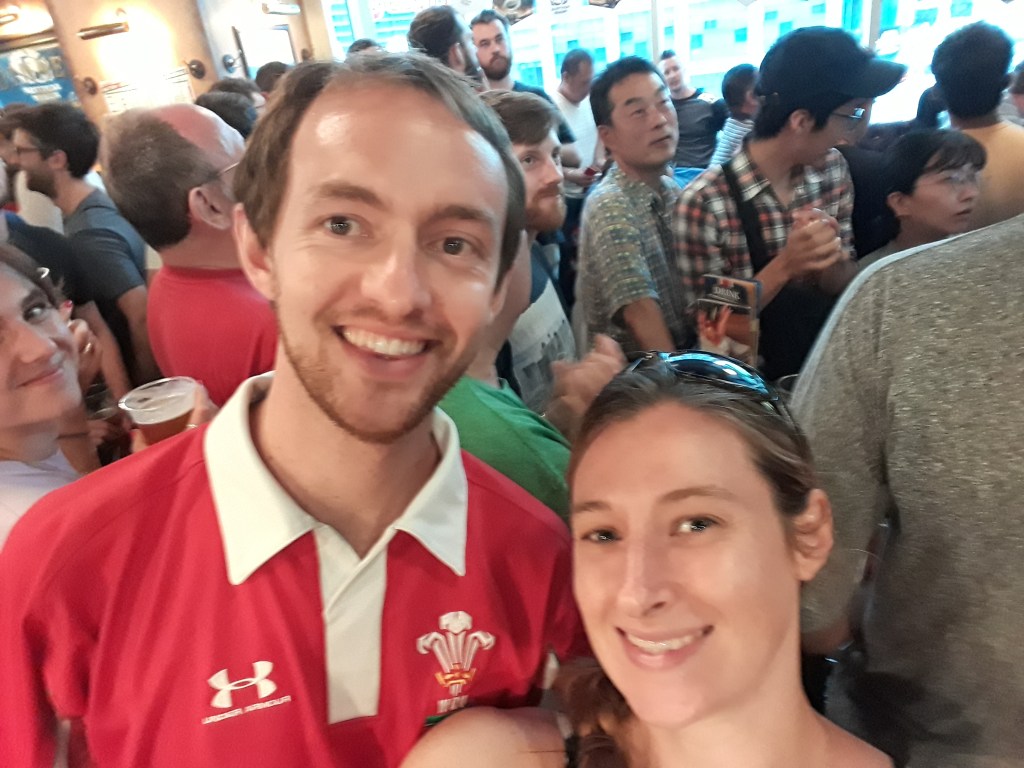
After settling in to our much more ordinary hotel we headed out to a ‘Hub’ bar, a chain of bars which we discovered a) were all across Japan (including Kyoto), b) are the perfect places to watch the Rugby and c) that half of the world’s Rugby watching population already knew this. We joined a huge contingent of Welsh supporters (definitely outnumbering the Aussies; partly as it was propped up with other home nations fans and Kiwis) and realised we were in for a treat of a game after a Wales drop goal 90 seconds in.

Come on Wales!! (What a shiny forehead)

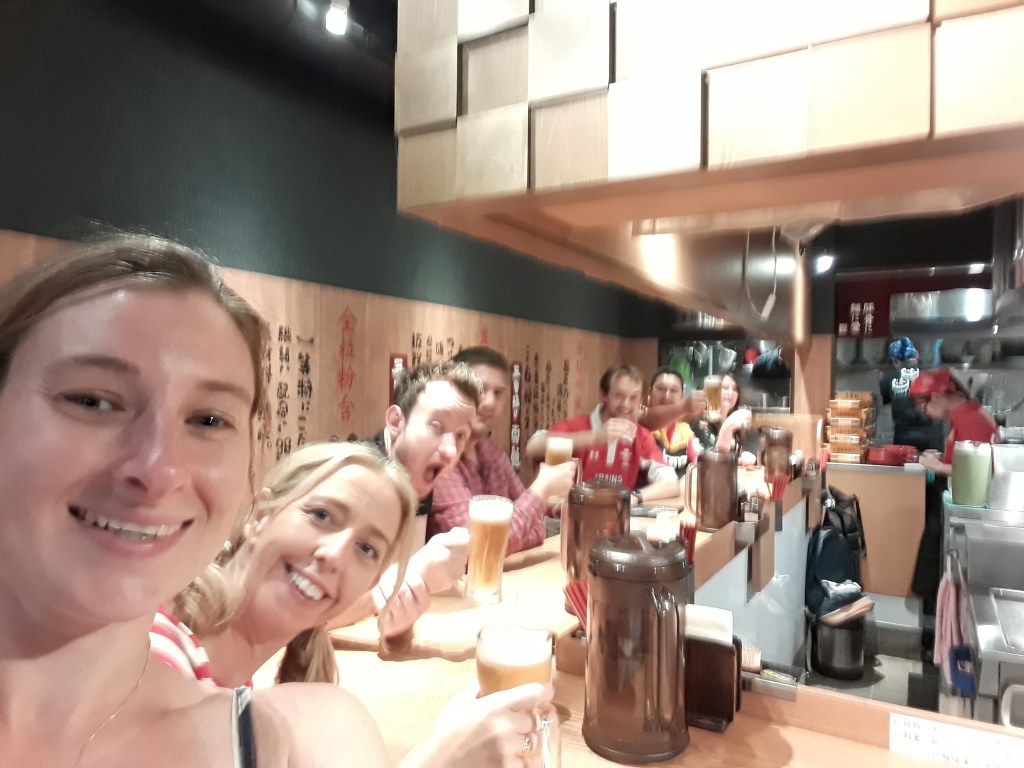
Over the next two hours we helped all our new best friends drink the bar dry as we watched Wales power to victory. The following food and karaoke bar tour (picking up new best friends as we went across the city) proved to be an excellent way of getting to know this crazy, fabulous city.

Team Ramen ‘n’ Karaoke

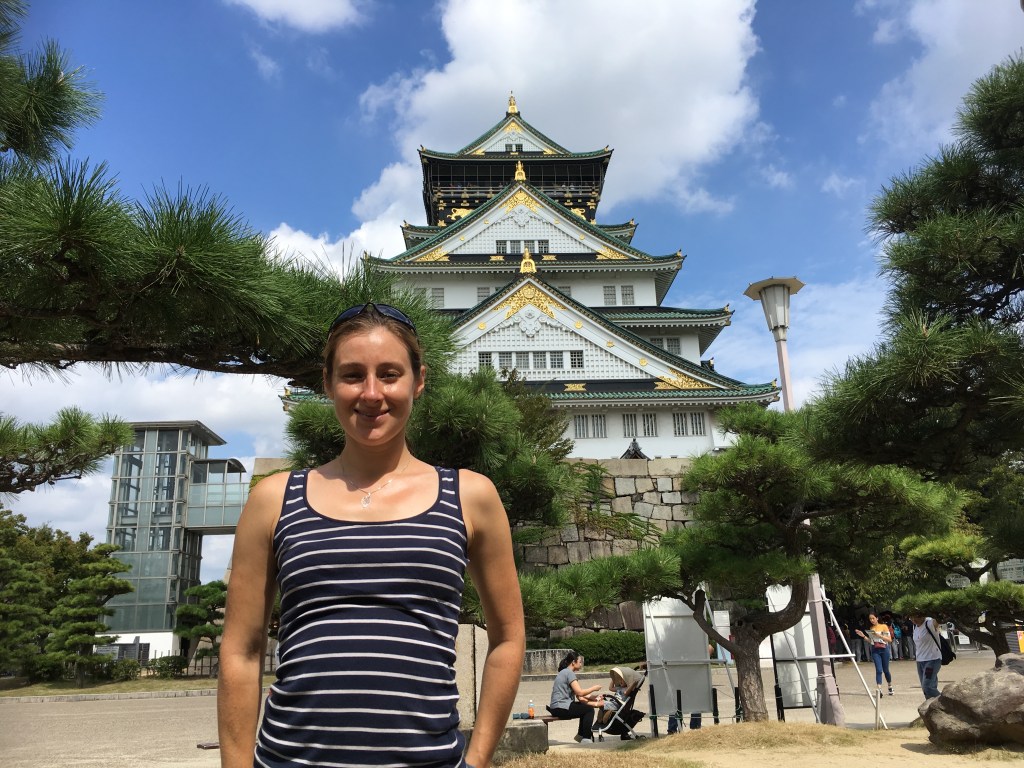
Funnily enough the next morning was the slowest start to the day of our trip so far. We did however, make it out to Osaka Castle for a late morning stroll. The castle is beautiful and is perched on top of hill with large castle walls, moat and gardens separating it from the rest of the city. It was a hot morning and we were enjoying the shade of the trees in the Citzens Forest when about 20 Japanese bird-watches got very excited by a brown bird in a tree near us. We obligingly got our cameras out and joined in with their bird paparazzi trail, as the bird hopped from one tree to the next. For all we know it was a sparrow…

Osaka Castle seems a world away from the streets the other side of the moat!

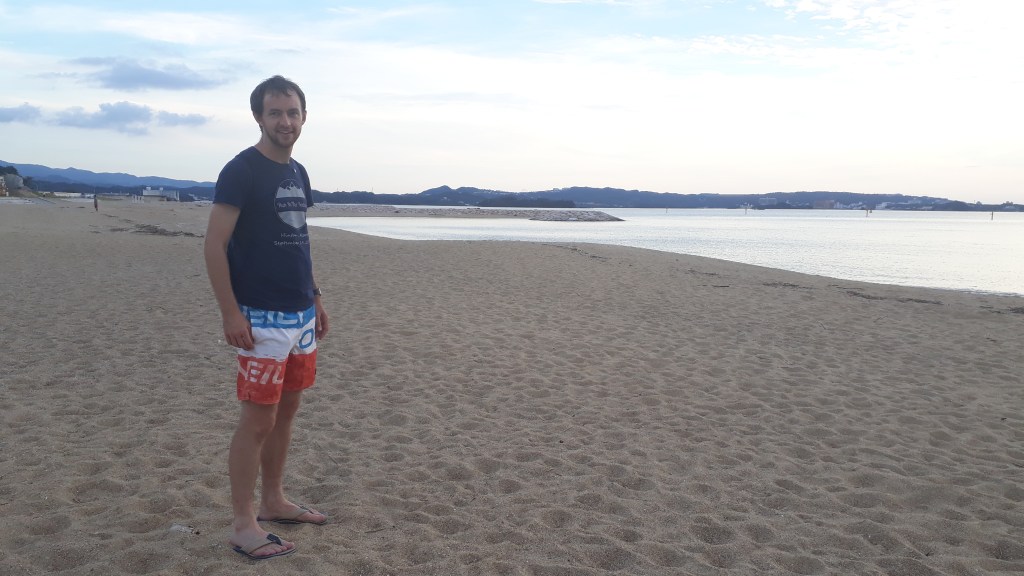
That afternoon we said goodbye to Osaka and caught a train down the coast to Tanabe, a small seaside town that would be the starting point for our next adventure. We checked in to our very traditional Japanese overnight stop and headed out to the beach. The beach was empty and the sea (unlike the Canadian side of the pacific) warm. We swam and sunbathed on the beach as late afternoon turned to early evening. A relaxing end to a great, crazy 24 hours!

Tanabe beach. Japan has some spectacular beaches which all seem incredibly under-utilised. A new promenade was being built here though so we reckon it’s going to be the new beach destination of choice – so get booking those flights quick!

Let’s go to Kyoto!

Kyoto in one trip (or one blog post – make sure you’ve got a cup of tea with you for this one!) is almost impossible simply due to the sheer volume of temples, history, culture and scenery. Even we recognised that we were never going to fit all the major sights into our three days in the city. You can have too much of a good thing and temple overload is a common aliment for the tourists of Kyoto, so we chose to plan our days here to maximise variety rather than focus solely on the temple highlights.

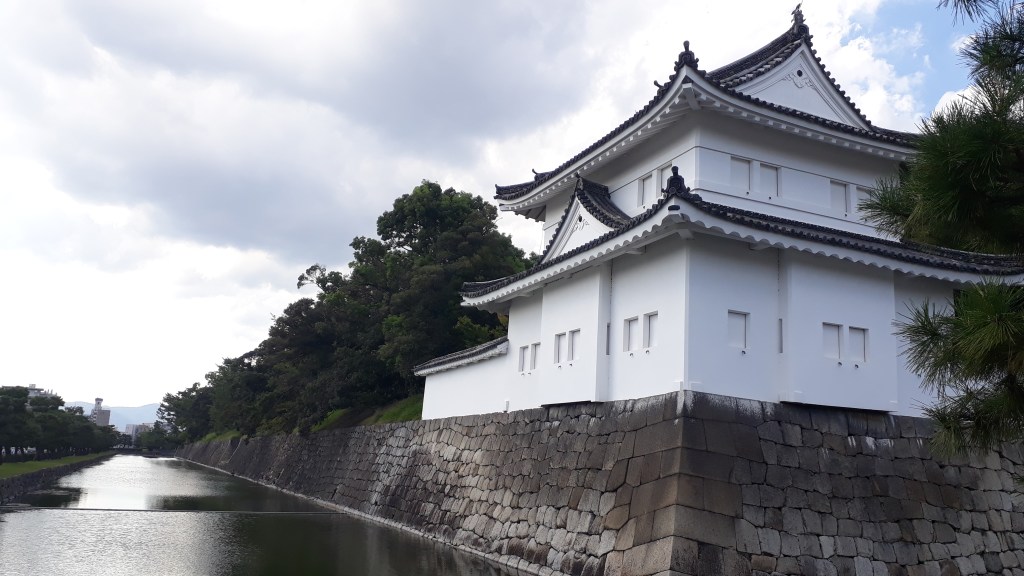
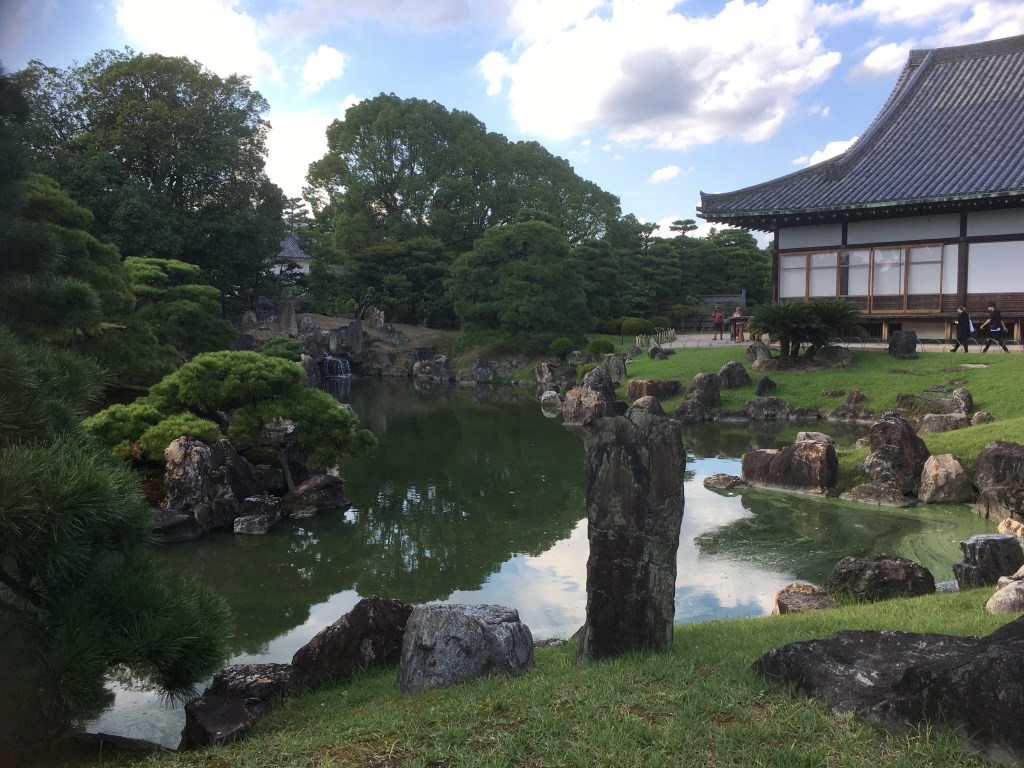
We arrived in Kyoto early afternoon and after ditching the bags at our hotel headed to Nijo-jo Castle, the historical home of the Shogun of Japan (Commander in Chief, head of the military, appointed by the emperor but had all the real power in Japan until 1867). It was a military palace and is one of the only surviving castles of it’s kind (wooden buildings have a tendency to burn down). We confess to knowing little about Japanese history before we came so enjoyed the opportunity to learn more about the buildings, customs and various factions of power over the couple of hours that we were there. The moat and its resident carp were also really impressive, but while there are nice parts of the garden, we did see better gardens elsewhere in the city and surrounding area.

One of the more interesting parts of Nijo-jo gardens

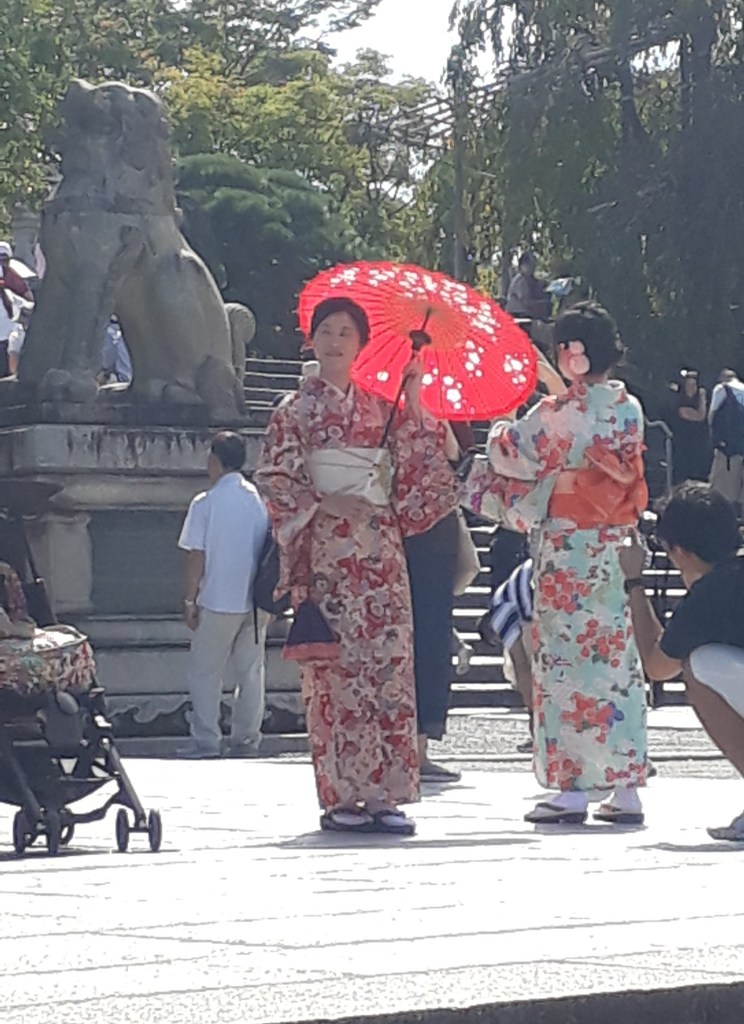
The other point of interest, that was replicated throughout our stay in Kyoto was the number of Japanese in traditional kimono and geisha dress. In part at least, this was due to the many ‘kimono rental’ offers near many major sights as the number of kimono’s increased at these locations. This, and the narrow photogenic streets certainly made for interesting walks through the city which we thoroughly enjoyed (until the heat and humidity got too much!) In the evening we meandered through the city and across the Kamo-gawa river to one of the few places we could find showing rugby in Kyoto (no games in Kyoto = no fan zones) that evening. At this point we discovered another cultural difference in Japan: drinking culture. The Japanese are very controlled when it comes to their drinking, making them rather unprepared for the world’s population of rugby fans. One 40 minute queue to the only barman later, and our single pints had to last us the game!

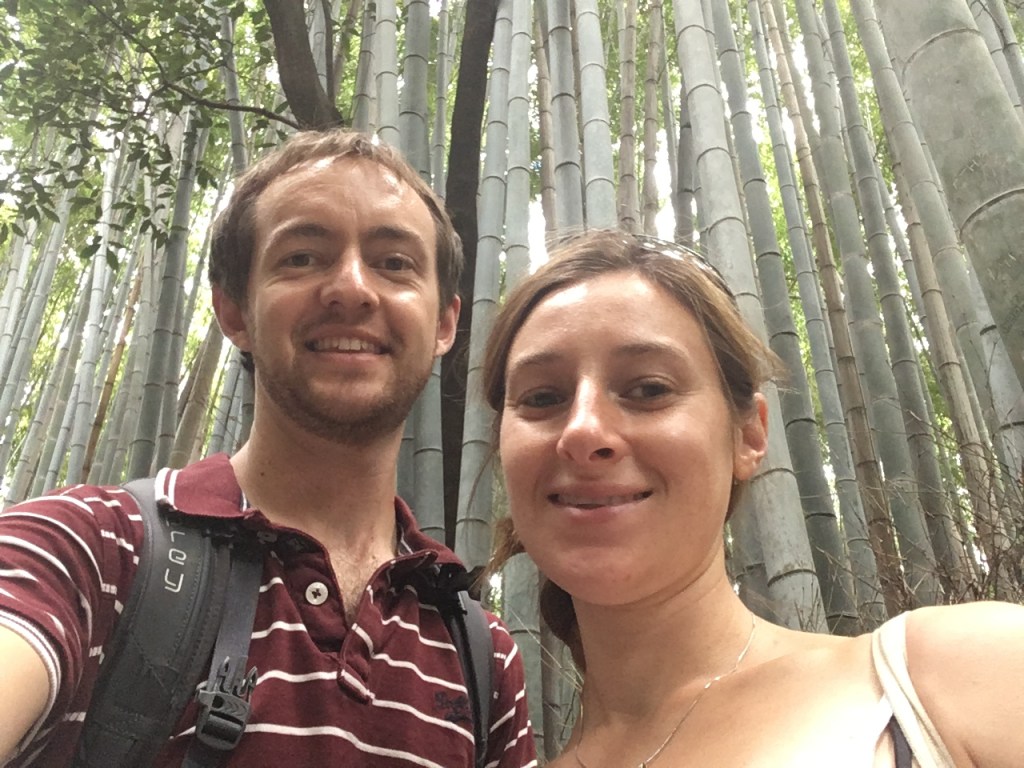
The next morning we took the 20 minute train journey west to the Arashiyama region on the fringes of Kyoto. We wandered through the Tenryu-ji temple complex (but did not go in) onto the famous bamboo groves. Whilst we did see other examples of this later in our trip, there was nothing on this scale and despite the already busy paths it was definitely worth a visit.

Arashiyama Bamboo Grove

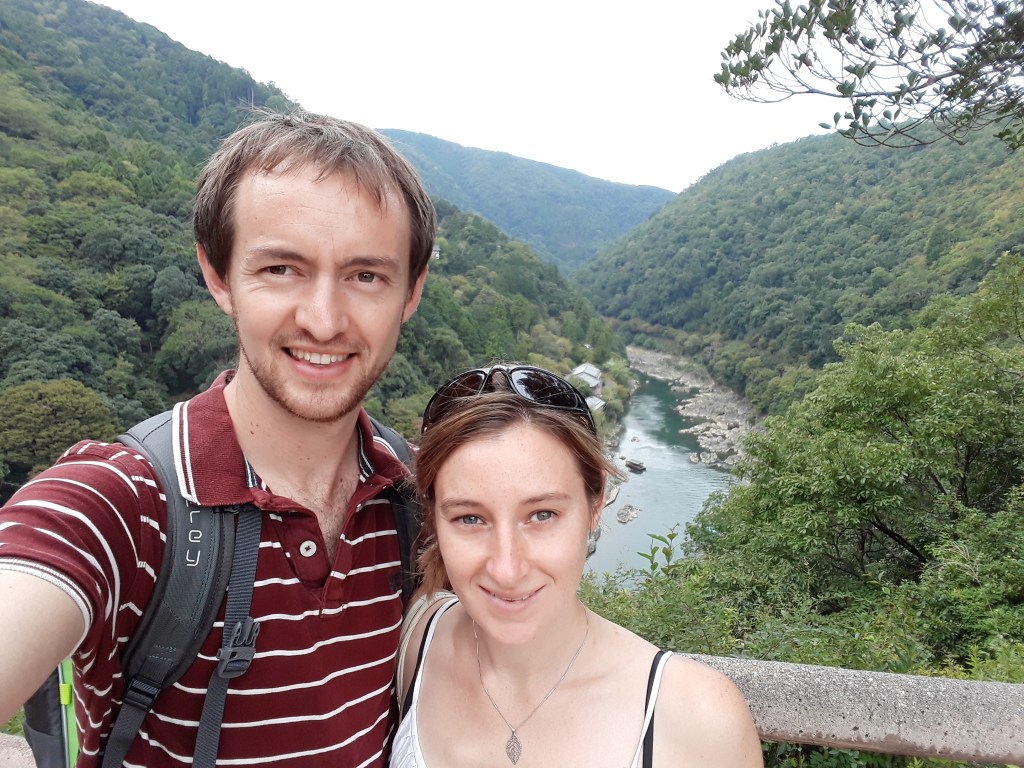
We escaped the crowds by following this up with a stroll through the Kameyama-koen park which included a fantastic viewpoint at the top of the park looking across the Katsura-gawa valley, which we eventually descended to and watched boats drift along the river as we debated what would be our next activity.

Katsura-gawa Valley

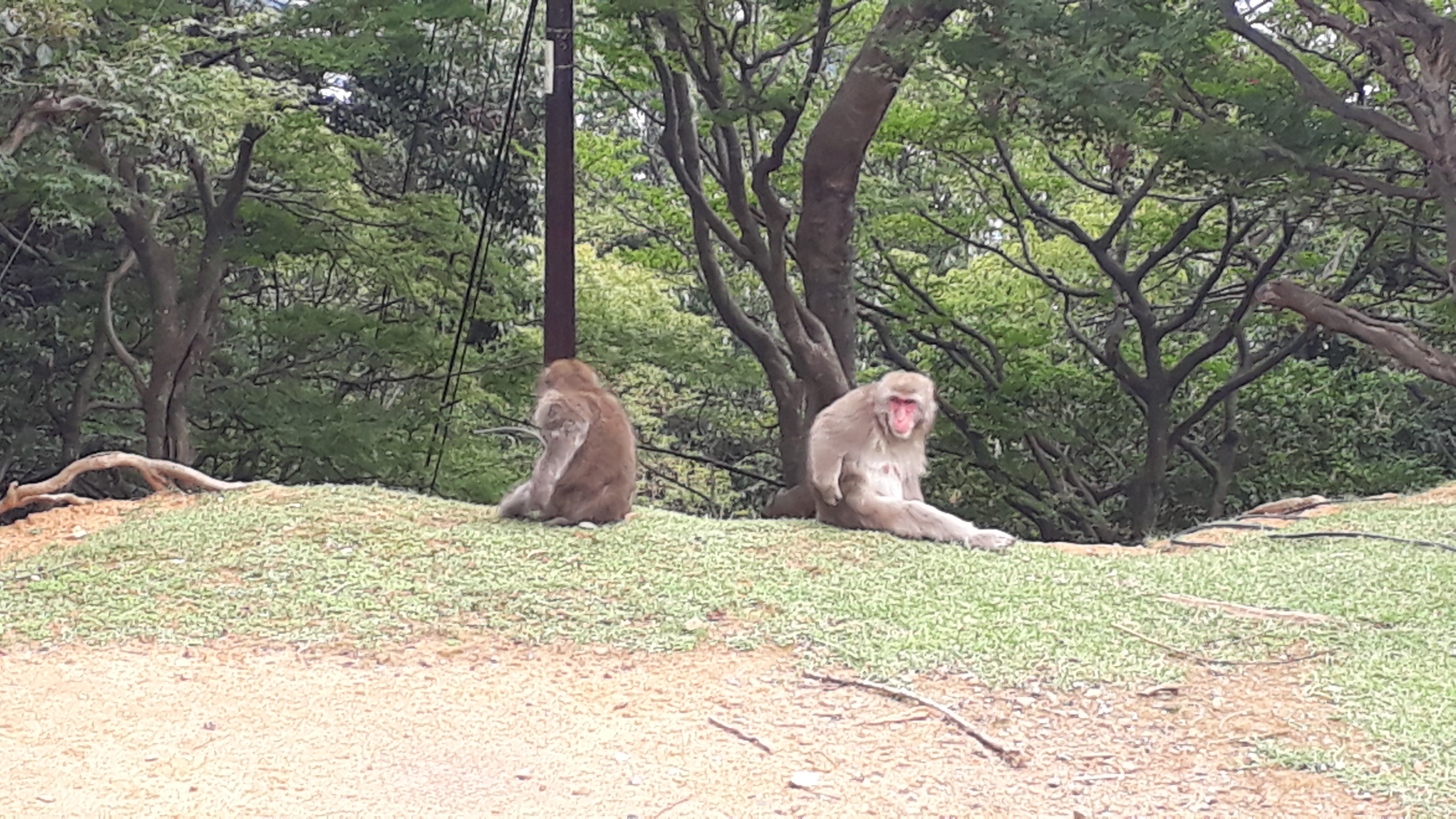
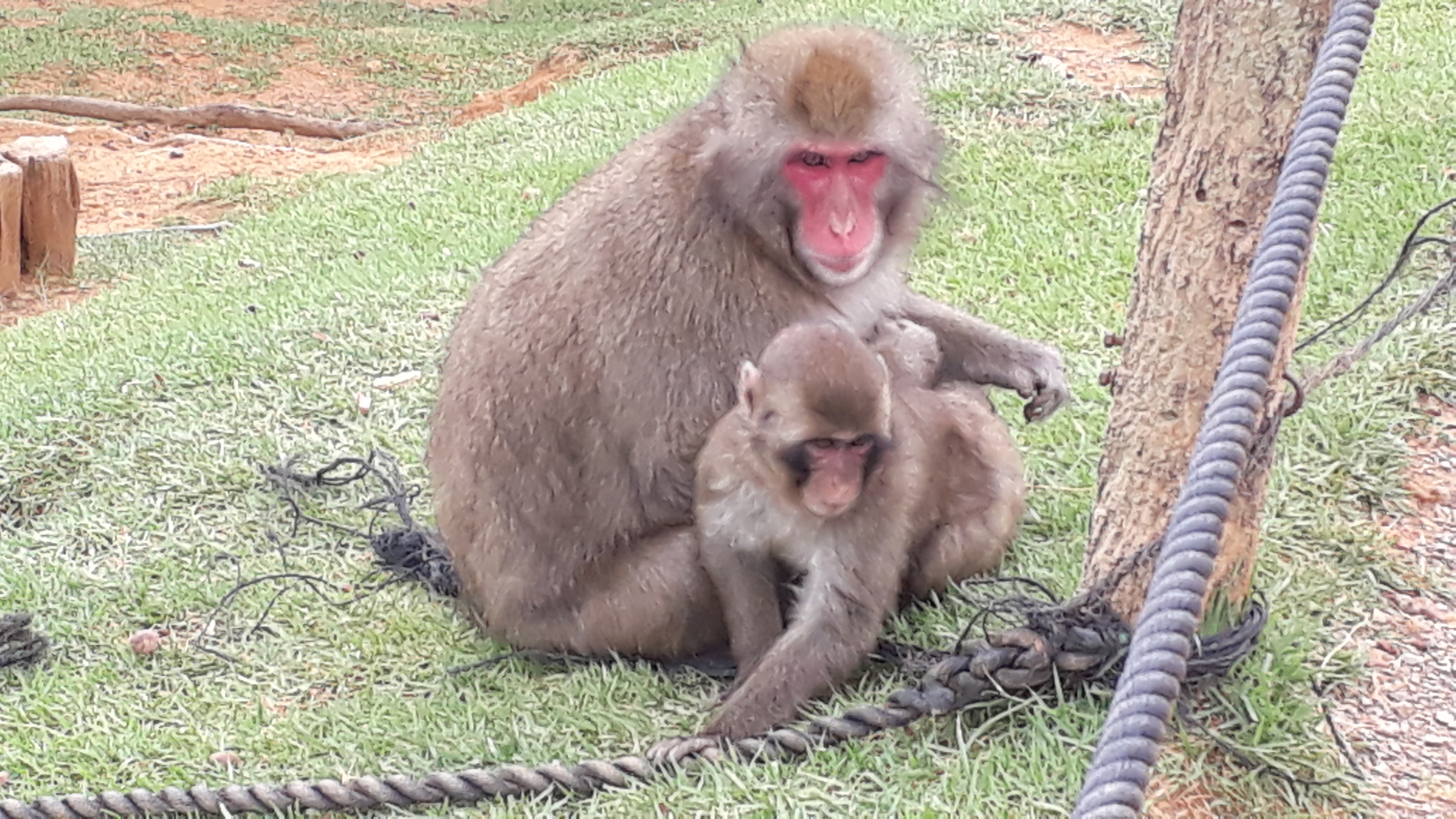
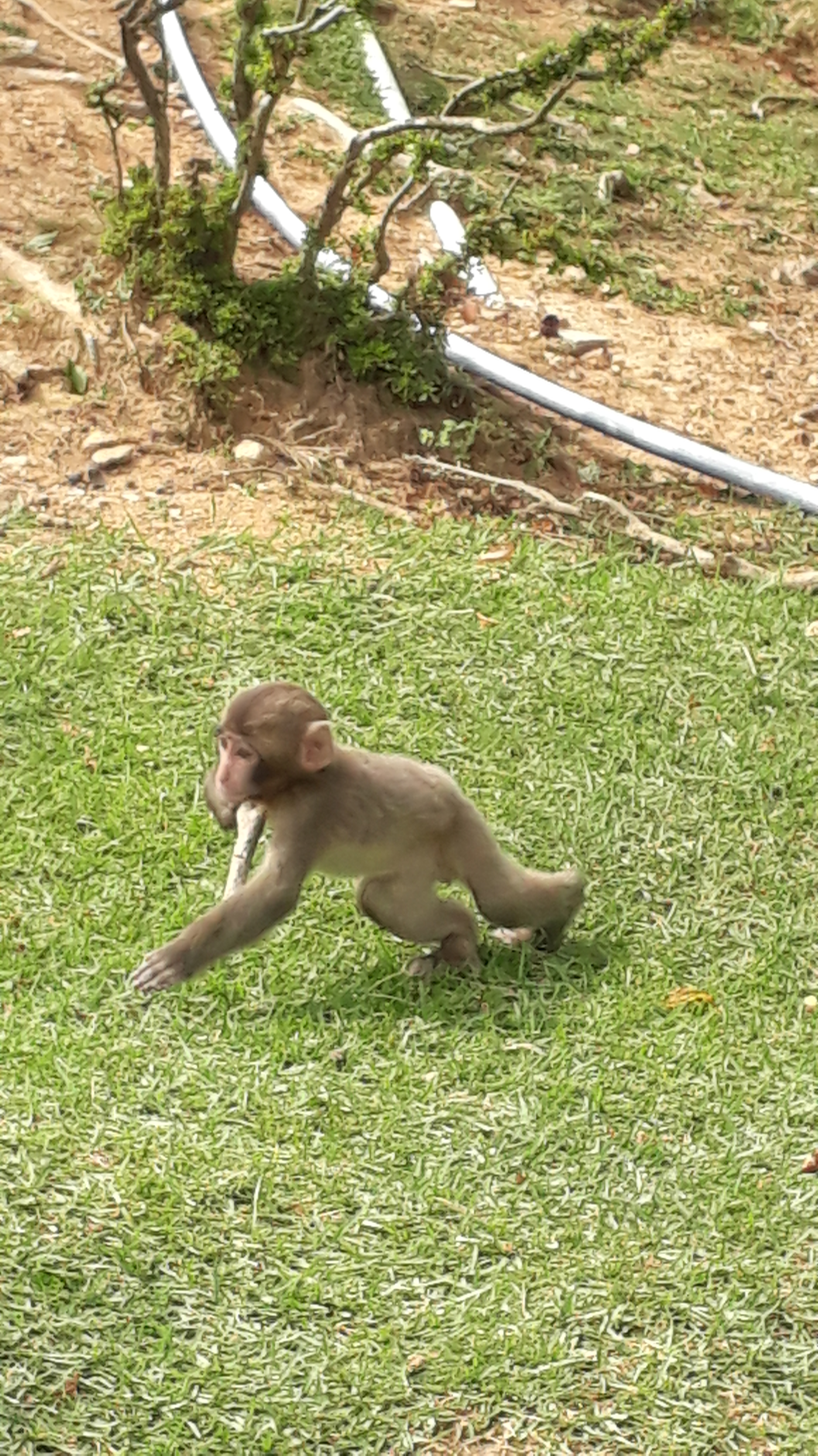
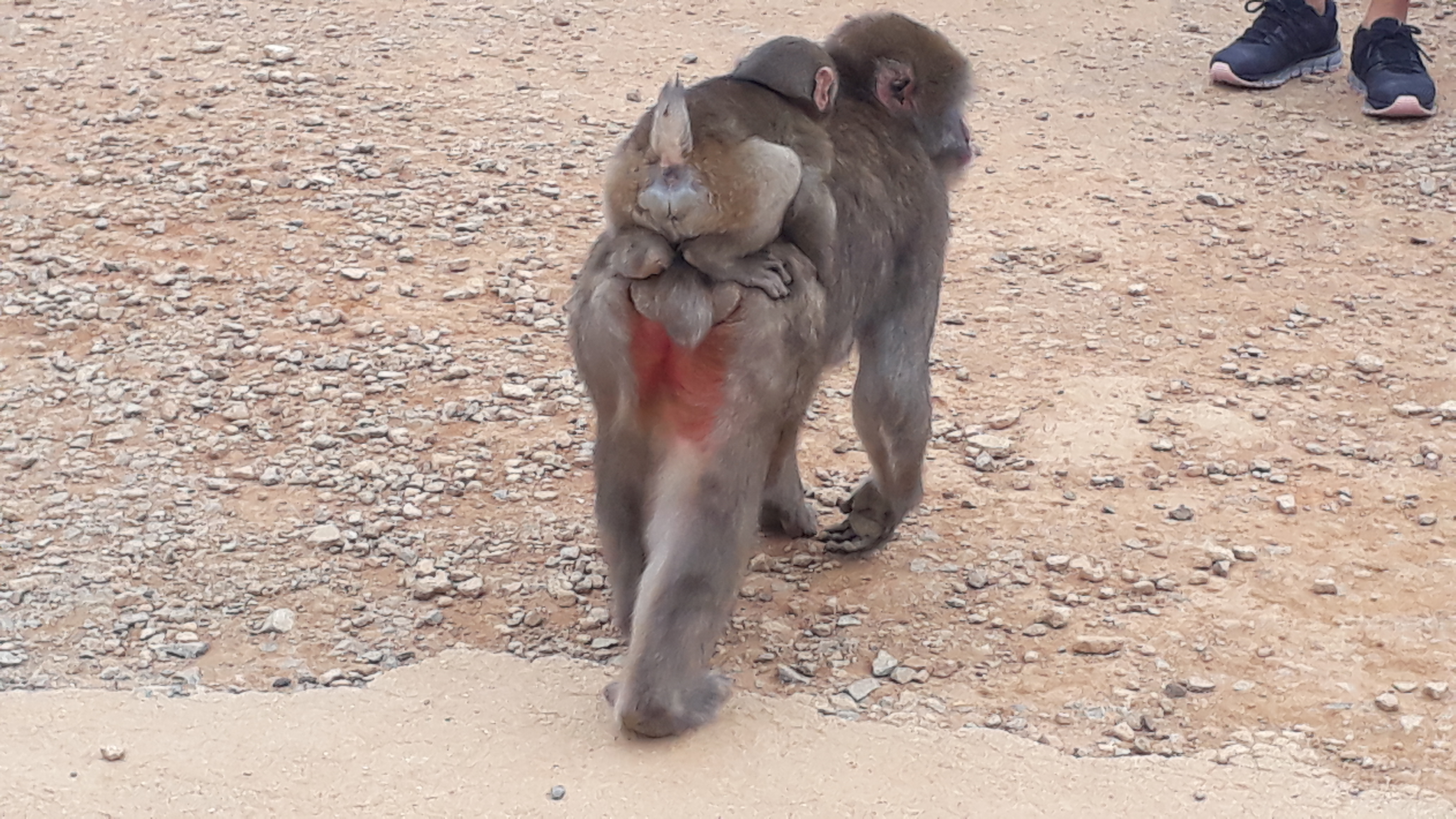
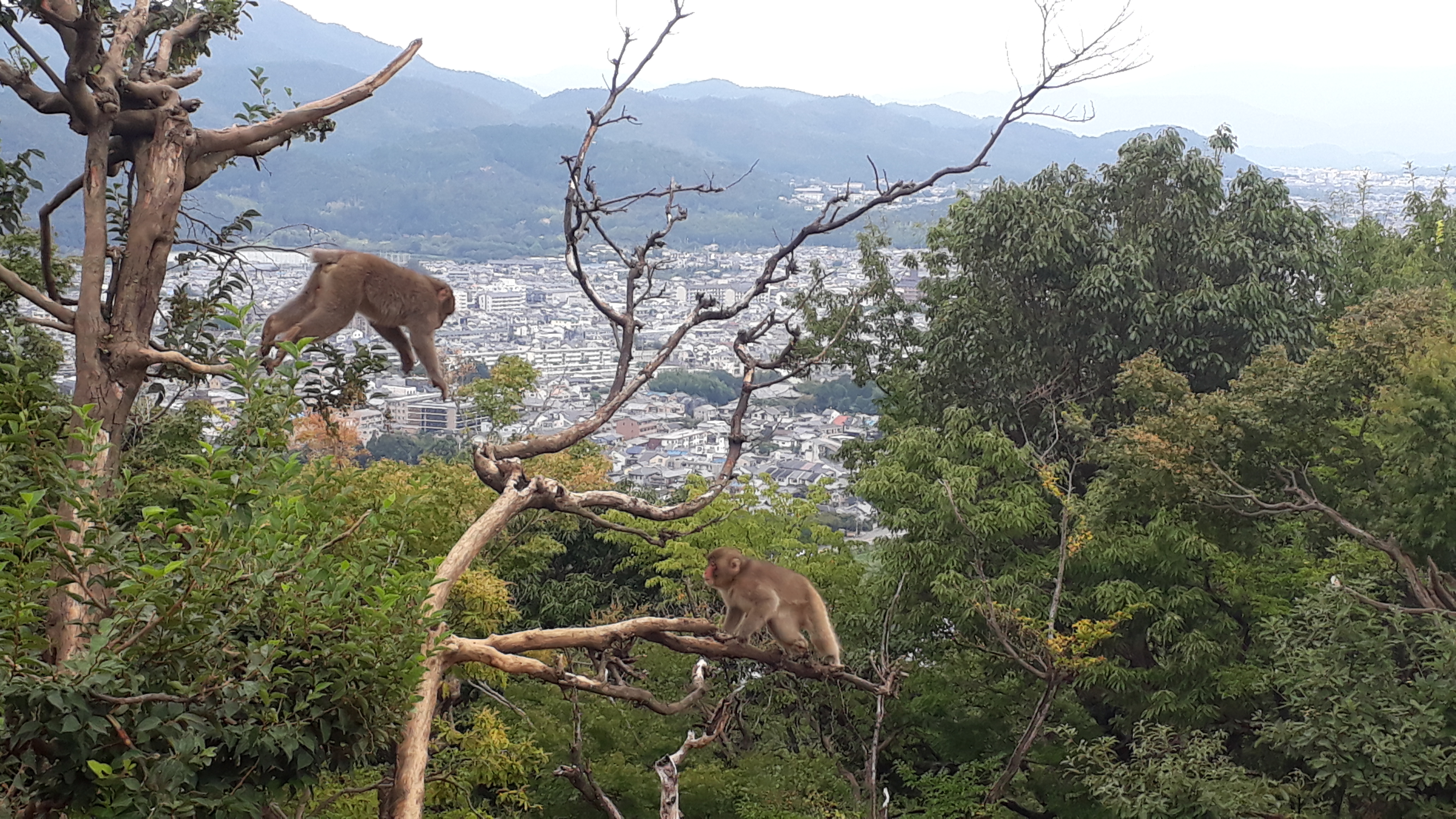
We settled with a visit to the Arashiyama Monkey Park which proved an excellent choice and earned Claire’s ‘best thing about Kyoto’ award (furry animals vs thousands of years of human history – no contest really!!!). After a steep climb we were rewarded with a hillside filled will hundreds of semi-wild monkeys who were completely unconcerned with the gawping tourists. It was so fun watching the baby monkeys play and fall out of trees before rushing back to monkey mums for a hug and clean. You honestly had to be careful not to tread on them, they were so close! The hill site overlooked Kyoto which offered some fantastic photos of monkeys swinging through the trees to a city backdrop. If it wasn’t for rumbling stomachs and a strict rule not to have open human food in sight of monkey eyes, we could have stayed all day. Instead we headed back to the river bank to eat lunch and watch the local school children perform a drumming ceremony that we didn’t understand!

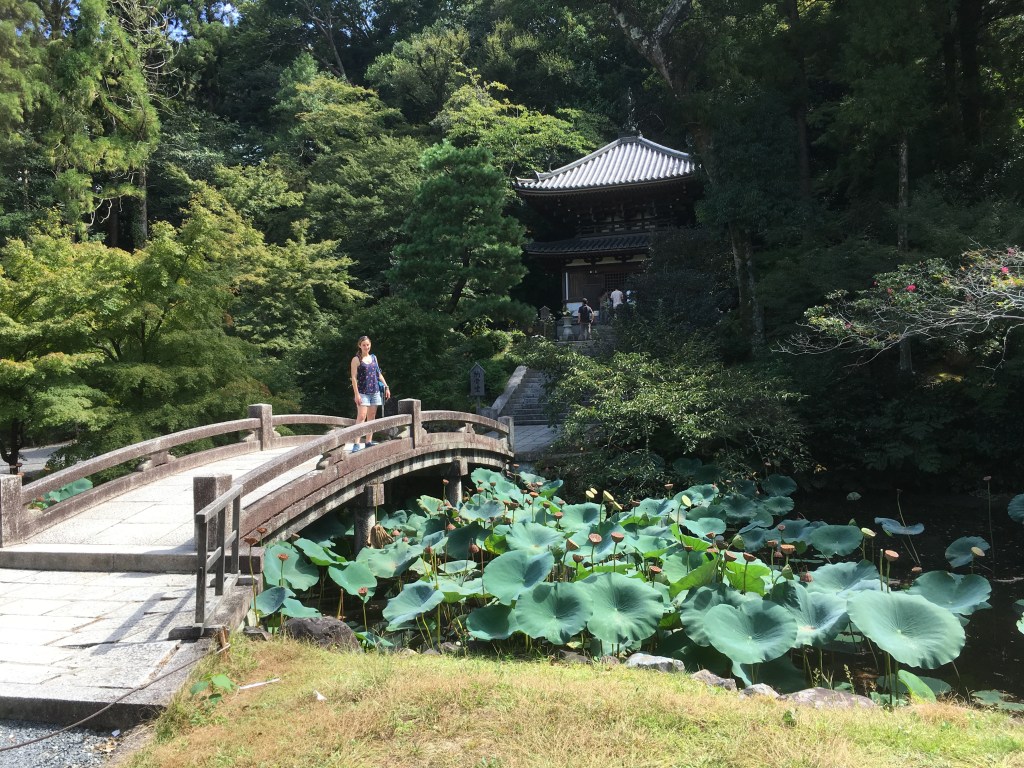
That afternoon we headed back to central Kyoto to the Daitokiyi temple complex; home to tens of temples and zen gardens and the headquarters of the Rinzai Daitoku school of Zen Buddhism. It was incredibly peaceful and tourist free considering it’s city locations and felt like it’s own little world. From here we decided to walk back through the city to the imperial palace gardens. These are vast, but despite a pretty bridge and pagoda in the far south of the gardens, the rest was slightly underwhelming as it was limited to trees and gravel paths. In hindsight we wished we had instead continued northwest to Kinkaku-ji (the ‘Golden Pavilion’) – one of Japan’s best known sights and sadly missed in our Kyoto visit. Oh well – can’t get it right all the time! Oh the plus side we had our first Okonomiyaki (or Om-nom-nomiyaki as Claire refers to it) experience for our evening meal.

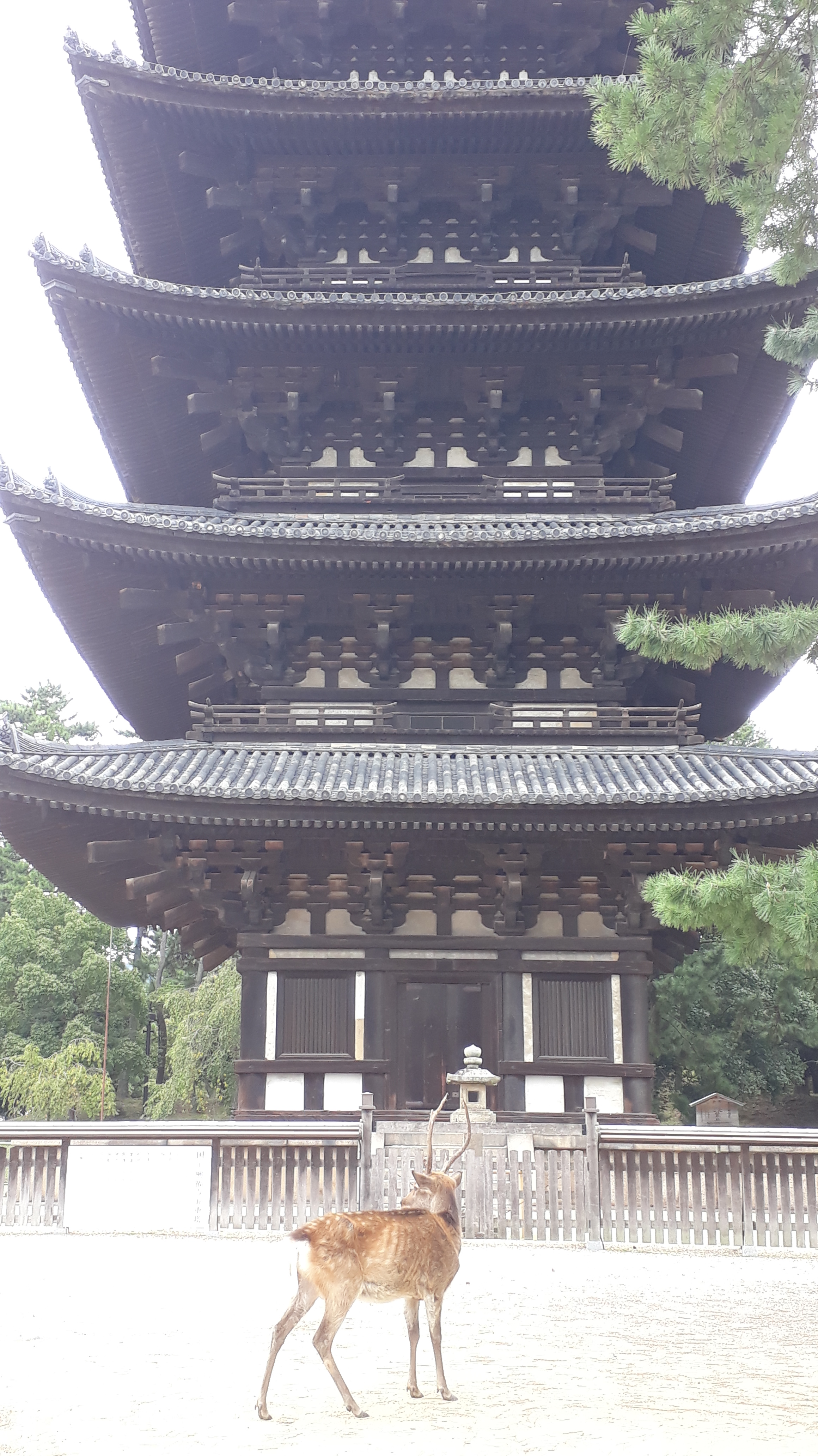
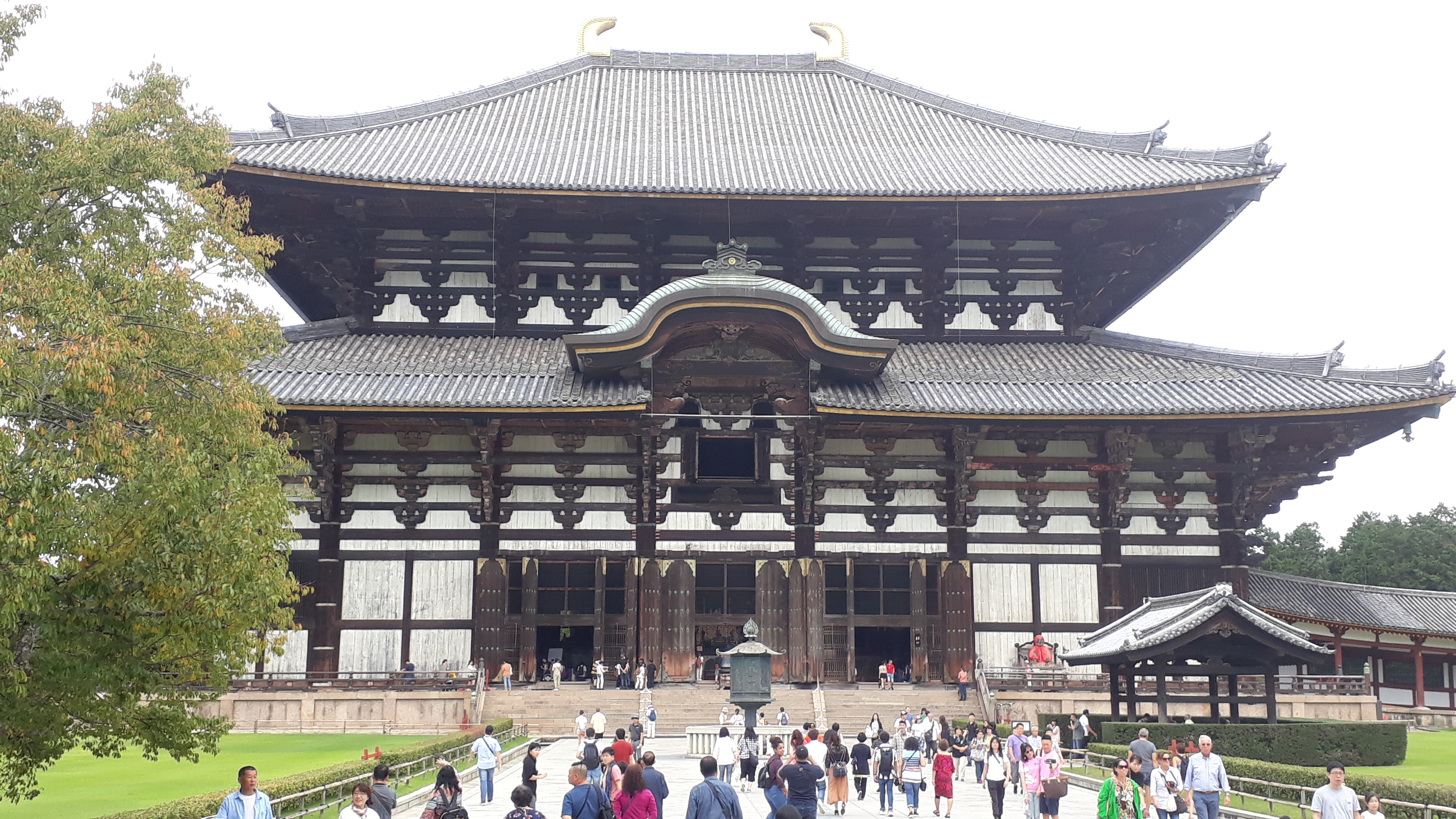
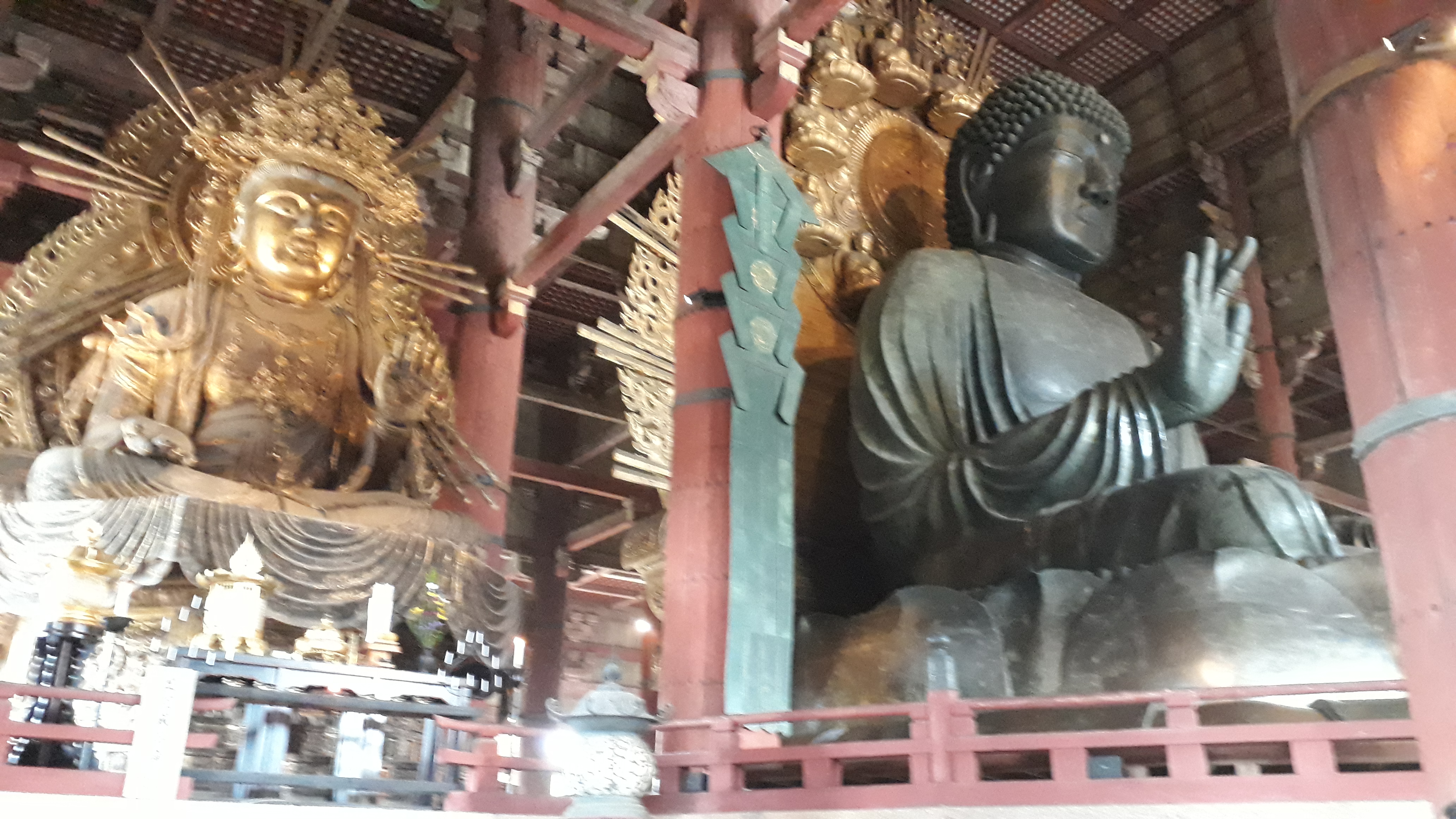
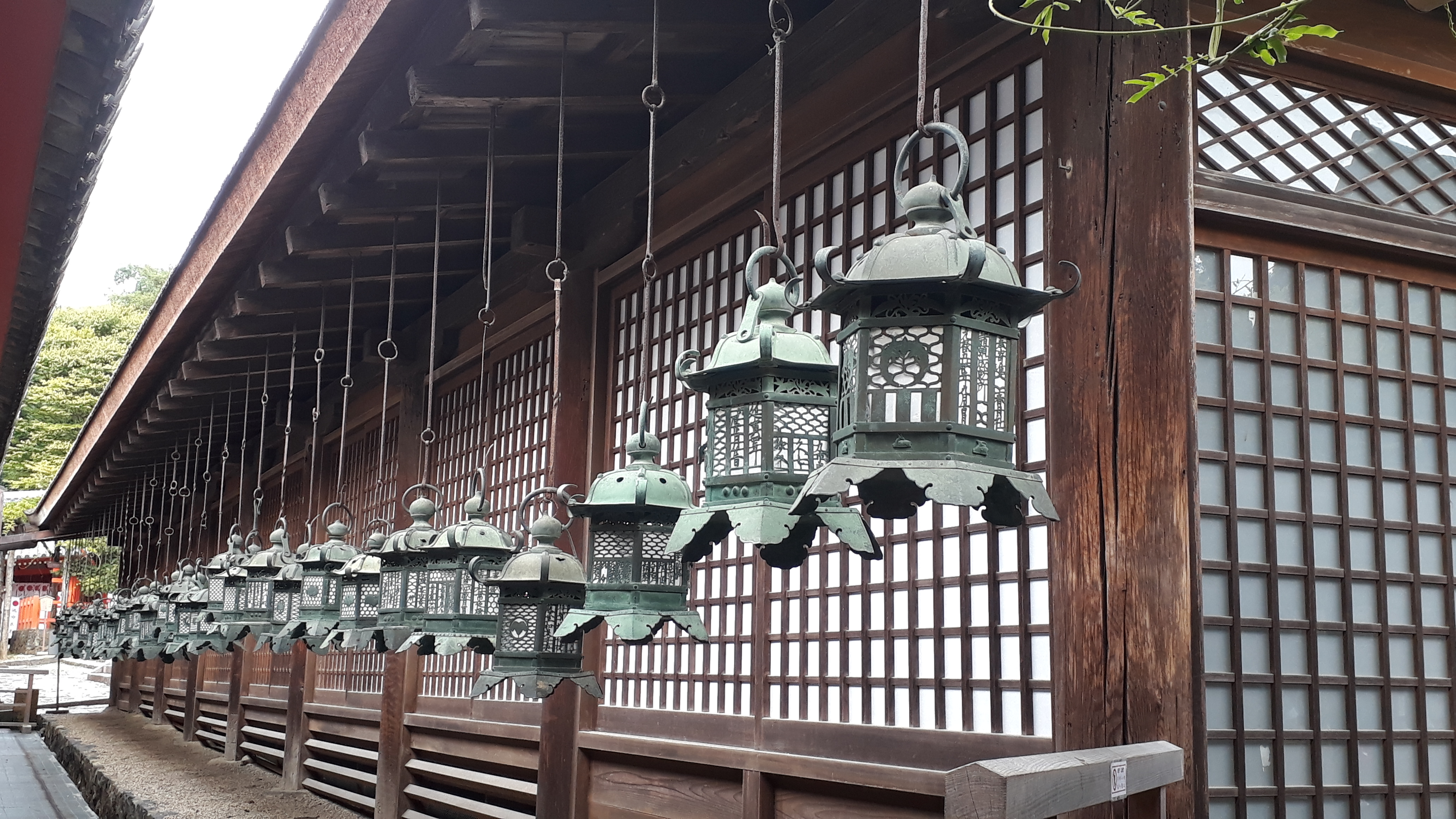
The next morning we were up bright and early to catch the morning train to Nara, a city 45 minutes south which is home to the famous giant gold and bronze Buddha (and approximately a zillion deer). We followed a half day 5km lonely planet itinerary through beautiful gardens (instead of the recommended Isui-en gardens the equally beautiful Yoshikien gardens are next door and free for foreign tourists) and on into Nara-koen park. Along with over 1200 deer and the Todai-ji temple (home of the giant Buddha) the park is home to many other pagodas, temples and Nio Guardians, along with thousands of tombstones. Wandering round the garden complex felt somehow more meaningful than dipping into temples within a city environment. The 15m Buddha is certainly impressive and also well worth the trip.

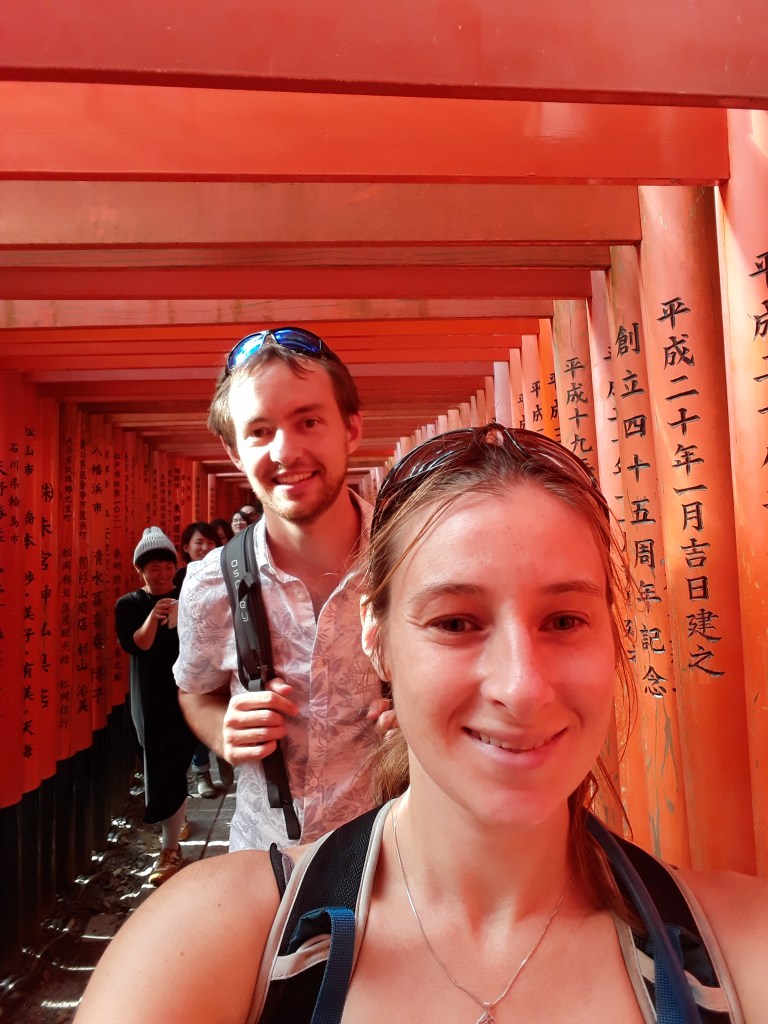
We took an early afternoon train back to Kyoto, stopping just outside the city proper at Fushimi-Inari Taisha, where thousands (quite literally) of bright red Torii gates line 4km of path up the mountainside, interspersed with many stone fox statues, considered to be the messengers of Inari (the god of cereals and sake). We thoroughly enjoyed the first 20 minutes of this hike, but an hour in when we finally reached the top we were disappointed by the lack of a view and Gareth was sure he would be having nightmares about getting lost in endless red archways. Our advice would be to definitely come here (it’s spectacular and unique), but don’t fall into the trap of having to get to the top just in case there’s something extra special to see – there isn’t and its a super sweaty climb on a hot day. There is a good view point over the city just past half way and that is probably far enough.

Getting lost in the Torii at Fushami-Inari Taisha

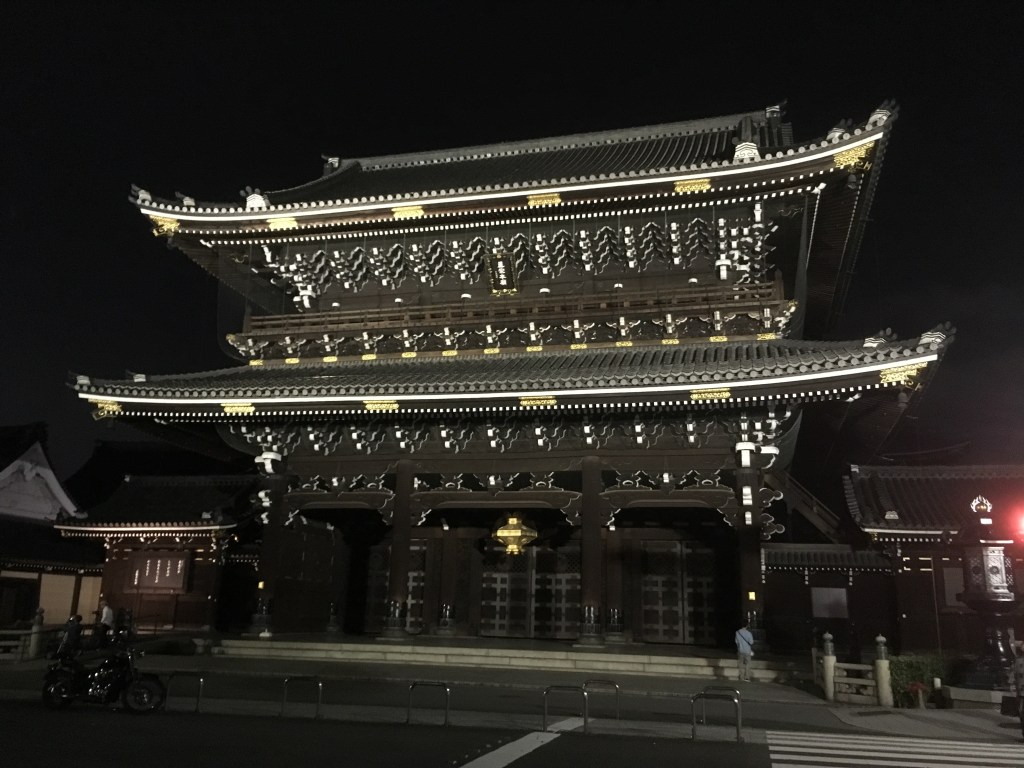
Rather than heading straight back to our hotel, we spent some time exploring the Kyoto station building itself, which includes light display staircases and viewing platforms across the city before catching the end of a stunning win for Japan over Ireland in the Rugby, and having a tasty, daring meal (including deep fried chicken skin crisps, cold tofu and chicken hearts) at a tiny traditional Japanese restaurant called Yakitori Bar.

Higashi Hongan-ji looked very impressive on our way home after Yakitori Bar

Our final morning in Kyoto was spent in the Southern Higashiyama district, which is generally considered to be the near the top of the Kyoto to-do list. The gardens and temples are certainly beautiful in this area. The streets just about manage to walk the right side of the line between traditional culture and crafts vs tourist trap but it is a close run thing at times. Friends had recommended we headed to the Kiyomizu-dera and descend into the Tainai-meguri so this was first on our list. The Tainai-meguri truly is an experience; it’s not everyday you descend into pitch-black passageways, guided by a string of buddhist prayer beads in order to isolate yourself from distractions and make a wish!

We might have wished for fewer interruptions, as we were accosted twice by different groups on the same school trip from Tokyo to help with a questionnaire for an English assignment. The children were very nice and the questions weren’t too hard, so we were quite happy to help really. We even got given presents by one of the groups – so an A+ from us!

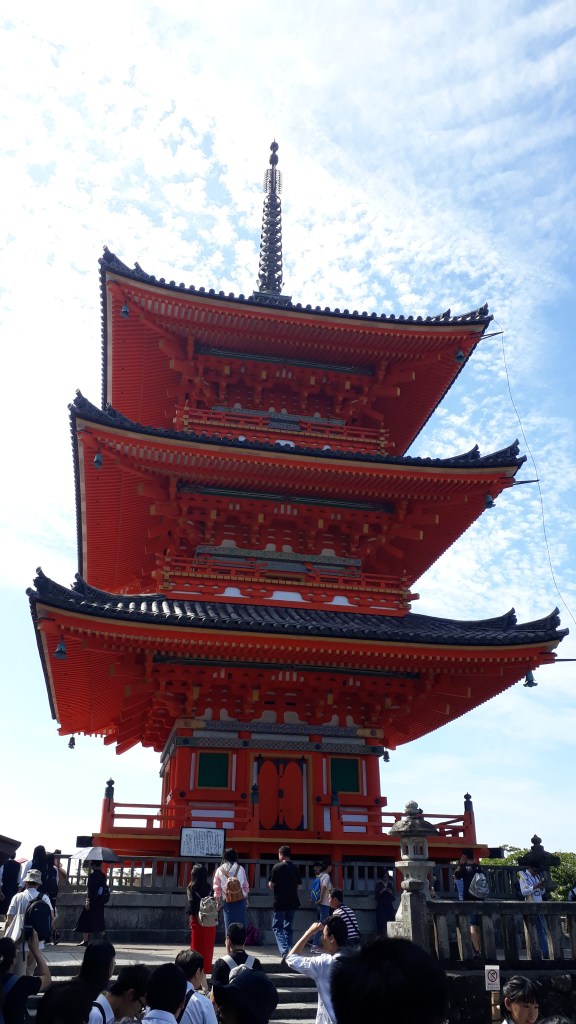
Three storied pagoda at Kiyomizu-dera

The rest of our morning was spent walking through Kyotos ‘most beautiful street’ and into the Maruyama-koen park via a variety of different picturesque temples. With that we waved Kyoto goodbye and set off for Osaka.

Claire at the Chion-in temple in Higashiyama

Konichiwa Japan! Arriving in Tokyo and Mount Fuji

After a ten hour flight that was delayed on the runway, we finally landed at Tokyo’s Narita airport. It was very important (to Gareth) that we got straight to the Rugby World Cup Fanzone in central Tokyo to watch Wales’ first match against Georgia. Fortunately Claire reminded him that we would need to pick up our Japan Rail passes and our Japan pocket WiFi in order to get there.

No beer today, lemonade to keep us awake!

Despite missing the first half and most of Wales’ tries, it was a good game and the atmosphere was helped by most of the Japanese in attendance seeming to have some sort of Georgian ancestry. As it finished at about 5 in the morning Canada time we were completely shattered and when we got to our hotel we were very grateful to the very nice man that had waited up to let us in.

The next morning, we woke up pretty early, due to the jet lag, so had plenty of time to prepare ourselves for the day ahead. We got the train to Mt. Fuji station, which is in a town called Fujiyoshida, where we were staying for two nights. We dropped our bags off at the hostel and took advantage of the 2 day passes we had accidentally bought to take the train down to Kawaguchi-ko lake. After having a lunch of Ramen, we were able to imagine what Mount Fuji might look like, if it wasn’t hidden in clouds (it’s known as the shy mountain for a reason) and to enjoy our first shrines.

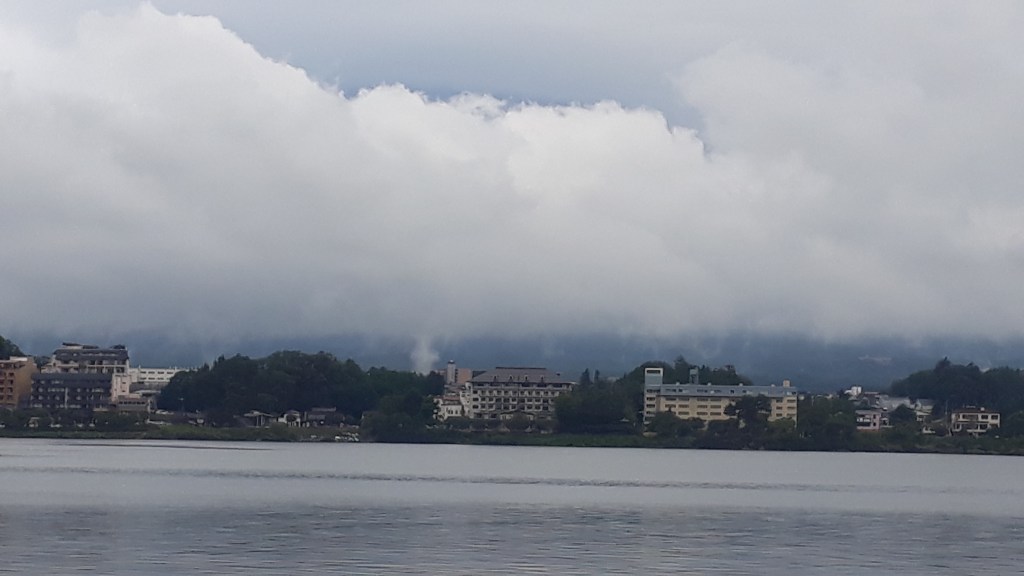
There’s a mountain behind there somewhere – promise!

Back at our hostel we looked up recommendations for good places to eat nearby and as it happened we found one that came highly recommended just up the road. Sakigake was a very typical Japanese restaurant in an old building, with floor seating and a bar area that overlooked the kitchen. We had some fantastic shrimp tempura and fried aubergine with rice and ginger. We also were given some Edemame beans as a starter, which we soon found out was common practise across Japan.

The following day, we woke up almost as early as the day before and rushed to the roof to look for Fujisan (as it is known in Japan), but still only clouds. We heard that early morning is the best time to see views. After and early breakfast we hired bikes from our hostel and headed out for a trip around Kawaguchi-ko and some of the other lakes that make up the Fuji Five Lakes region. This proved to be a fantastic way to spend a day.

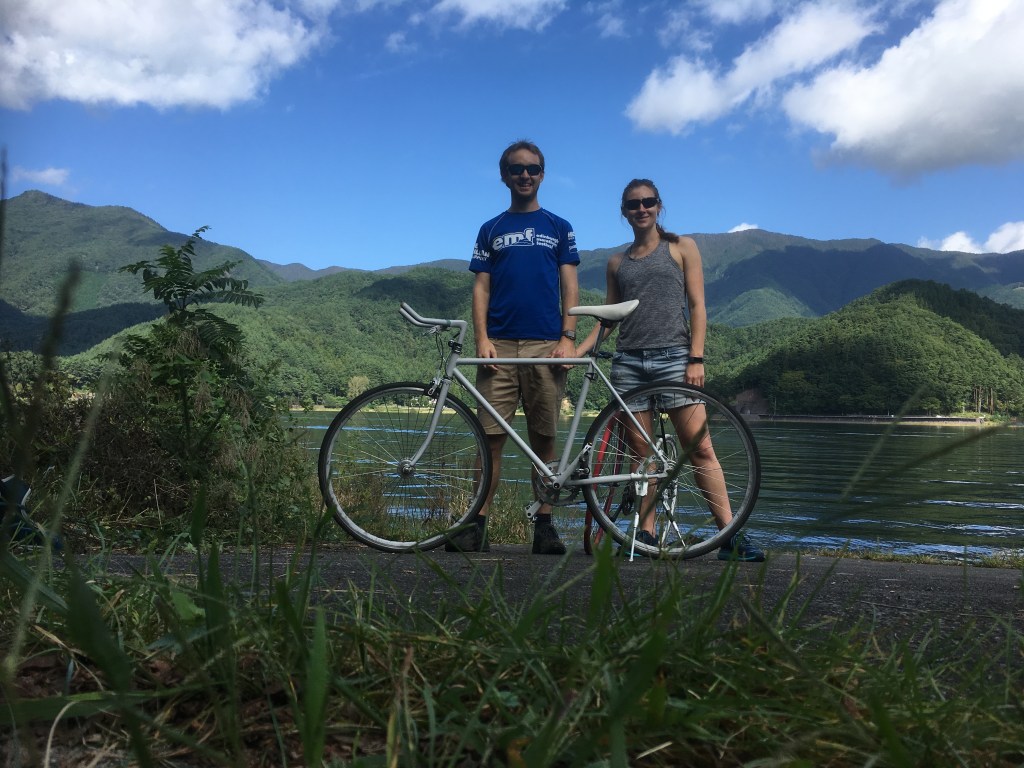
Great day for a bike ride!

The 20km bike ride around Kawaguchi-ko is touted by many of the bike hires near the train station, and our hostel had seemed slightly surprised that we were intending a longer cycle, warning us of large hills to get to the other lakes. However, after an uphill slog from the far shore of Kawaguchi-ko lake to the next lake along, Sai-ko we were rewarded with the beautiful countryside of a more rural, serene Japan (along with some super downhill sections!)

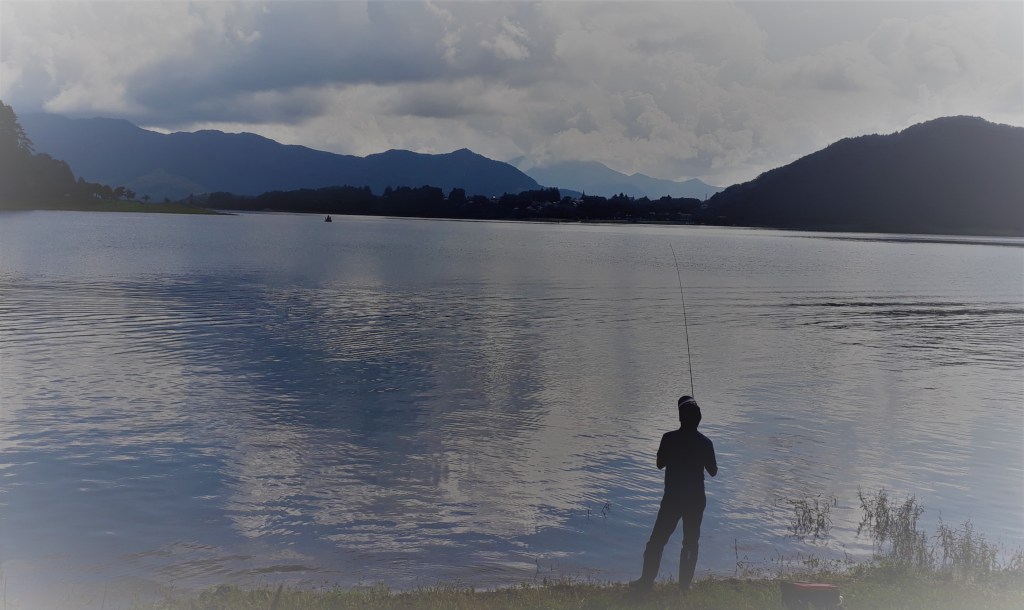
A fisherman on the banks of Sai-ko

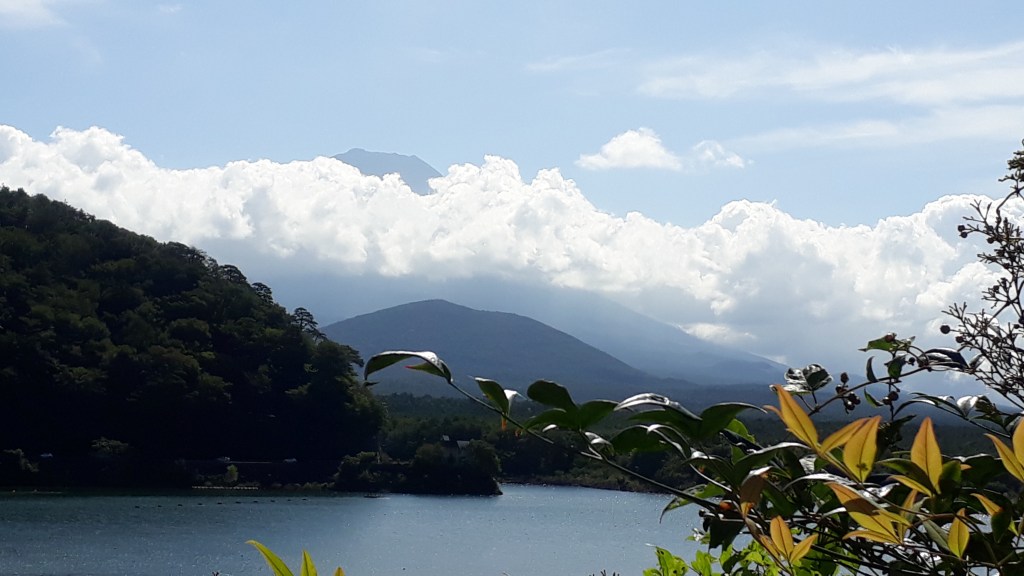
We had heard that 3rd lake of the group, Shoji-ko was another good place to capture the Mount Fuji view we were hoping for, and we were very fortunate that just as we made round to the far side of Shoji-ko, the peak of Fuji broke out of the clouds. We shared the moment with four cyclists from China (who were cycling across Japan from Toyko on mountain bikes and therefore put our morning ride completely to shame). We declined an offer to join their trip, instead electing to reward ourselves with a coffee whilst we planned our route back.

Despite a lovely day lakeshore, Mount Fuji only briefly peeked out of the clouds for us. However, we don’t think it was visible at all from Kawaguchi-ko, so we were very happy to see this much!

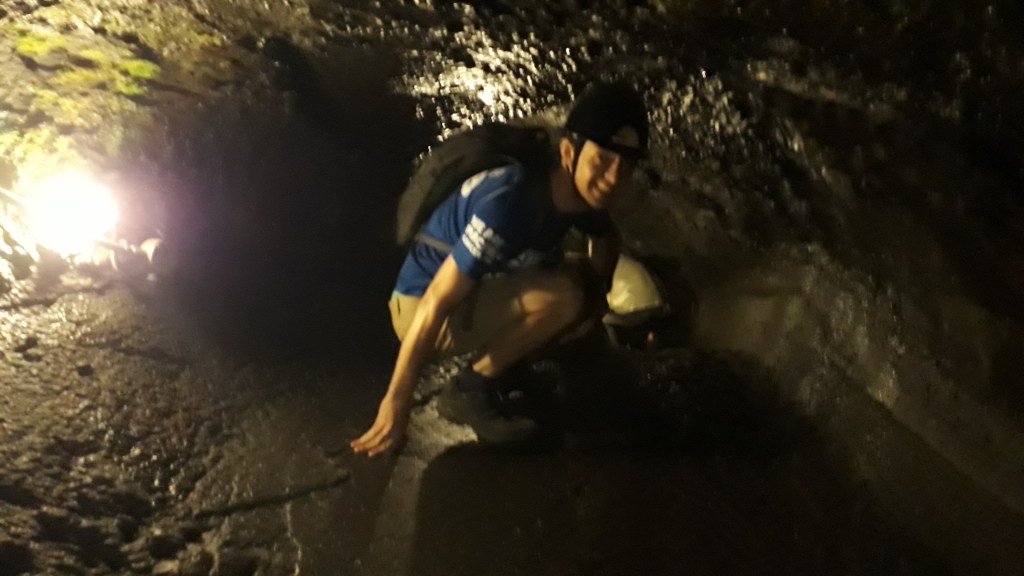
We chose a slight detour on the way back to take us past a couple of interesting lava caves; the Wind Cave and the Ice Cave. Ice and melt waters from the seasonal snow cap of Fuji enter these caves and keep them at below 5C, making them ideal natural fridges. Through Japans history they were used to store grains and silk worm larvae among other things (to increase the number of silk harvests for exports to the west). Today they were being used to cool down two very hot cyclists!

It’s cold in this cave it is precious

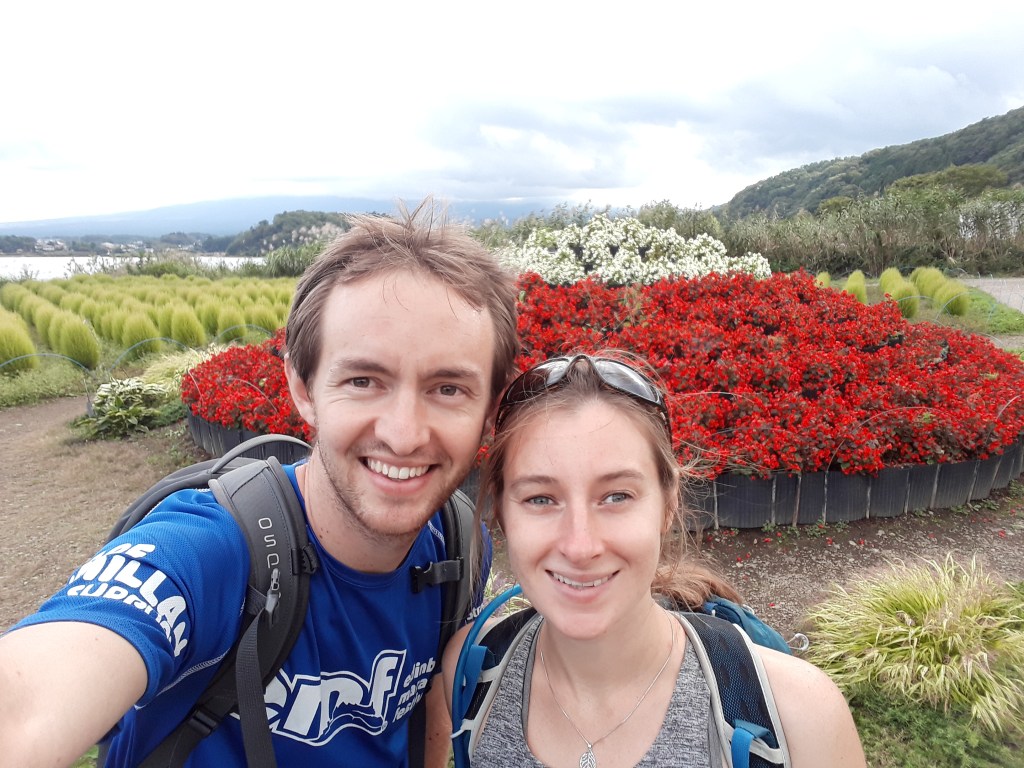
After lunch we cycled back to Kawaguchi-ko Lake and up the opposite shoreline. We stopped off to climb a lot of stairs to a viewpoint without a view, and then headed to some flower gardens on the banks of the river which included a floral representation of Mount Fuji (with the real deal now being fully shrouded in clouds again!).

Flower Fuji

A combination of residual jet lag and a bike ride in the sun had tired us both out so we headed back to the hostel for a bit of downtime. We valiantly made it to 6pm before heading out for a quick dinner before bed. This time opting for a Ramen place, which was second closest to our hostel over going back to Sakigake. This turned out to be the wrong choice, as we ended up receiving the wrong meals. In our jetlag affected state we could well have pointed to the wrong side of the menu…. We ended up getting sesame seeds and sweetcorn Ramen rather than pork and spring onions (it really doesn’t compare!). Slightly disappointing, but as we were tired and hungry, we gobbled it down without complaining (to the staff anyway)! A short trip back up the road and we were straight off to bed,

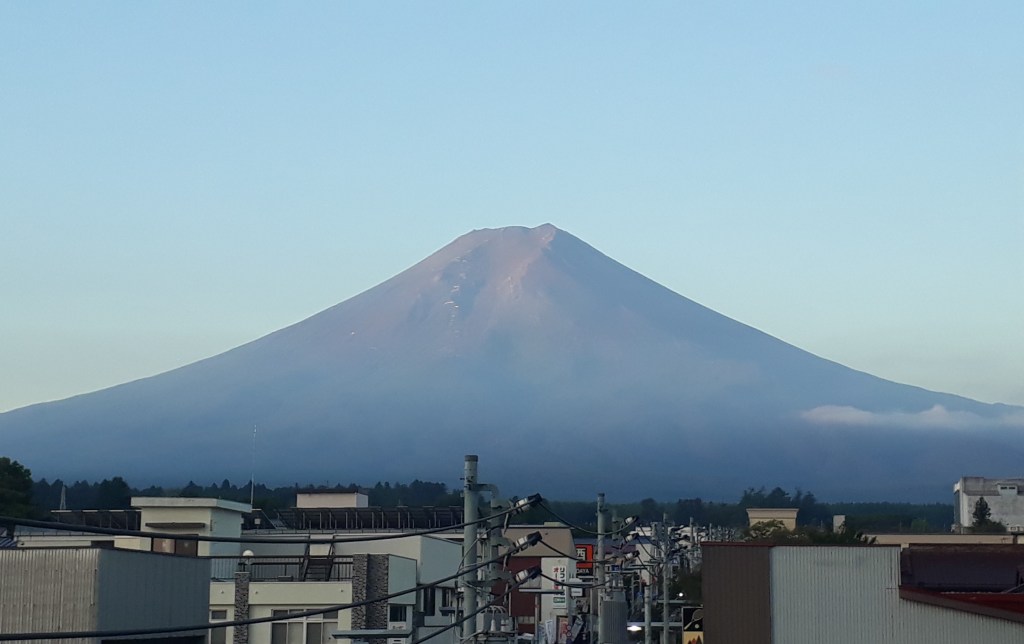
The next morning was our last near Mount Fuji, we were really hoping the maybe the cloud would stay away for long enough for us to get a good view of Fujisan. When our confused body clocks woke us at 6am Claire went straight to the window see what she could see. A minute later we were up on the hostel roof terrace to get a better view of the clear morning and the whole of Japan’s most famous icon. It was a very special experience, knowing that we were very lucky to have caught this view in the short time that we were there.

The view we had come to see – Fuji had taught us the lesson of patience. What a view!

By the time we’d had breakfast and were heading of on the train to Kyoto, much of the mountain was hidden behind a white shroud as it had been on the day before. Thank you Fujisan for popping out to say hello!

Victoria, Vancouver and a Canada round up

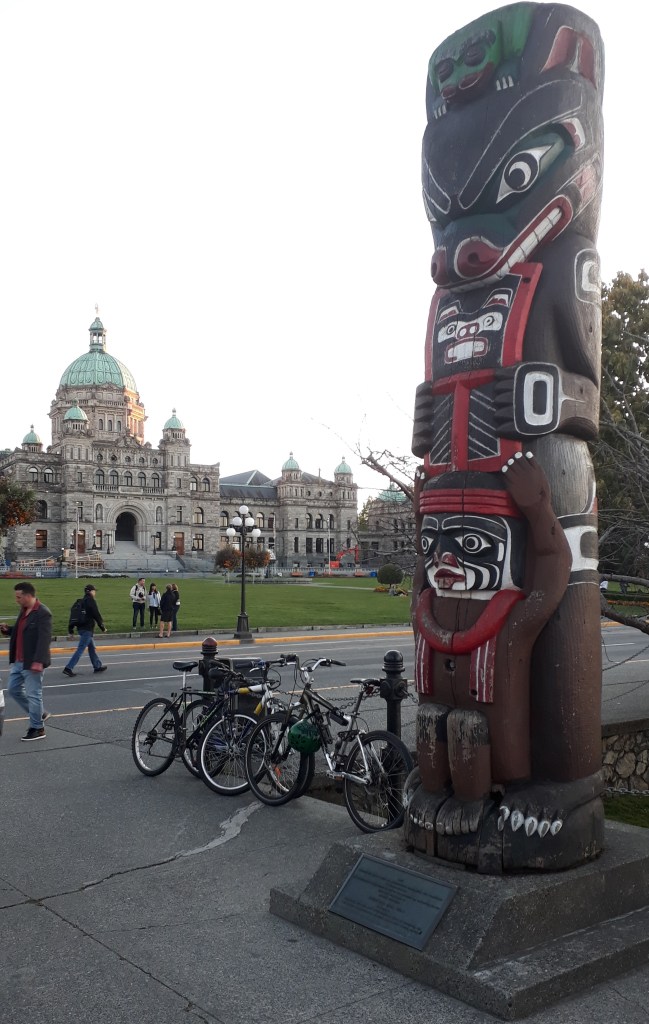
We arrived in Victoria (the capital of British Columbia, despite being significantly smaller than Vancouver) at about 16:00 and donated our tent to the Salvation Army (who seemed a little too pleased to be receiving a wet, dirty tent, that probably couldn’t survive a moderate gust or 30 minutes of steady rain). We then checked into our nights accommodation before wandering back along the beach front into the central city. Our walk took us through Beacon Park that along with being the location of the 0km marker for the transcanadian highway, it also contained a Great Horned Owl, peacocks, a cricket ground, fountains, a putting green, a zoo and the pope (OK the last one’s a lie but you get the idea), and was therefore one of the best urban parks either of us has ever been to.

Of all the Canadian provinces we visited, BC definitely had the most totem poles

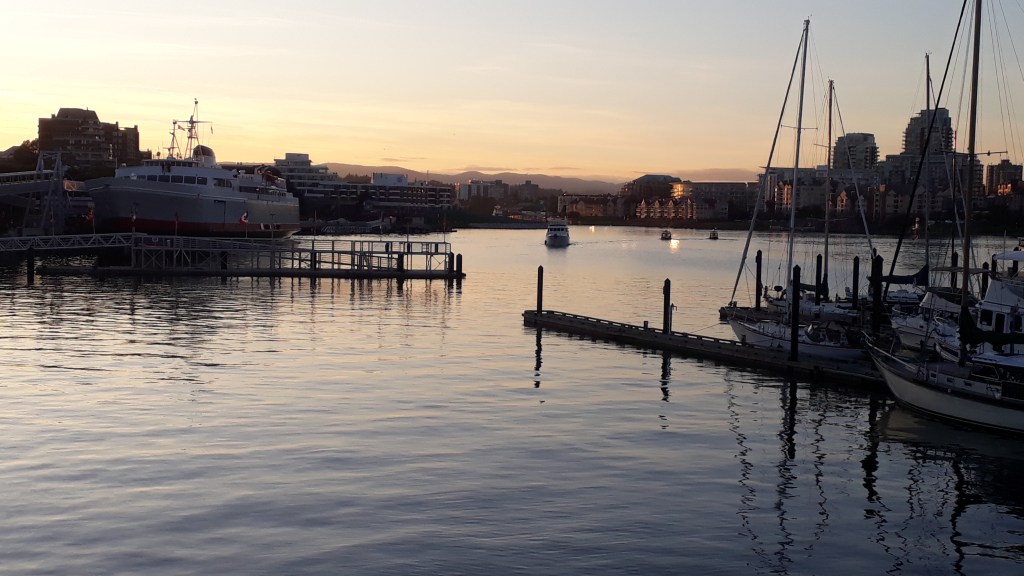
We arrived in the city centre in time to see the end of the climate change protests which had been going on worldwide and walked along the harbour as the sun set. Our host for tonight’s stay had recommended the Canoe Brewhouse, so we headed there to sample a few more Candian beers and food listen and dance to a local band.

View across the habour in the centre of Victoria

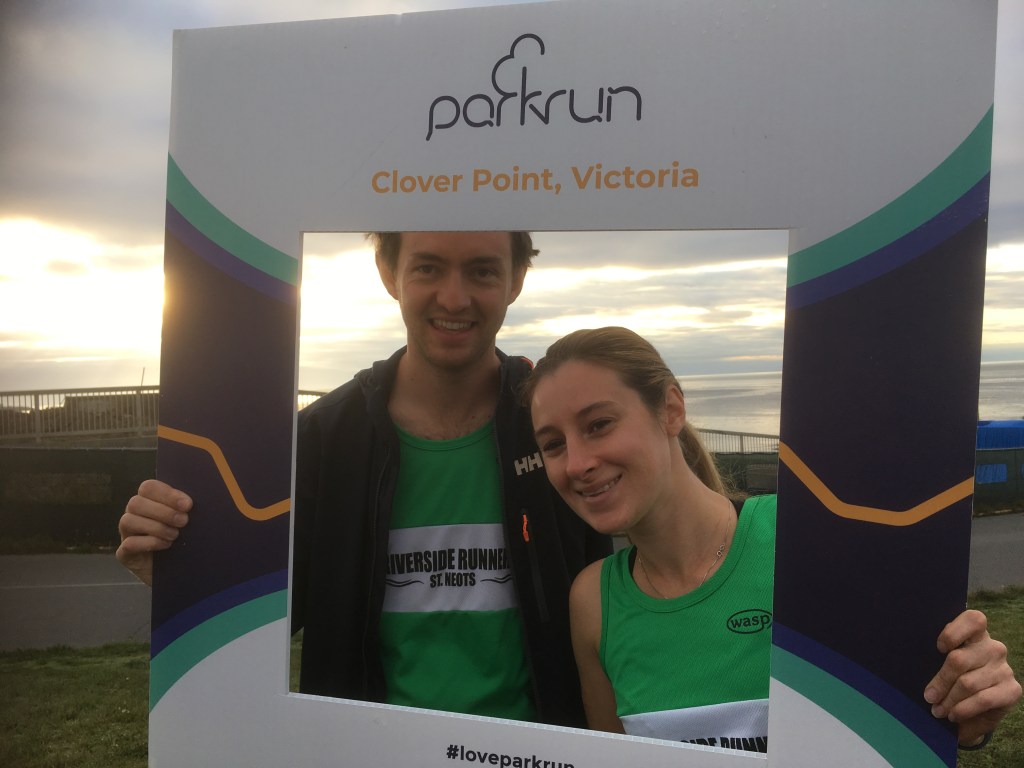
The next morning was a Saturday and yet again our overnight accommodation happened to be 5 minutes walk from the start of a parkrun (although Claire was not impressed that this parkrun started at 8am!). We really must recommend both the run and our accommodation (search for Fairfield Pied-à-terre on Airbnb) to all Parkrun Tourists out there. Gareth triumphed this time, beating Claire and all the other girls! Then we were off to get the Ferry (which we did manage to catch this time), back to mainland Canada and Vancouver.

Clover Point parkrun is a there and back again course along the coastal path. Gareth managed 7th finisher again and Claire was 2nd lady.

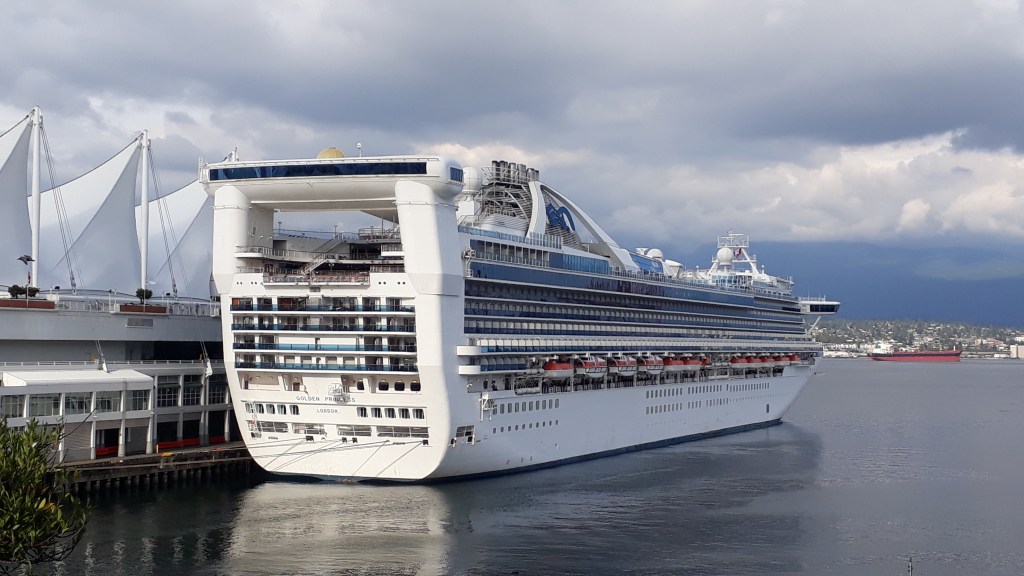
We had both been to Vancouver before, so had decided to just spend one night here (but it is a brilliant city and deserves a few days if you haven’t been before) and unfortunately a 2 hour traffic jam off the Ferry ate into our day. We contented ourselves with a wander around the harbour, admiring all the massive ships before a stroll into Stanley Park. Gareth also had a root bear float (root beer with a dollop of ice cream in it), but it wasn’t quite as good as he rememberered them to be .

Vancouver Habour was filled with ships and sea planes.

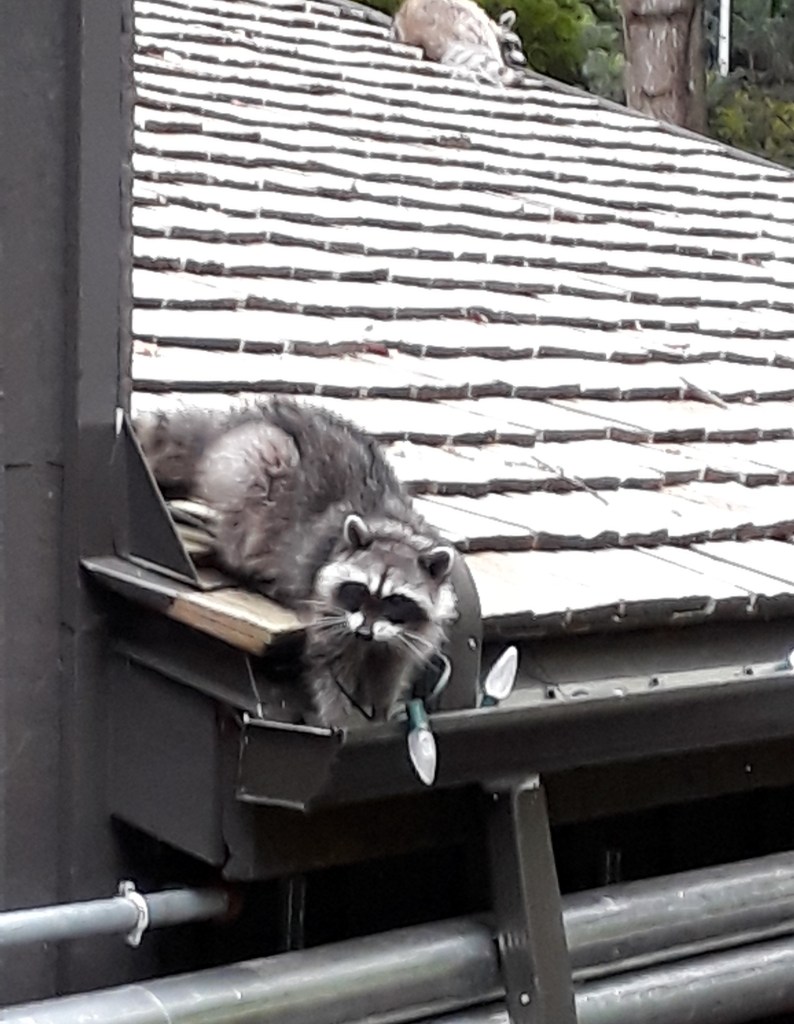
We spotted some raccoons during an early evening meal in the park, completing our Canada wildlife bingo. Claire had one more soaking wet run in the morning to burn off some energy before a long flight. Goodbye Canada – we have had the most amazing time! Next stop Japan!

Racoons came to visit as we ate our evening meal in Stanley park

Canada Overview:

What would we have done if we’d had more time? Claire: White water rafting in Jasper, Mountain biking in Whistler, Sea Kayaking to the Broken Island Group from Ucluelet. Gareth: Coming back in the winter to go snowboarding, going to see some North American sport, exploring more of the north and visiting some of the eatern maritime provinces.

Anything we wouldn’t have done again? Claire: Left the train wreak 5 minutes earlier so we caught the earlier ferry to Vancouver Island! Gareth: Correcting Claire’s spelling of wreck throughout the blog – it would have made a good running joke.

Highlight of the trip? Both: Via Ferrata in Banff!

Best 24 hour period? Both: Afternoon Lake Louise hike to Plain of 6 Glaciers followed by Morraine Lake and Icefield parkway the next morning.

Design a site like this with WordPress.com
Get started