Hiroshima is not an easy place to visit, and this is not an easy blog to write. However, by sharing stories of the devastation that atomic bombs cause Hiroshima aims to prevent a repeat of this tragedy.
After leaving Dave and Alisha in Shingu, we caught the train back around the Kii peninsula to Osaka and enjoyed the amazing coastline one last time, before arriving in Hiroshima the middle of the afternoon. After dropping off our bags at our hotel, we headed to the Hiroshima Peace Memorial Park. It is built around the hypocentre of the atomic bomb, which was dropped on the city on 6th August 1945 by the allied forces along with another on Nagasaki a few days later to end WWII. Prior to the bomb it was one of the busiest shopping and residential districts in the city. One single person from this entire district survived the attack (who was working in a concrete basement at the time).
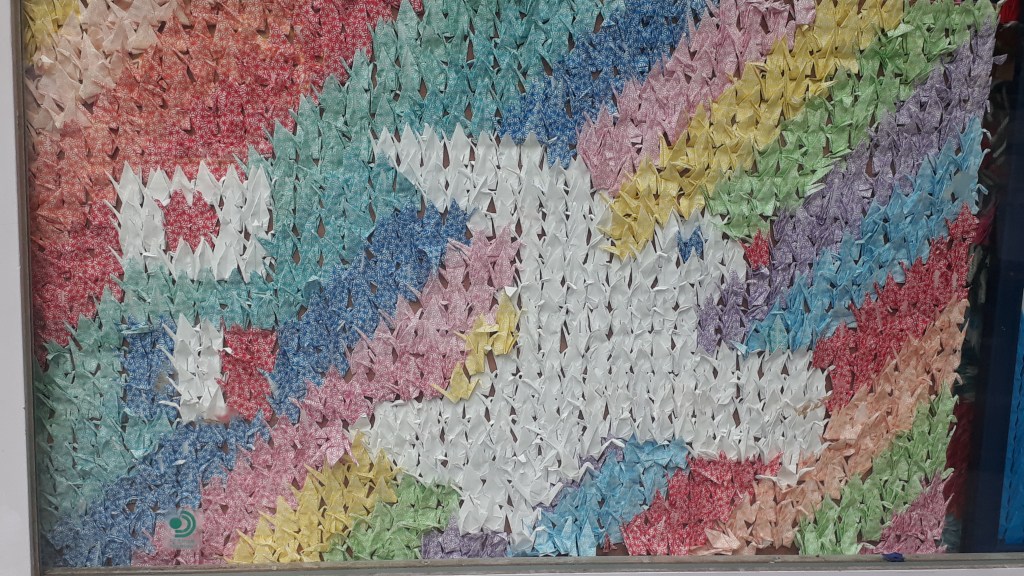
As you might expect, the park itself is a very tranquil place and conducive to reflection on what was an atrocious attack on the city and its people. We first visited the children’s peace memorial, which is dedicated to the children who died as a direct result of the atomic bomb and in the days, months and years following. There is a large display case, which contains folded paper cranes that have been sent to Hiroshima from children across Japan and the world to symbolise a commitment to peace.
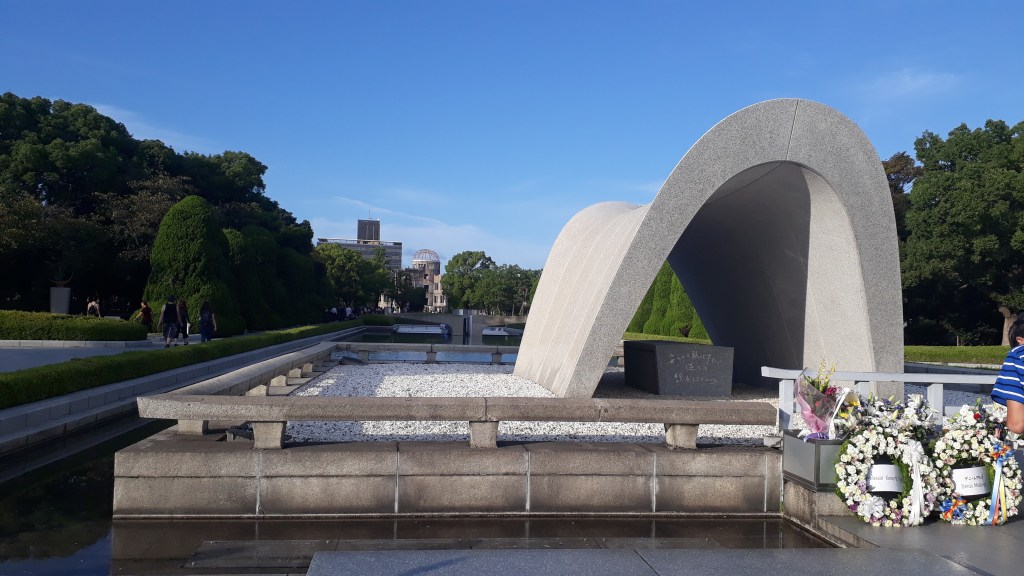
Next we walked past the Peace Flame, which was first lit in 1964 and will burn until all nuclear bombs on earth are destroyed. At the other end of an ornamental pond is the Memorial Cenotaph, which contains the names of the known victims of the bomb and is covered by an arch shaped shelter, which is said to act as a shelter for their souls.
After this we went down into the Hiroshima National Peace Memorial Hall, which is underground and houses a 360 degree mural of the city after the bomb went off. It is made using 140,000 tiles, which is the same number as the estimated number of people who had died from the effects of the bomb at the end of 1945. It is a quite amazing scene of demolished structures with very few left standing.
The most difficult part of the day came when we visited the temporary exhibition on the way out of the hall. This was showing a video of drawings and artefacts produced that related to school children who had been killed by the bomb. A number of children had been assigned “demolition duties” by the Japanese government, which involved creating fire breaks in the event of a regular air raid. Many of these children were just starting their work when the bomb hit. No warning was made. The stories are too horrible to repeat, however they often were passed on from first responders who were able to talk to the children before they passed away. You can only imagine what a harrowing experience it must have been.
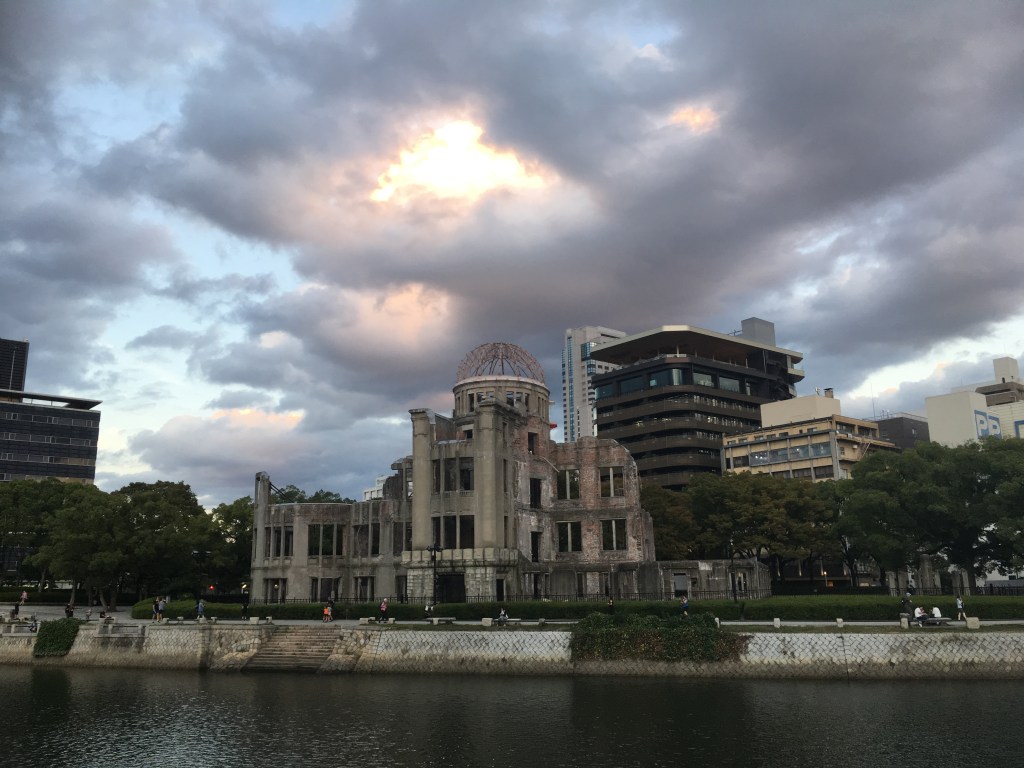
On our way back to our hotel, we passed the A-bomb Dome, the closest building to the hypocentre to remain partially standing after the bomb hit. It acts “as a historical witness that conveys the tragedy of suffering the first atomic bomb in human history and as a symbol that vows to faithfully seek the abolition of nuclear weapons and everlasting world peace”. It is a very haunting and moving structure.
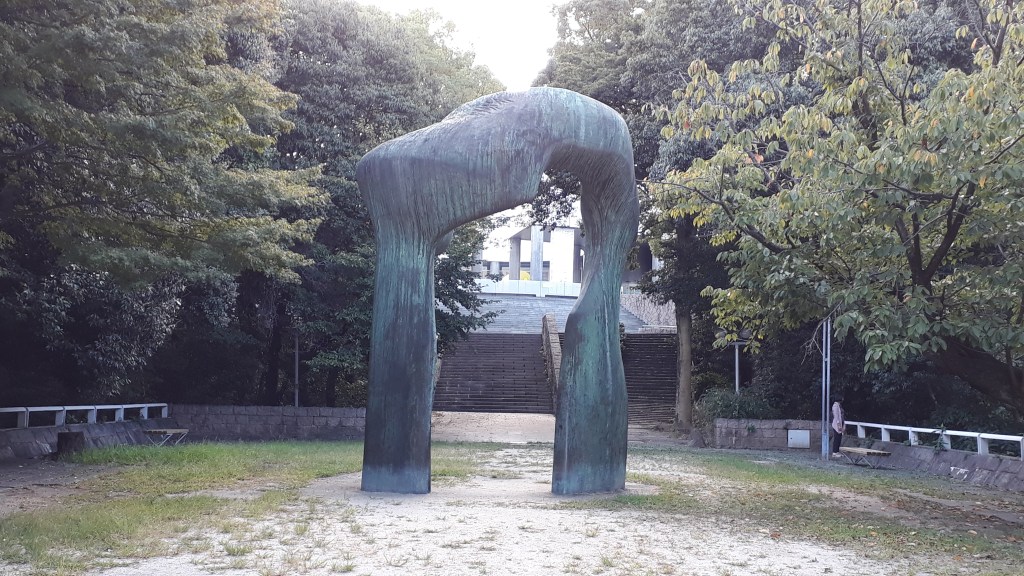
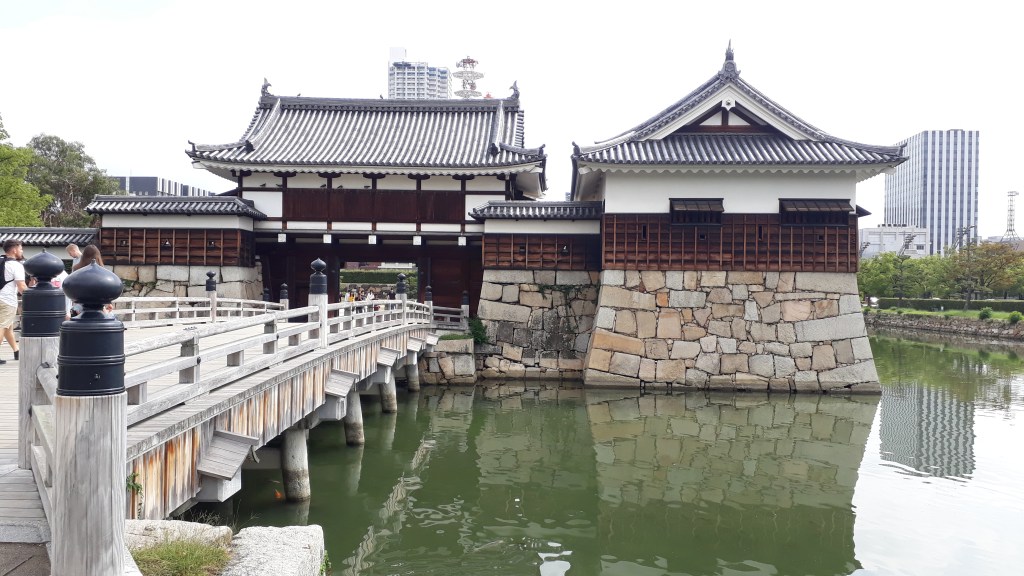
The next morning Claire went for a run around Hijiyama park, which covers a hillside to the East of the city and houses an art museum and many sculptures and statues, as well as having great views of the city. We then headed to Hiroshima castle, which was partly rebuilt following the atomic bomb and wandered around the grounds.
We spent the rest of the morning at the Hiroshima Peace memorial museum. This museum is a vivid account of the grotesque damage the atomic bomb caused the people of Hiroshima. It includes photos and artefacts of the victims and records of parents recounting the days of suffering their children went through before death.
The museum also includes artifacts recording the decisions & politics leading up to the bombing. The popular narrative is that the bombing was a necessary evil to successfully end the greater evil of WWII. Japan was looking like losing the war and already in surrender talks (but not giving in to allied demands). But the allies had spent billions of dollars spent on the atomic programme and had no demonstration of it’s power to justify the colossal expense. Despite protestations from the scientists developing the device a decision was made not to warn the people living in target cities to evacuate, and the signature of the UK prime minister and USA president authorising the attack that would lead to the deaths of 140,000 innocent people in 1945 alone.
The museum asks that visitors spread the word of the tragedy that took place in Hiroshima and encourage their friends and families to support de-nuclearization around the world. We hope that this blog has done just that. Although the city has rebuilt and now appears at first glance just like any other city in Japan, no-one should have to suffer in the way that the people of Hiroshima did.
 Claire and Gareth go travelling!