Great Walks and rides with a twist!

The Nelson region is the bread basket of New Zealand and along with world famous wineries, the area is filled with fields of vegetables, fruits and hops with local breweries almost as abundant as wineries. The other thing the Nelson region is famous for is mountain biking. These two activities can be combined in The Taste Trail (yes – you guessed it – another of the Great Rides), which quite frankly felt made for us.
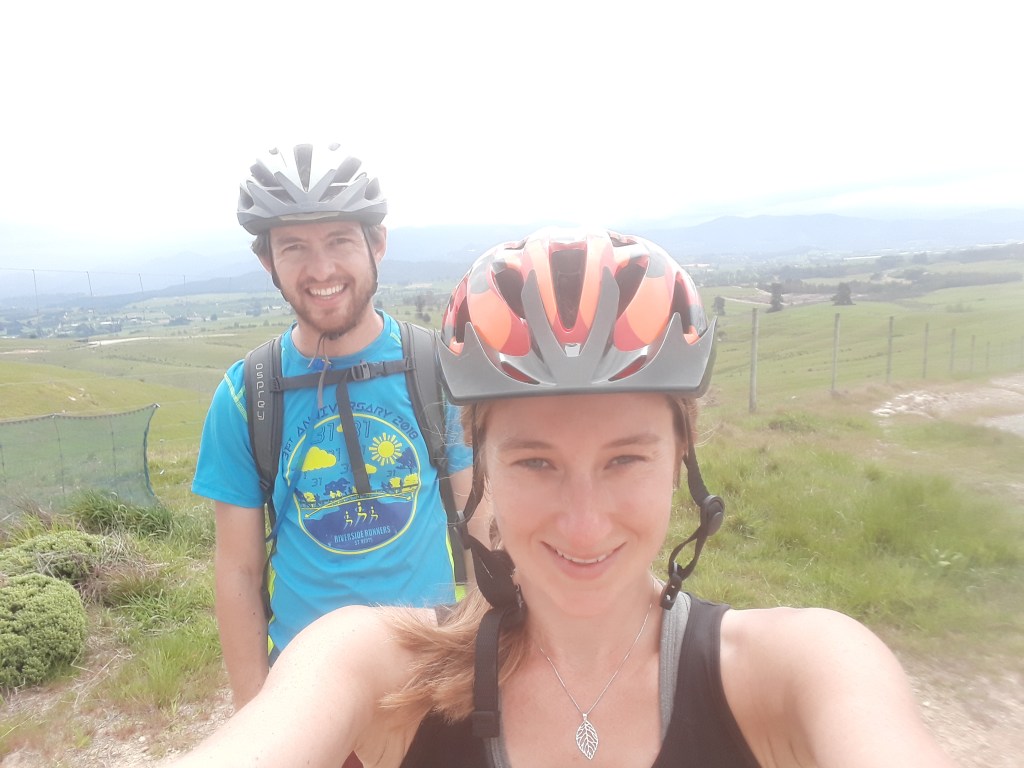
A couple of beers in to our ride, after the main assent of the day.

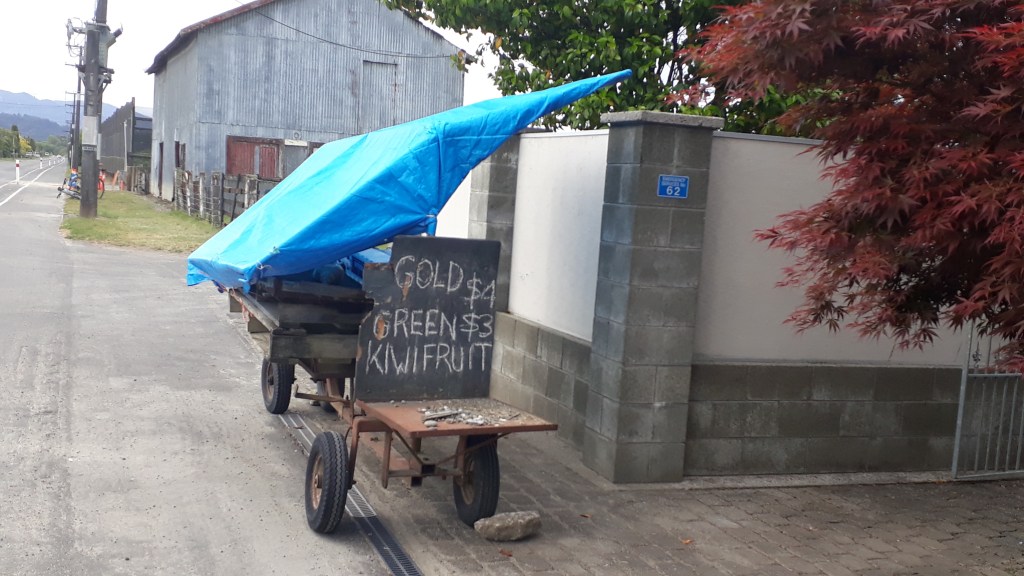
Given that a critical element of the trail is drinking, our first job that morning was to drive our camper to our overnight stop at the most westerly end of the trail in Kaiteriteri where you can also hire mountain bikes and has the added advantage of having a mountain bike park. The taste trail maps highlight participating coffee shops, bakeries, breweries, restaurants and wineries along the route although there are of course other none affiliated stops. The map does not mark the 10’s of local produce carts along the trail and even though we were visiting in early spring there were apples, kiwis, honey, beans, asparagus all on offer (we should have driven the route first and not stopped at the Nelson supermarket the day before!).

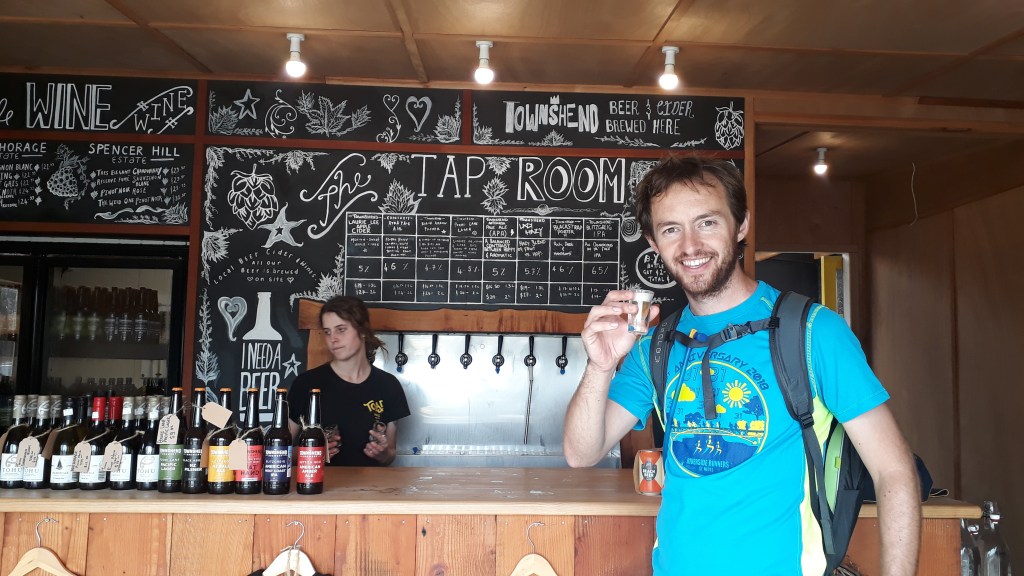
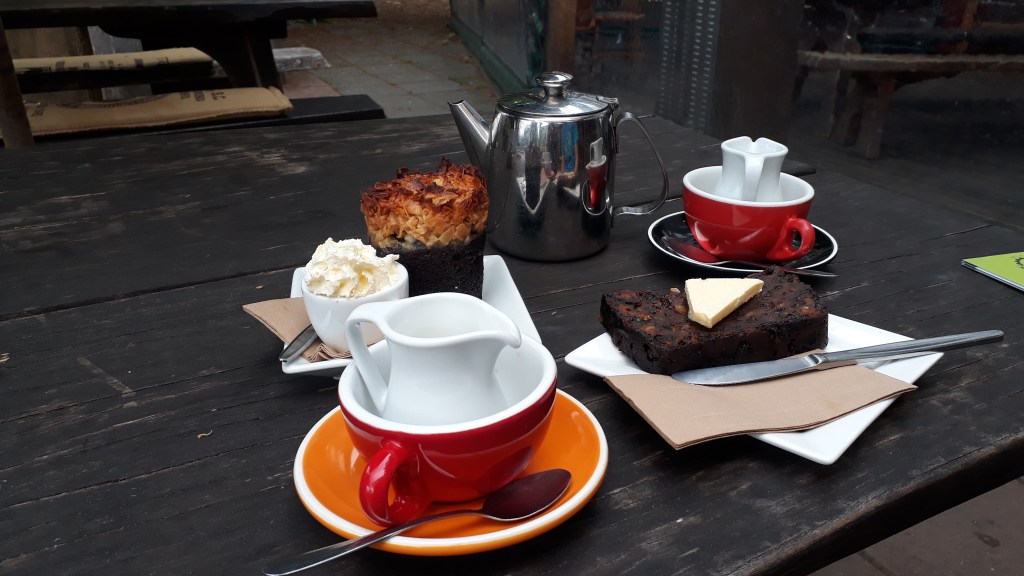
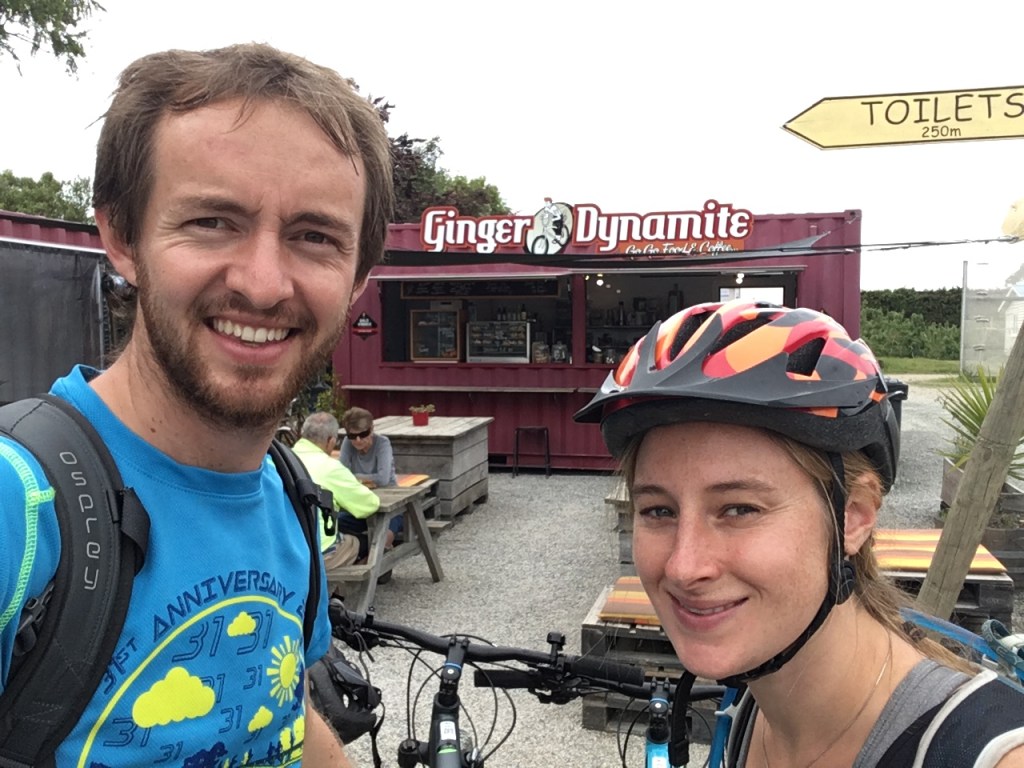
After picking up bikes and cycling for a hour heading out of town and into fields of hops and vines it was time for a break. As it was pre-noon our first stop was coffee and cake at Ginger Dynamite before we headed through some beautiful coastal scenery to Motueka. It was at this point that Claire discovered the best place in New Zealand: Toad Hall – a café/brewery/pub/juice bar/restaurant/shop which excels at everything and is probably the reason so many Brits emigrate here. On our first visit we headed to the brewery and sampled a variety of different beers and ciders before heading to the bar to quench out thirst.
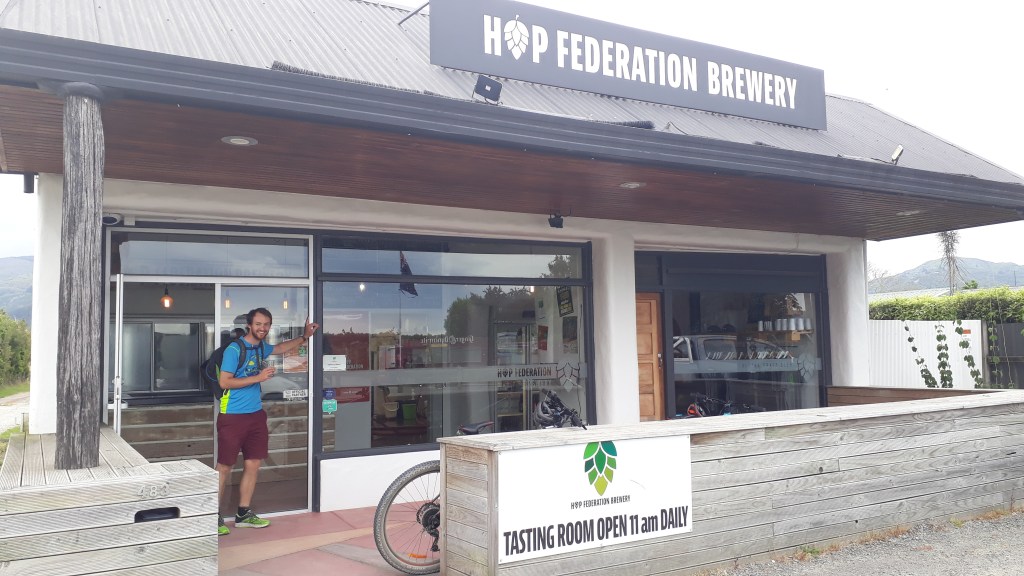
From Toad Hall our route headed off road and up hill! The trail guide describes this ‘easy’ section of the route as a ‘comfortable granny-gear climb to a highpoint with panoramic views’. Well…. the views are beautiful and worth the climbs but comfortable is not a word usually associated with the granny bike gear for good reason. After admiring the view and enjoying the downhill we stopped just outside of Tasman and decided to turn round and head back via a flatter on-road detour, instead of carrying on to the next foodie stop. This decision was in no way due to the cake section of Toad Hall closing at 4pm (we got there at 3:30pm – phew). After gorging and working it off on another hour’s ride we hopped into the Hop Federation Brewery for more free samples and left with rucksacks a few pints heavier!

With all that Dutch courage, the mountain bike park proved irresistible on our return journey back to Kaiteriteri and we spent a final half hour hurtling around the tracks before it was time to return our bikes and prepare ourselves for an early start and more adventures.
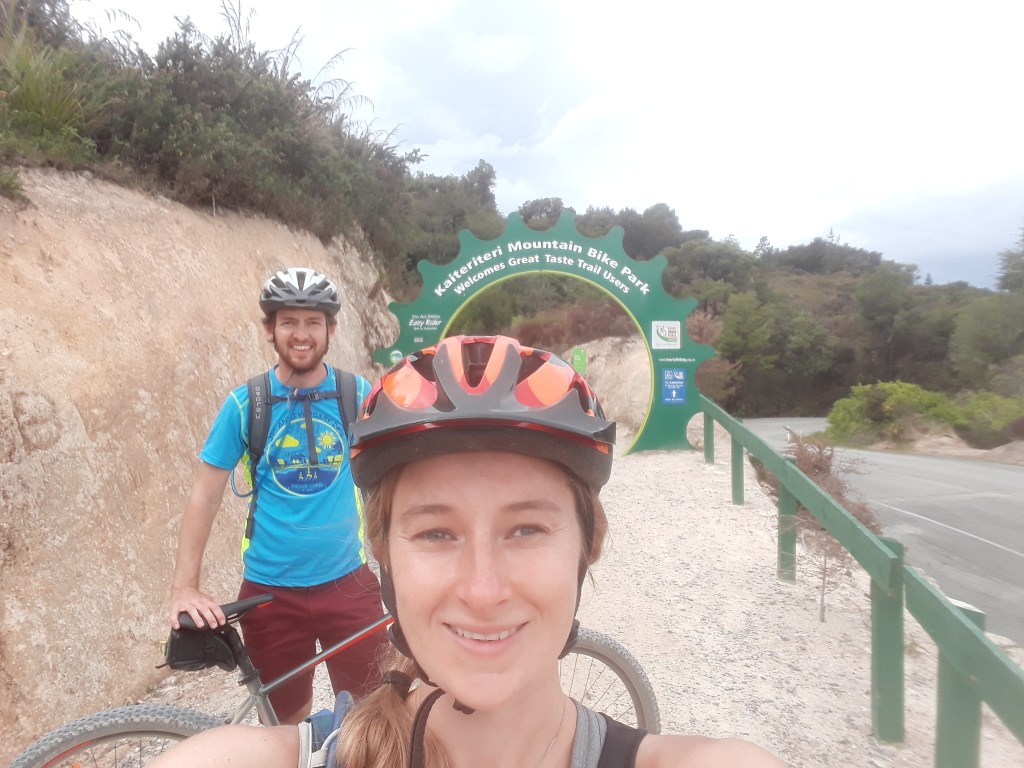
The Kaiteriteri mountain bike park was full of great trails including ‘Easy rider’ (the Hop Federation serves beer of the same name) and ‘swamp monster’

When planning our trip to New Zealand some friends who had been before told us that kayaking in Abel Tasman (and including an overnight stay in the national park) was one of their top activities.  Abel Tasman is a relatively new national park, on the northern shore on the South Island and named after the Dutch explorer who first discovered New Zealand. The area can be explored via another Great Walk, which travels up the coast via cliffs and a few bays whose navigation rely on you getting to them at low tide if you want to avoid getting wet. In contrast, our exploration of Abel Tasman relied on us getting wet as we would be spending the next two days doing the Source to Sea adventure package with Abel Tasman Canyoning and Kayaking.

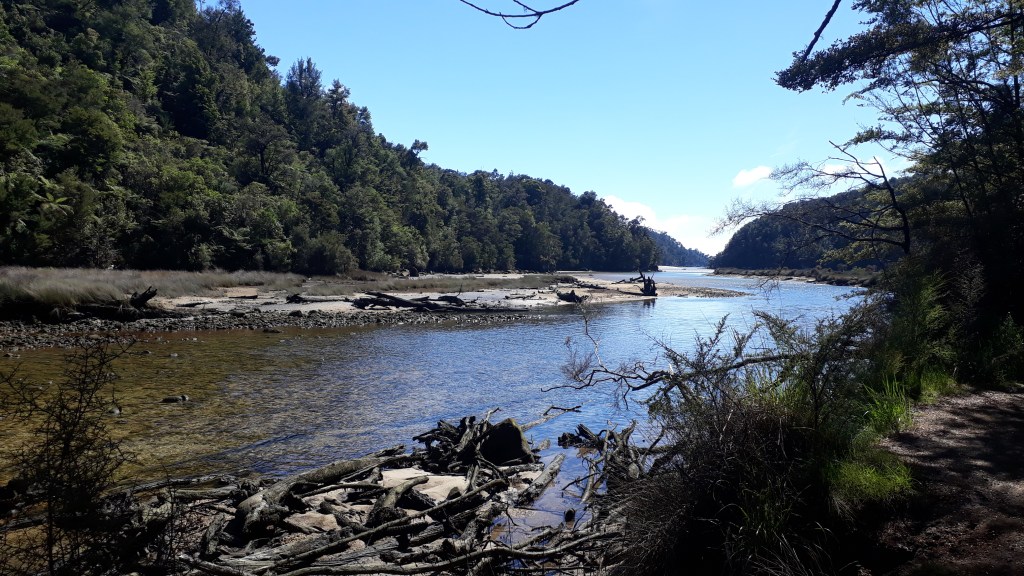
We met up with our group for day one at 8am to get kitted out for the day’s adventures and take a water taxi up the coast to Anchorage Bay, via the well-known split apple rock formation. After disembarking onto a beautiful beach we grabbed our wetsuits and headed off into the bush, along part of the Abel Tasman great walk before cutting off and heading further inland to the Torrent River. Walking and carrying the wetsuits was hard work on a hot day and we were ready for a lunch break and cool down in the crystal clear river water by the time we got there.
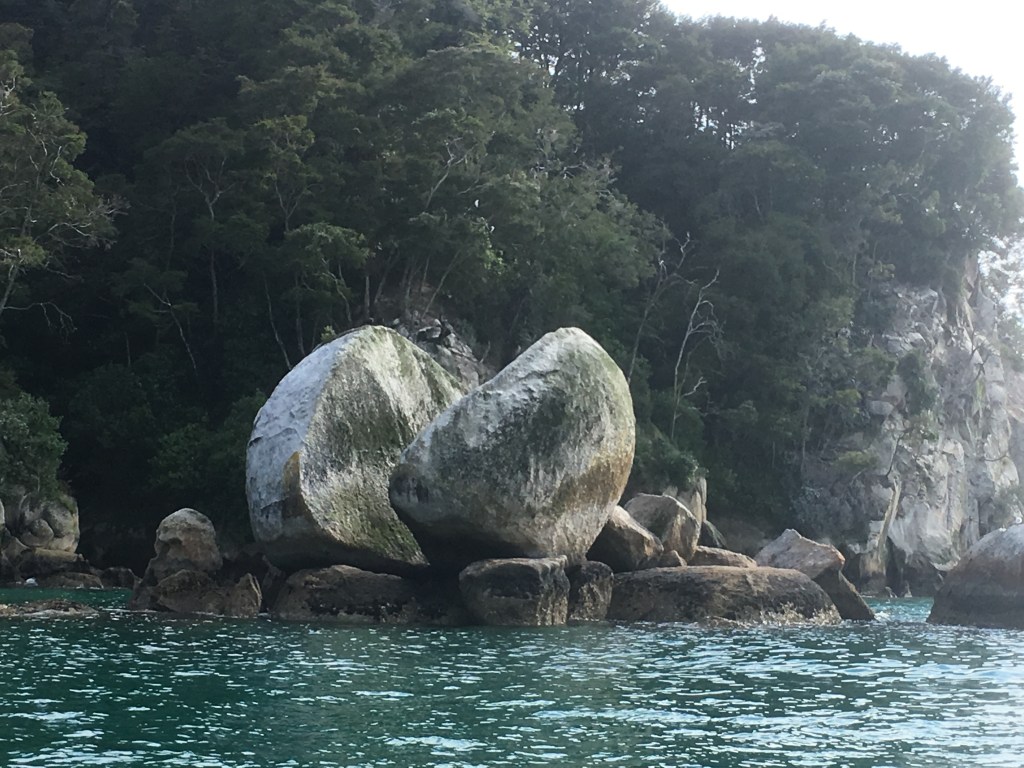
Split Apple Rock

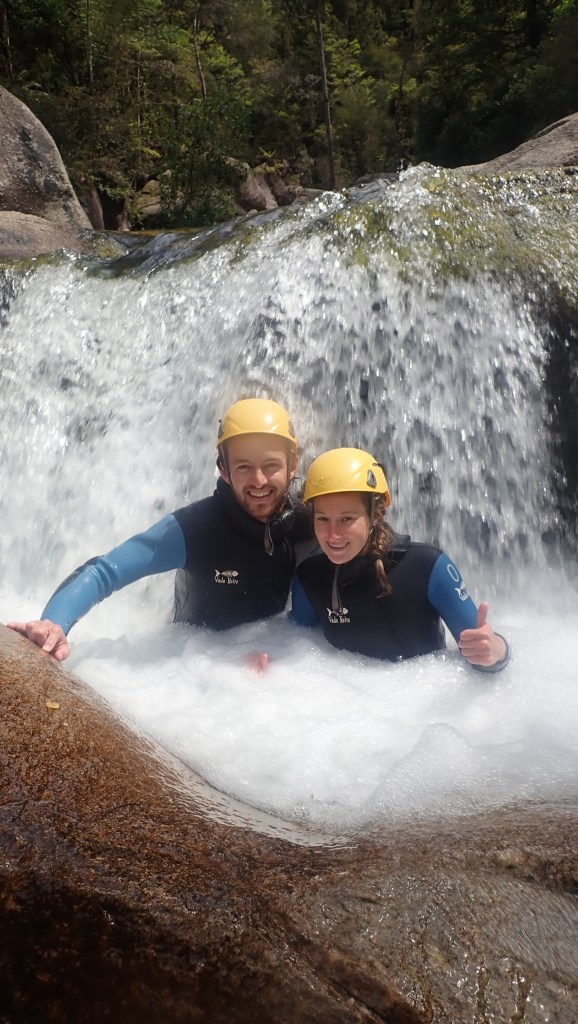
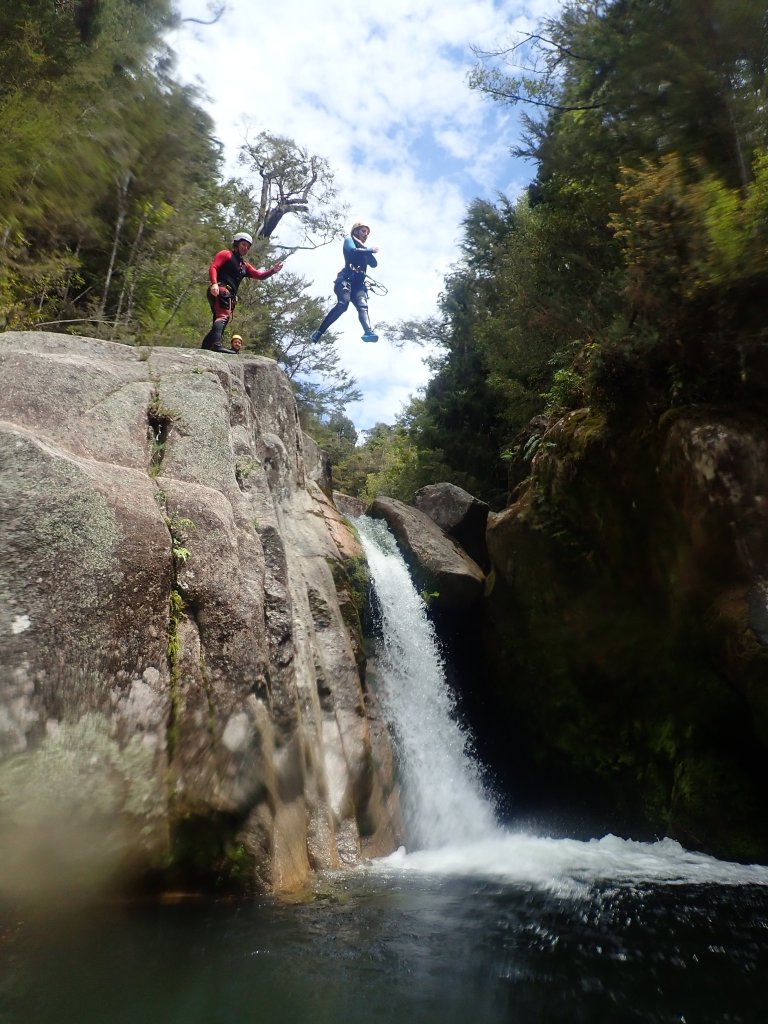
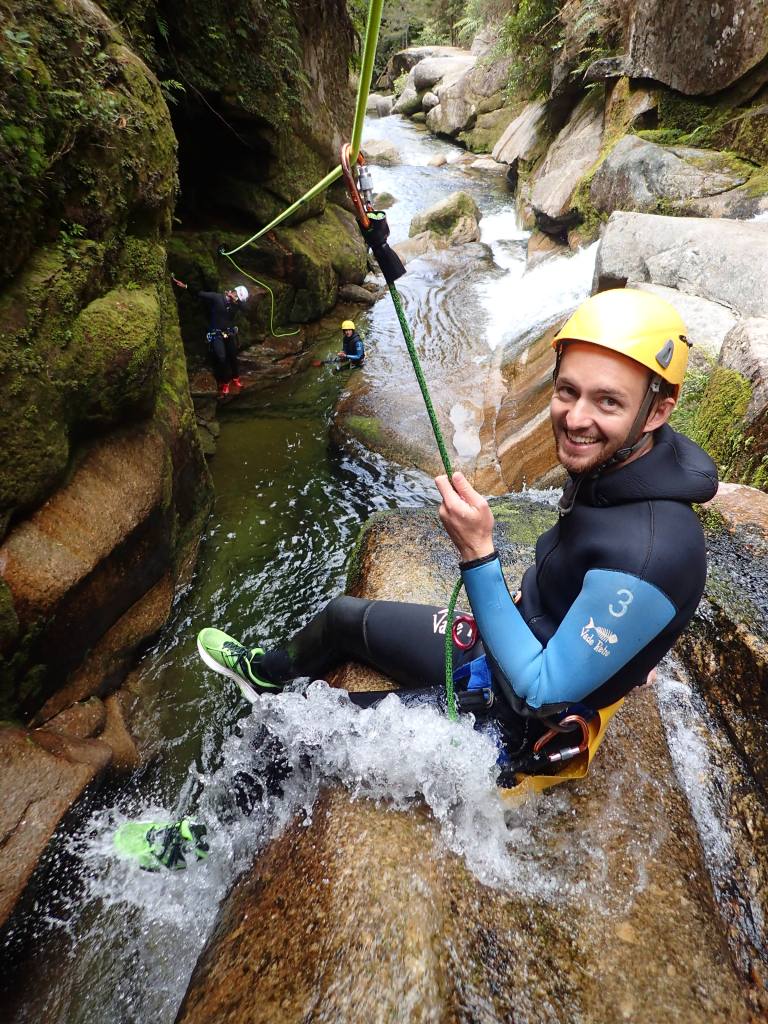
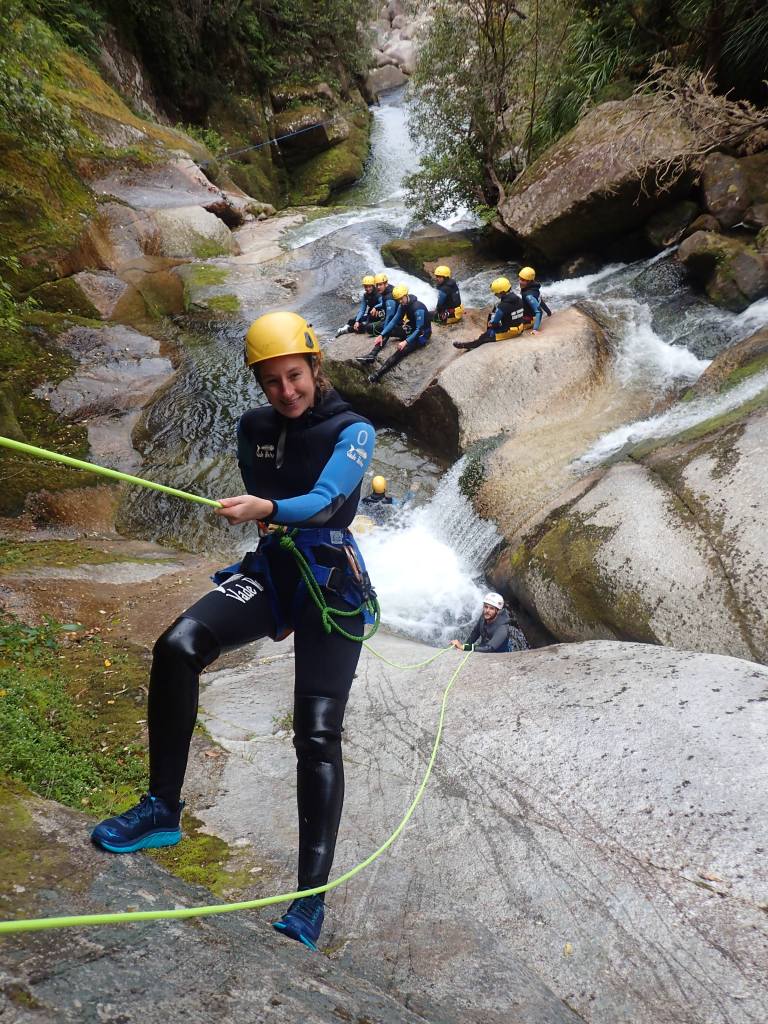
For the next two hours we slid, swam, zip lined, jumped, climbed and absailed down the river rapids. Highlights have to be the abseil behind a waterfall to dive out through it at the bottom, and the ultra-high jump (‘you need to commit and run off the top of the cliff or you will hit the rocks below’) which Claire and two other in the group were crazy enough to try. Gareth is less keen on falling and especially into water, so he stuck to the baby jumps! We ended the canyoning by sliding into Cleopatra’s Pool, to the surprise of the people bathing there, and heading back to Anchorage Bay.
Whilst the rest of the group headed back on the water taxi, we were left marooned on the beach to wait for a pick up dingy from The Aquapackers, which was basically a floating dormitory in the middle of the bay.  This might sound very sketchy, but it was completely amazing!  The Aquapackers has room for 20 people, although there were only 12 the night we stayed and is run by a couple, Jane and Mark, with help from local boy Wade.  The floating cube isn’t very big, but it does have 3 floors, one mostly under the waterline and another mostly open deck, where we ate our evening meal.

Now the evening meal is the thing that made the place most special (to Gareth at least), but there was also the amazing views of the bay and the swimming in the sea to be enjoyed first, followed by an open air shower on the edge of the boat (swimming costumes remained on!). 
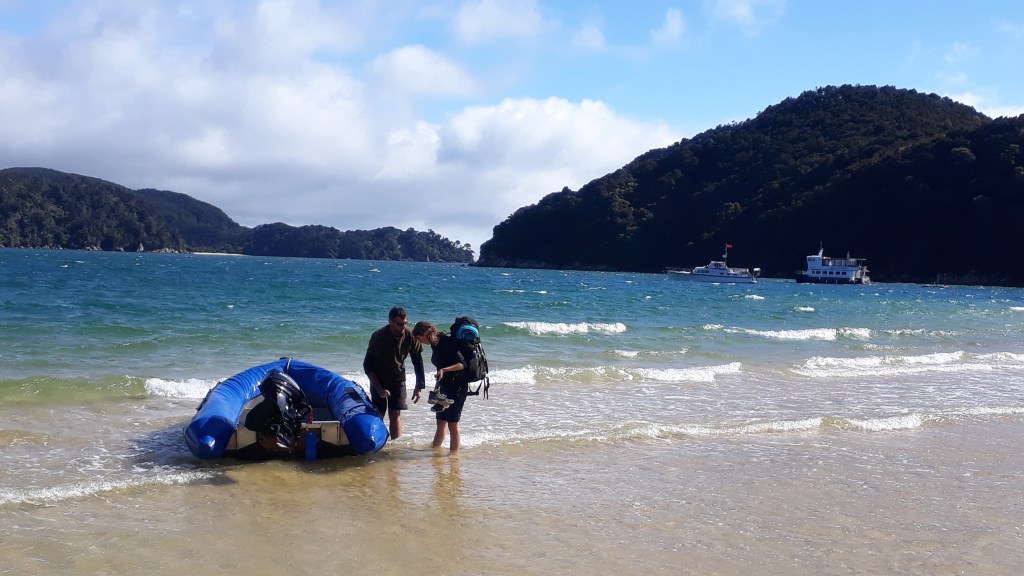
Heading to The Aquapackers for an enormous meal and gorgeous views of the Abel Tasman coastline

Now to the meal.  Considering that the boat can hold twenty people, you might have expected that Jane was concerned that another twenty might turn up that evening wanting to be fed.  The spread was enormous, with chicken drumsticks, chicken skewers, sausages, burgers, many different salads, pastas, potatoes and coleslaw to name just a small selection. Claire’s Gran would have struggled to over-cater this much!  The following morning, to help us recover, we were presented with an endless supply of pancakes, freshly made bread with local jams, cereal and so much fresh fruit.

It wasn’t just the food that made The Aquapackers such a great place to stay, it was also the good company provided by the other guests who came from a selection of fine European nations (Germany, France, Iceland and Holland).  Although the Germans did struggle ein bischen with playing Cards Against Humanity. Jane was also very friendly and would tell anyone who would listen about her scepticism of vegans (I think getting certain supplies can be difficult when you live in the middle of the sea). Wade too was full of witty anecdotes (he was filling in for Mark, who was away on some other business).

The following morning we had some time before journeying over the headland to meet our kayaking group, so we accompanied one of our companions from the night before on the start of their walk along the Able Tasman Great Walk. Sarah was from Germany and was travelling in New Zealand alone, but seemed to be having as great a time as we were and we had got on really well with her the night before.  We walked almost as far as Cleopatra’s Pool again, except via a different route.  As the tide was in it meant a bit of a detour for Sarah.
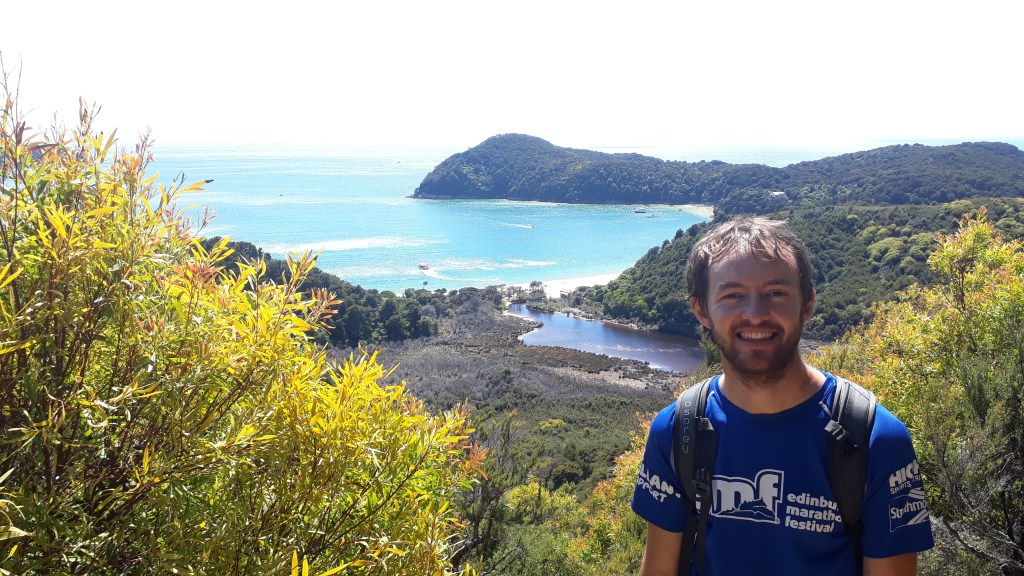
After leaving Sarah, we followed the path back past Anchorage Bay and enjoyed some great views into the bay and further along the coach to more tropical looking beaches.  After slightly longer than we had expected, we dropped back down to Observation Beach to meet our guide and trip mates for lunch, before starting our kayak adventure.
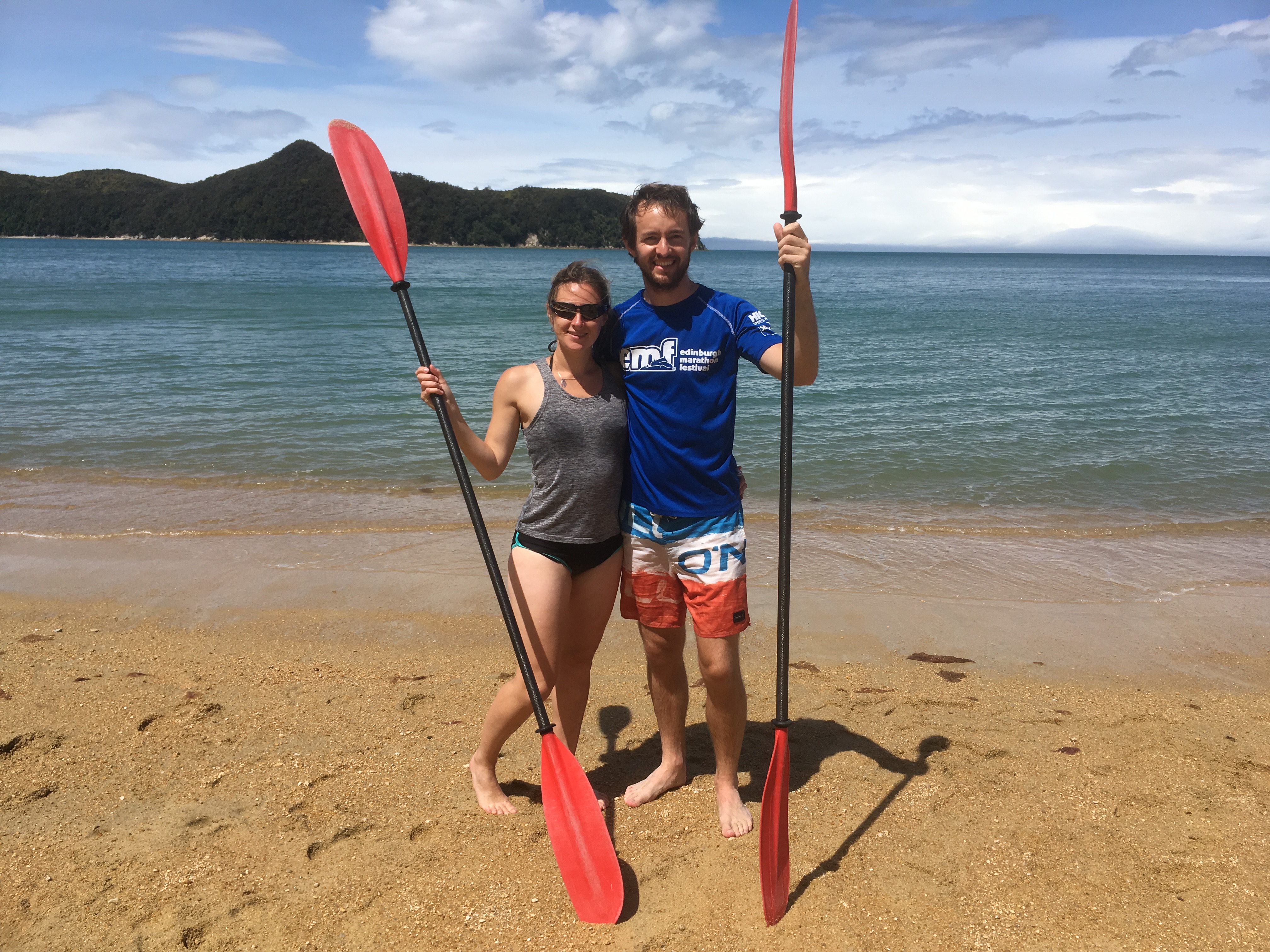
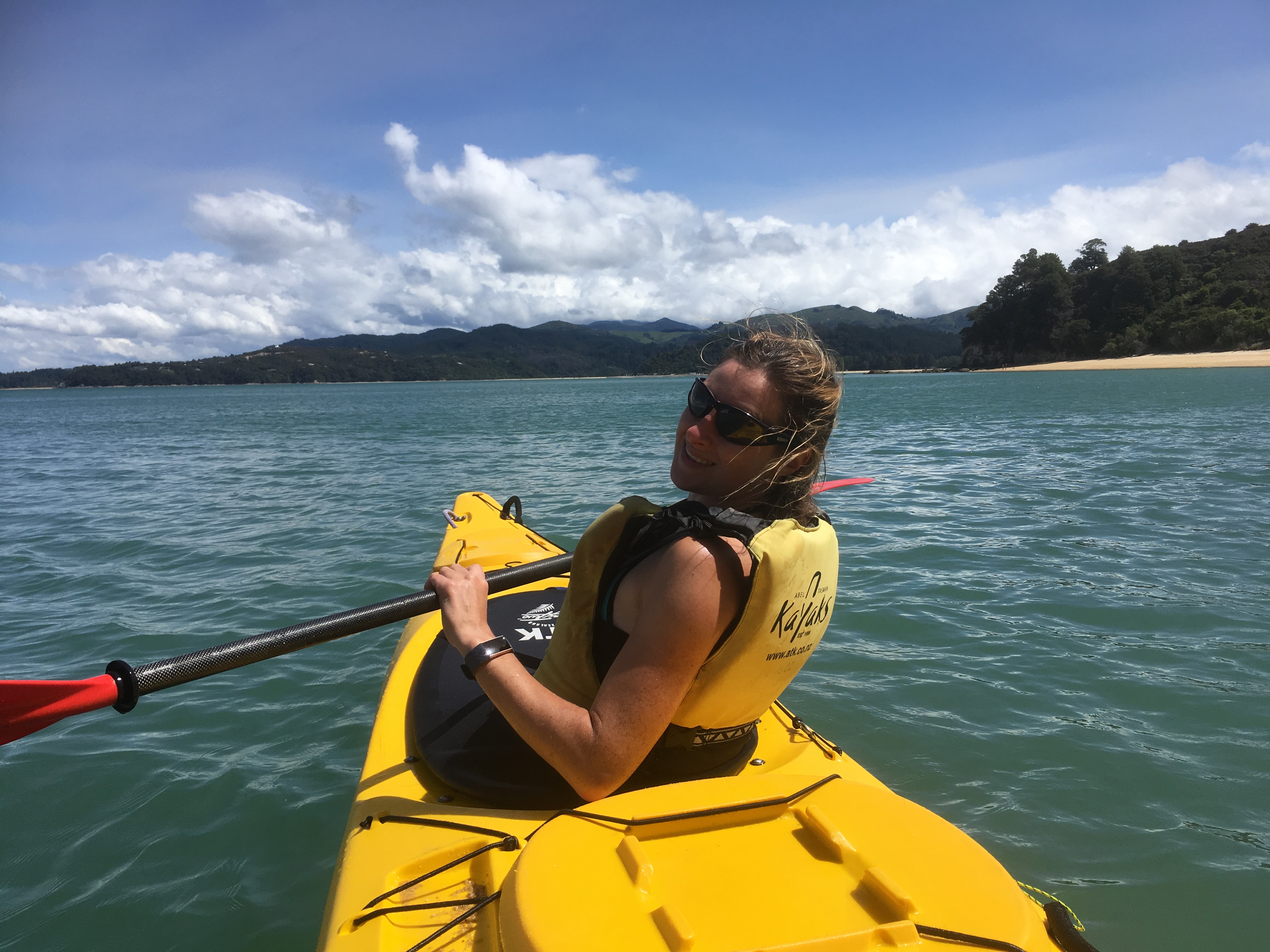
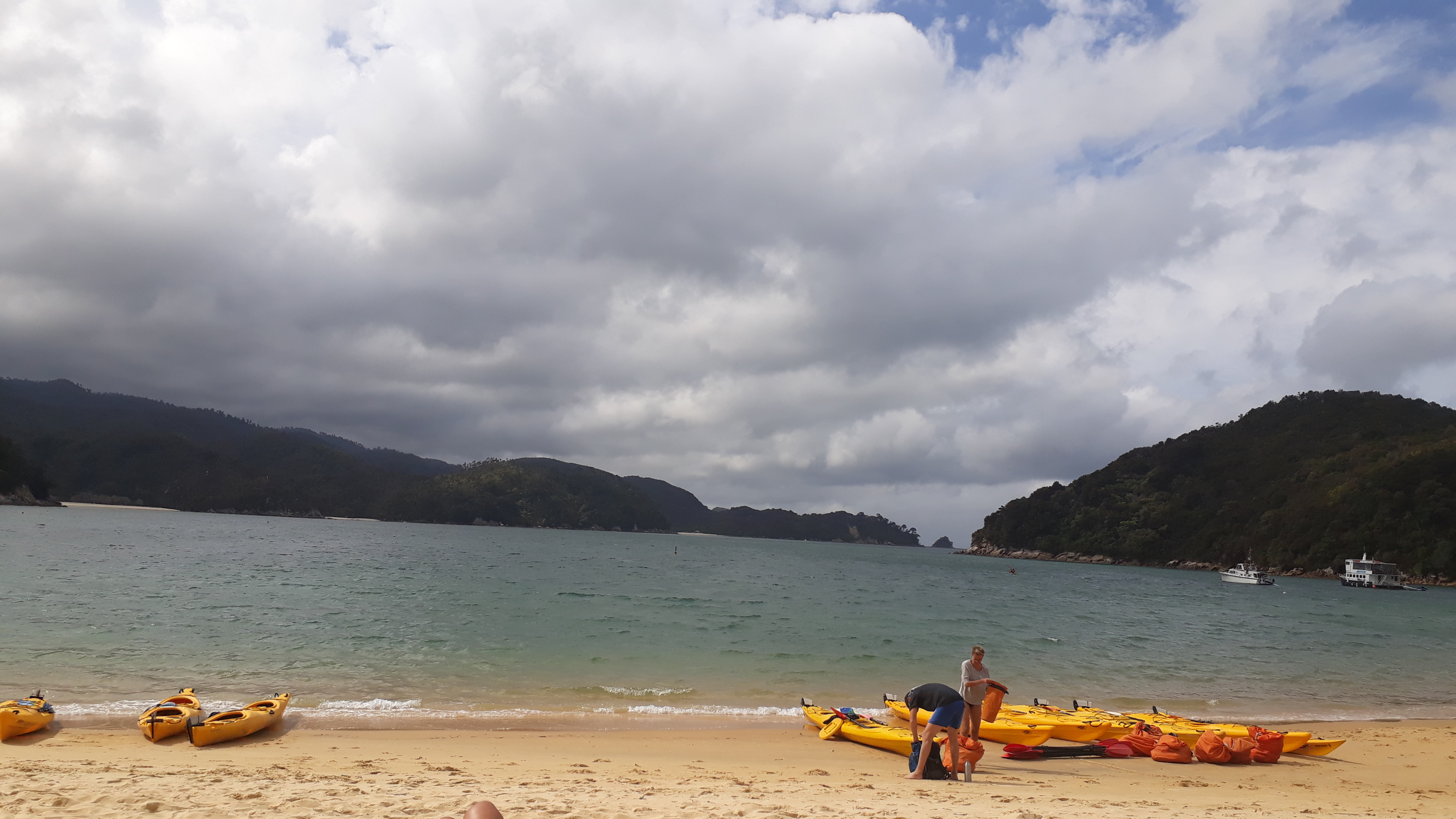
The first part of the kayak trip was something a little different.  We joined the four double kayaks together to form a raft and the two people at the back corners (one of which was Gareth) hoisted a sail, which the guide had attached to their paddles, into the air, while their partners (one was of course Claire) held onto the bottom of the sail at the other end.  After a few false starts and some manoeuvring to catch the wind, we eventually managed to get out raft going along at (literally) a rate of knots.  It was pretty fun, although Gareth complained of a sore arm afterwards and Claire felt robbed of some of the kayaking.

We then kayaked past Adele Island to Apple Tree Beach (where British settlers had tried and failed to grow apple trees) for a stop to enjoy the white sandy beach, to have a quick swim and to inspect the lagoon behind the beach. The final leg of the journey took us back to where we had caught the water taxi the morning before.  We weaved our kayak in between the rocks that jutted out into the bay and also spotted several stingrays, which was an unexpected bonus of the trip and a consequence of the tide being further out. After a hot shower and farewell coffee we said goodbye to the North Coast and started our journey south.
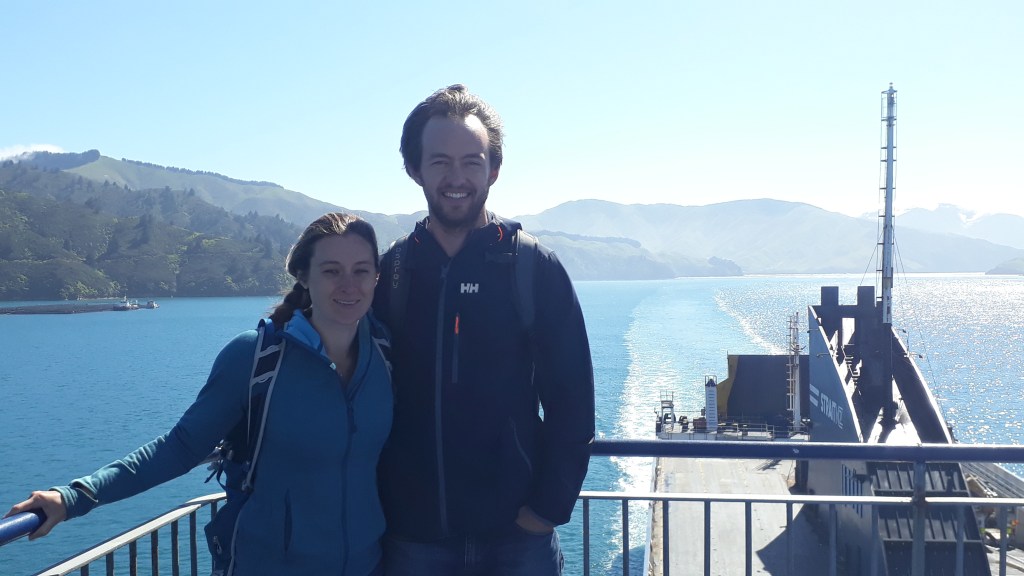
Welcome to the South Island

We left Wellington via the early morning ferry. The three hour trip can be choppy as the Tasman Sea is funnelled between the two islands, but we had been advised to make sure we were on the top deck for the last hour of the journey when the sea and wind calms in the shelter of the beautiful Marlborough Sound. This was excellent advice. The beautiful bays and cliffs along the sound were a great introduction to what the South island had in store for us over the next few days.

On the ferry ride from Wellington to Picton, passing through the Marlborough Sounds.

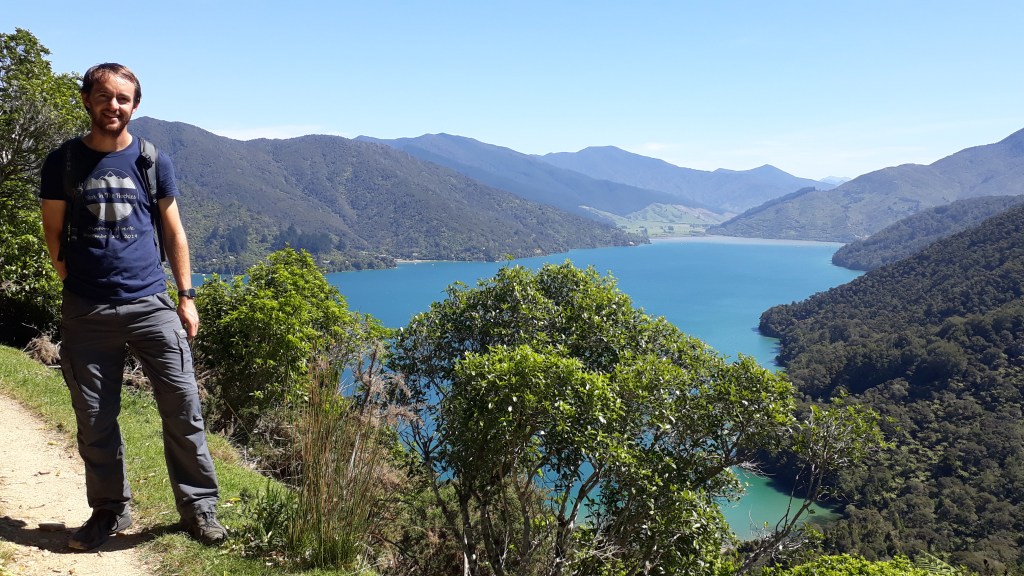
On arriving in Picton, we headed straight up the road to Anakiwa a small village which is the start (or end) of the Queen Charlotte track. The 72km Queen Charlotte Track is another of the 22 Great Rides (intermediate to difficult mountain biking), but also a very popular walk with access to sections of the track provided by water taxis for those just wishing to complete a day walk. With just an afternoon to spare we elected to do a there-and-back-again walk to the first viewpoint along the track.

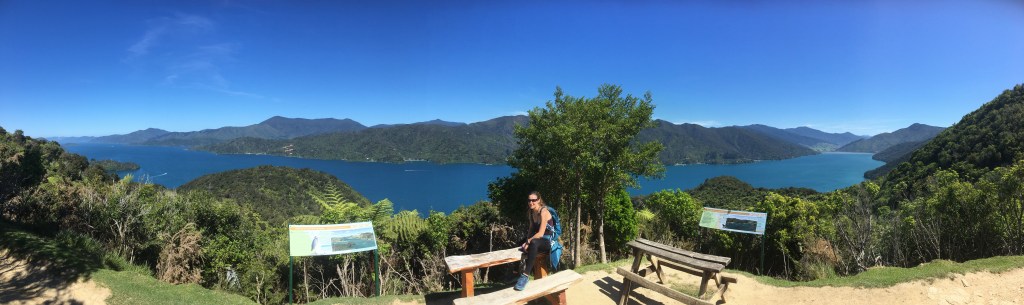
On the Queen Charlotte track overlooking the Marlborough Sounds. The view began to open out as the tree cover thinned

As we left the village the path climbed up the cliff side, dipping into a couple of beautiful secluded beaches and bays along the way. The path then steepened with some sharp corners close to steep drops that definitely met the intermediate mountain biking standard! Much of the path was tree covered and we were grateful for the shade on the hot day, whilst wishing the trees would part for a moment to give us an unrestricted view of the glistening sound below. As we continued to climb the trees began to thin and we were offered a couple of sneaky peeks at sections of the bays before we reached the viewpoint, with a glorious 180° panorama along the Sound.

At our turnaround point for the walk; a 180 view of the sounds.
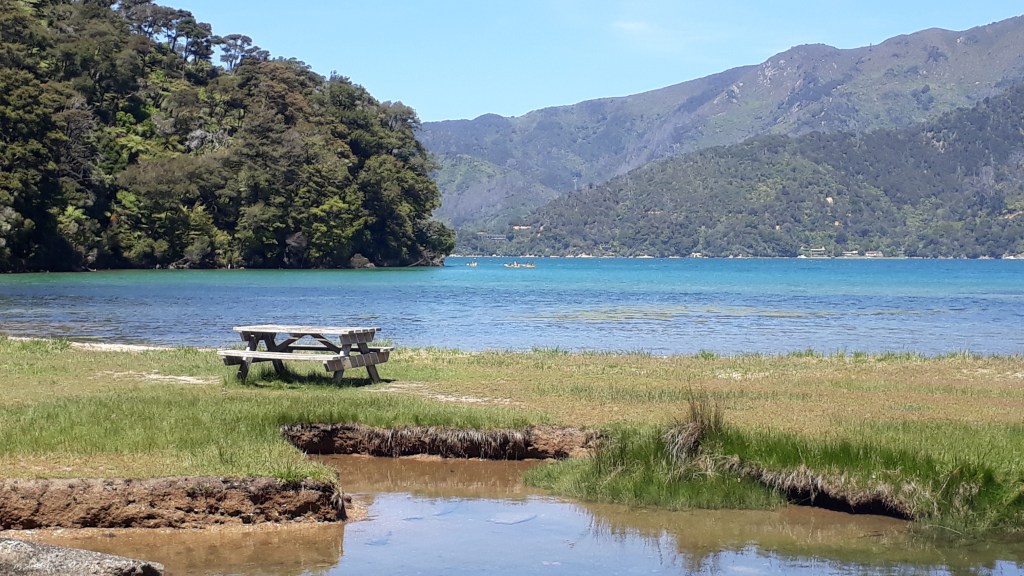
Back at sea level, at a small beach and campsite.

On our return walk we stopped off at one of the beaches for a relax in the sun before heading back to the camper for a late afternoon drive north west to Nelson. There are semi frequent signs along New Zealand roads warning travellers to allow extra time on New Zealand roads, and the stretch of road from Picton to Nelson certainly lived up to the warnings. It was like being on the most undulating, winding sections of the Cornish coast for the majority of our 110km drive, with equally spectacular views. The concentration needed for this section of the drive and our early start that morning meant that we were both tired and relieved when we arrived at Nelson, to our campsite by the sea.

The next day was our second day at a Twenty 20 cricket match.  In the morning, after picking up a coffee at the beach, we went into town to pick up some supplies and also went into the Department of Conservation offices to book some camping hut spaces for the Routeburn Track later in the holiday. It was lucky we did as it was the last two spots available.

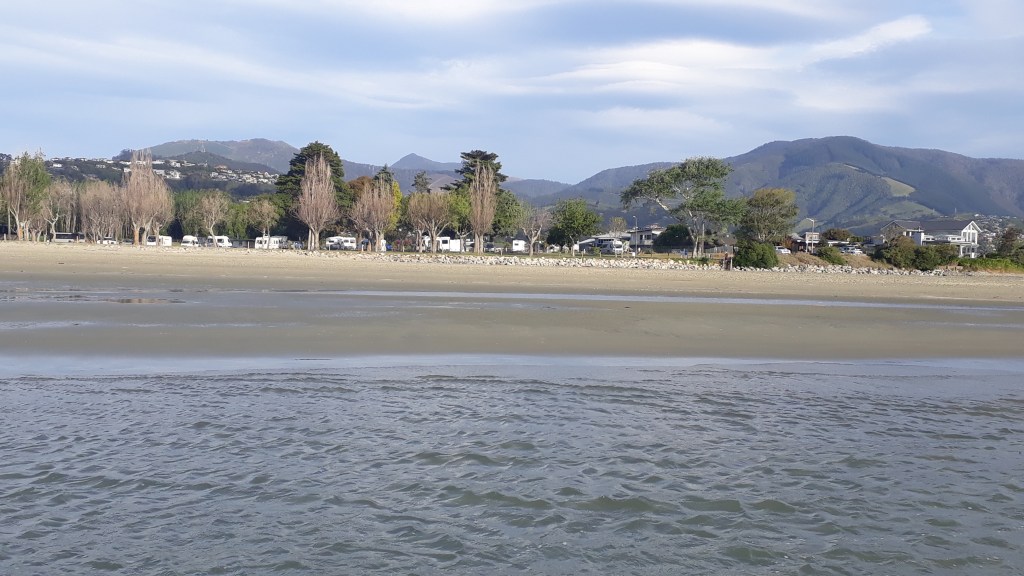
View back up the beach to our campervan (in the very centre of the picture).

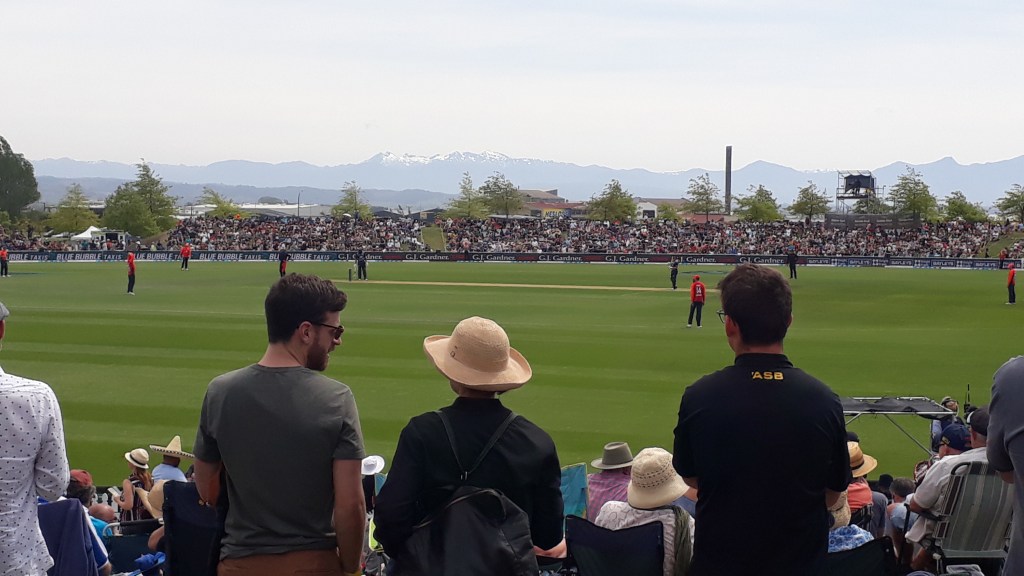
We headed over to the cricket and were worried that there would be nowhere to park the camper close to the stadium, but fortunately New Zealand is much more relaxed than the UK and we were able to park a short walk from the stadium and arrive just before the game started.  It was an absolutely stunning location for a cricket ground, with views of the Tasman Sea in the foreground and the National Parks of Abel Tasman and Kahurangi on the other side of the bay.  On top of that the playing surface look lovely with snooker table flat lush green grass and a straw coloured wicket in the centre.  Spectators packed the sloping grass banks around the ground and many had brought in picnics to keep them sustained.

The game itself was another good one, with New Zealand racking up a big score of 180 for 7, with the big hitting Colin De Grandhomme (“the big man”) getting 55 and several others chipping in.  It seemed like it would be a tough total to chase, but England started really well making 90 for 1 in the first 10 overs. Then Dawid Malan got out for 55 and soon after Eoin Morgan followed for 18, which sparked a trademark England Collapse, where they went from 139-2 to 149-7.  In the end England were 14 runs short, but they were in with an outside chance until the last two overs.

Not often you can sit sunbathing on a grassy bank with your own picnic, watching an international cricket match with a view of the sea and snow capped mountains in the distance.

Gareth really enjoyed an afternoon in the sun watching cricket in such a lovely place, but unfortunately we appeared to be a jinx on England as they won the other 3 games that we didn’t see and also won the series 3-2. Claire really enjoyed an afternoon in the sun eating chocolate ice cream

That evening we wandered to a nearby Sprig and Fern where we sampled some local beer and really tasty burgers. On the way home we wandered along the beachfront and we were treated to the locals setting of firework displays all across the coastline – it turns out that Kiwis are just as keen to celebrate the saviour of the Houses of Parliament from oblivion as the British are!

The South of the North Island

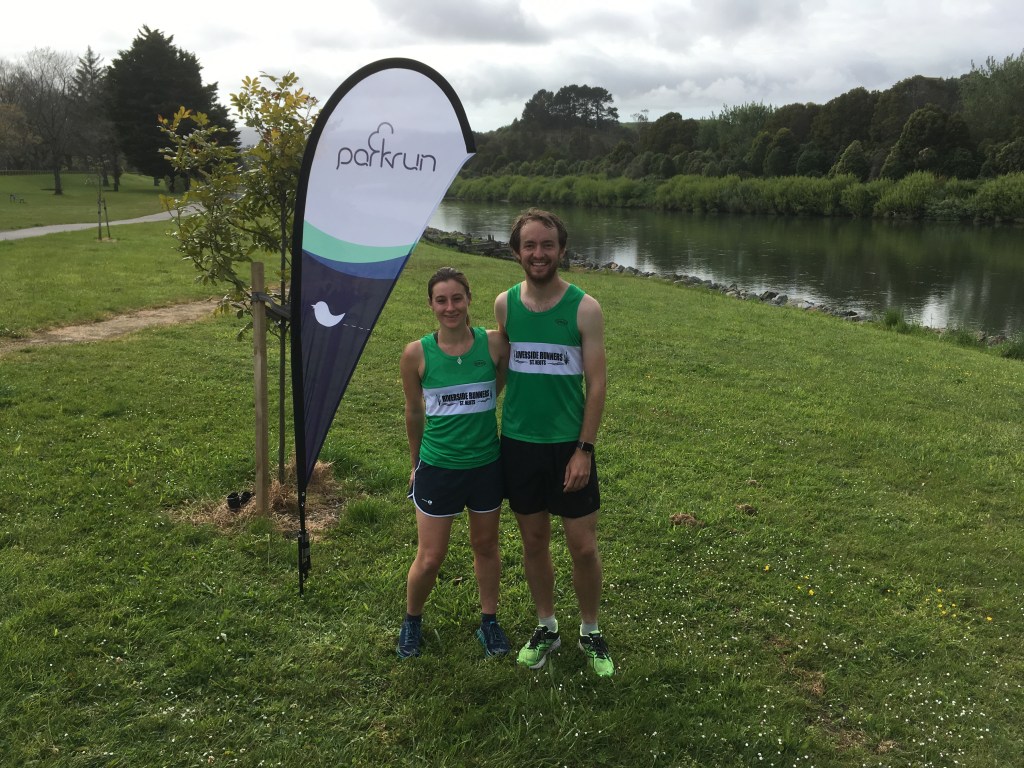
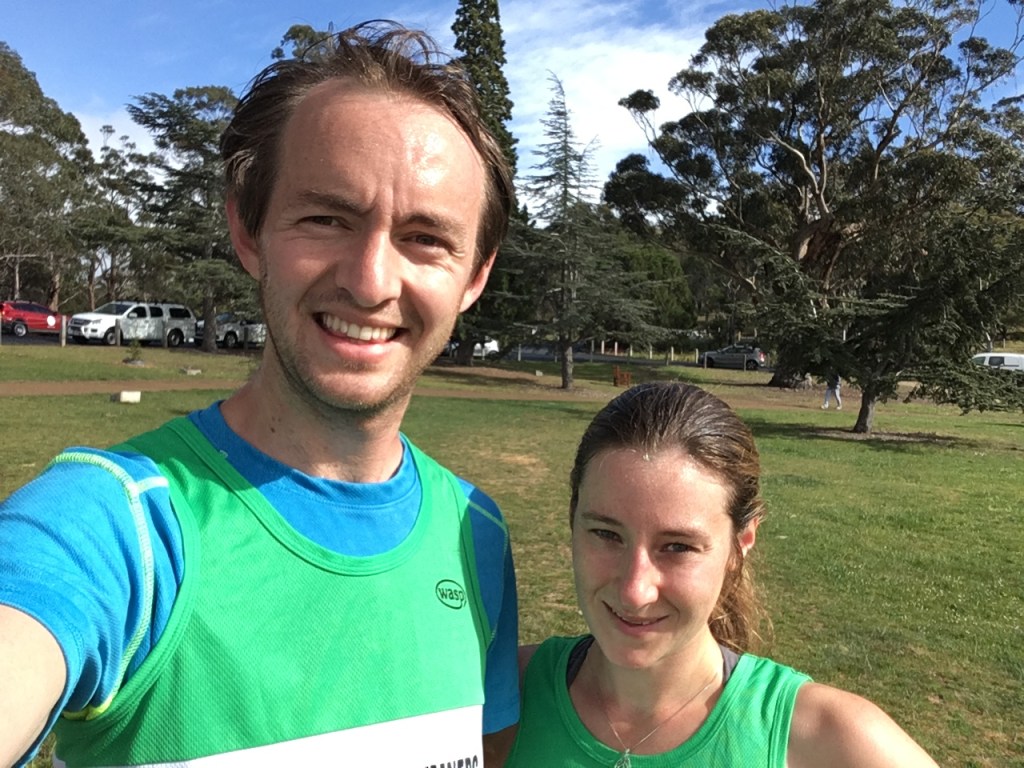
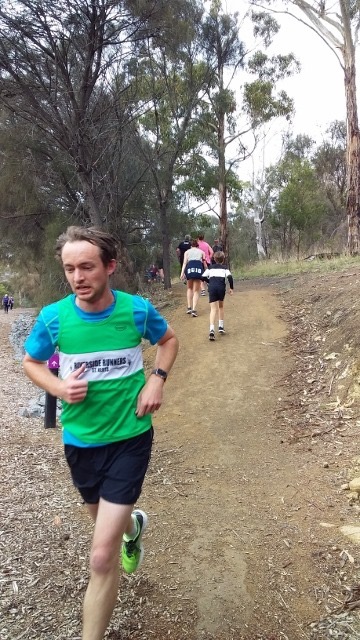
It was that time of the week again when we don our green and white vests for a mad dash around a local park; this time it was Palmerston North it what would be our final parkrun of our round the world tour (parkrun hasn’t quite reached Sri Lanka yet!). On a flat riverside course and egged on by a few competitive New Zealanders, Gareth clocked his fastest time of the trip leaving Claire for dust, and thereby winning our round the world series by 4 wins to 2.

Still smiling after a good bit of morning exercise

For once our day’s schedule was pretty empty (Claire must have missed a page in the diary) so we consulted the guide book and picked out a couple of stops on our journey to Wellington. The first of these took us on a detour in the opposite direction, to Manawatu Gorge (home of New Zealand’s largest windfarm). On our way we pass what must have been the largest group of bikers anywhere in the world. It must have taken over 5 minutes to pass them all. Quite an amazing site!

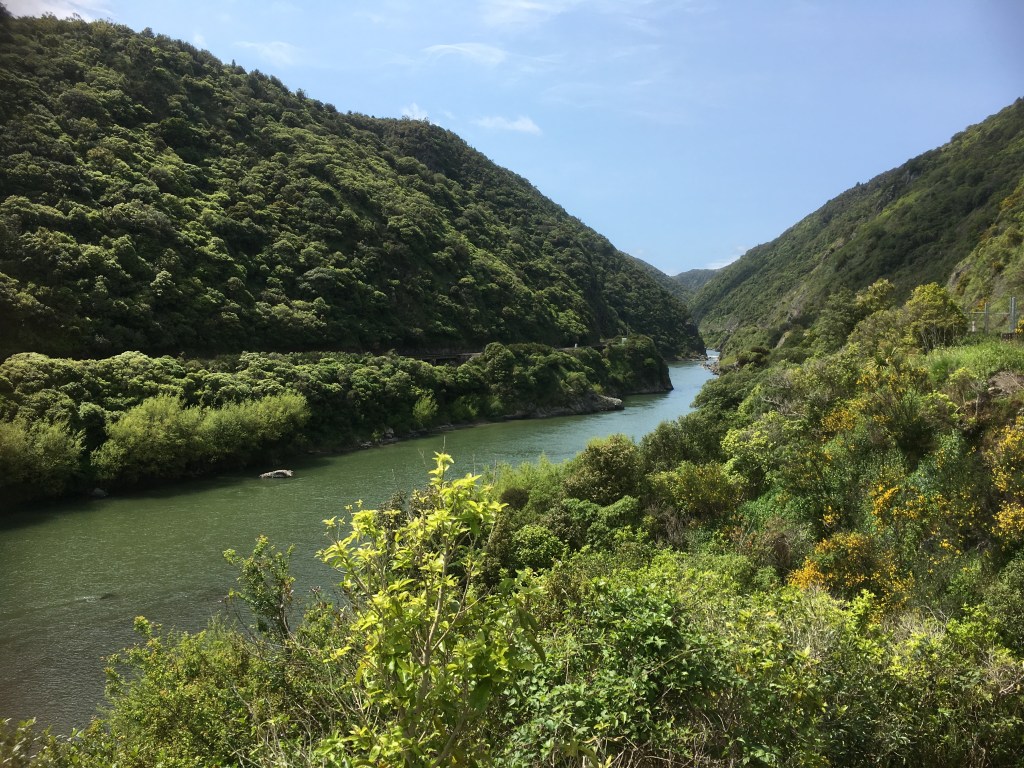
From the Gorge car park we completed the Tawa Loop walk which heads uphill through native bush to a sculpture of Whatonga, one of three warrior Chiefs to lead the Maori across the Pacific Ocean to settle New Zealand. Overall the walk was pretty but we were disappointed not to get more of a view across the gorge (the best view was probably from right next to the car park!)

#The Manuwatu Gorge – a highway through the gorge has been closed for several years with little sign of reopening, making for a more peaceful walk.

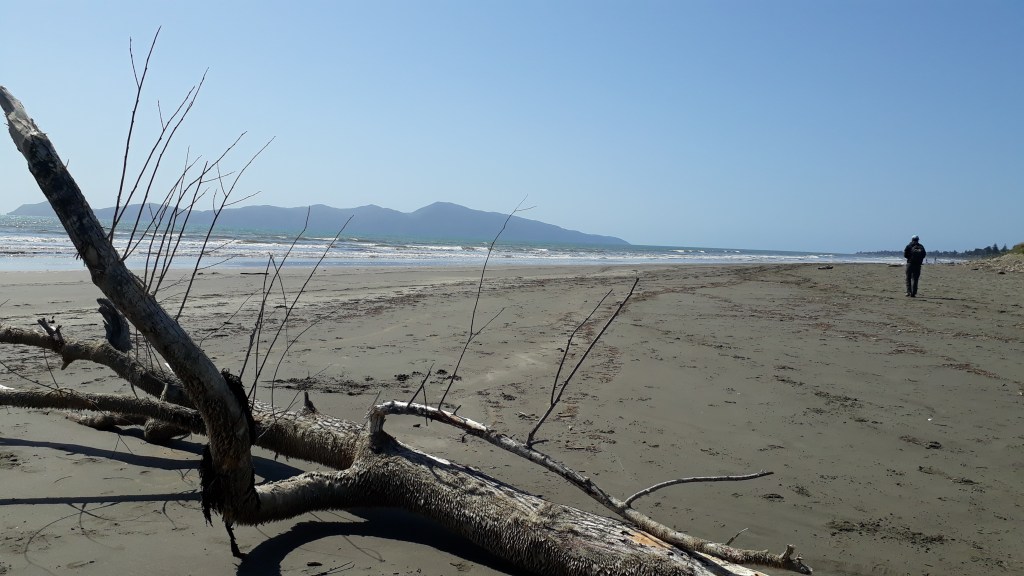
A picnic lunch later and we were on our way south west, to the coastal road to Wellington. We made an afternoon stop at Queen Elizabeth Park for a slightly chilly walk along the beach before heading on to Wellington. We’d planned to spend the evening in Wellington but hit a stumbling block – on Saturday nights the campervan site is closed in preparation for the Sunday morning market! After 90 minutes of failing to find any freedom or paid camping spots in the city we resorted to heading 15km outside of town. Learning point – Wellington and campervans don’t mix on a Saturday.

Looking out from Queen Elizabeth Park across the sea to Kapiti Island

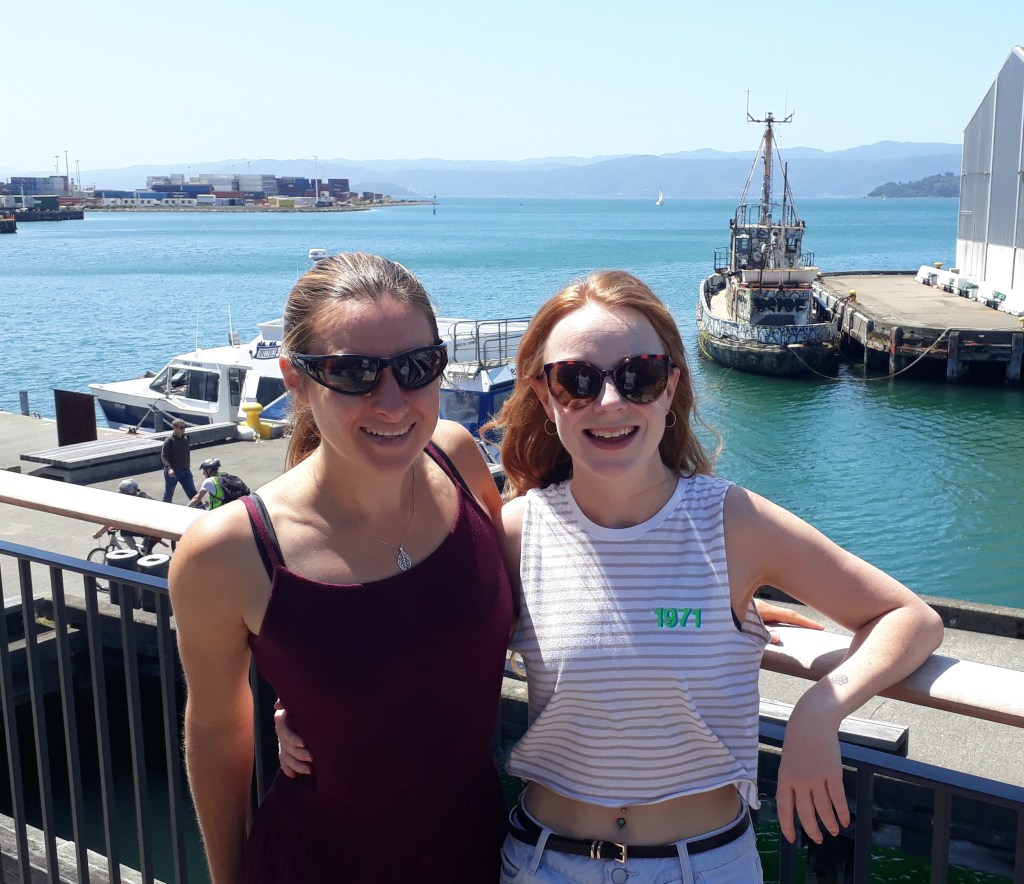
The next morning we avoided further parking nightmares by taking the bus into Wellington. Along with the Rugby in Japan, our round the world trip had been designed to fit in the England cricket tour to New Zealand. Today we would be seeing our first of two Twenty20 matches against the Black Caps. Amazingly, even Claire was looking forward to the match – although that had less to do with the cricket than the opportunity to have a few drinks with our friend Jade, an escapee Brit!

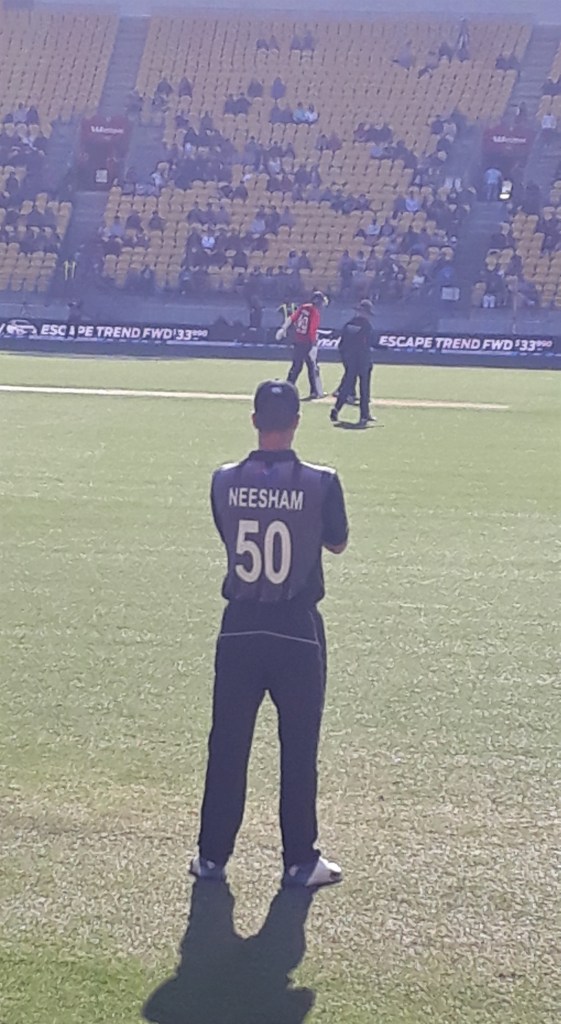
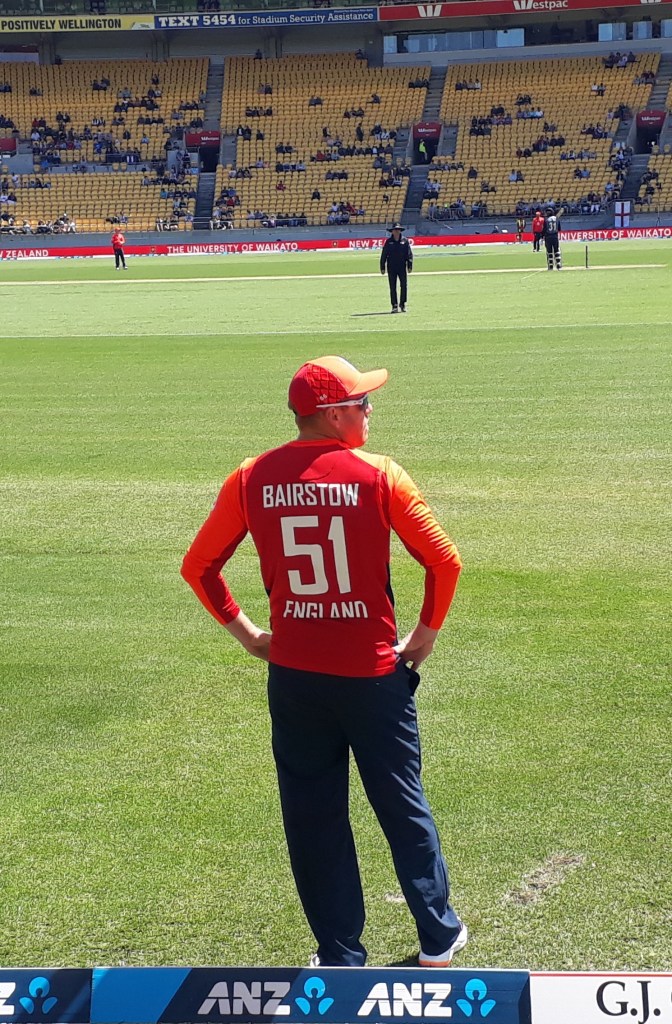
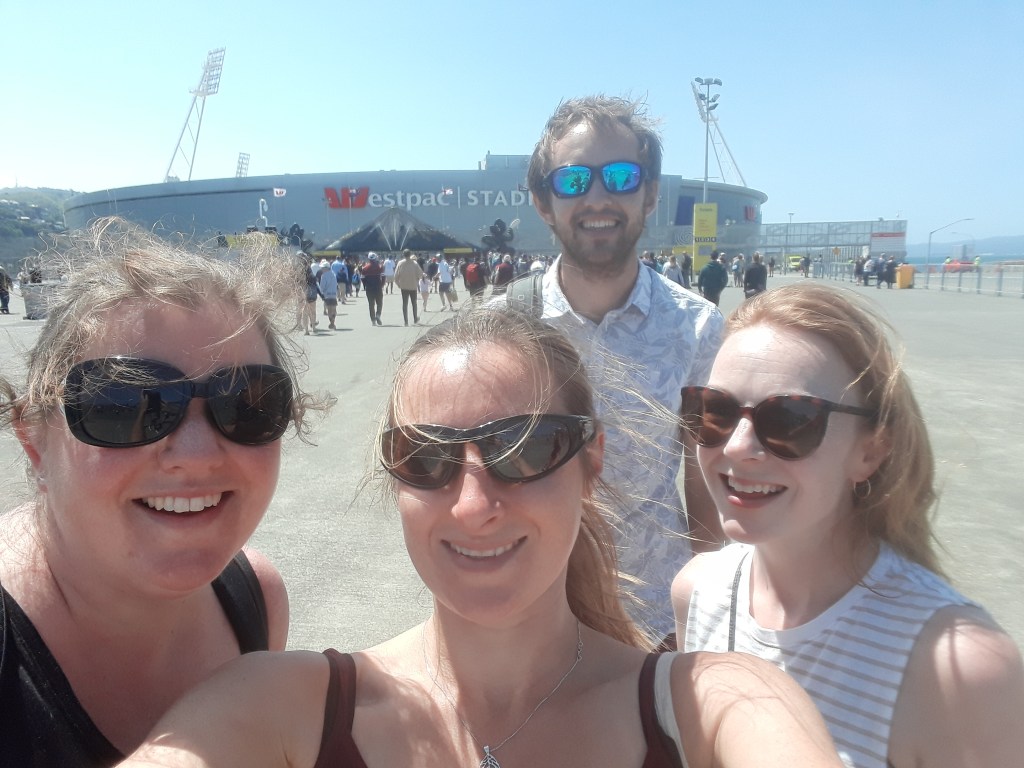
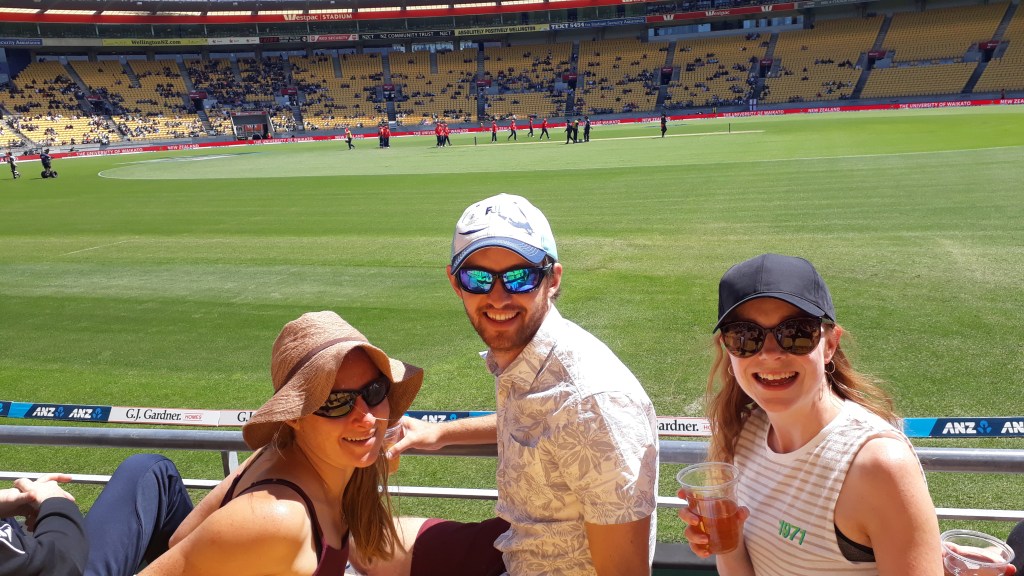
After lunch at the waterfront we headed to the Westpac stadium where Gareth had managed to get us front row seats for the game. The stadium was quite a large one and was no where near reaching capacity (although Jade and her friend Ash told us that it is even more empty for Football games). We got a few stars come to field near us, including Jonny Bairstow, Jimmy Neesham, Colin Munro and James Vince (who dropped two of the three sitters that England missed on the day). Unfortunately England couldn’t quite chase down the New Zealand total, but the game was pretty close until the last five overs. One highlight was Dawid Malan hitting an absolutely massive six, which went out over the roof of the stadium, and Chris Jordan had a good cameo at the end too (hitting 3 sixes of his own).

We headed home via the Sprig and Fern pub and the Botanical Gardens, which really are worth a visit – although probably not best appreciated after sitting in the sun drinking beer all afternoon. We got a relatively early night in ahead of our ferry to the South Island the next morning.

Great walks and rides of the North Island

One aspect of New Zealand’s culture that has impressed us is the importance placed on sport and exercise. This of course includes the countywide support for the All Blacks and Black Caps but extends to a nationwide enjoyment of the outdoors. This has led to a vast network of walking and cycling trails across the country, with the most popular 10 walking routes given ‘Great Walk’ status and 22 ‘Great ride’ cycle routes. Of all the Great Walks one section of the Northern Circuit stands out as one of the greatest day walks in the world: The Tongariro crossing.

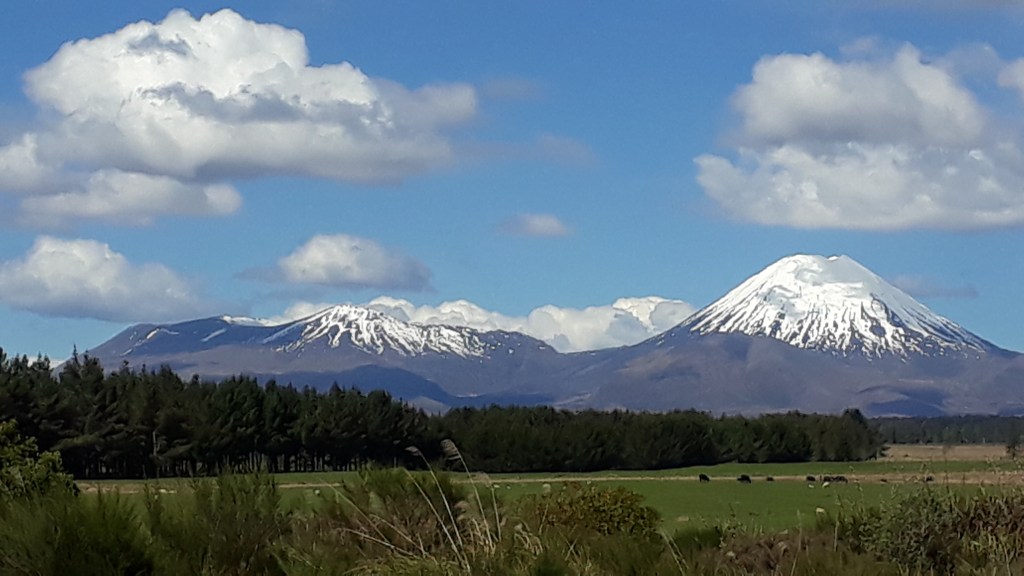
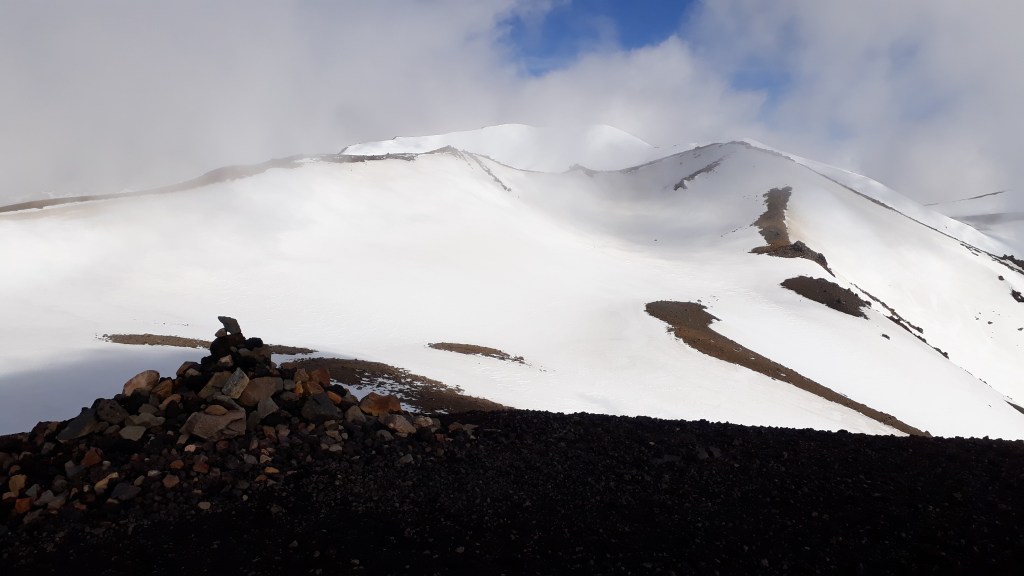
Mount Torgariro (left) and Mount Ngāuruhoe – the crossing goes just to the right of Mount Tongaririo

The Tongariro Alpine Crossing is a 6 to 9 hour one way hike between Mount Torgariro and Mount Ngāuruhoe (Mount Doom for all those Lord of the Rings fans), which is conveniently accessed using a shuttle service to return you to your vehicle after the walk. Whilst we were still in the shoulder season for Alpine walking we had been advised to book the earliest shuttles to beat the crowds. Whilst we absolutely appreciated this advice once we were on the crossing, we were less convinced as we were woken up by the 5:45am alarm!

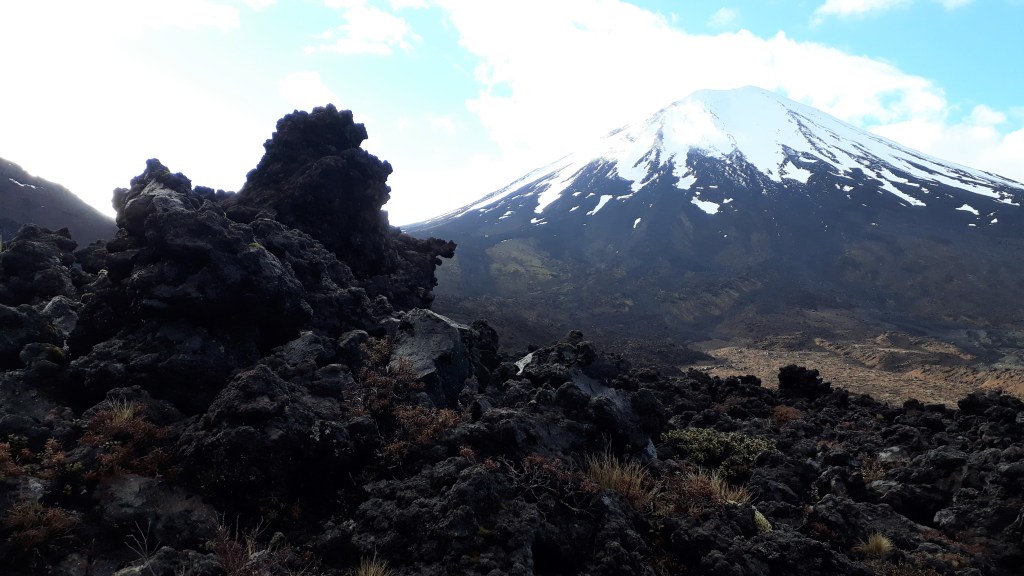
We started our walk from the west side of the crossing at 6:30am which meant we were some of the first hikers on the trail that morning. Over the first hour the morning cloud gradually began to lift as we slowly ascended through a slightly marshy valley scattered with basalt rock formations from past lava flows. As the mountain peaks crept in and out of the clouds we caught glimpses of the path ahead climbing into the ridgeline.

Mount Ngāuruhoe from near Soda Springs

We took a slight detour off the route to admire the Soda Springs waterfall where we got a great view across to Mount Taranaki to the West. When we rejoined the path 20 minutes later we realised the benefit of our early start, as we were caught up by the next bus load of hikers who did not seem interested in completing the detour. All of a sudden the path seemed much busier.

Gradually patches of snow began to appear in sheltered spots between rocks. As our climb steepened, the crowd thinned again and snow began to invade the path until we reached the south crater, which formed a completely white flat plain of ankle deep snow which ended in the first ridgeline of our hike.

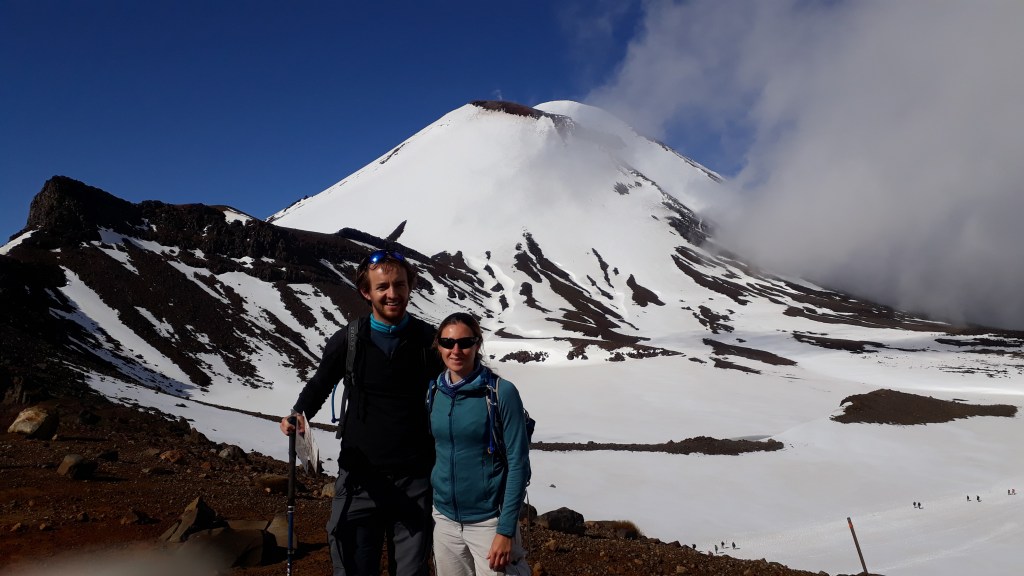
Some enthusiastic hikers, with and Mount Ngāuruhoe and the south crater of Mount Tongaririo in the background with hikers crossing the snowy plains on their way up to the ridge.

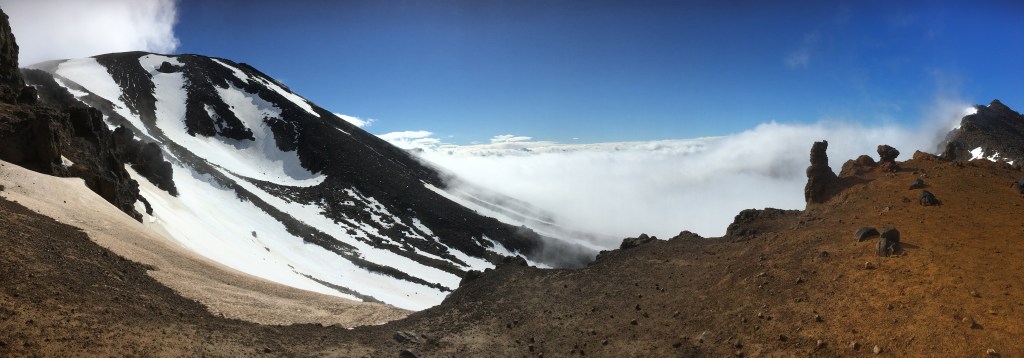
The top of the ridgeline took our breath away (both literally and figuratively). We could suddenly see across both east and west sides of the valley and the peaks looked majestic with their snow covering. Clouds were above and below us, but were moving quickly so that different parts of the landscape kept appearing and disappearing adding extra magic to the scenery. In Claire’s opinion the views for this half hour period were the most dramatic of our trip (even beating Moraine Lake in Canada!).

The view from the ridgeline looking across the opposite side of the valley

The ridge climbed up for a short way to reach the summit of our journey at the Red Crater, where the snow had been melted by the volcanic warmth below and the ground was even warm to the touch.  The view now opened up to the Northwest, where we could see the summit of Mount Tongariro itself.  Claire was keen, considering how well we were keeping to time, to make it to the summit, but Gareth decided that it would probably not be sensible considering that there were no marker poles in the snow to show the way and as the view to the Northeast was obscured by cloud, which could roll in at any moment and create “white-out” conditions. Having heard that a Japanese tourist had got lost and died on the route the previous week, it was not worth taking any chances.

Mount Tongariro peaking out of the cloud for a few minutes just as we arrived at the top of the crossing.

Instead we hung around at the top for about 20 minutes waiting for the cloud to disperse and show the views to the north and east.  Unfortunately the opposite happened and the clouds closed in and we were only able to chat to some other travellers hoping optimistically for the same.

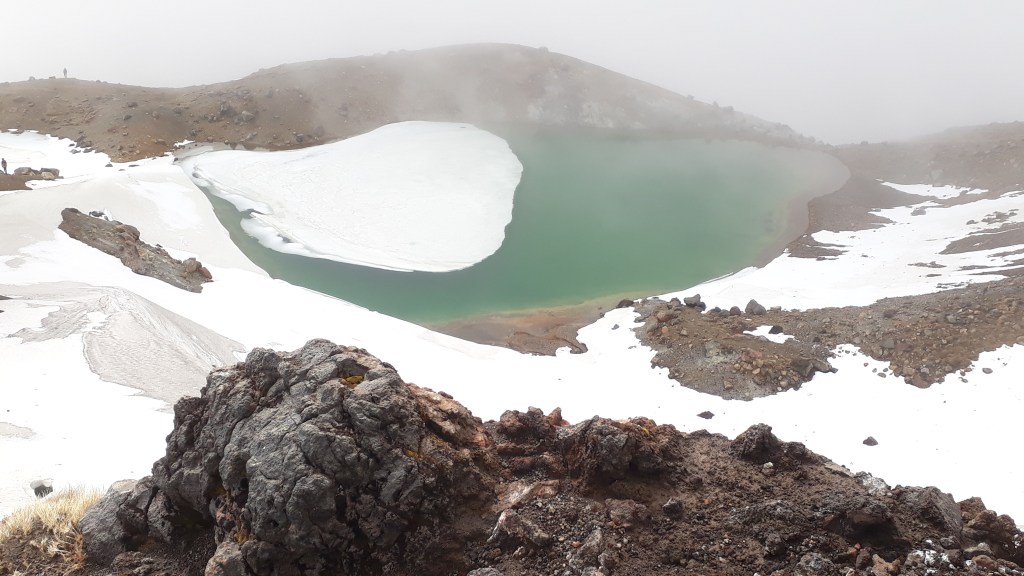
We then dropped down a short way to the Emerald Lakes, where the view of the valley remained partially hidden, but the lakes looked very beautiful in their semi melted state, so we stopped again to admire them before crossing the central crater, which was another snowy plain.  Our final climb of the day was up to the Blue Lake, where the view of the lake and the central crater made a good place to stop for lunch.

The Emerald lake. We met up with a couple who did this walk two days after us – they had the same picture but all the snow had already vanished!

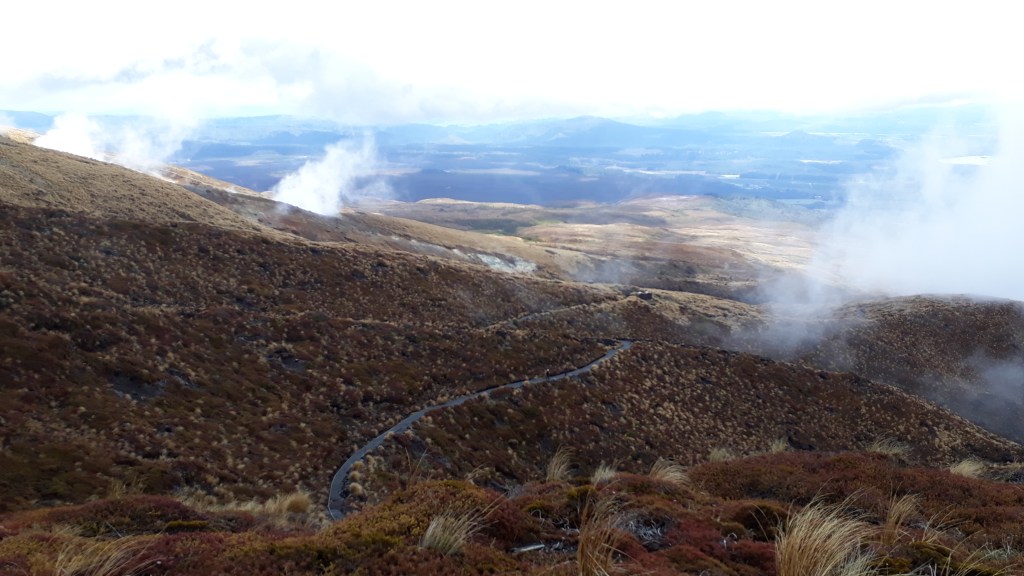
Past here we dropped out of the cloud and managed to get some views of Lake Taupo and the forests to the North, before Gareth decided that we should try to make the first of the hourly buses back to the car as we were on track to just miss it.  Having “encouraged” Claire to run the last 2km, Gareth was pleased when we got to the car park just before the bus arrived. He was a little disappointed to discover though that the bus driver always likes to wait 10 minutes, “so that nobody just misses the bus”!

The route down. Clouds on the right of the picture, but the ones on the left are actually the Ketetahi hot springs

Regardless, we made the bus and were back to our car with plenty of time to visit National Park Village for a coffee and to stock up on supplies before heading south to find a campsite.

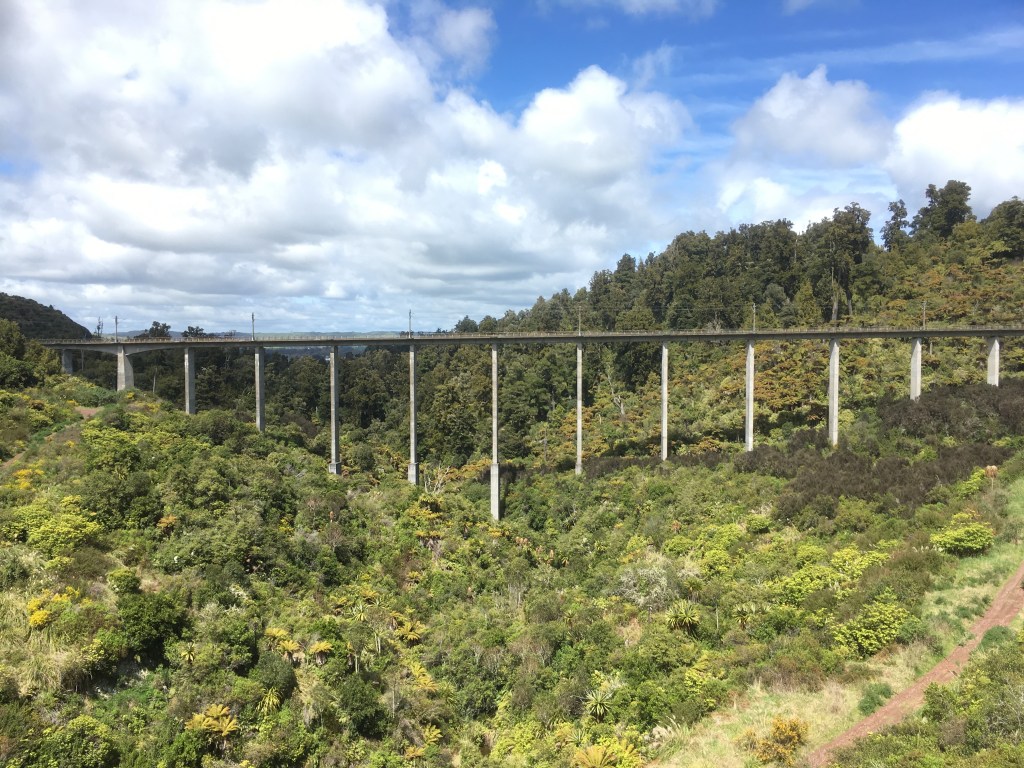
We stayed the evening in Raetihi in the hope that we could do some kayaking on the Whanganui River as part of the Whanganui (pronounced Fanganui according to its Maori roots) Journey (a river based version of a great walk).  Unfortunately due to it being low season, there was limited availability for hiring Kayaks, so we instead headed to the nearby town of Ohakune to do some mountain biking on a stretch of the Mountains to Sea ‘Great ride’ track known as The Old Coach Road.  This trail is between two railways, which had proved difficult to build and so historically coaches carried people between the two termini.

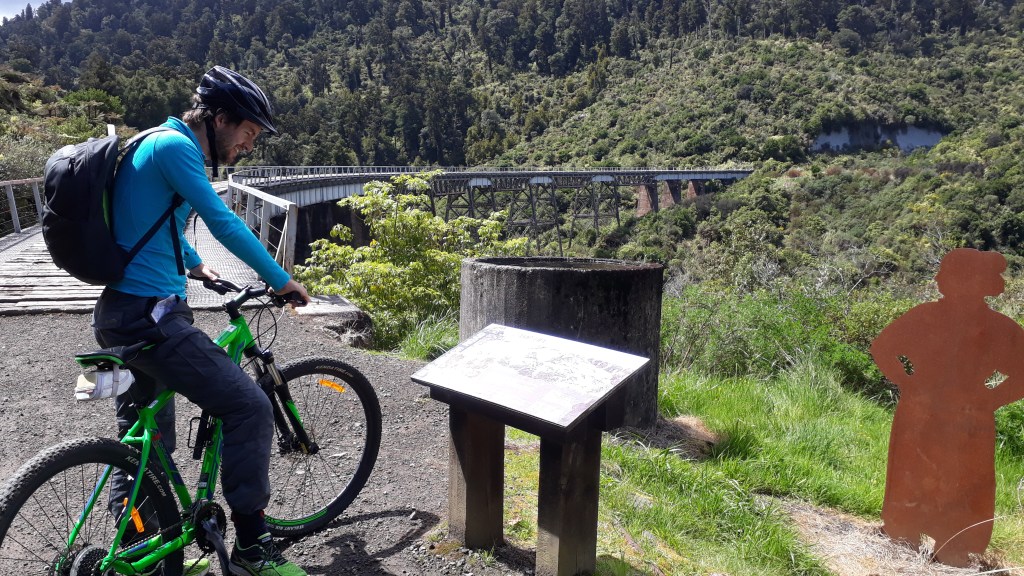
The metal lady was not buying Gareth’s excuse that he was “just stopping to read the signs”! The old first viaduct is in the background.

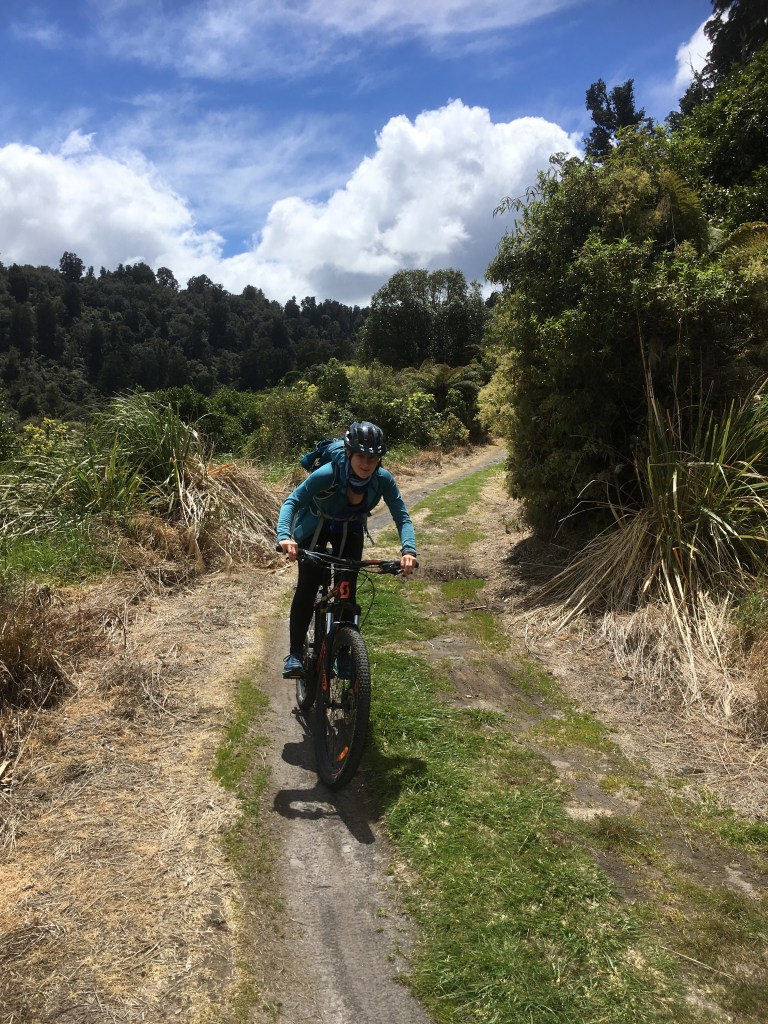
Picking up the bikes in the centre of town, we cycled uphill past the train station on a tarmac road, before turning onto a gravel road and then onto a small track, which was a mixture of dirt, grass and the original cobbles. The climb was quite steep, and uncomfortable on the cobbled sections, but fortunately there were lots of information boards to read, which gave us a valid excuse for each rest! We were rewarded with occasional exhilarating downhill section where we thankfully didn’t meet too many people going in the opposite direction on the narrow track.

The modern replacement for the first viaduct.

After about an hour we came to the first of two viaducts that had been abandoned by the railway and could be cycled across, giving fantastic views of the valley below. After another battle uphill which reached the summit of a ride and enjoyed a steep hairpin turn filled downhill section to the second viaduct, which was also our turnaround point so we went straight back up the hill and collapsed at the top for a well deserved picnic. With approximately 11km of our 12km post lunch cycle downhill our afternoon was sheer joy. Our stops were now opportunities to gather our nerves before hurtling down the track again. It was over far too quickly and neither of us really wanted to return our bikes (although our legs probably couldn’t handle another ride!).

A rare picture of Claire using her brakes!

We treated ourselves to a post ride coffee and cake (or in Gareth’s case beer), before we set off on the road again (swapping 2 wheels for 4) towards our overnight stop in Palmerston North. On the way we were treated to some stunning rolling hills, amazing river gorges where the flat land just dropped away and viewpoints that were so expansive that it seemed as though we could see half of the North Island. New Zealand appears to have a new pocket of beauty with every turn of the steering wheel.

If our blogs are giving you itchy feet and Peru is on your bucket list then please check out our friend Erick’s website who has set up his own tour company IncasPath in Cusco, Peru. He’s a really friendly guy and probaly the best tour guide we’ve ever had. We completed the Salkantay pass with him to Machu Picchu four years ago and have had the travel bug ever since!!!! http://www.incaspath.com

A land of Volcanoes: Rotorua and Lake Taupo

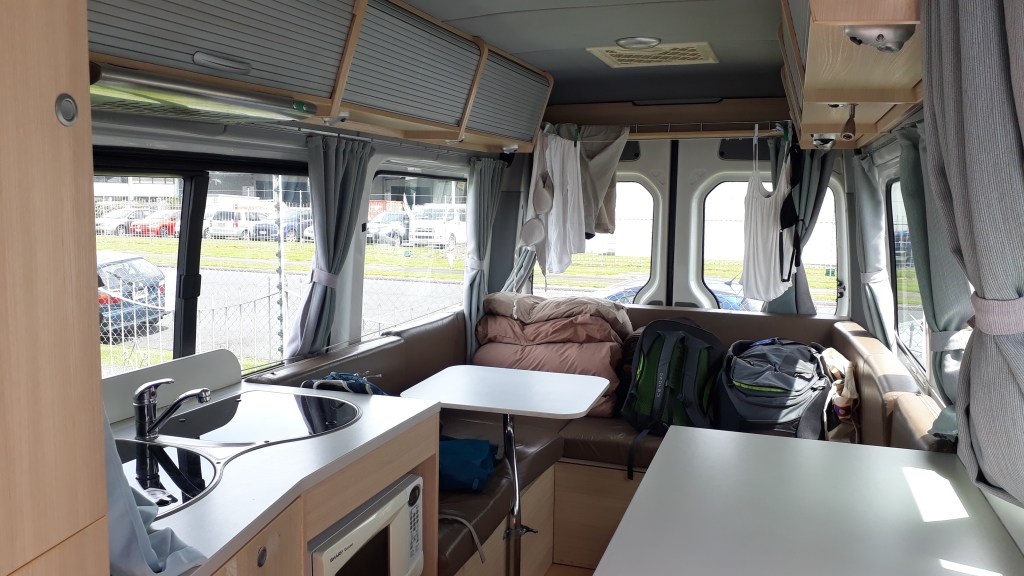
On our third day in New Zealand, we picked up our camper van which would be our home for the next three weeks.  We’d splashed out a little bit and gone for a slightly bigger one than we had in Tasmania – one with a toilet and shower and that we could stand up in! A bit larger than what we usually drive, it took a little bit of getting used to, but we had the journey to Rotorua to perfect our technique.  Claire even got complemented on her reverse parking when we arrived at the campsite (Gareth was jealous)!

Our home for the next 3 weeks!

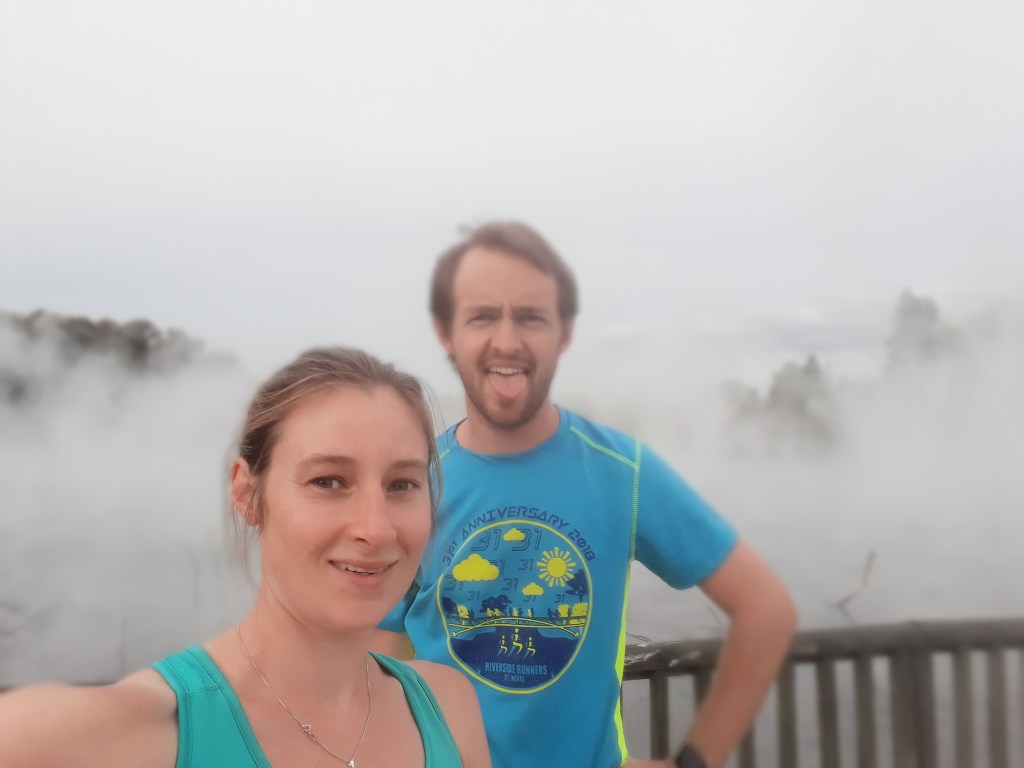
For those of you that have been to Iceland, Rotorua would not look out of place; just swap the woolly hat and scarf for shades and a sun hat! After spending most of the day on camper related activities both of us needed to stretch our legs. As we only had that afternoon in Rotorua we decided to dig out the running shoes. Our first kilometre took us through Kuirau Park, where the standard riverside walkways and green spaces are punctuated by steaming vents, boiling mud and a decidedly eggy smell! Certainly not your average park!

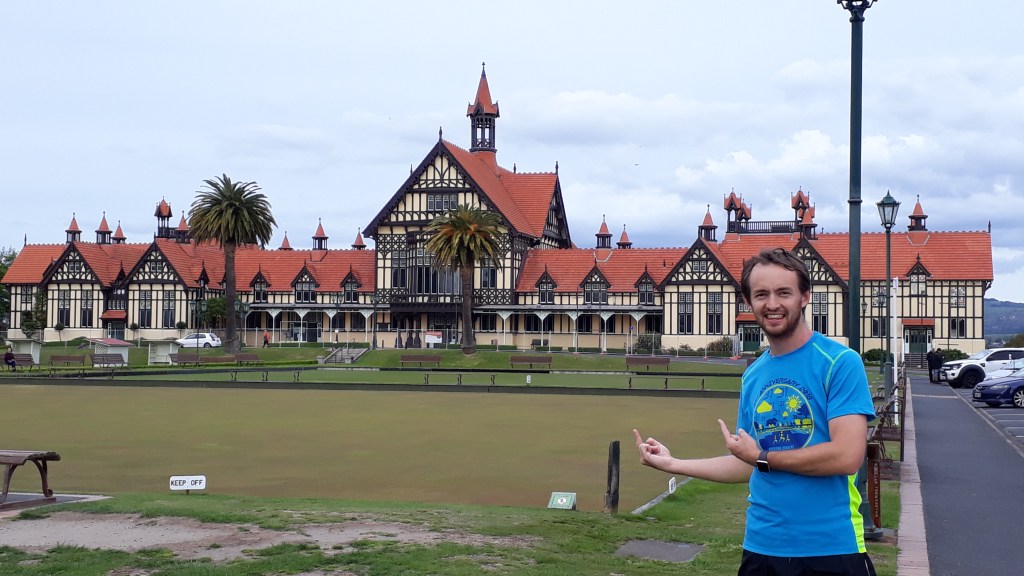
We crossed town and heading through government gardens (home of the hot spring baths and Rotorua Museum) before running along Rotorua lakefront and back to camp. We enjoyed an after run soak in the natural hot springs at the campsite – a definite perk to living is such a geothermally active area! Another perk is the tourism it (and the traditional Maori communities in the region) brings to the area. There is quite a large number of ticketed geothermal parks, Maori villages and activities in the Rotorua area.

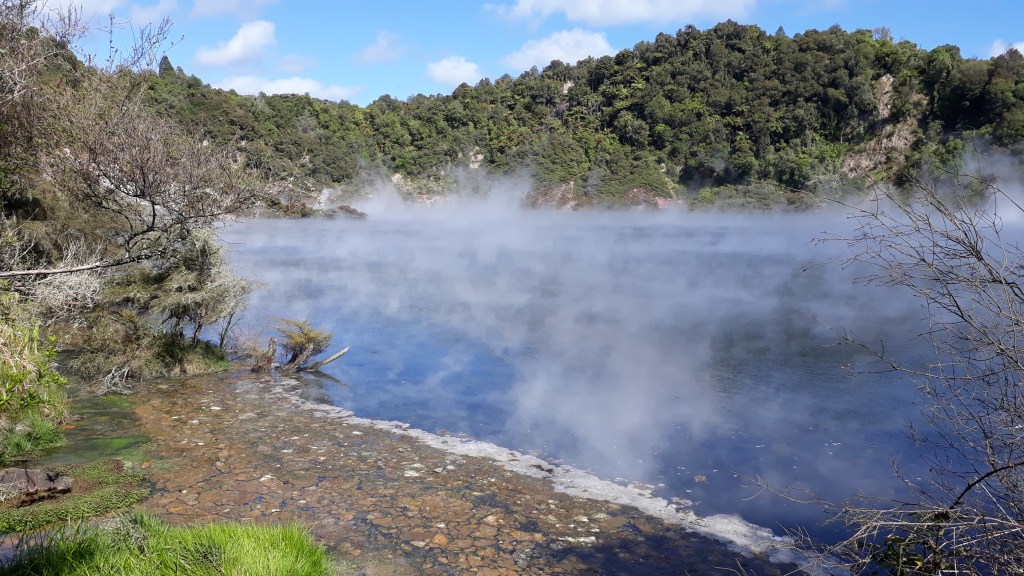
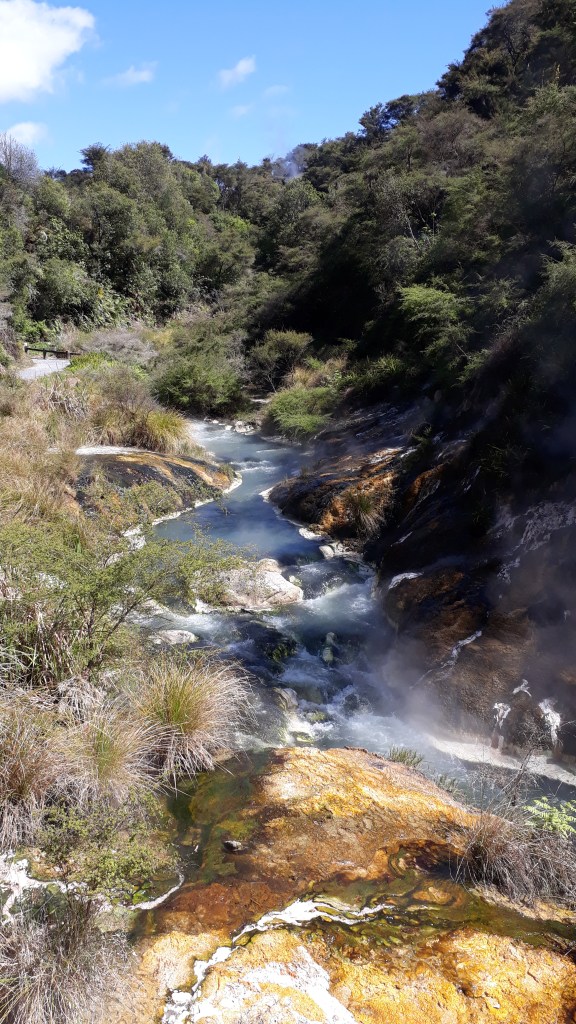
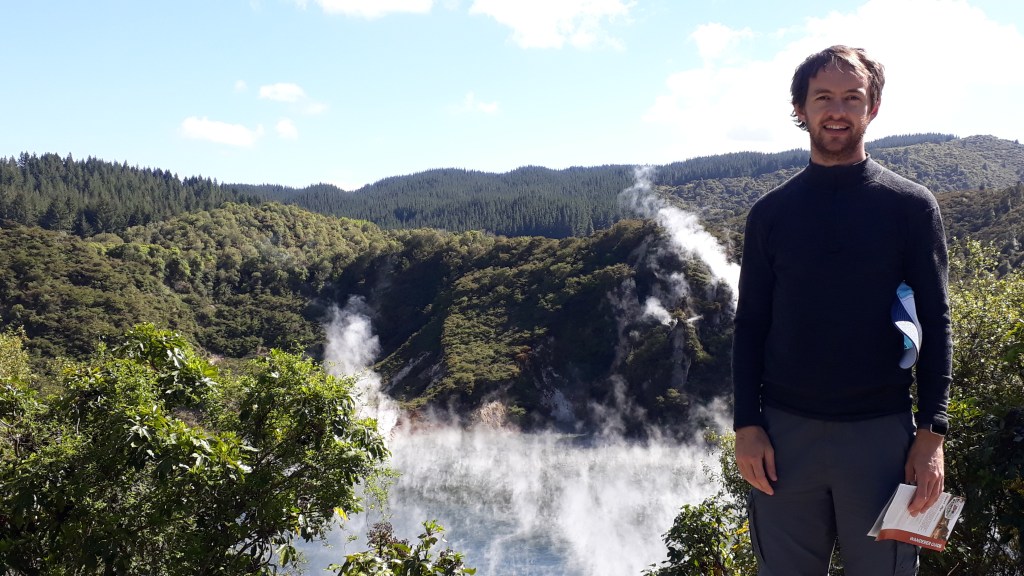
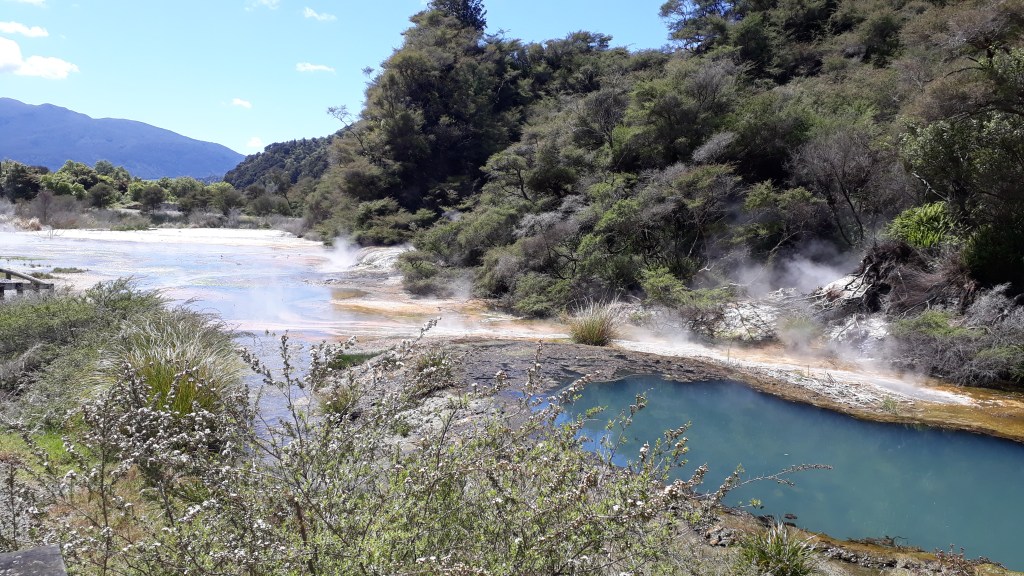
The variety of attractions in the area meant we had some decisions to make about how we spent our only morning. We eventually settled on a trip to the Waimangu Volcanic Valley where life is rapidly restoring itself following the eruption of Mt Tarawera and Lake Rotomahana – in 1886! The changes in ecosystems and geothermal features since the eruption (and following smaller eruptions since then) have been fully documented, with the area playing host to Victorian era eco-tourists following the eruptions and subsequent geyers. A 2 hour walk took us past crater lakes, steaming acid ‘frying-pan’ lake and rivers and up to viewpoints overlooking the valleys. A short bus ride (and longer peruse of the interesting gift shop) later and we were back on the road heading to Lake Taupo.

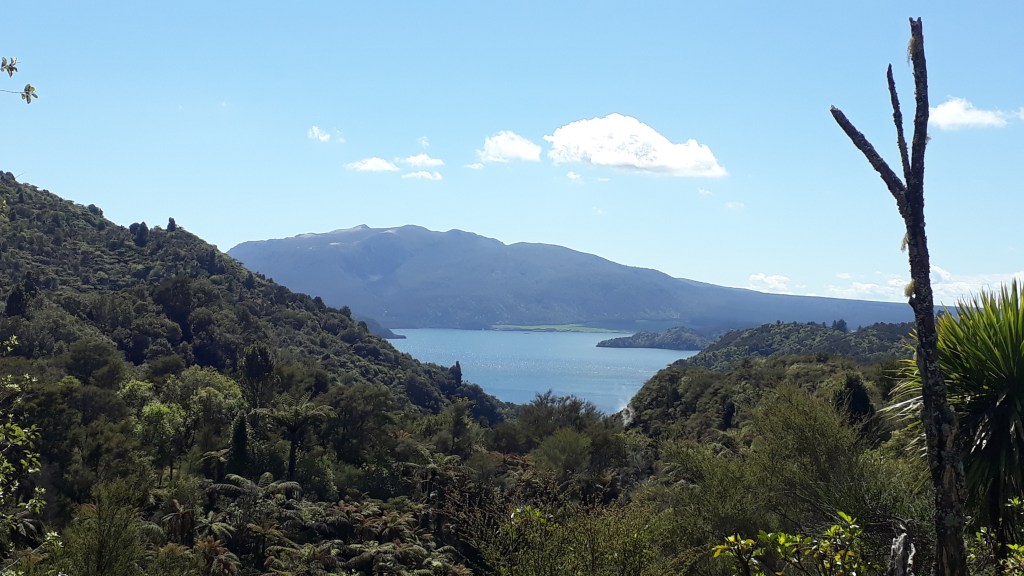
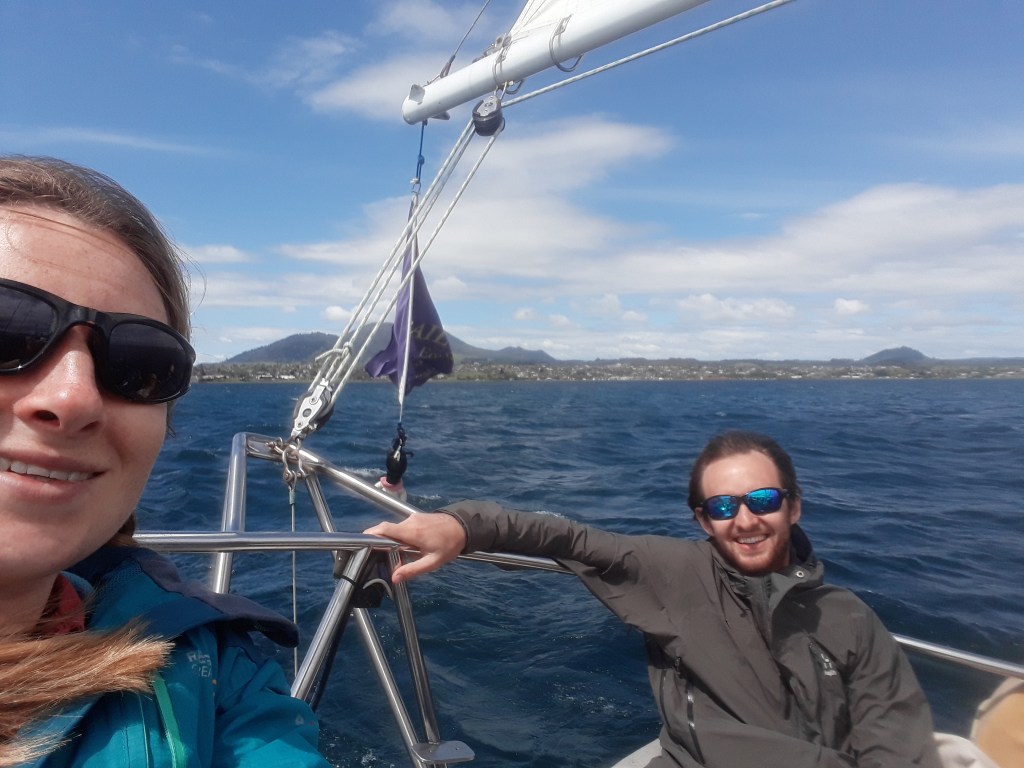
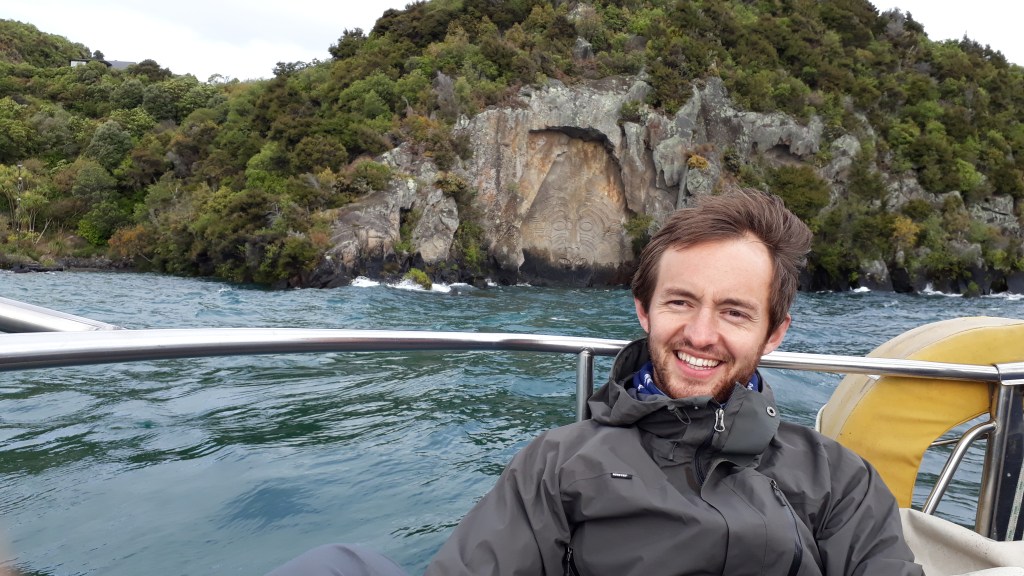
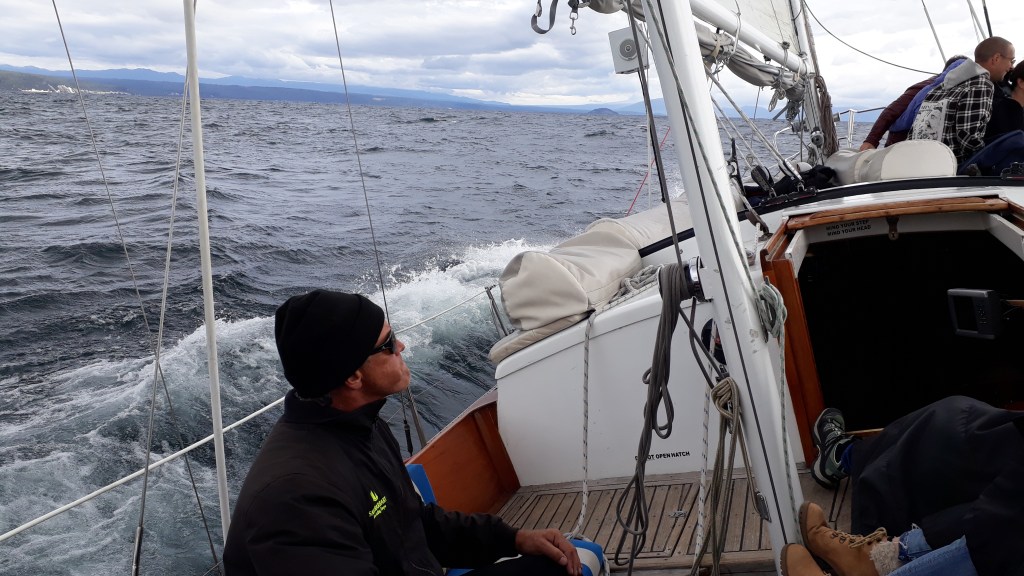
Lake Taupo is a giant lake in the centre of New Zealands North Island created 26,500 years ago by a super volcano (the world’s largest eruption in the last 70,000 years). The lake shores are also home to some large Maori rock carvings, which can only be accessed by boat. We went for the ‘turn up and see’ approach to tour booking and were really fortunate that the only boat with space that afternoon happened to be an ecotour on New Zealand’s only electric powered yacht (very eco friendly when you consider that 86% of New Zealand’s electricity is renewable!) – a new experience for both of us.

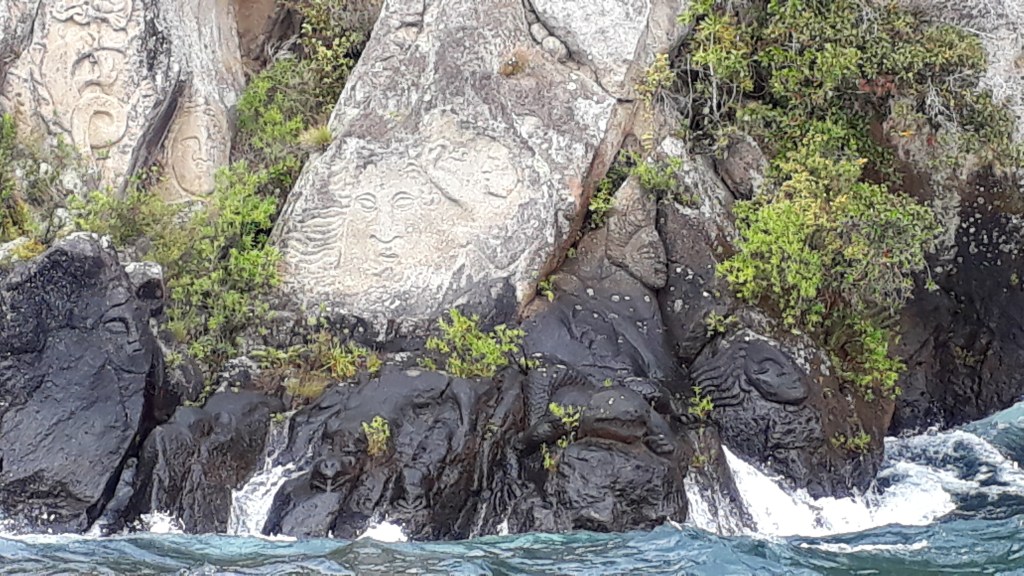
Our skipper James was full of interesting information about Lake Taupo, sailing and the environment which he shared with us during our pretty choppy trip out to the carvings (the wind was getting quite close to Barbary’s 30 knot limit). These carvings were completed over a four year period in the 1970s by a Maori master stone carver as a gift to the town of Taupo. The isolated location of the rockface makes it incredible to imagine the effort that must have gone into creating these.

Alongside the main carving, student joined in by creating some smaller carvings
The largest caving is of Ngatoroirangi, a visionary Māori navigator who guided the Tūwharetoa and Te Arawa tribes to the Taupō area over a thousand years ago.

After our boating trip we heading into Taupo to the Crafty Trout micro brewery and craft beer pub where Gareth enjoyed trying a few different beers whist allocated driver Claire found a dog to play with – win/win! In the early evening we said goodbye to Taupo and headed south. Torgariro Crossing here we come!
Welcome to NZ: Auckland and Waiheke Island

With only limited time for our trip we had had to be selective about which countries we chose to visit. However, in choosing where to go there was one place that was always at the top of both of our lists; New Zealand!

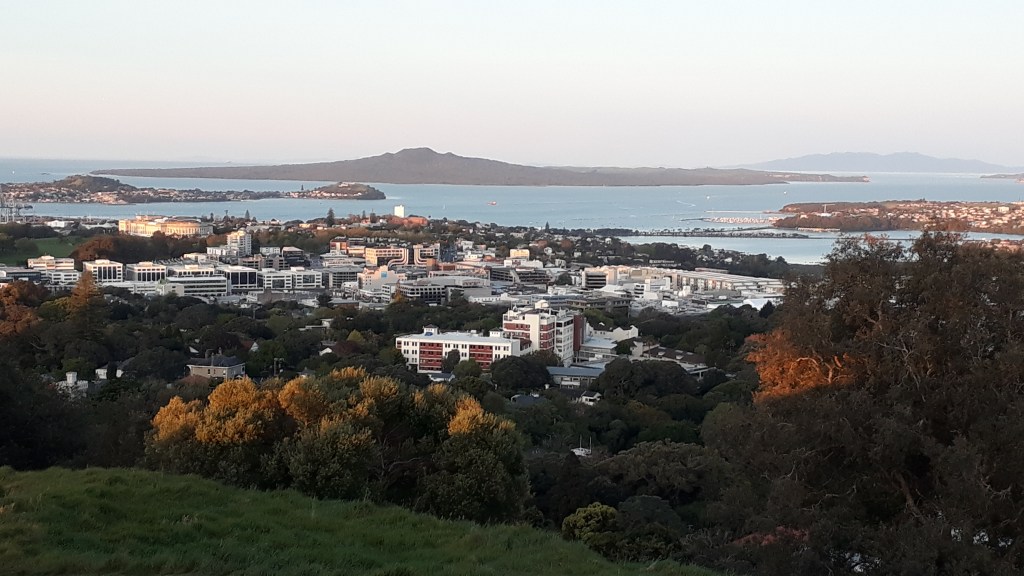
We touched down in the largest city, Auckland in late afternoon and headed to our Airbnb to check in.  We were disappointed to learn that the advertised dog was away for the weekend (probably after a busy week digging up bones and having its belly rubbed). As we have done in many of the cities we have visited we then found the nearest hill and climbed it. In Auckland’s case this was Mount Eden an extinct volcano with a crater sacred to the Maori, which was the place to go at sunset for locals and tourists alike – some of whom had brought a picnic or a few drinks up with them. Claire admired the sunset, whilst Gareth pointed out the cricket pitches and rugby stadiums (and admired the sunset as well).

The view from Mount Eden across the Hauraki Gulf

Following tips from some Cornish expats that noticed Gareth Wales shirt, we headed to Citizen Park Bar in the Kingsland area of Auckland for a bite to eat and spot of Rugby (Wales v South Africa), one of which ended successfully!

The next day was New Zealand’s Labour Day, which we took advantage of in the form of free coffees with brunch whilst we plotted our self-guided tour of the city. Let’s be honest, Auckland is known for its beautiful location rather than its architecture. However, the city parks and historically (by New Zealand standards) significant buildings made for an interesting walk through the city, reaching our ultimate goal of the city wharf at midday. Here, we bordered a Ferry, and set off on the 30min journey across the Hauraki Gulf to the more rural Waiheke Island (did we mention we aren’t really city people).

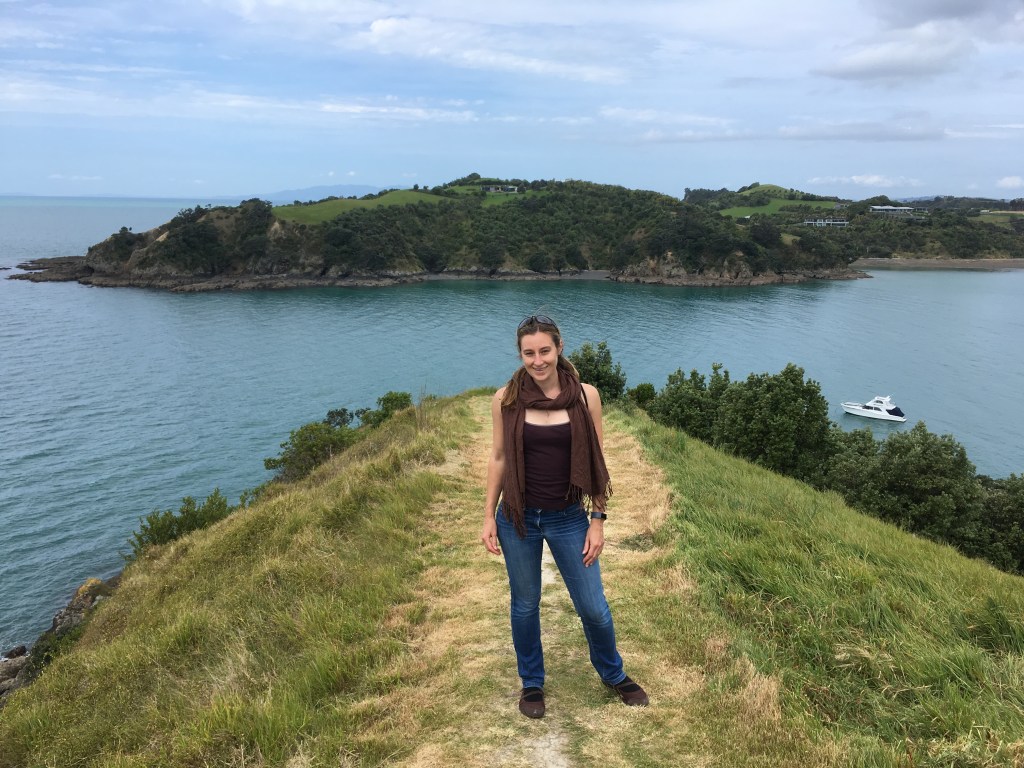
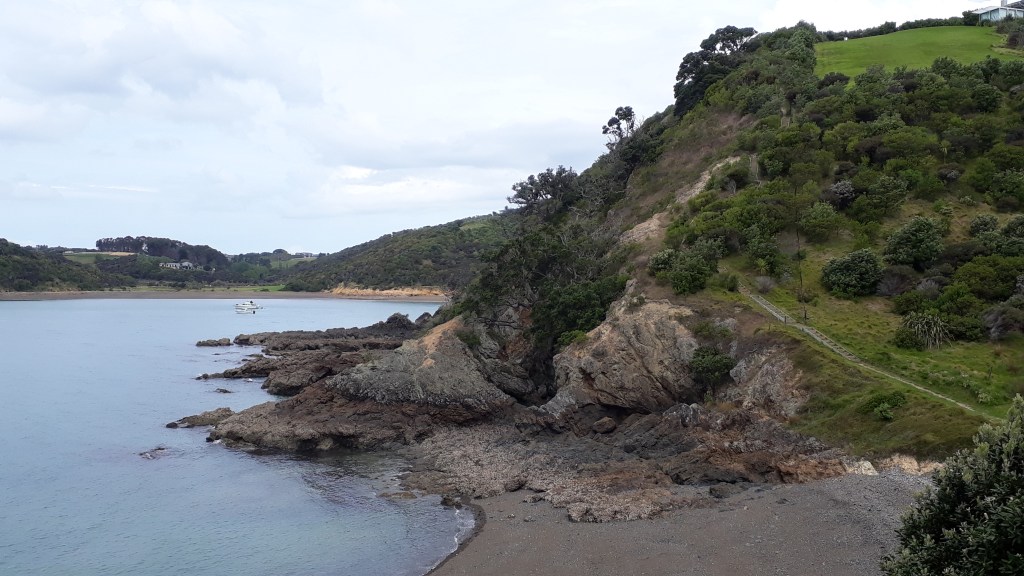
We’d been drawn to Waiheke Island for two reasons: a stunning coastline with a footpath the whole way round and buckets of wineries. After a really windy crossing (we were the last two to leave the outside deck once we were exposed to the full force of the wind), we decided to combine the two with a sunny afternoon walk around the most westerly peninsular that ended at the Cable Bay winery (so named due to the massive power cable which runs under that part of the island and across to Auckland). On the way we passed beautiful bays, ‘hobbit style’ rolling hills and the houses of the millionaires who get to enjoy the view (and the wine) when everyone else has gone home!

Another beautiful bay. Note the house in the top right of the picture – wouldn’t mind waking up to that view every day!

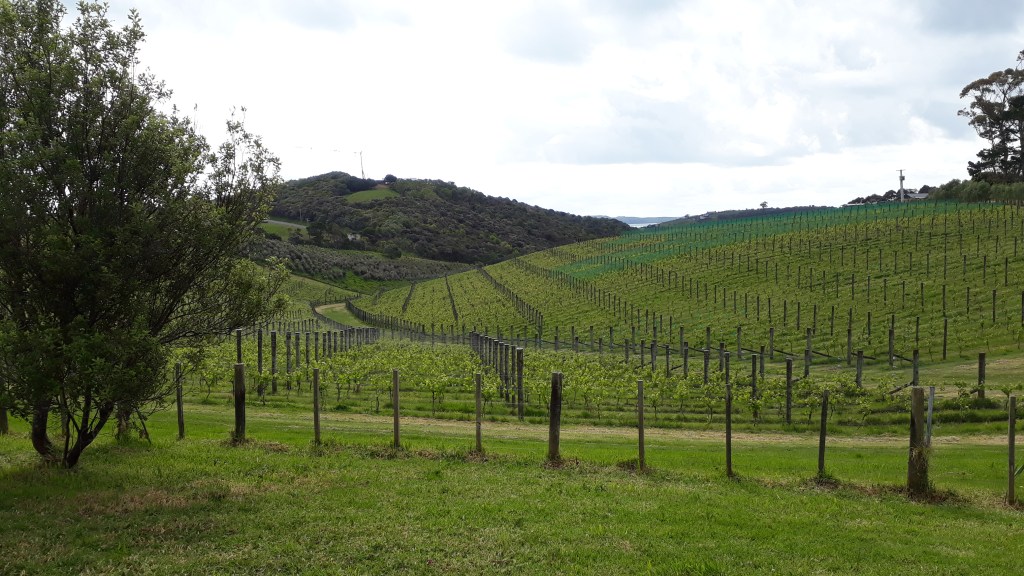
As we turned away from the coast in search of wine, the rolling fields turned into rolling vineyards and we arrived at Cable Bay tasting rooms ready for our first sample of their harvest. We elected the taste the white wines and were given a selection of four wines from Waiheke and the sister vineyard on the south island in Marlborough.

Now is that the pinot or the ?

We spent the rest of the late afternoon sampling some of Cable Bay’s delicious food (and more wine) in a restaurant which had a beautiful view across the ocean, before heading back to Auckland for the evening. The ferry back to Auckland was full of dogs and somehow a few of them managed to find there ways over to Claire, who was very obliging and gave them the attention they required. And you thought we never relaxed!

A final feast before we spend the next 3 weeks in a campervan! Not bad for a first taste of New Zealand!

If our blogs are giving you itchy feet and Peru is on your bucket list then please check out our friend Erick’s website who has set up his own tour company IncasPath in Cusco, Peru. He’s a really friendly guy and probaly the best tour guide we’ve ever had. We completed the Salkantay pass with him to Machu Picchu four years ago and have had the travel bug ever since!!!! http://www.incaspath.com

Sydney and the Blue Mountains

During our Kumano Kodo hike in Japan we had met a brother and sister from Sydney who had been less than enthusiastic about their city. As a result we entered Sydney planning for a more relaxed pace to this section of the trip to refresh ourselves between campervans.

We arrived in Sydney in the early evening, navigated our way through to Kings Cross station and then followed other London-sounding roads to our Airbnb attic studio room (with mini art gallery). We picked the closest restaurant at random, and then were treated to some of the best Thai food we had ever eaten! For anyone going to Sydney it was called Eat Thai on Victoria Street.

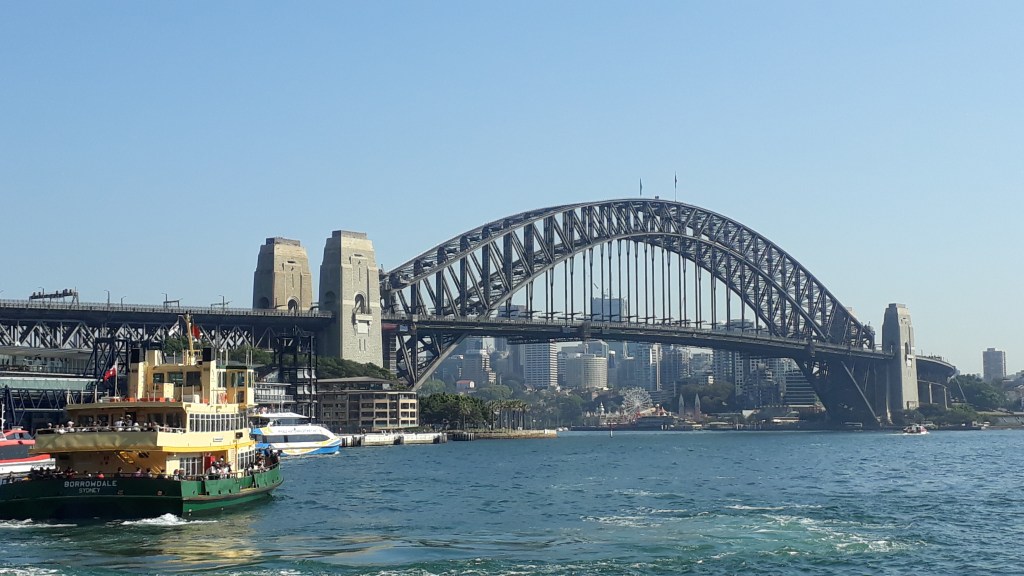
The next day was beach day. Having friends who had already researched the beaches of Sydney for us we were heading straight to Manly Beach, instead of the closer famous Bondi beach. One of the major perks of Manly beach is the journey, as it includes a 30 minutes ferry ride past the Harbour Bridge and Opera House.

View of Sydney Harbour ridge from the ferry to Manley beach.

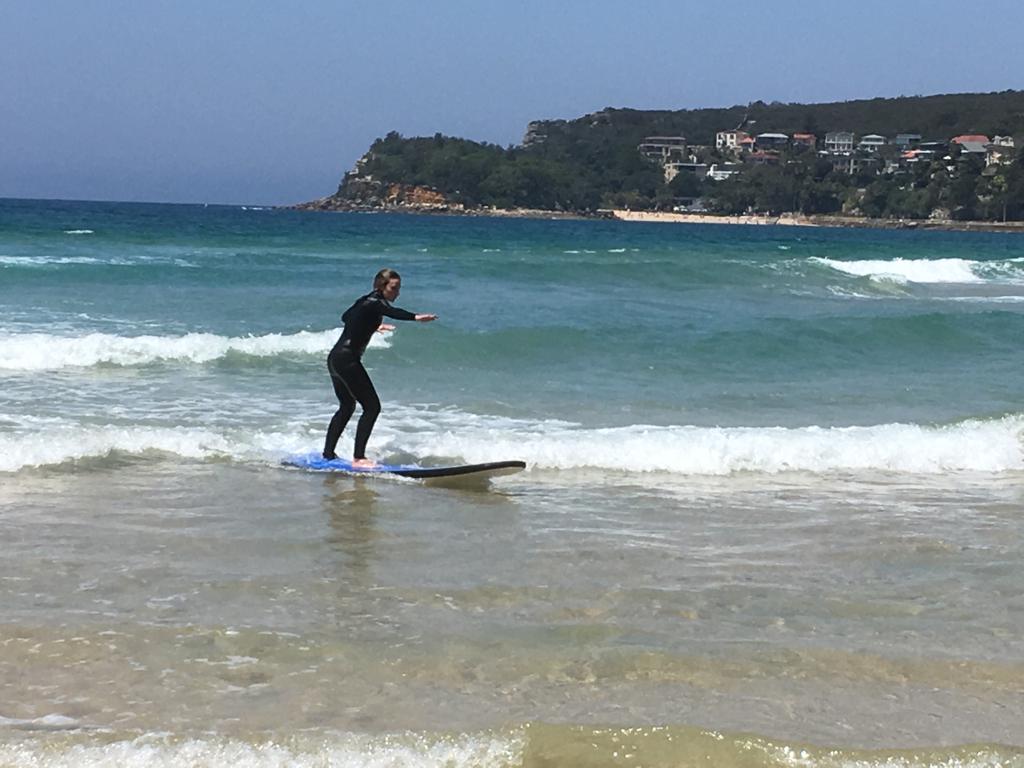
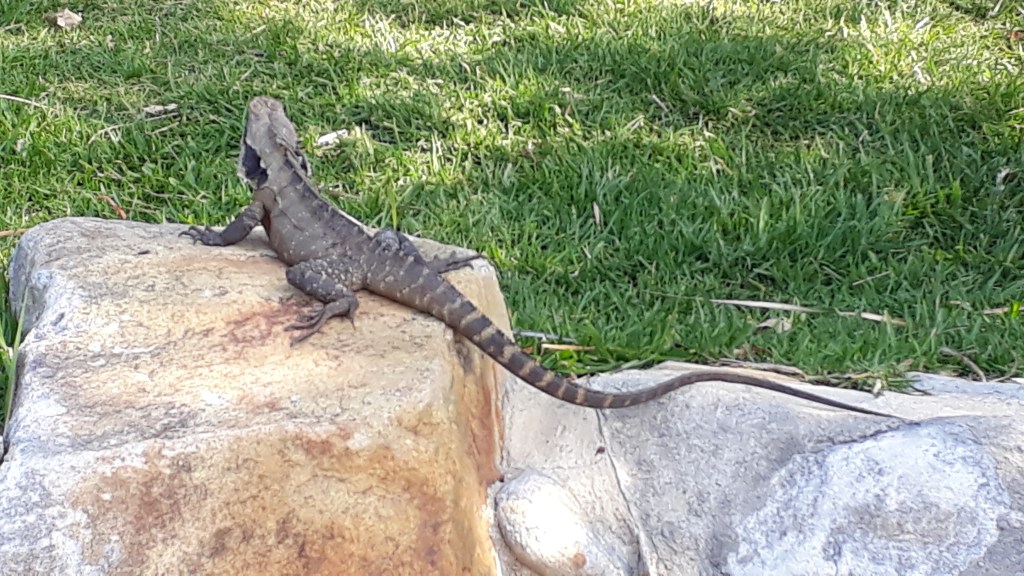
Another perk for Claire was the surfing. Whilst Gareth was looking forward to getting to sit still for a few hours, Claire couldn’t possibly go to Sydney without at least trying to surf. As well as its large sandy beach, Manly has a surf school and some great surfing conditions for beginners so more than met both of our needs. Claire spent the morning mastering surfing/drinking sea water/being shark bait whilst Gareth enjoyed a bit of peace and watched from the shore. We regrouped for lunch and then wandered along the promenade via ice creams and Australian water dragons to Shelly Beach, a more secluded bay filled with (you guessed it) shells, for a quick dip in the Tasman Sea until a rogue dark cloud rolled over and brought a slightly early end to what had otherwise been a gorgeous sunny beach day.

Claire on one of her more successful attempts at riding the waves!

We caught the Ferry back to the city as the sun was setting and wandered round the city wharf in a failed attempt to have fish and chips by the sea.

An Australian Water Dragon. Or, a very big Lizard.

The city of Sydney is almost completely surrounded by National Parks. It would have been a travesty if we had come all this way without venturing into one of them, and as a result we had put Blue Mountains National Park on our Sydney ‘to-do’ list. The main entry point to the Blue Mountain region is via Katoomba which can be easily (and cheaply) accessed via a 2 hour train from Sydney, and linked up with public bus services running to all the main sights. Following a bit of on-the-train research we had picked two areas to explore: Wentworth Falls (a 187m three tiered waterfall) and the Three Sisters (a rock formation and main tourist attraction of the area) and as the Wentworth Falls bus arrived first, our order of service was set!

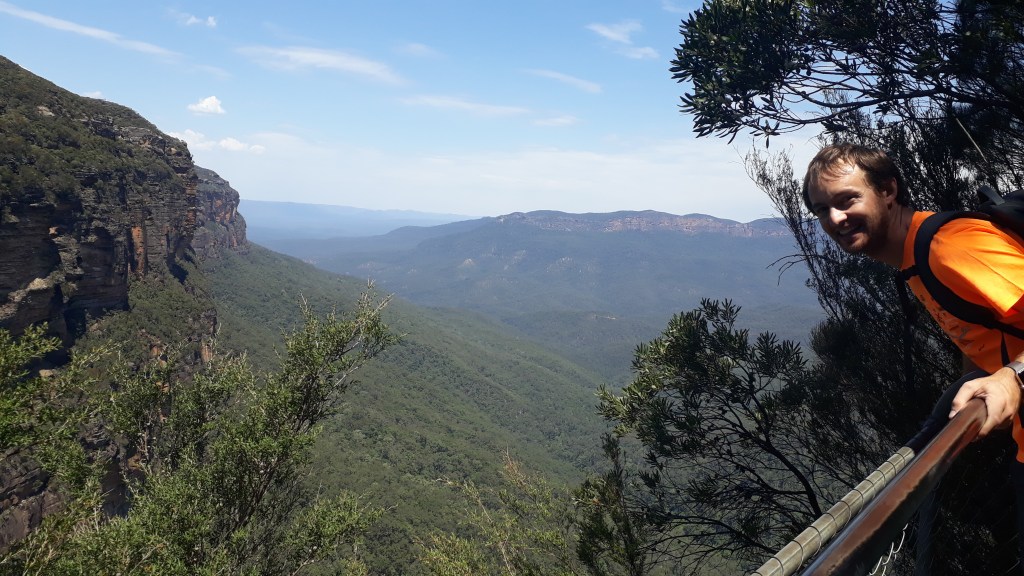
Welcome to the Blue Mountains! The photos do not do them justice.

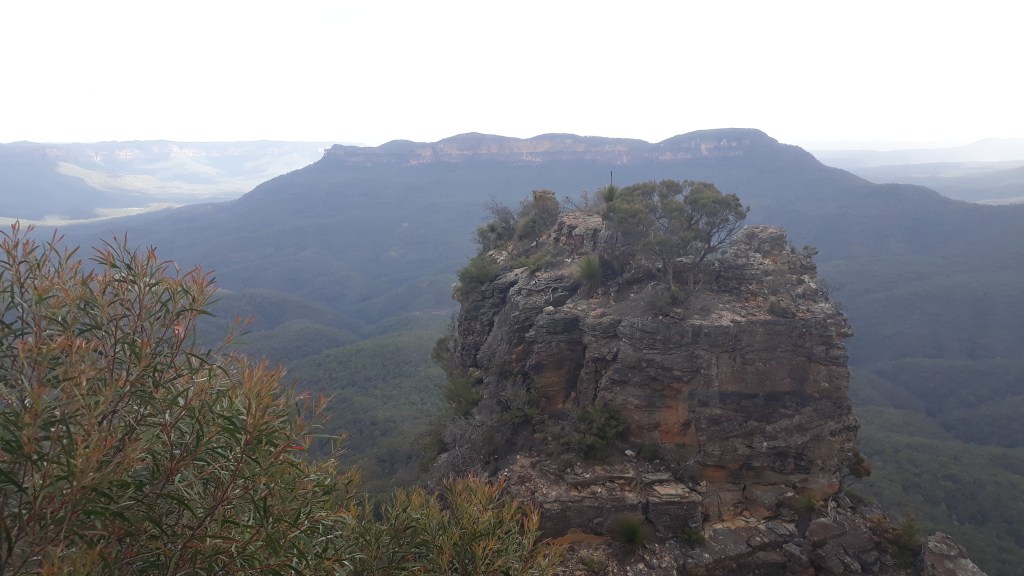
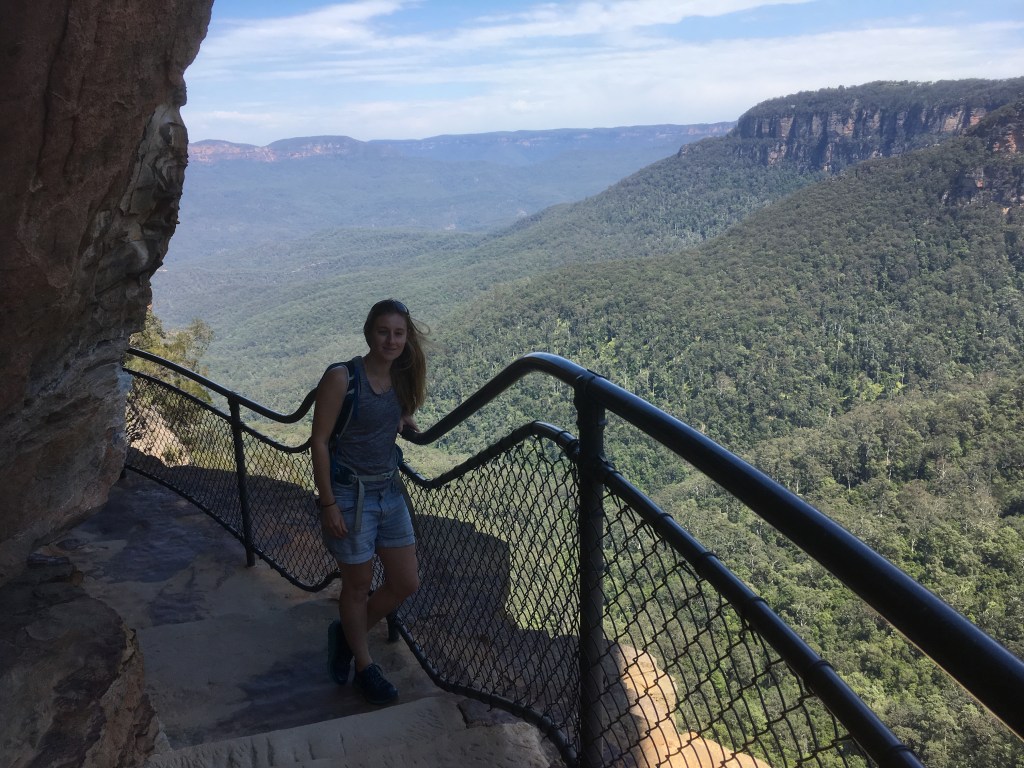
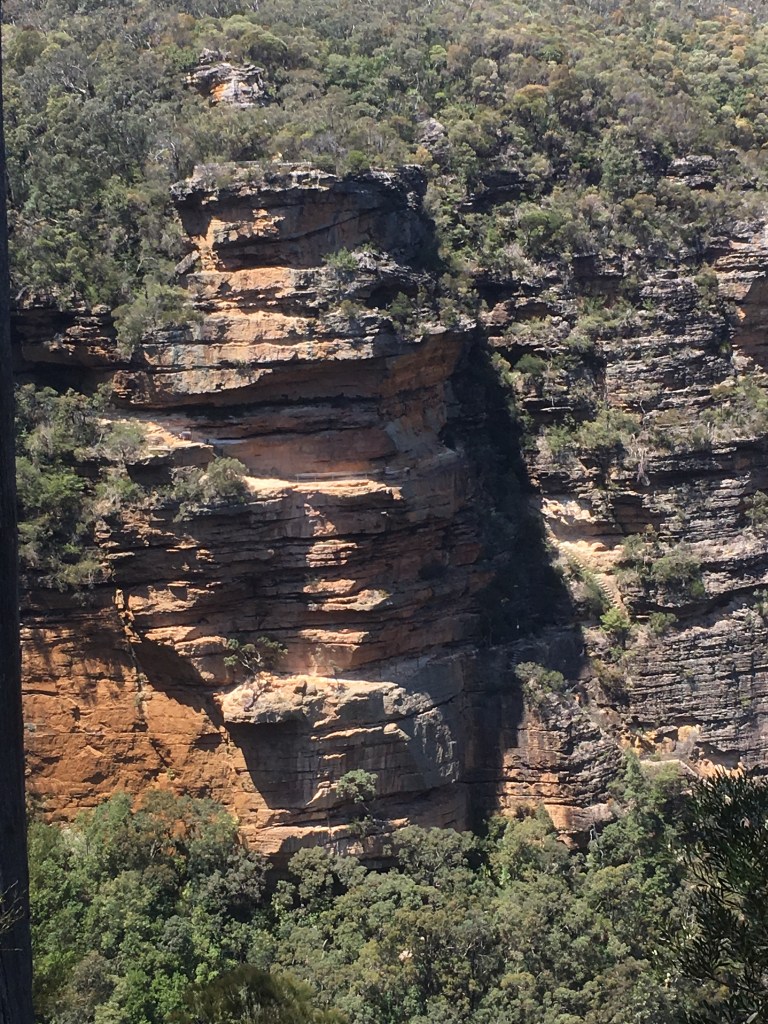
We soon discovered that the Blue Mountains are not what makes this National Park so special (although they do look blue when seen from a distance); instead it’s the gaping chasms that separate them. We spent about an hour or two traversing the cliffs around and across the Wentworth Falls, in a mixture of awe and incredulity at the first Australian explorers who had decided these would be good locations for footpaths!

Having enjoyed the views across the gorges so much we decided to extend our afternoon walk by getting off our next bus early and walking from the Leura Cascades to the Three Sisters via the Prince Henry Cliff Walk. This proved to be an excellent decision as took us past multiple lookout points along the valley to marvel and the waterfalls, cliff faces and beautiful bird life (both above and below us).

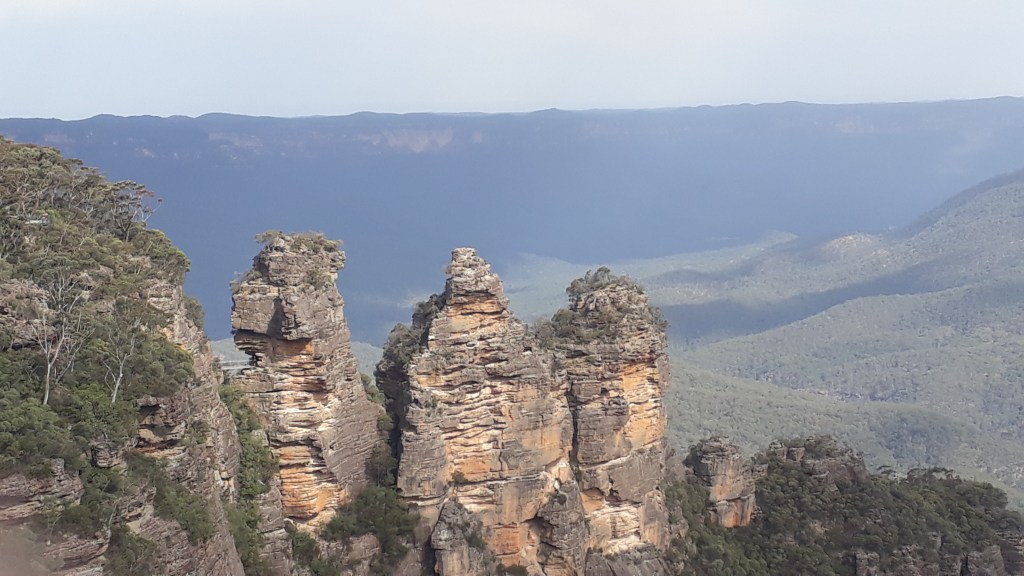
We eventually arrived at the Three Sisters themselves, or more precisely at sister number one, which can be accessed via a bridge across the chasm. We decided not to descend the full 900 steps (!) of the Giant Stairway, which takes you down the valley below and instead headed along the cliff top to Echo point for ‘the photo’ of the Sisters that all us tourists really come for!!

The three sisters

Our final day in Australia didn’t get off to the perfect start; the parkrun closest to our Airbnb had been cancelled! Fortunately Gareth managed to locate another a mere 40 minutes commute away and we got to the start line with seconds to spare. Gareth left Claire for dust in this battle who clocked her worst performance of 2019 (probably not at all related to staying up until 2am reading the night before!). Another nice park, with a cricket pitch, and some old brick kilns that made us feel like we were back in our old house in Bedfordshire.

After our early start the rest of our day was spent ambling around more of the city sights and the botanical gardens, and getting ourselves prepared for our next stop: New Zealand.

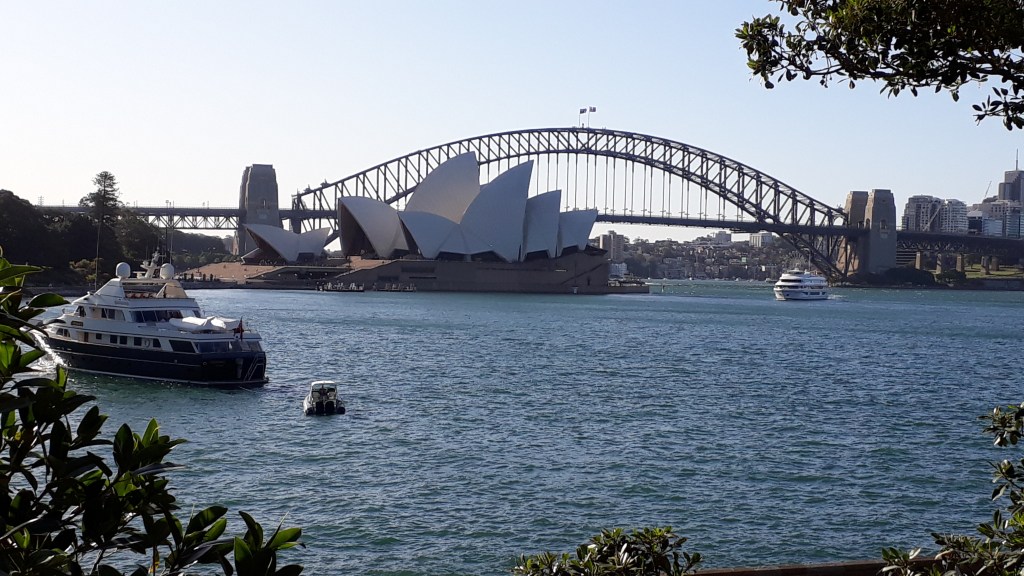
View from the botanical gardens looking out across the opera house and Harbour bridge

Australia Summary

  • Best view:
    • Gareth – view of Mount Field National Park from Seager’s Lookout.
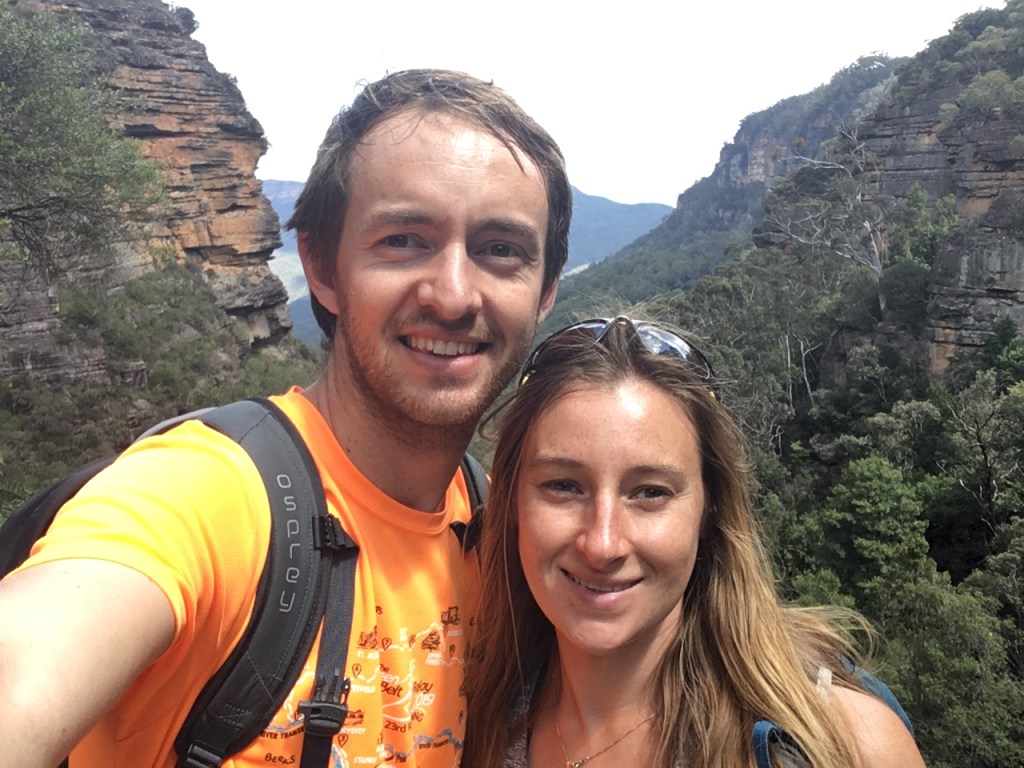
    • Claire – In the Blue Mountains from one of the lookouts between Leura Cascades and the Three Sisters
  • Most enjoyable day:
    • Claire – Mount Field and Bonorong Wildlife Sanctuary
    • Gareth – 100% agree (shame we didn’t do the Bush Golf on that day too!)
  • Biggest surprise:
    • Gareth – Not being a city person, I was really surprised that I liked Melbourne so much. It felt like a nice place to live as well as to visit.
    • Claire – The amazing birdlife. I’d just never really considered how different it would be. They were so bright and had such different songs to the UK. The first couple of days in Melbourne and the Dandenongs were really special.
  • Most fun activity:
    • Claire – Surfing on Manly Beach,
    • Gareth – all the hiking was really fun, there were lots of great views and interesting wildlife to see (maybe the adrenaline rush of worrying about snakes all the time made it a bit more exciting too!)
  • Coolest wildlife:
    • Gareth – I can’t really pick, but feeding Kangaroos wad great fun and visiting the Blue/Little/Fairy Penguins in a natural setting was another unforgettable experience.
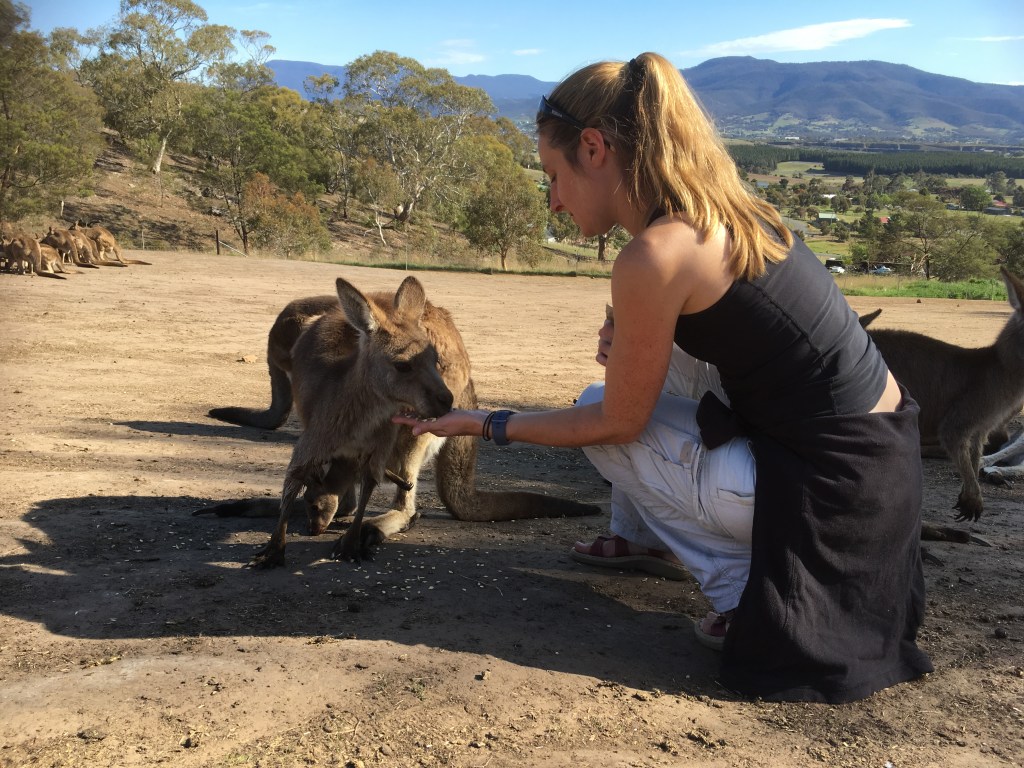
    • Claire – has to be feeding the Kangaroos, one of them held my hand to keep it steady whilst she was feeding and it was amazing!

Tasmania part 2: The return to Hobart via Mount Field National Park

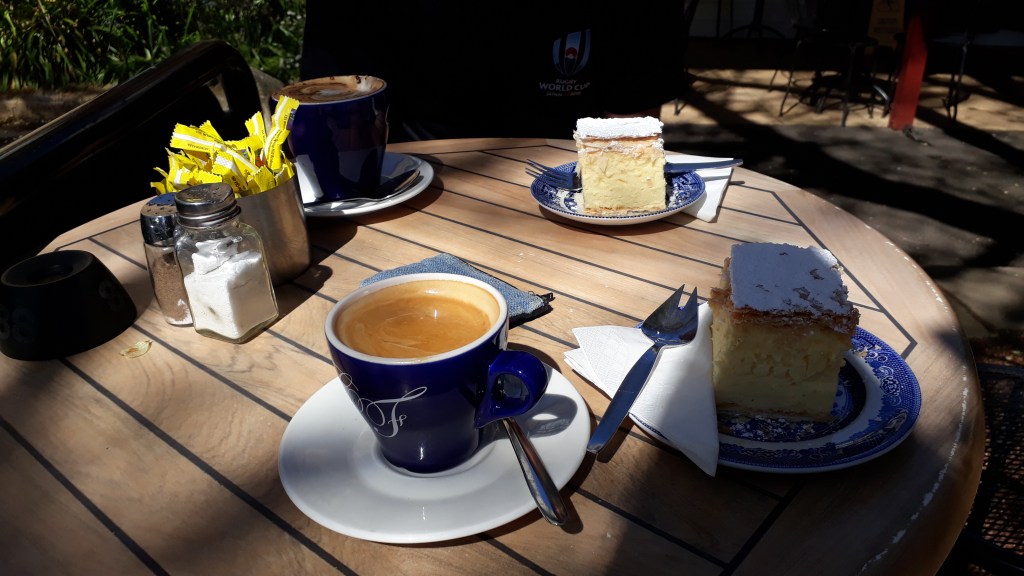
We chose to take a different route back to Hobart, which was able to satisfy both our loves of cake and of mountains. Back in Melbourne our Airbnb host had raved about the vanilla slices from a small town called Ross, whilst Mount Field National Park (to the West of Hobart) sounded like a great place to be explored. After a slow start to the morning (all those beaches yesterday were hard work), we spent the late morning driving through the Tasmanian Midlands (picture the Peak District on the best day of spring but without any people and at least triple the size). We arrived in Ross in perfect time for a post lunch coffee and can happily report that the vanilla slices were 100% worthy of their praise.

The vanilla slices at the Ross bakery were creamy, fluffy and delicious!

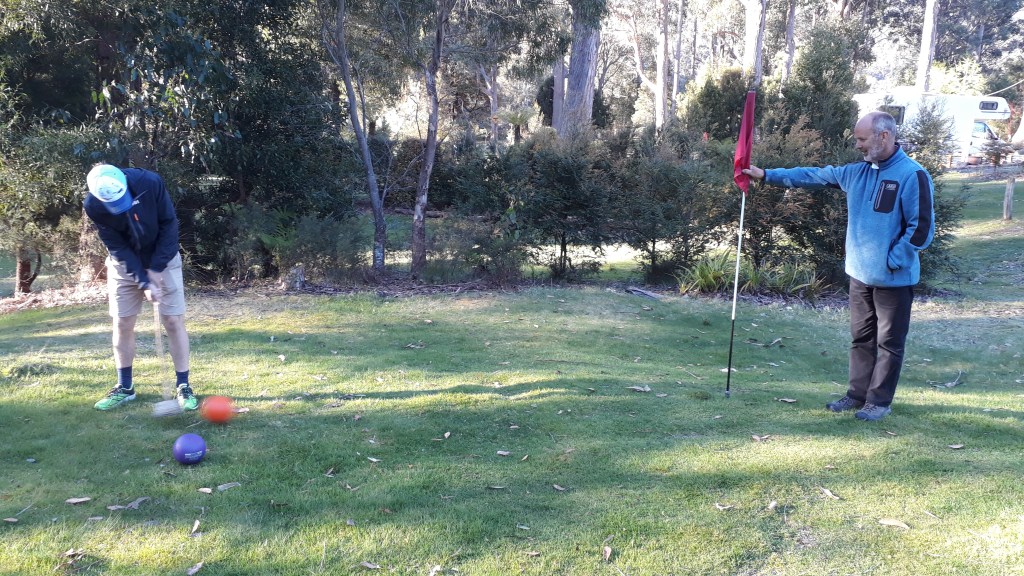
We arived in Mount Field late afternoon and elected to stay at the quirky ‘Left of Field’ Bush Campsite. The offer of a round of bush golf (possibly invented by the campsite owner) was too intriguing to resist. The game is played using ‘rustic’ versions of a croquet mallet, foam balls the size of melons and greens more akin to crazy golf. In a repeat of our Frisbee golf escapades in Toronto Gareth’s technique gradually improved, whilst Claire’s patience rapidly diminished. Claire consoled herself with toasted marshmallows on the campfire.

Gareth and his caddie at hole number 1. The caddie didn’t stick around much longer once he realised how unskilled we were!

The next morning, after a coffee to ease the effect of the “marshmallows”, we popped over to the national park visitor centre to check out Russell Falls. These were a real treat, only a few hundred meters from the visitor centre they formed a beautiful tiered waterfall which sparkled in the early morning light.

Looking for a bit more of an adventure, we headed further up the mountain and along a steep dirt road which seemed to go on forever until we eventually reached a carpark at just over 1000m altitude (our second time driving up from near sea level to Munro height during our Tasmania trip). We set off past Lake Fenton (a drinking water reservoir – we wondered if Anglian Water and the Tasmanian water authority would consider job swaps?) to Seagers Lookout, a mini 1155m peak on the side of Mount Field East.

The view across Lake Fenton from Seagers Lookout

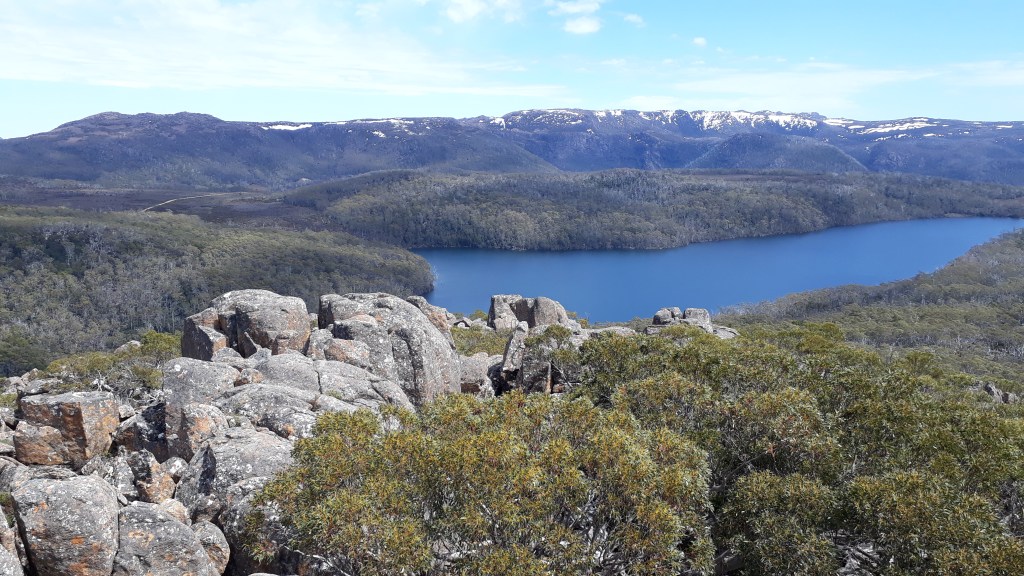
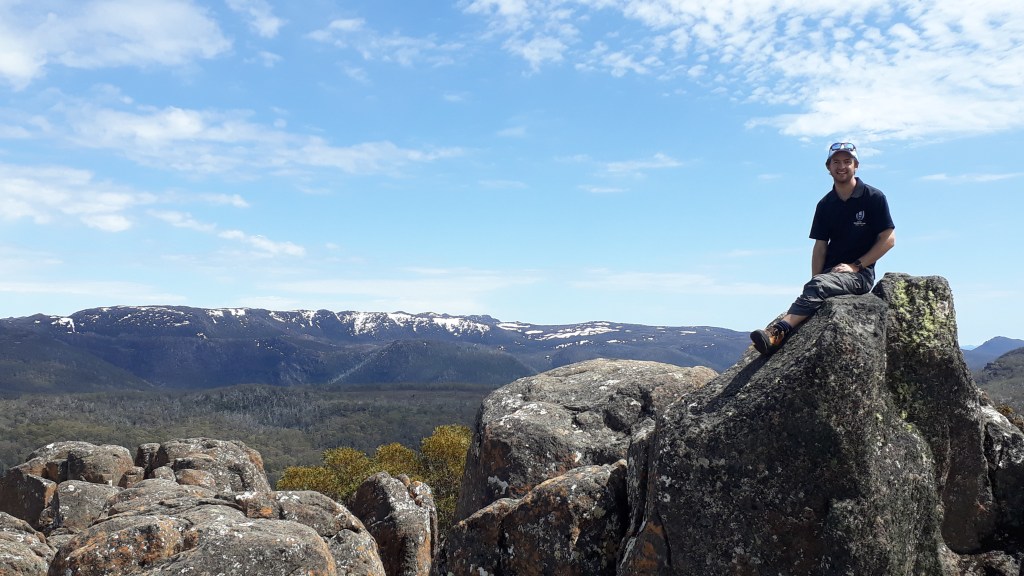
There was a great little scramble at the top, which exposed 360 degree views across the valley to the snow capped Rodway range of mountains and to Mount Field East. We were extremely glad we had managed to fit a trip here on our Tasmania mini tour!

Gareth at the top of the scramble

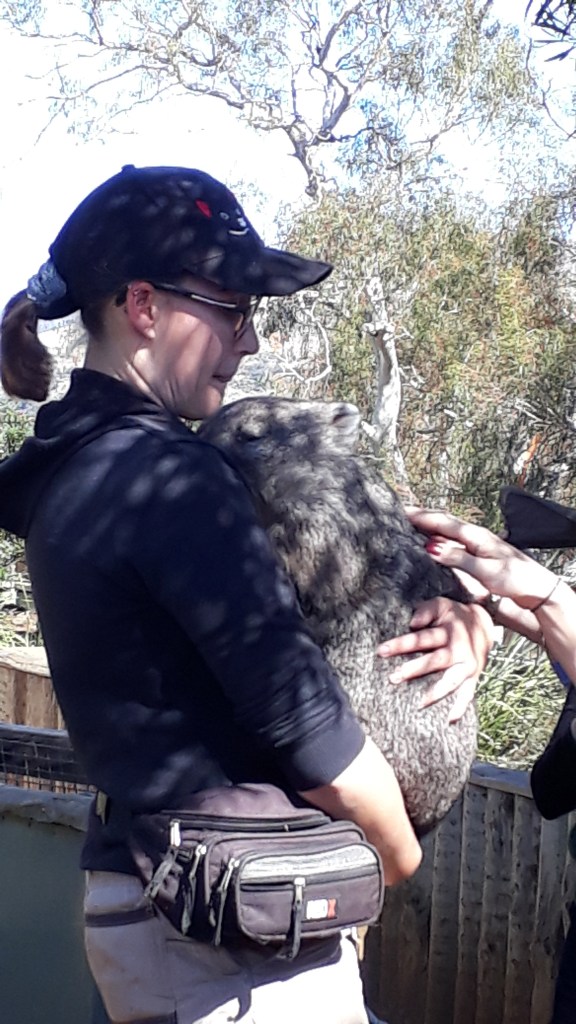
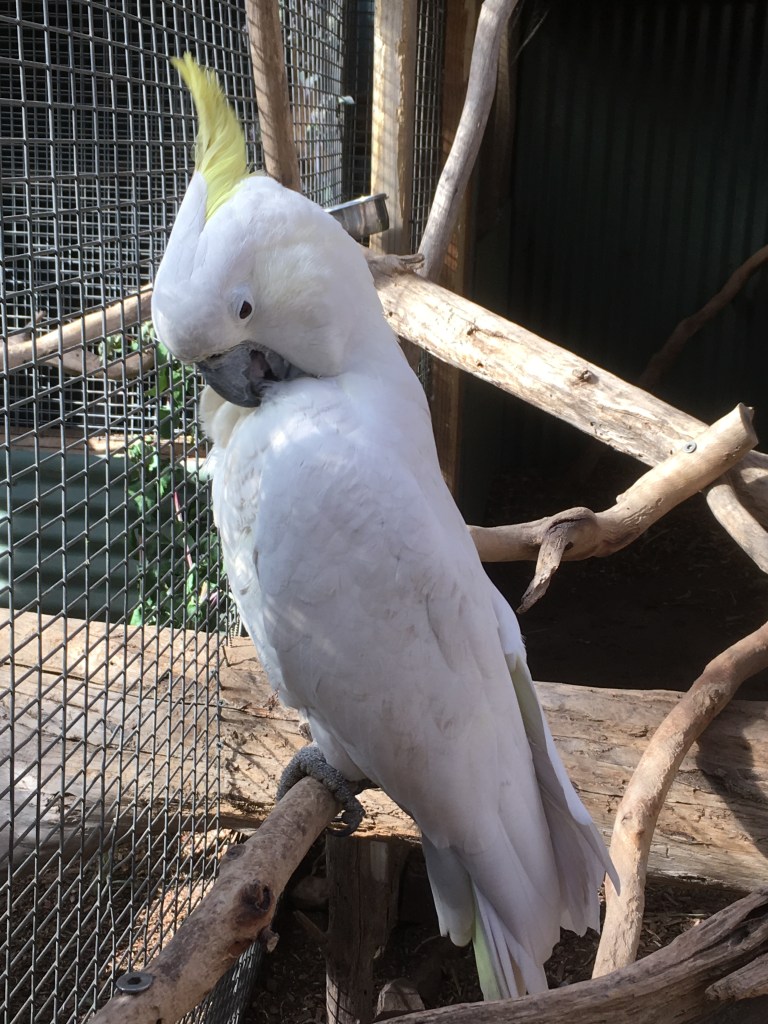
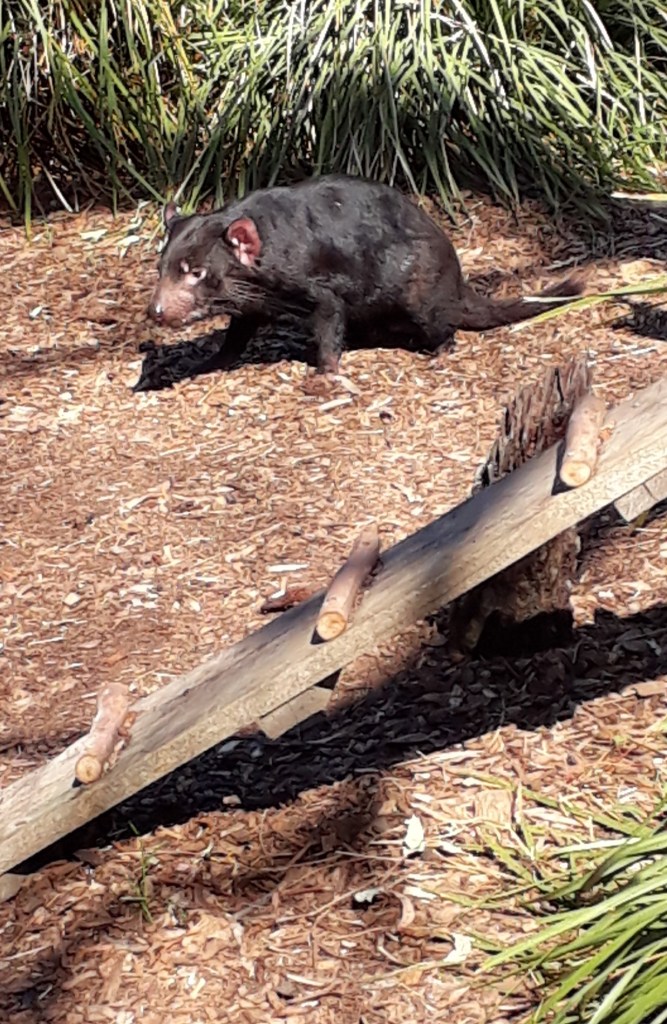
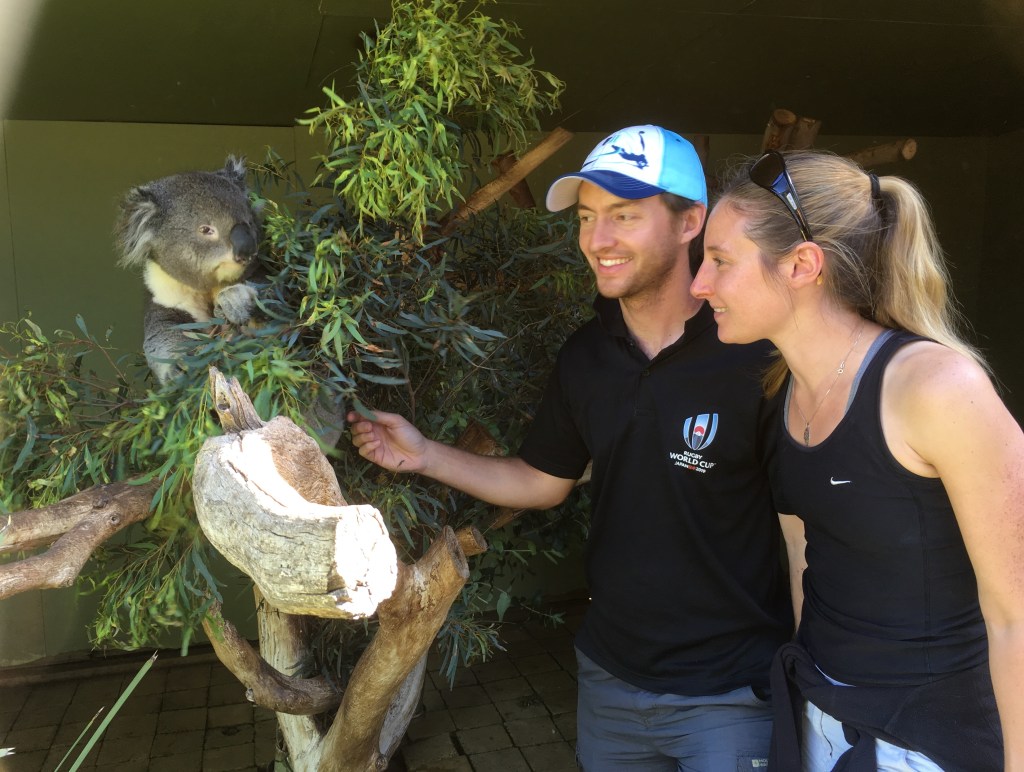
One thing that was still missing from our trip to Australia so far was encounters with some of it’s famous wildlife. We decided to resolve this on our way back to Hobart with a trip to Bonorong Wildlife Park, which is a rescue centre for orphaned Joies and got there just in time for the last tour of the day. Over the next hour we got up close and personal with Tasmanian Devils, Wombats, Kolas and Kangeroos. Gareth had a lengthy conversation with a 100yr old cockatoo who seemed to take a shine to him. Overall it was one of the best experiences of trip so far.

We decided to spend our last night in Tasmania in Richmond, a small town near Hobart frequently highlighted on the tourist circuit for it’s historic bridge and jail. However on arriving in the town that evening we decided that with so many houses in the UK being older than Aussie ‘history’ we probably weren’t the target audience. On the plus side the only place still open in town was the pub where we enjoyed a final Tassie dinner, and tried to work out when we could next visit!

Tasmania Part 1: Hobart and the East Coast Drive

Tasmania (or Tassie as the Aussies call it) was an area of Australia that we were both extremely keen to explore. For some reason it seems to be missed off the standard British tourist itinerary, yet every Aussie we had met along our trip so far had raved about it. We had five days of camper van action, in a practise run for New Zealand later in the month.
As we descended into Hobart we knew this part of the trip was going to be special; miles of white sandy beaches with turquoise water, mountains and forests easily outnumbering the odd settlement. Even the airport was welcoming; the bio-contamination check was a cute spaniel who went and sat on any bags he deemed to be a risk (and looked so pleased with himself every time). After passing our bag check we exited the terminal to a welcome to Tassie BBQ and free hot dog!

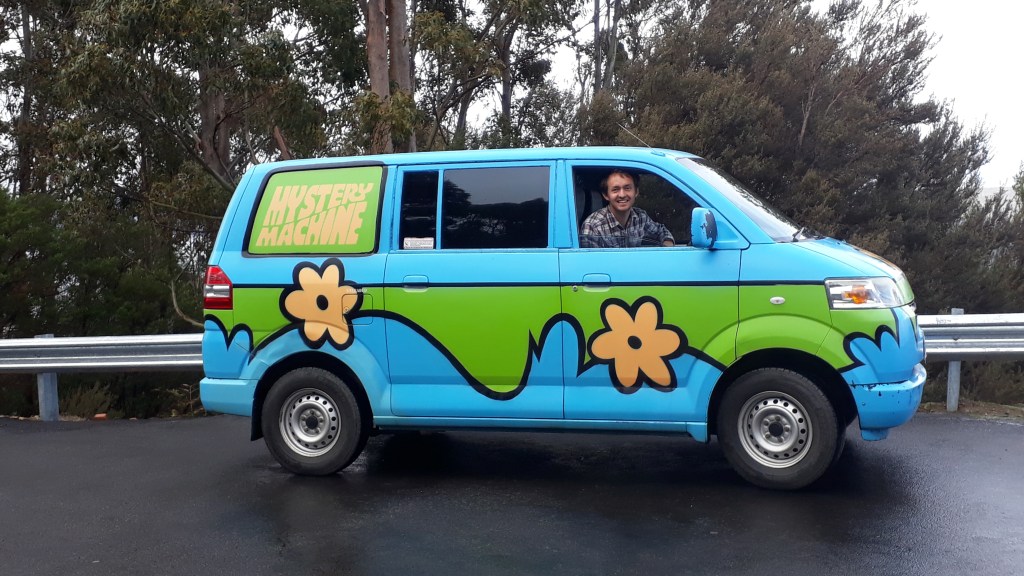
The Mystery Machine with Gareth at the helm on the way up Mount Wellington

After a bit of a walk to pick up our camper (which happened to be the Mystery Machine from Scooby Doo), we headed through Hobart towards Mount Wellington – a Munro sized mountain which towers over the city. As we started the winding drive up to the summit a sign warned of snow forecast for a couple of hours’ time which made us laugh given the beautiful sunny afternoon.  However as the journey to the top progressed, the wind was picking up and we got hit by a couple of showers.  We stopped about 2km before the summit at a viewpoint and, as it was dry, decided to walk the rest of the way to the top.

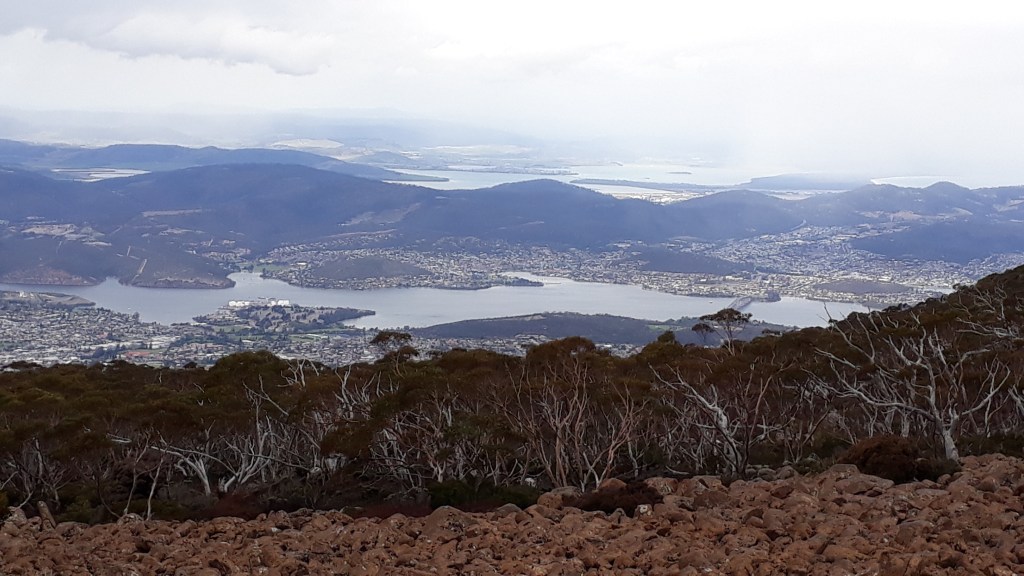
At the top the wind was blowing pretty hard and it had started to rain, but fortunately a viewing shelter was on hand to protect us from the worst of it.  And what a view it was (even in the cloud)!  It looked over Hobart, way down below and out towards the southeast of Tasmania over the bays and islands and smaller hills and to the south across the islands and to the north up the river valley towards central Tasmania.

The view from 90% up Mount Wellington, across Hobart and the coast. Unfortunately the clouds had drifted over by the time we reached the top .

However, our love for this mountain did reduce on our way back to the car. The winds picked up to the point it was difficult to walk in a straight line, and the rain soon turned to hail that was blown into our stinging faces for a good 20 minutes.  We arrived back at the car soaked and freezing cold and feeling a little sheepish for dismissing the warning of snow!

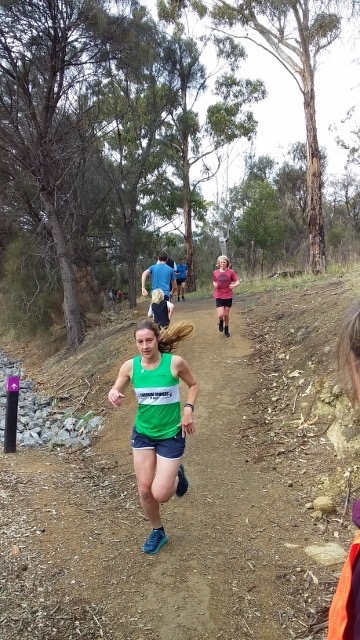
The next day was parkrunday (Saturday to those who are less enlightened), and we went to Queen’s Domain on the edge of Hobart to run round the park there.  In one of our most exciting runs so far, Claire built an early lead over Gareth on the downhill first half, but Gareth made up most of the gap on the way back up the hill.  Claire managed to spot Gareth coming though and finished just ahead of him by one second!  Gareth was consoled by the fact that there were two cricket pitches at the end of the course (although no play at the time of the parkrun).

After a quick shower and breakfast back at the campsite, we got out on the road to the East coast.  Our destination was Freycinet National Park, which had been recommended by most of the Aussies and fellow travellers we had spoken to.  The park is on a peninsula and can only be accessed part way down by car, so the rest has to be done by walking. As we sat having our lunch and looking across the bay just before the park, we wondered if we might be in for more rough weather as the peninsula seemed to be under a mass of thick clouds. However by the time we got round to the visitors centre on the other side the skies were blue and suncream was swiftly applied!

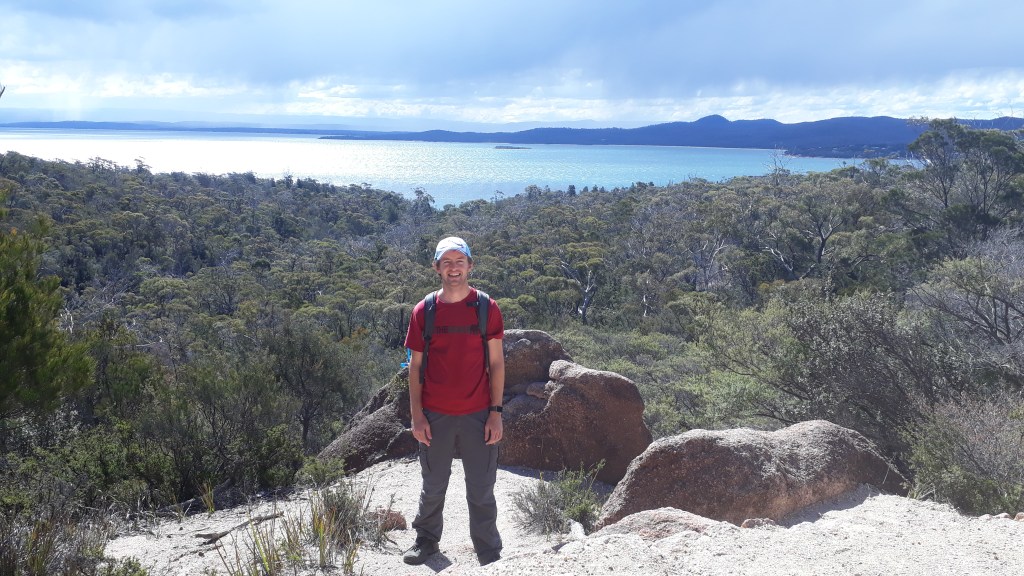
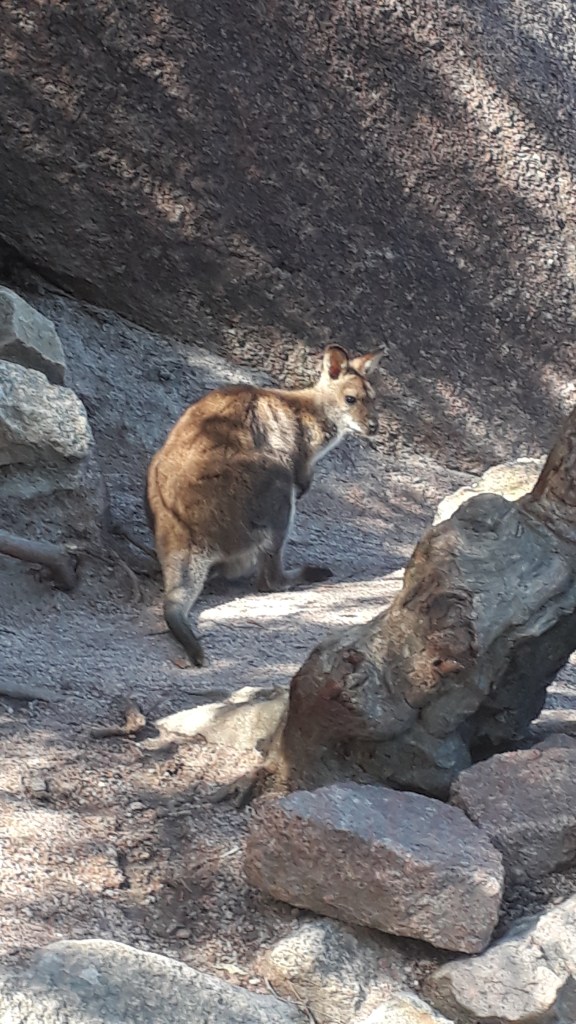
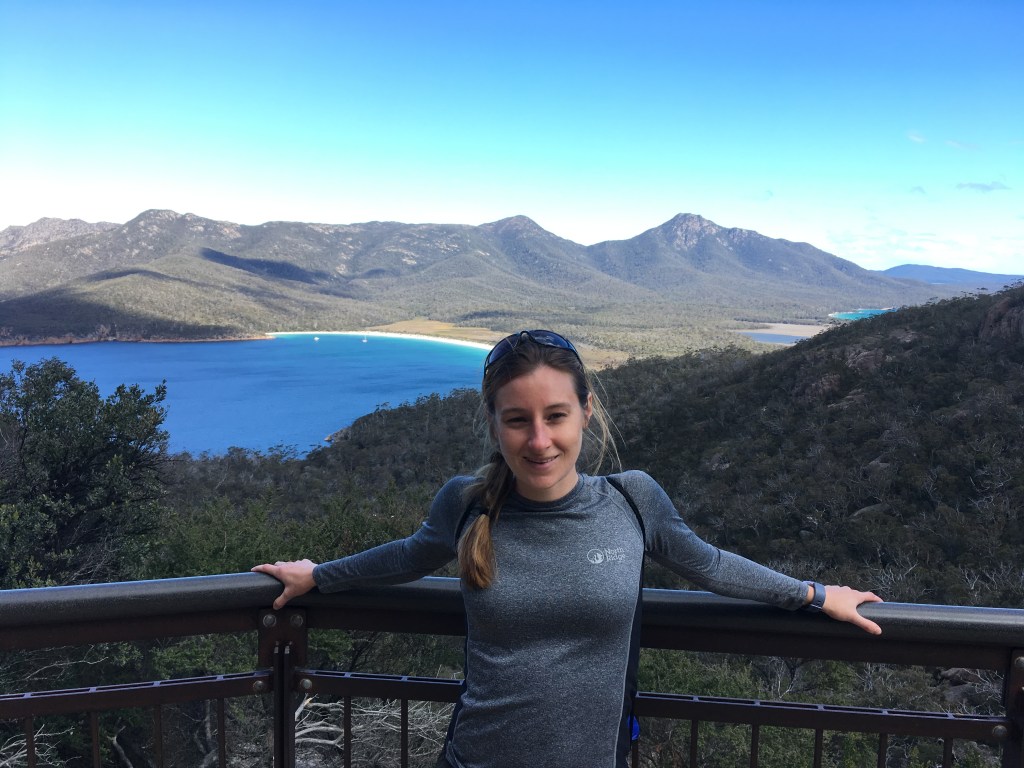
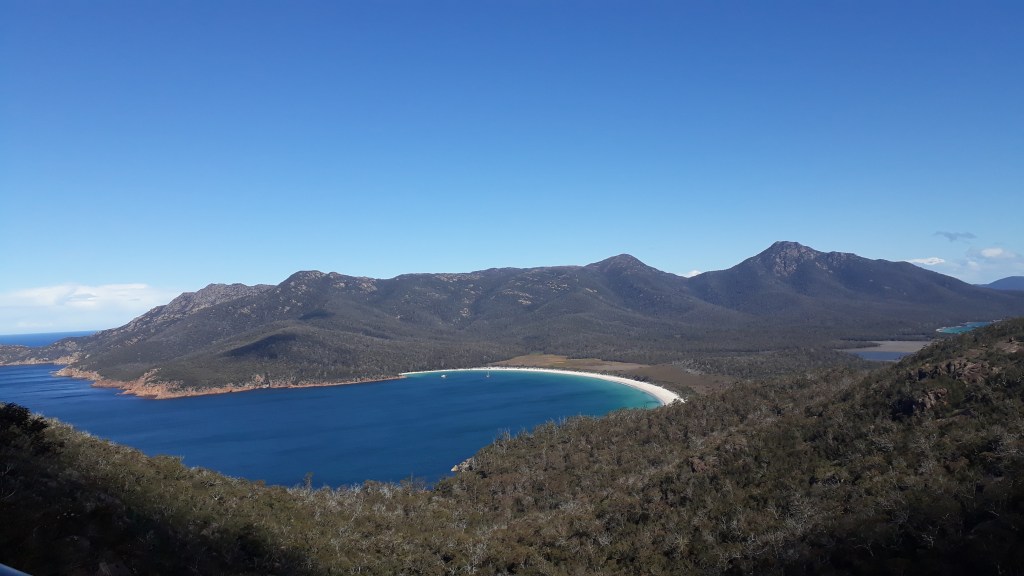
We chose to do a walk to Wineglass Bay lookout which is supposed to be one of the most scenic bays in Tassie. As we reached the ridgeline we could see fantastic coastlines on both sides of the peninsula but the turquoise waters and white sands of Wineglass Bay really made it stand out. It was definitely one of the most beautiful bays that we saw during our trip (and there was some good competition). As we were stood at the lookout snapping pictures of the view, we were joined by a wallaby who managed to get to the middle of the clearing before realising he was surrounded by people, and decided to employ the ‘if I stand still they can’t see me’ approach whilst we all took pictures of him!

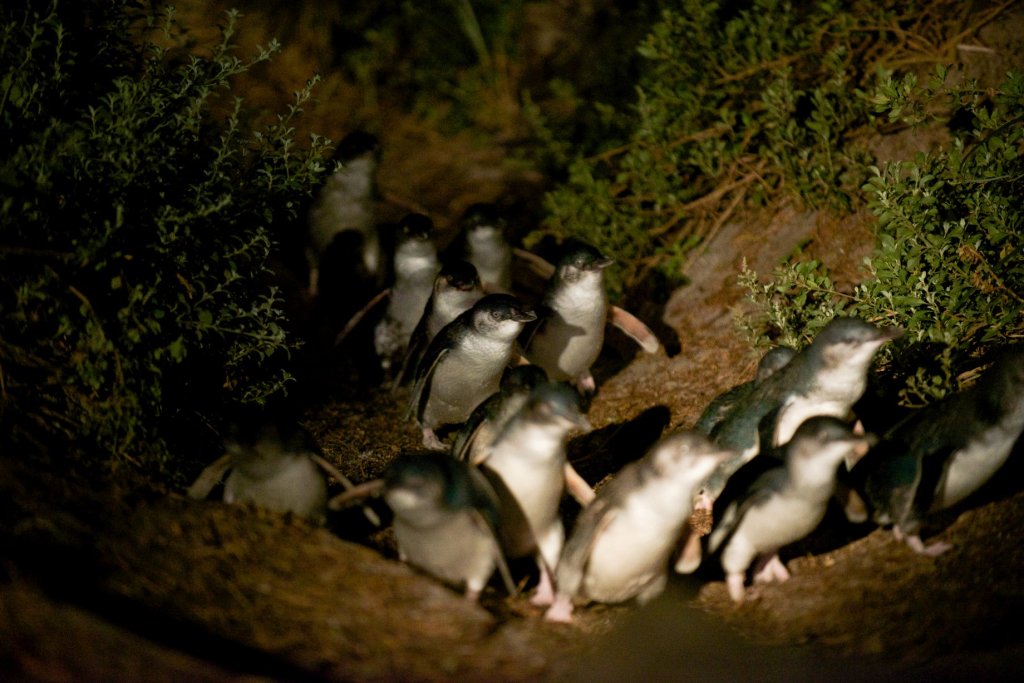
After our walk we headed back north to Bicheno which is a town just outside the National Park and had two vital attractions: firstly it was the only settlement nearby large enough to be showing the England vs Australia rugby game; secondly the towns cliffsides are populated by a colony of little penguins (also known as blue or fairy penguins) who return on mass each evening from a day of fishing. We spent an hour watching around 50 of these wonderful birds waddle past, some getting close enough to touch (we resisted with difficulty) before a late night drive back into Freycinet National Park.

These little guys were incredible. After swimming all day catching fish and avoiding sharks, the male penguins have sentry duty all night whilst the females keep their eggs warm.

We stayed overnight a Friendly Beaches campsite which had been recommended to us back in Hobart and when daylight dawned we could see why. The campsite backs onto miles of postcard perfect beach made all the more beautiful by its isolated location. We spent two hours that morning walking along the sand of Friendly beaches and admiring the 1000s of different shells along the beach, only seeing a handful of people.

Friendly Beaches campsite (run by volunteers and free to use) backs onto miles of white sand and turquoise ocean. If this doesn’t make you reach for your camping gear then nothing will!

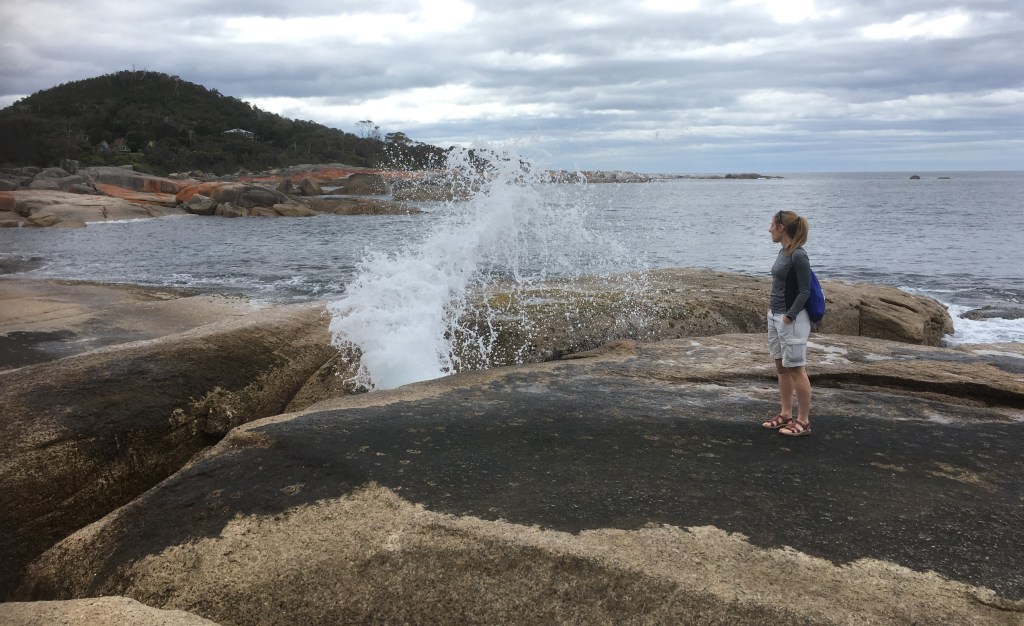
After another quick stop at Bicheno to admire the Bicheno blowhole we were on our way north heading up along the east coastline to find more perfect beaches at Lagoons Beach Conservation area, St Helens and the Bay of Fires.

The Bicheno Blowhole

Overview of the day: Tasmania probably has more kilometres of perfect beaches than it does people, and the Tasman Sea in spring rivals the North Sea in temperature!

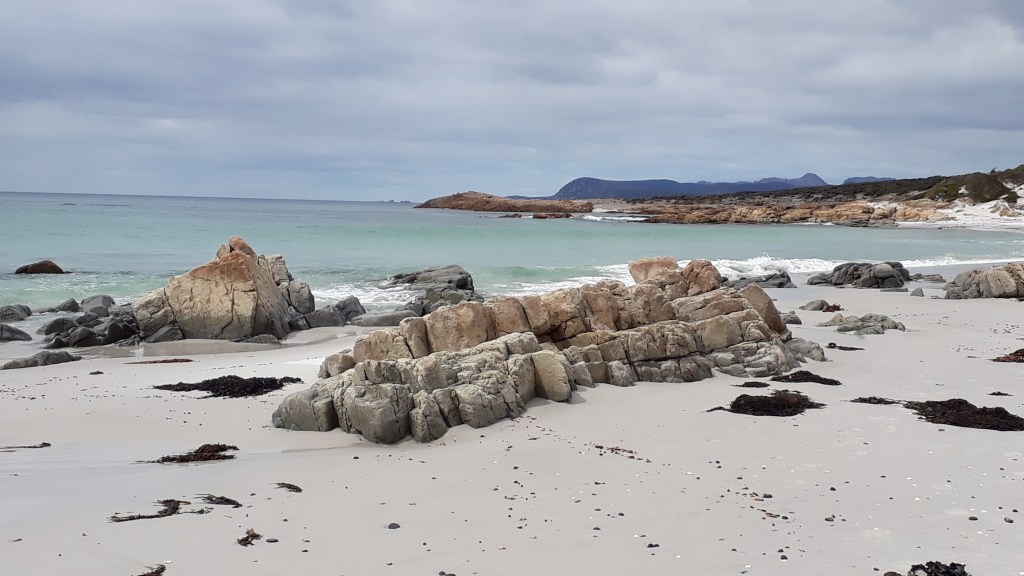
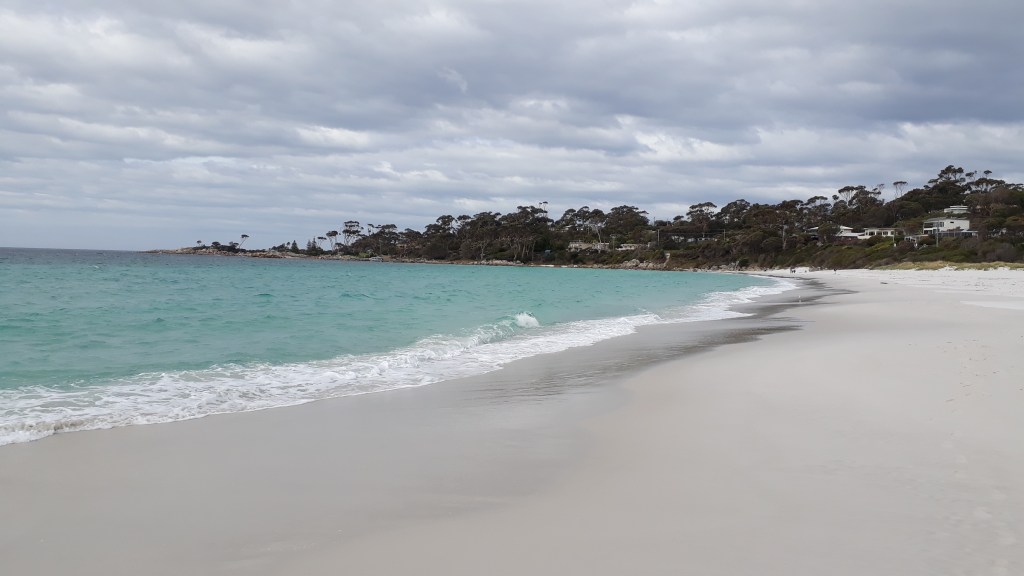
The beach at Binalong Bay to the north of St Helens. Don’t let that tropical paradise look fool you though – the water was freezing!
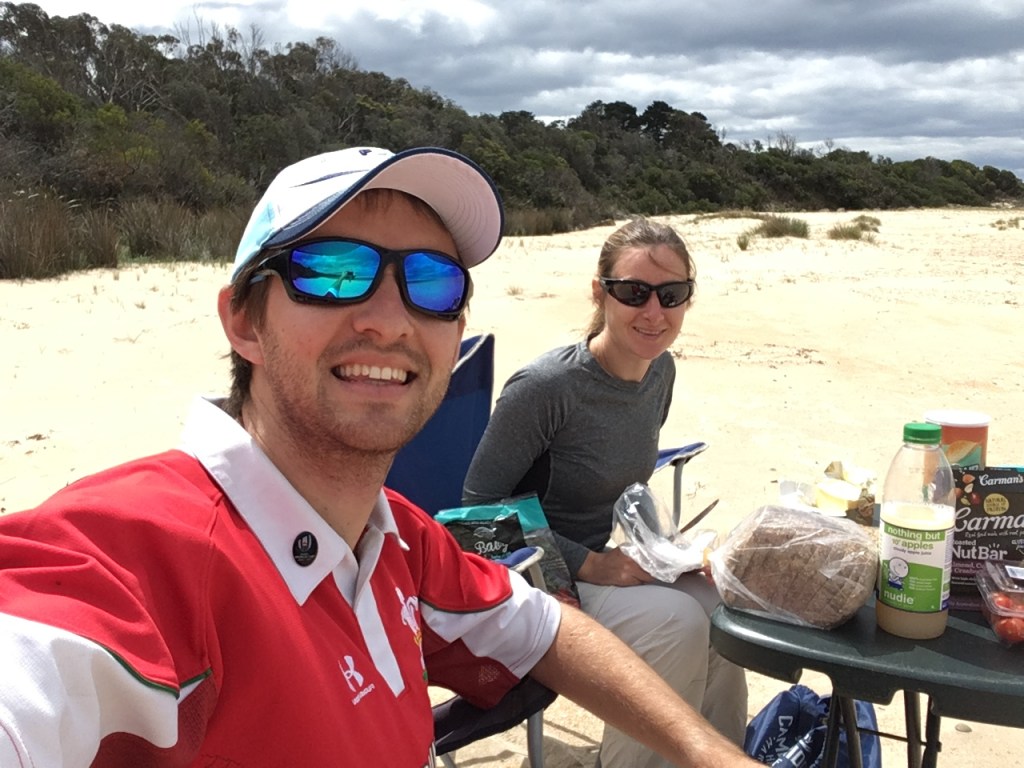
Of course, we had to have a picnic on the beach! Granny Piper will be proud!

G’day Melbourne!

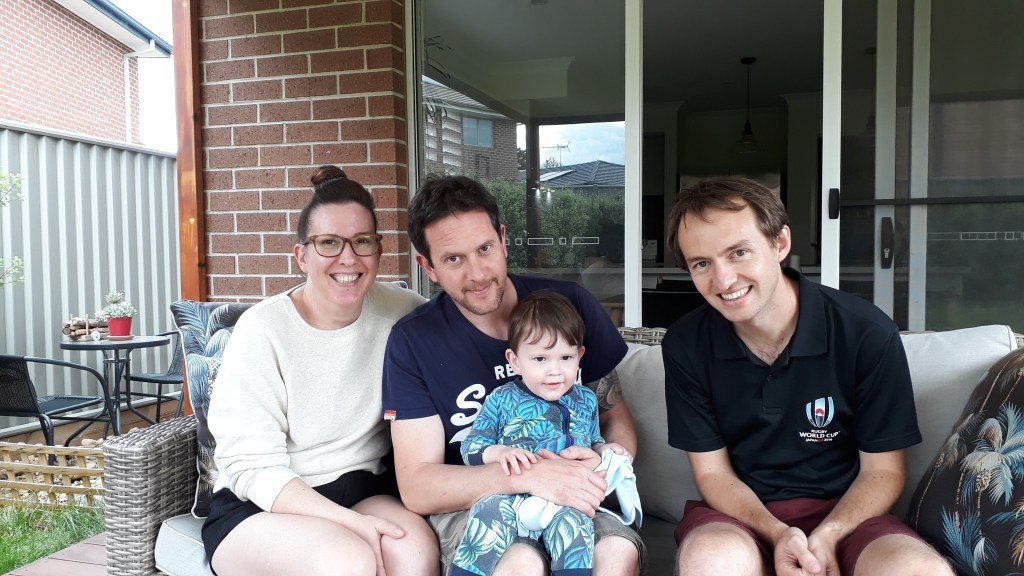
After a slightly delayed flight due to the Typhoon (we got off easy compared to Claire’s brother!), we arrived in Melbourne, Australia. Recognising that we would have needed all our sabbatical just in Australia if we had wanted to cover the whole country, we had focused our 2 week itinerary on the south-eastern tip: Melbourne, Tasmania and Sydney. One key reason for us heading to Melbourne was that Gareth cousin Joel lived here along with Alex and toddler Charlie (who we hadn’t met yet). So after checking in to our Airbnb we headed across town to see them. We enjoyed a fantastic family afternoon in the garden catching up, gorging on cheese (Japan doesn’t really do cheese) and being entertained by Charlie.

Visiting with Alex, Joel and Charlie

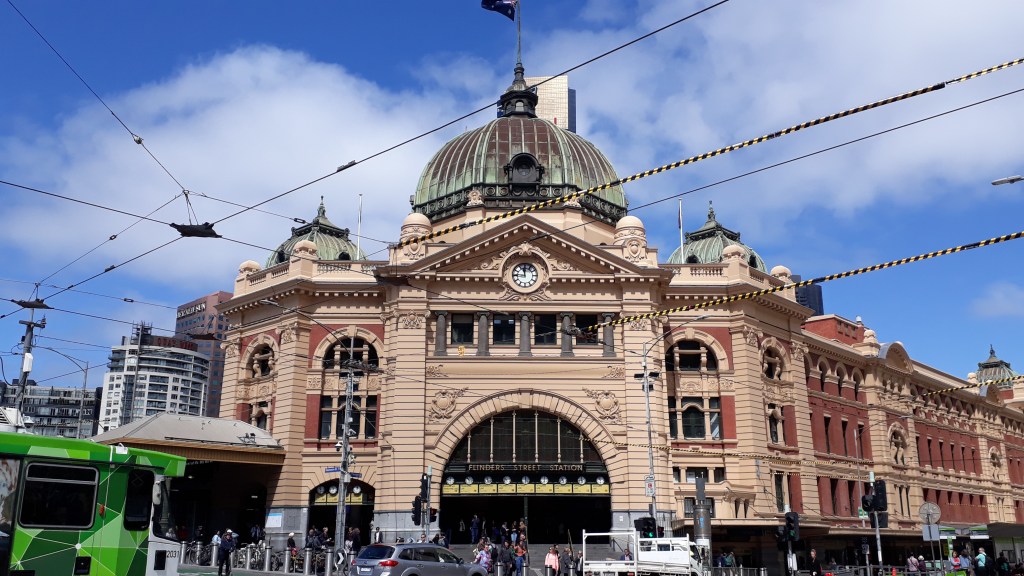
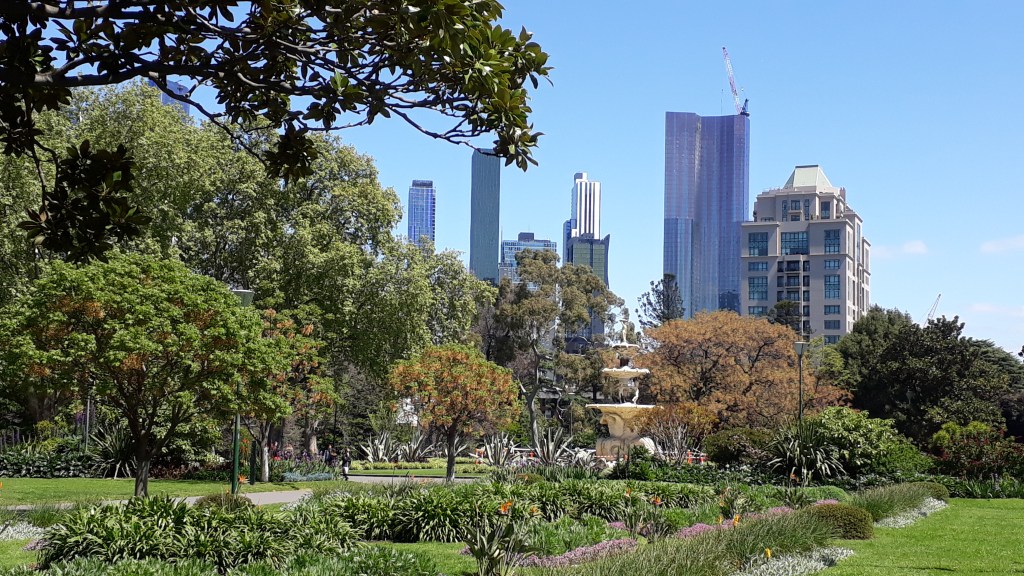
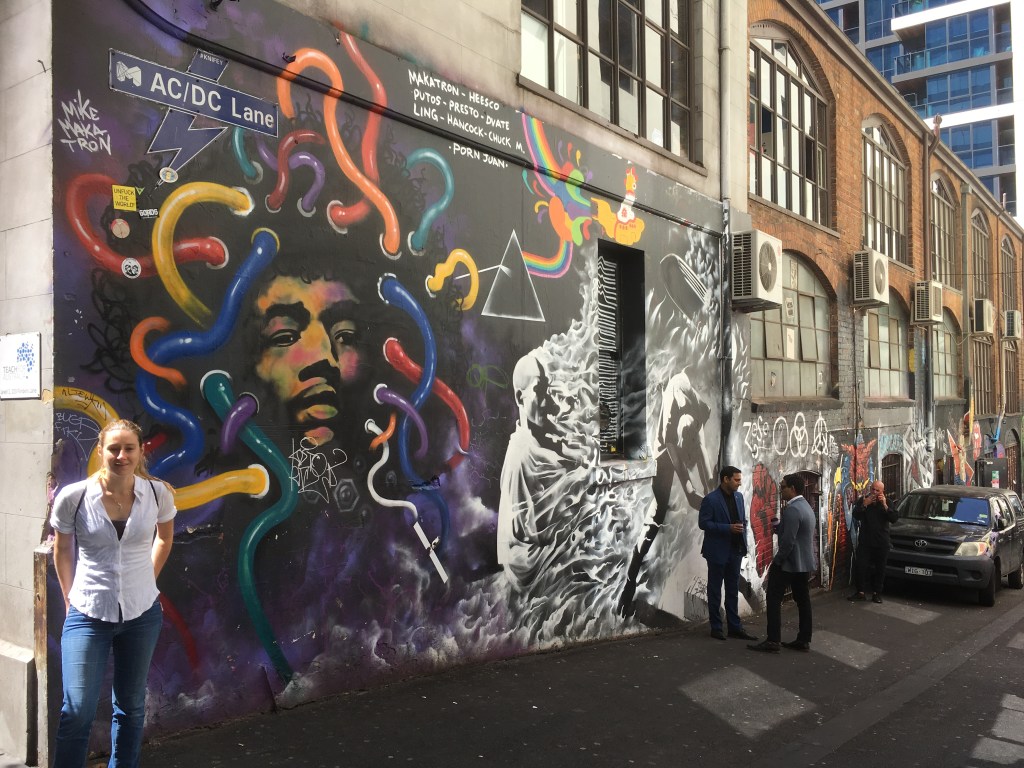
The next day we focused on the city. After a lazy morning recovering from minimal sleep on our overnight flight, we headed out for a self guided walking tour around the city. Key highlights included the bustling Queen Victoria Market; ACDC lane full of rock’n’roll street art; Carlton Gardens (perfect picnic spot as attested to by the huge numbers of Melbournians out for an earlier lunch & sunbathe).

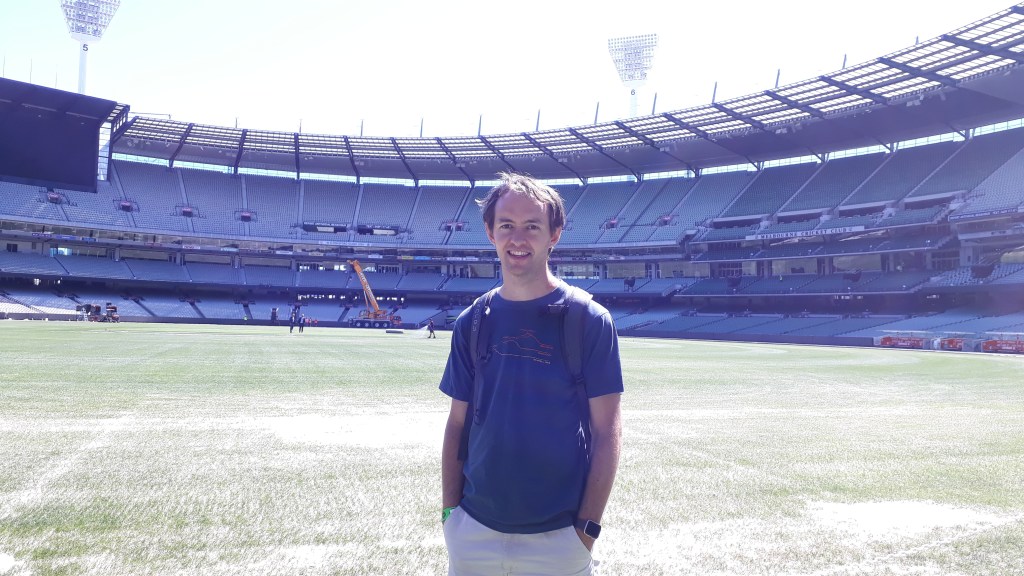
Gareth couldn’t come to Australia without cricket making its way onto the must-do-list somewhere. As there were no games on anywhere that we were staying we couldn’t see a game (Claire was so disappointed) so we instead booked a stadium tour of the Melbourne Cricket Ground. The ground is located in a massive sporting complex to the east of the city that can be accessed by a beautiful walk along the river front, with great views looking back at the city centre.

The MCG is an amazing cricket stadium, or sports stadium for that matter, as it is the 10th largest for any sport in the world (beaten by 8 American Football College stadia and the world’s largest stadium – the North Korea national stadium). It has a capacity of over 100,000 and is also the home of Aussie Rules. The ground has been on the current site in Yarra Park since 1853, but it’s undergone some serious development since then. It is now a state of the art stadium with modern seating, TV screens, a great media centre and so many bars to enable the punters to keep refreshed.

The stadium also has a great nod to it’s history as well, with lots of historic bats and caps and other paraphernalia on show as well as a very well stocked museum in the basement. There is an excellent training facility with a bowling machine that projects an image of different bowlers running in before releasing a delivery that that bowler would bowl. We enjoyed seeing Alastair Cook’s name up on the wall in three foot high letters next to 244* – the highest score by a visiting batsman in a test match. After our tour we walked back along the river, stopping at one of the many bars for some ‘happy hour’ beers.
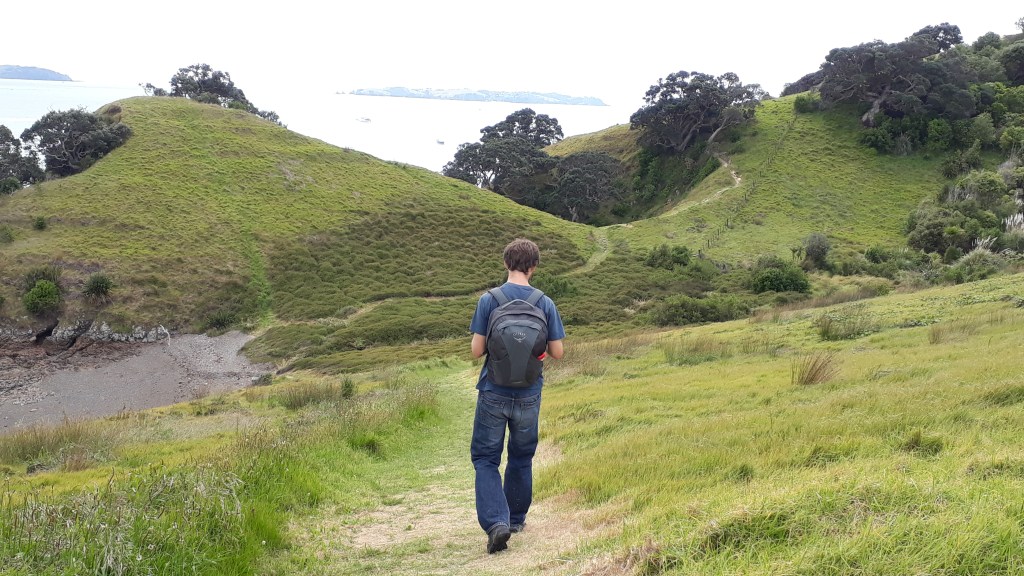
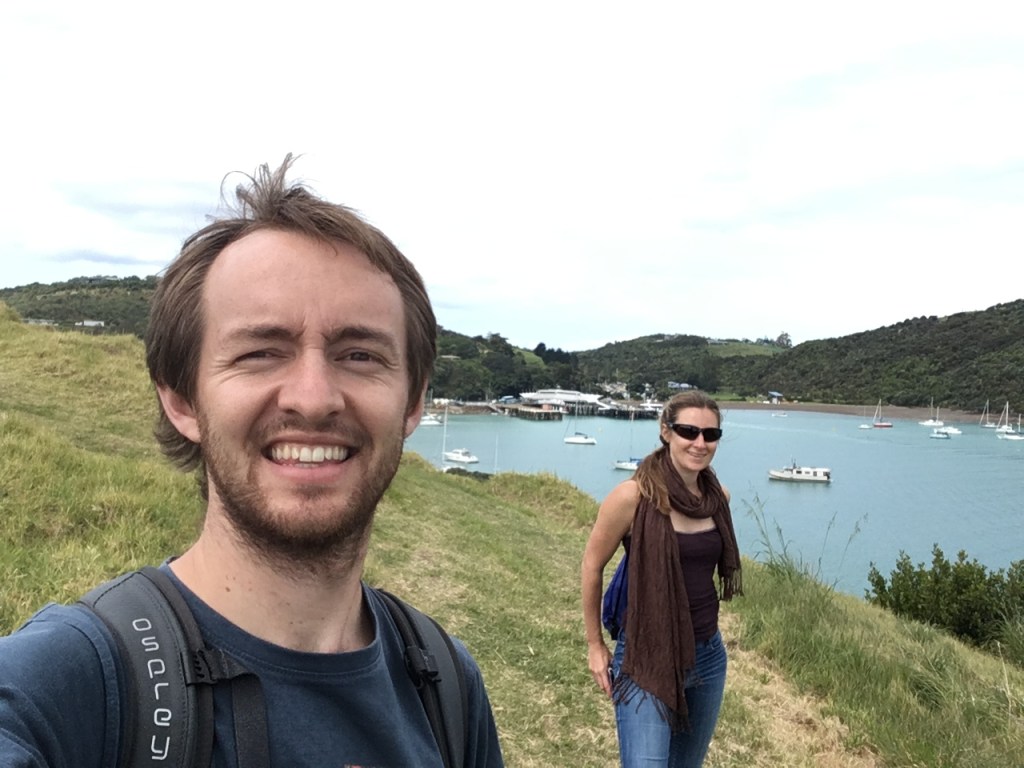
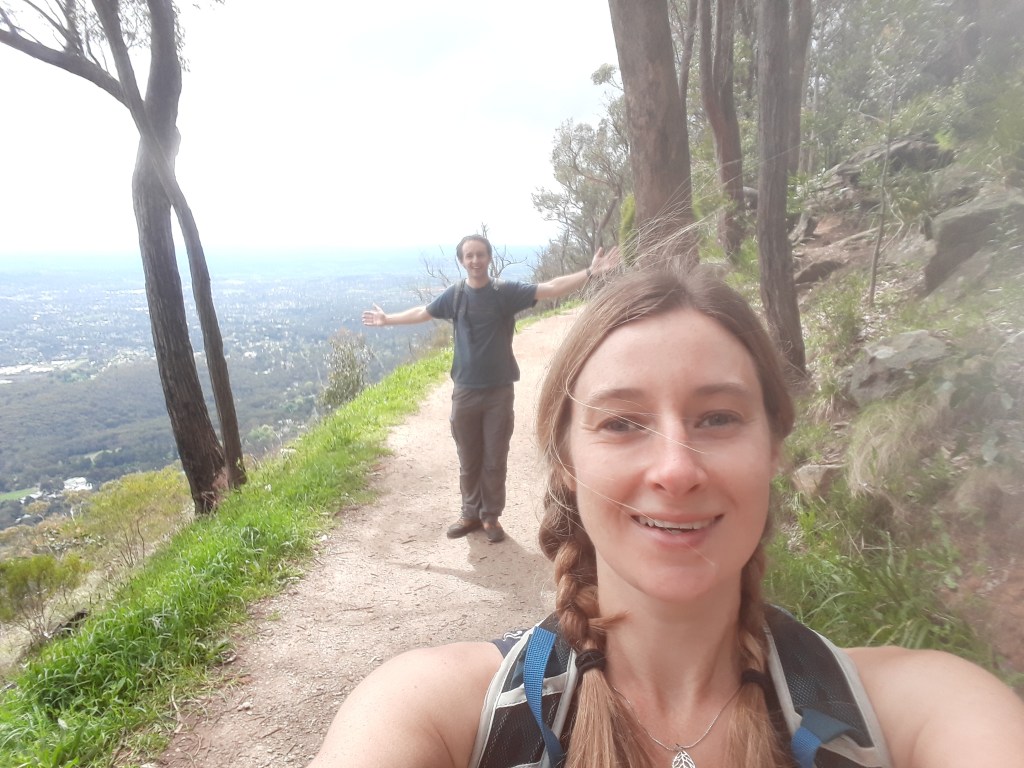
By day 3, our hiking boots were itching to be let out for a walk so we took the train east into the Dandenong Range for a bit of an adventure. We had researched a few different walk options the night before and had found a 13km hike from Sherbrooke to the Summit of Mt Dandenong which was easily accessible by public transport.

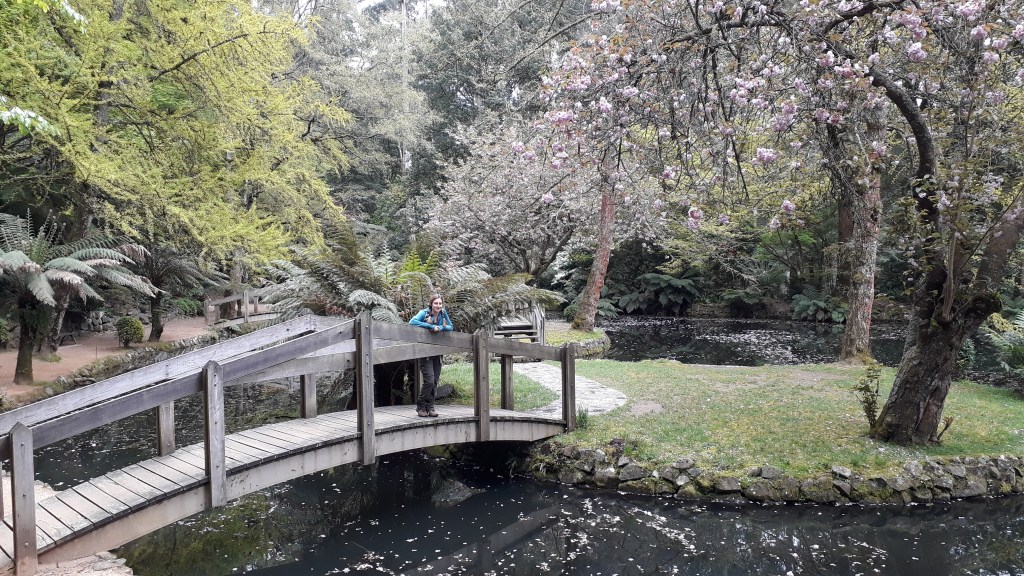
Alfred Nicholas Gardens

The beginning of the walk passed through the beautiful Alfred Nicholas Gardens, before heading into the Australia bush. Until this point in our trip we felt you could have almost placed Melbourne into the UK without it seeming too out of place, but the moment we entered the bush the similarities ended. The vegetation had that slight tropical feel to it, and the bush sounded more akin to the Amazon Rainforest than a British woodland. Then there was the animal life; brightly coloured birds (some of which sounded like monkeys) and lizards sunning themselves along the path. The walk really felt like our own mini adventure.

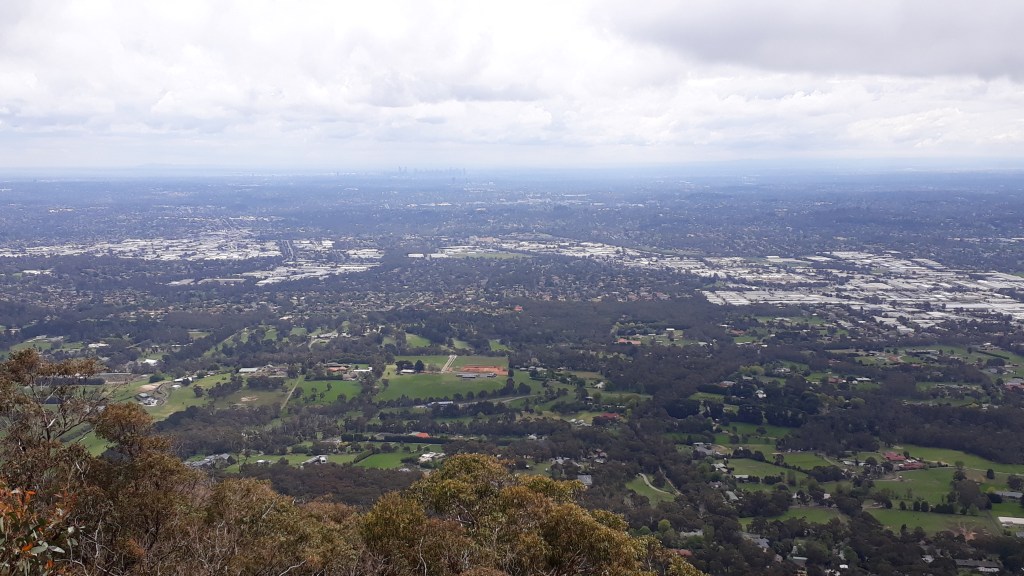
After walking through Sassafras our track slowly began to gain altitude, and the view across out across Victoria began to open out. Along with the breath-taking views, we also enjoyed the Australian naming convention for footpaths. For starters they all had a named sign at each junction (unlike the multitude of ‘public footpath’ signs in the UK), and each name was a logical description of the track; ‘Zig Zag track’ zig zagged up the slope, ‘Towers track’ went to the broadcasting towers at the top of the hill – it made it very easy to navigate!

THe view from below the summit of Mount Dandenong

We reached the summit of Mount Dandenong in the early afternoon which has a viewpoint and the fancy SkyHigh café with windows overlooking the expansive valley below. We treated ourselves to tea and cake before catching the bus and train back into Melbourne.

And the view back to Melbourne from the top

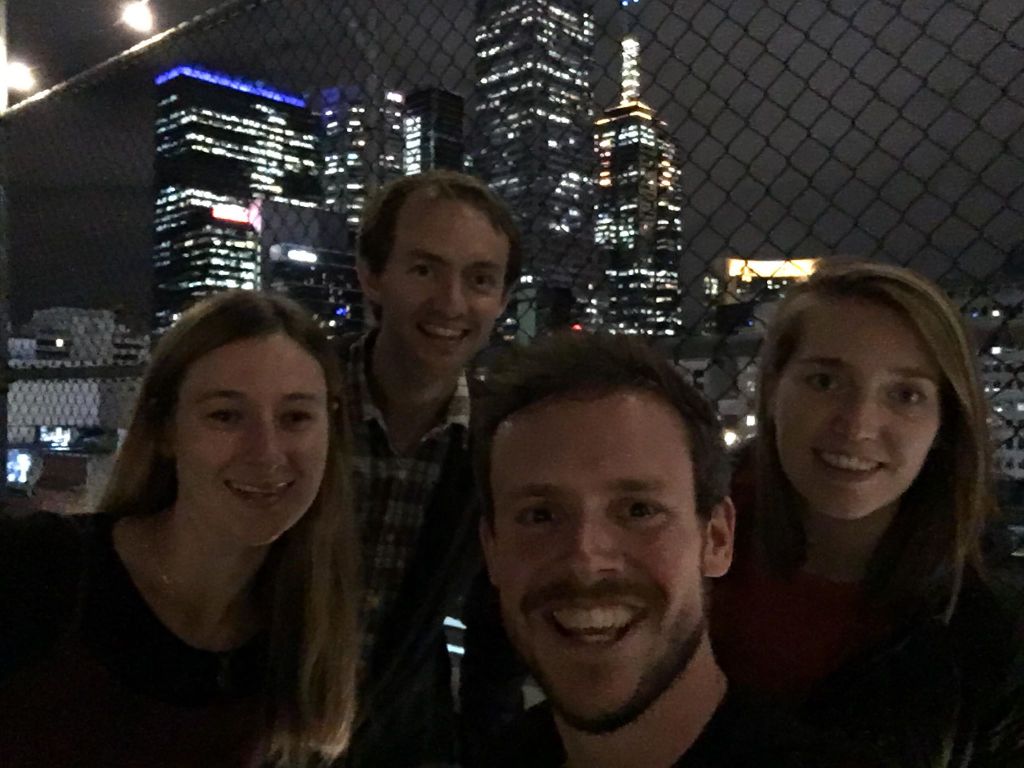
That evening we had arranged to meet up with an old friend from Claire’s lab days at Anglian Water, who had recently moved to Melbourne. We spent a great evening with Michael and Annie, sharing travel stories, eating far too much delicious Thai food, and having a drink on a rooftop terrace overlooking the cityscape.

With Michael and Annie on a rooftop bar overlooking Melbourne

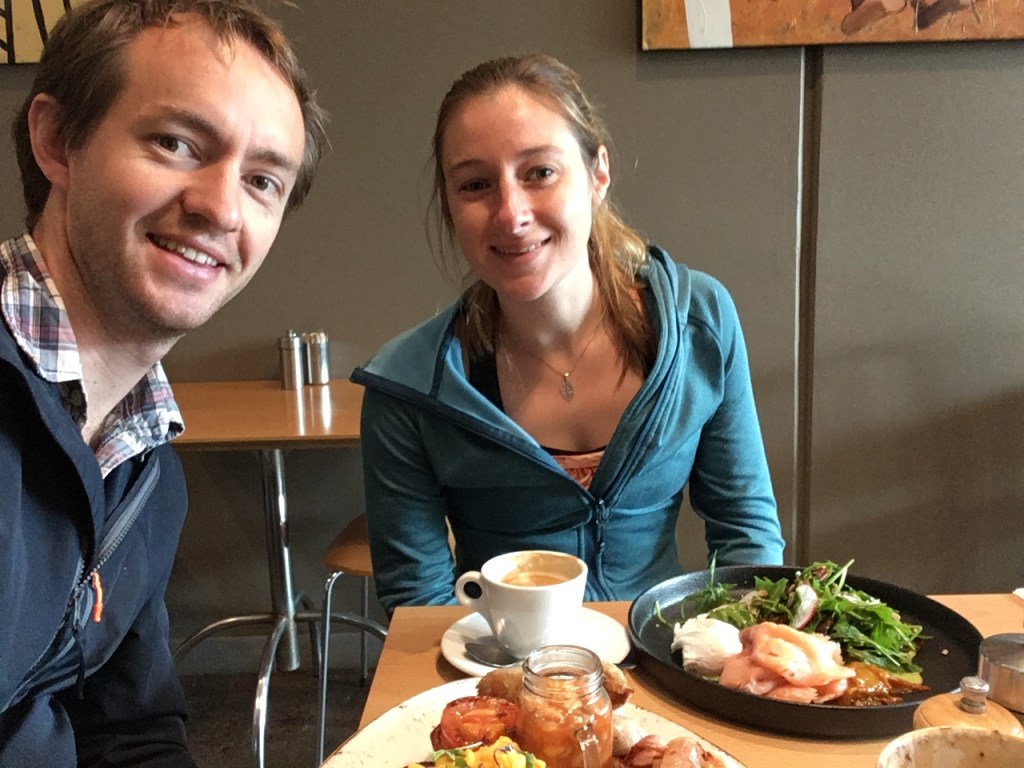
For our final day around Melbourne we had hired a car to head out across the bay to Mornington Peninsula. Following Michael’s advice that brunch was an important element of Melbourne culture which we had so far missed, our first stop was ‘Boyz for Breakie’ in Mornington. The food and coffee were both delicious!

Boyz for Breakie – tasty!

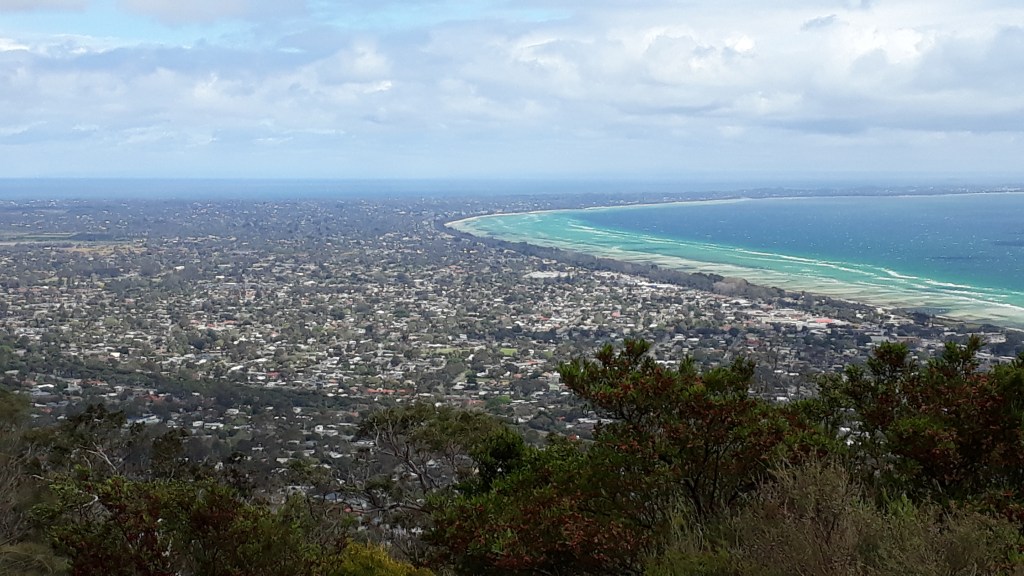
Next stop was Arthurs seat (named after the Edinburgh version), a prominent peak on the peninsular where we enjoyed an after brunch walk looking out across the coastline of the bay and saw our first wallabies (or maybe they were kangaroos).

The view from Arthur’s Seat (no, not that one!)

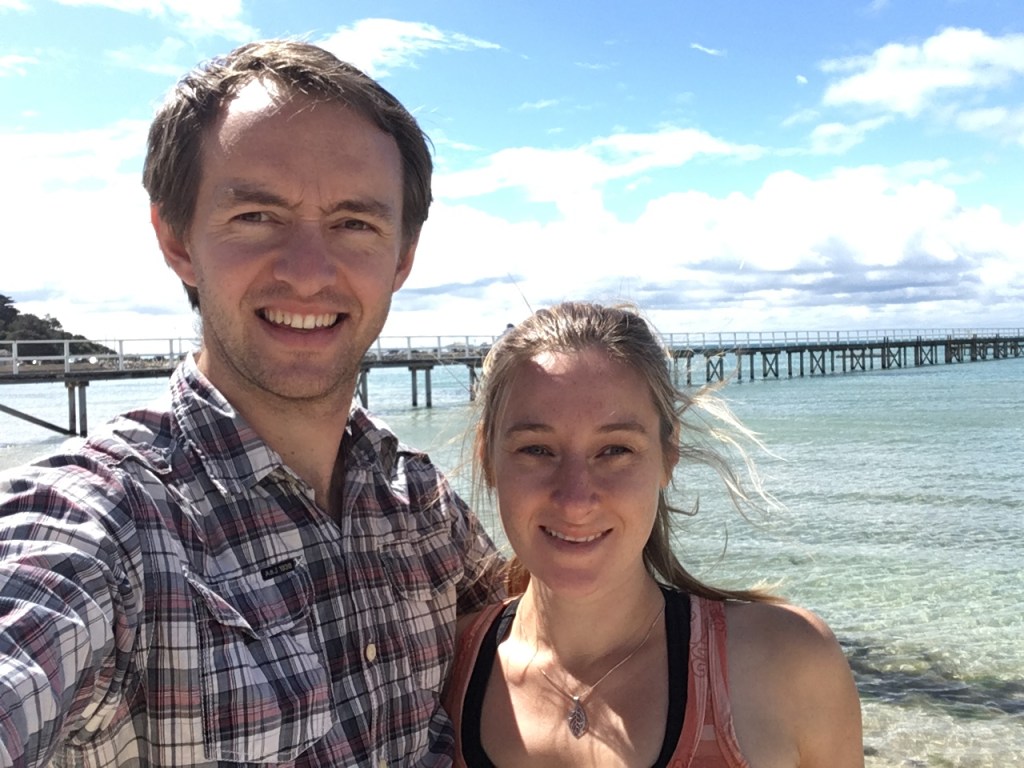
Then we continued on along to Sorrento at the tip of the peninsula for a breezy beach walk and a relaxing afternoon. Sorrento is a popular beach retreat for Melbournians during the summer, but this early in spring we almost had the town to ourselves!

Sorrento Pier

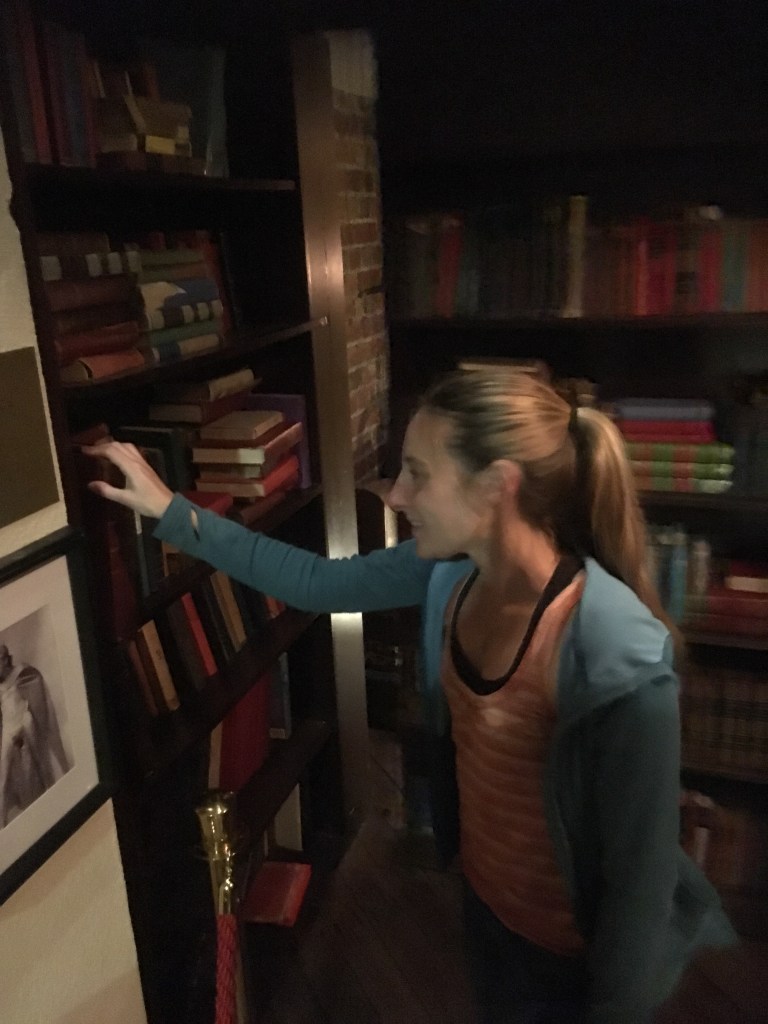
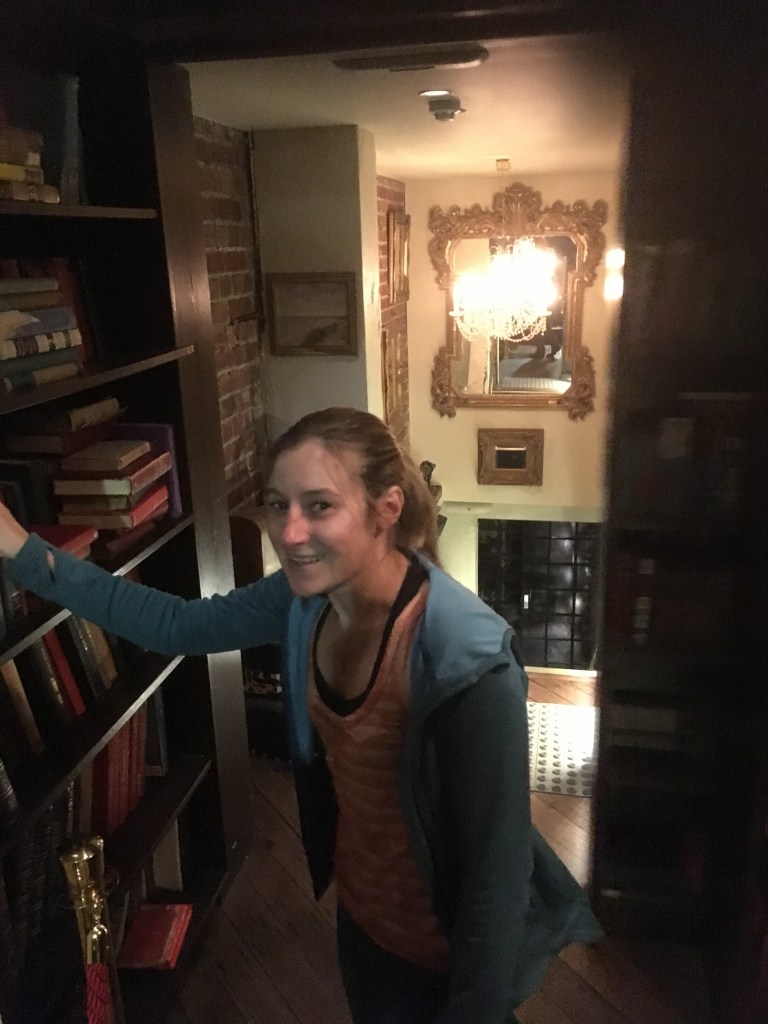
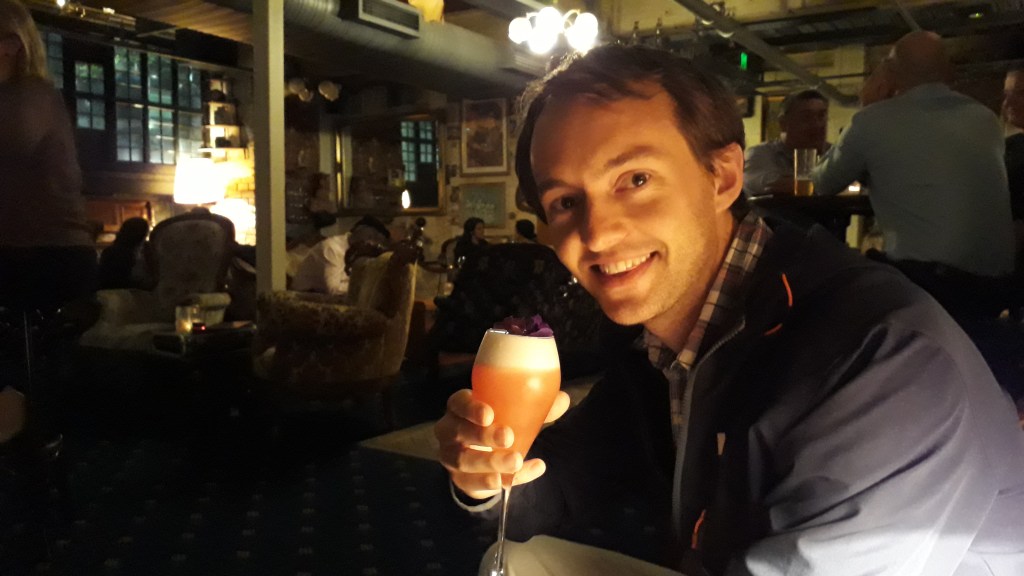
We celebrated our great time in Melbourne with an evening drink at a ‘secret bar’ (a craze in Melbourne at the moment). Claire couldn’t resist having been brought up on Enid Blyton books!!!

Design a site like this with WordPress.com
Get started