Kyoto in one trip (or one blog post – make sure you’ve got a cup of tea with you for this one!) is almost impossible simply due to the sheer volume of temples, history, culture and scenery. Even we recognised that we were never going to fit all the major sights into our three days in the city. You can have too much of a good thing and temple overload is a common aliment for the tourists of Kyoto, so we chose to plan our days here to maximise variety rather than focus solely on the temple highlights.
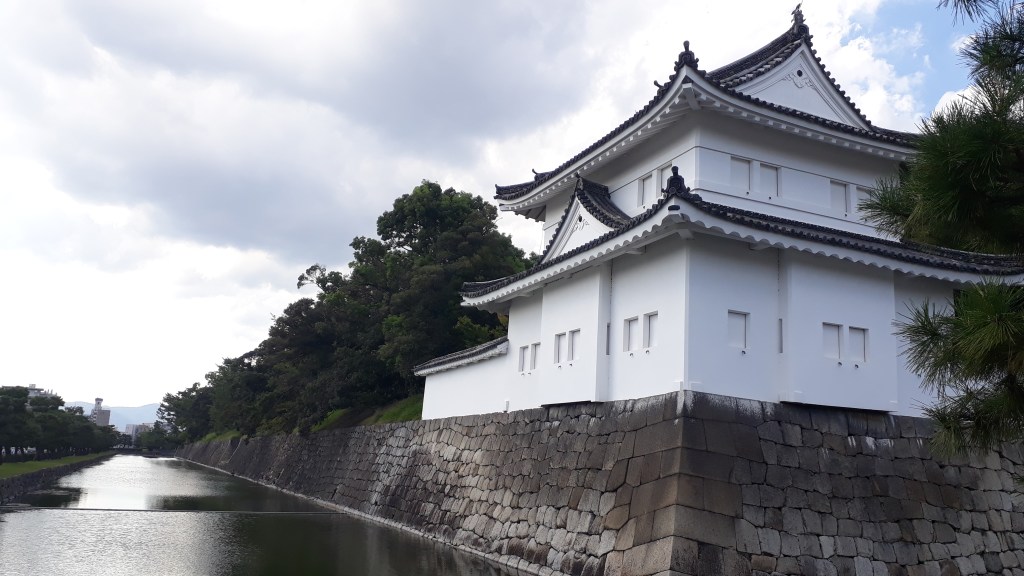
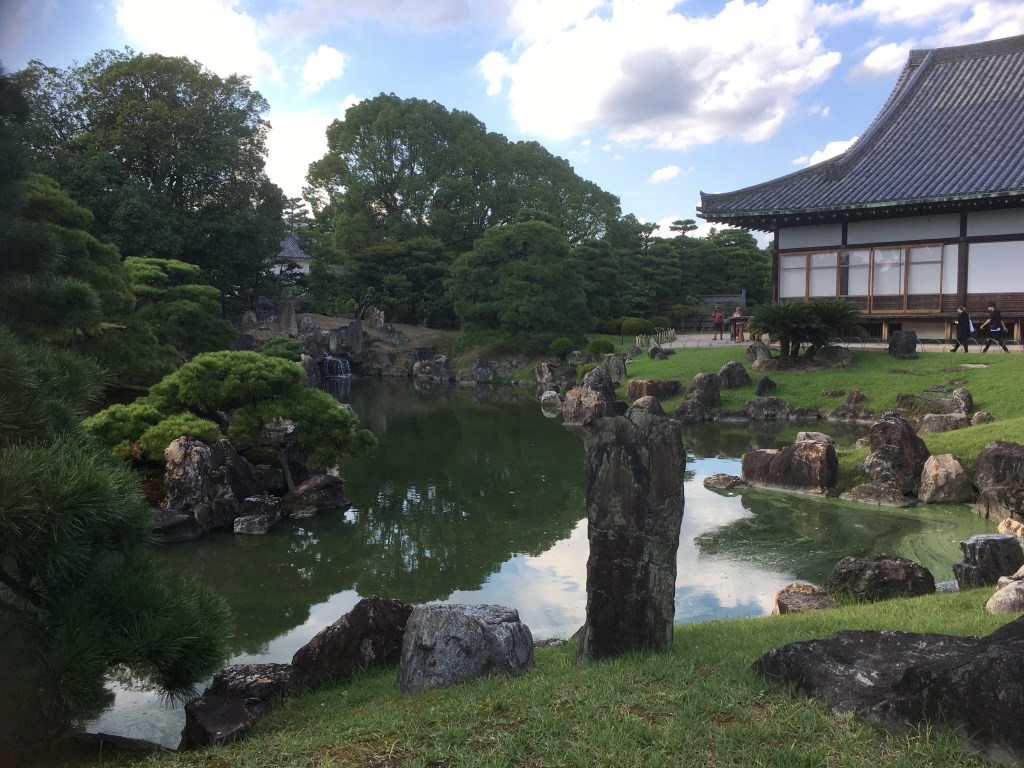
We arrived in Kyoto early afternoon and after ditching the bags at our hotel headed to Nijo-jo Castle, the historical home of the Shogun of Japan (Commander in Chief, head of the military, appointed by the emperor but had all the real power in Japan until 1867). It was a military palace and is one of the only surviving castles of it’s kind (wooden buildings have a tendency to burn down). We confess to knowing little about Japanese history before we came so enjoyed the opportunity to learn more about the buildings, customs and various factions of power over the couple of hours that we were there. The moat and its resident carp were also really impressive, but while there are nice parts of the garden, we did see better gardens elsewhere in the city and surrounding area.
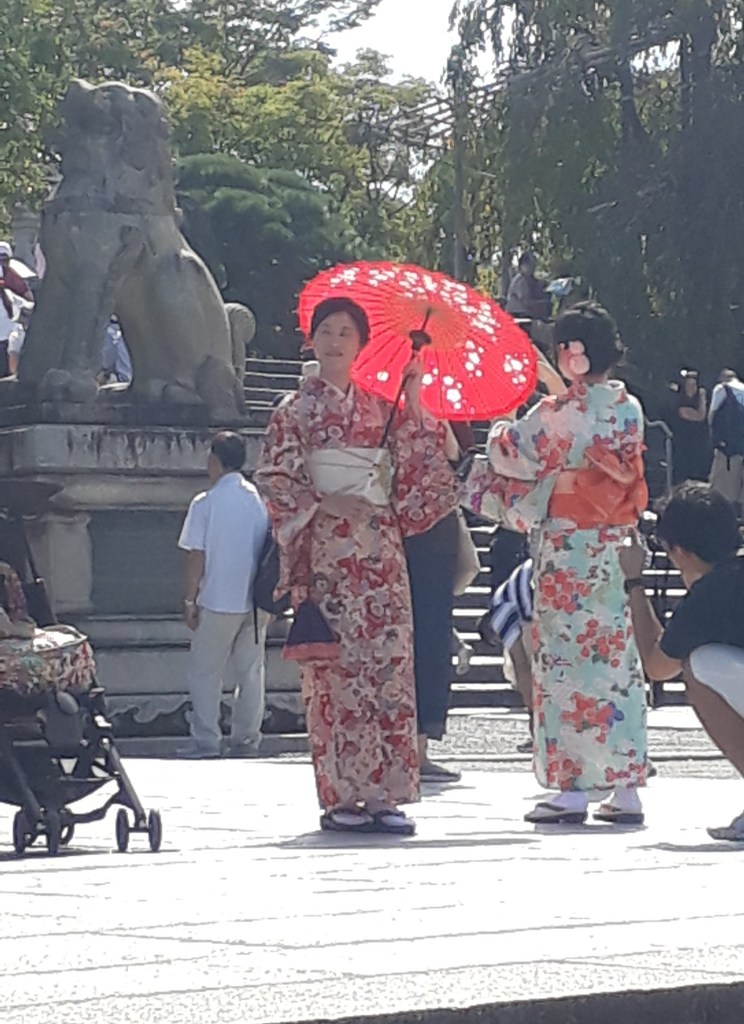
The other point of interest, that was replicated throughout our stay in Kyoto was the number of Japanese in traditional kimono and geisha dress. In part at least, this was due to the many ‘kimono rental’ offers near many major sights as the number of kimono’s increased at these locations. This, and the narrow photogenic streets certainly made for interesting walks through the city which we thoroughly enjoyed (until the heat and humidity got too much!) In the evening we meandered through the city and across the Kamo-gawa river to one of the few places we could find showing rugby in Kyoto (no games in Kyoto = no fan zones) that evening. At this point we discovered another cultural difference in Japan: drinking culture. The Japanese are very controlled when it comes to their drinking, making them rather unprepared for the world’s population of rugby fans. One 40 minute queue to the only barman later, and our single pints had to last us the game!
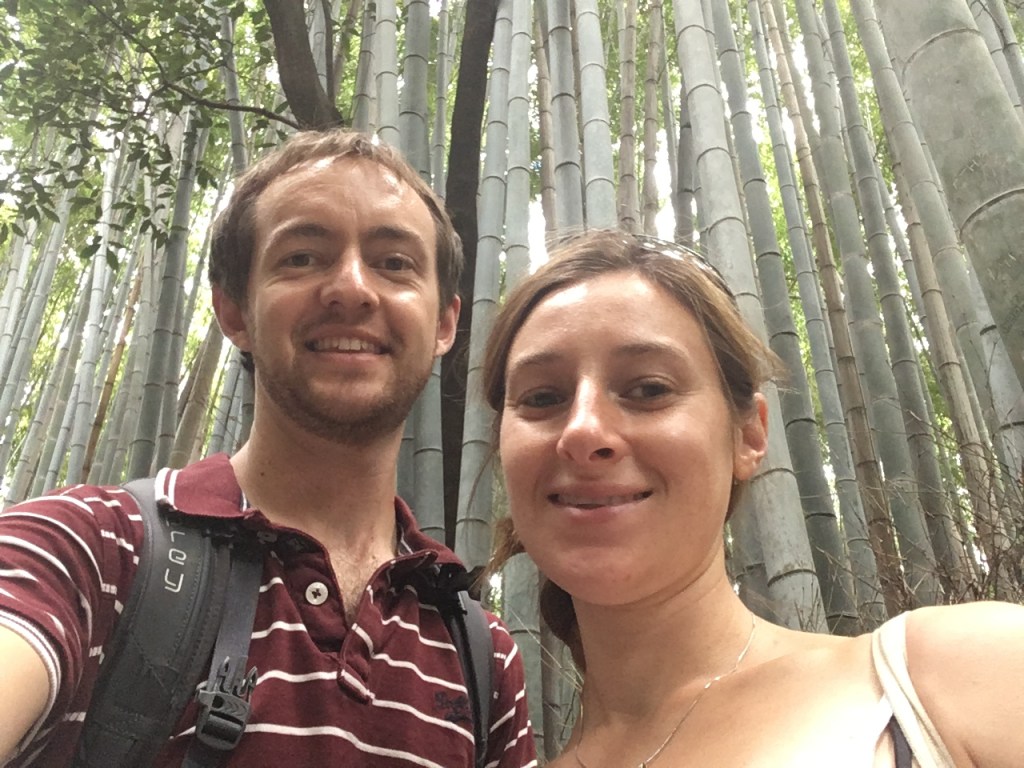
The next morning we took the 20 minute train journey west to the Arashiyama region on the fringes of Kyoto. We wandered through the Tenryu-ji temple complex (but did not go in) onto the famous bamboo groves. Whilst we did see other examples of this later in our trip, there was nothing on this scale and despite the already busy paths it was definitely worth a visit.
We escaped the crowds by following this up with a stroll through the Kameyama-koen park which included a fantastic viewpoint at the top of the park looking across the Katsura-gawa valley, which we eventually descended to and watched boats drift along the river as we debated what would be our next activity.
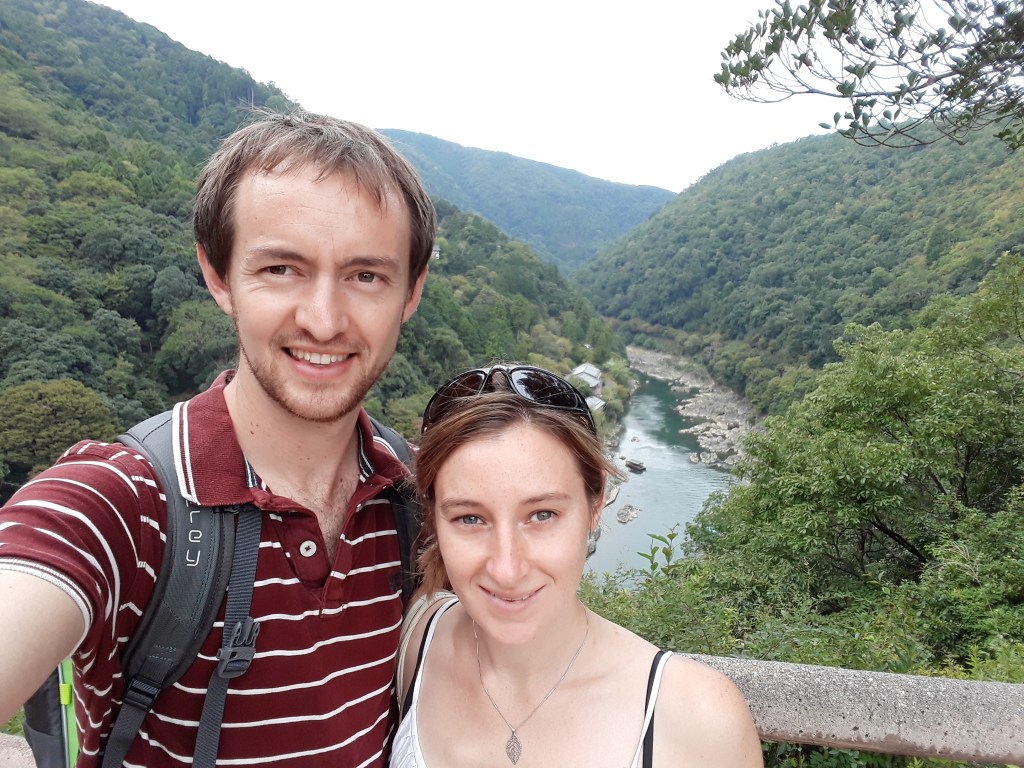
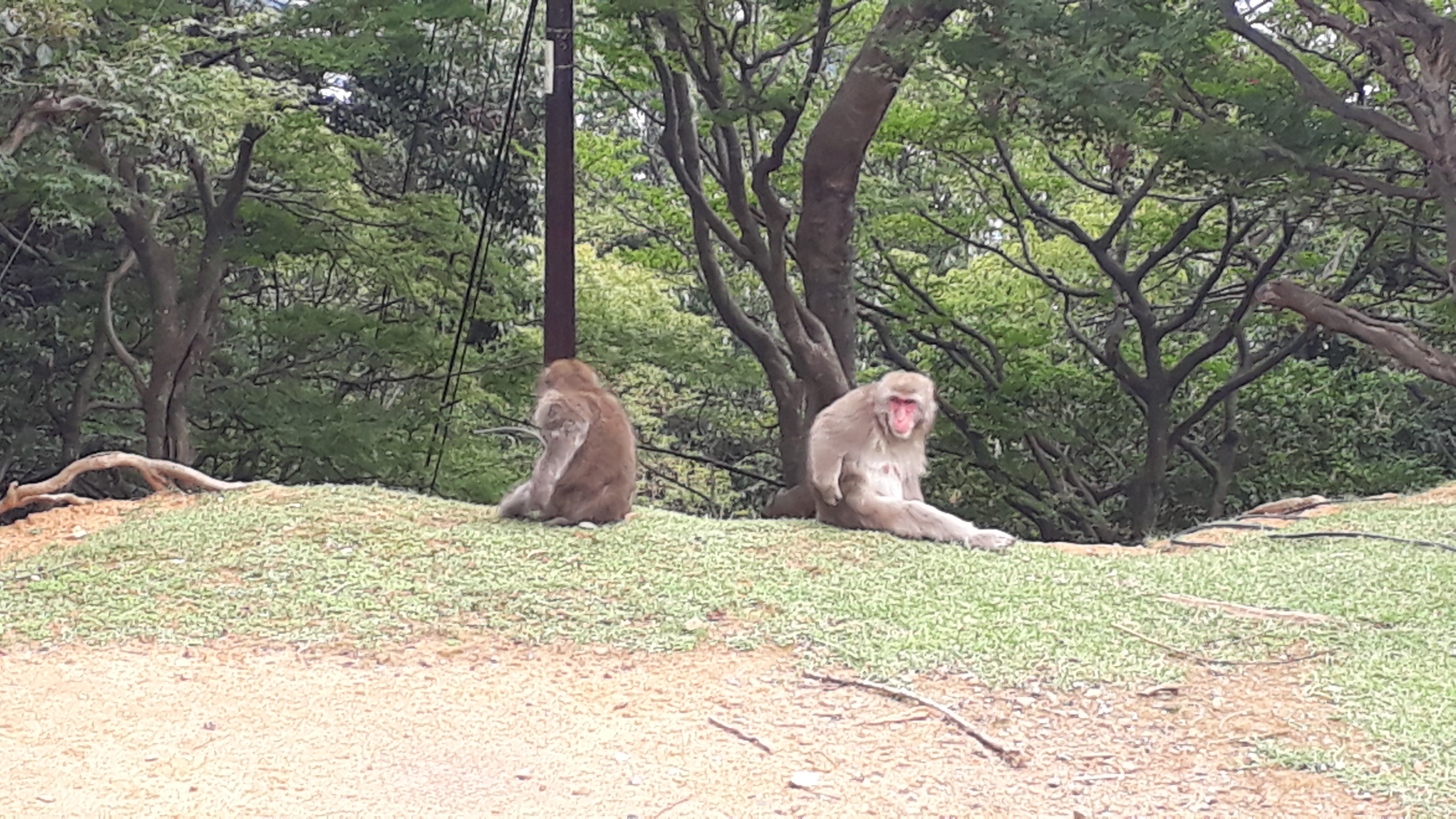
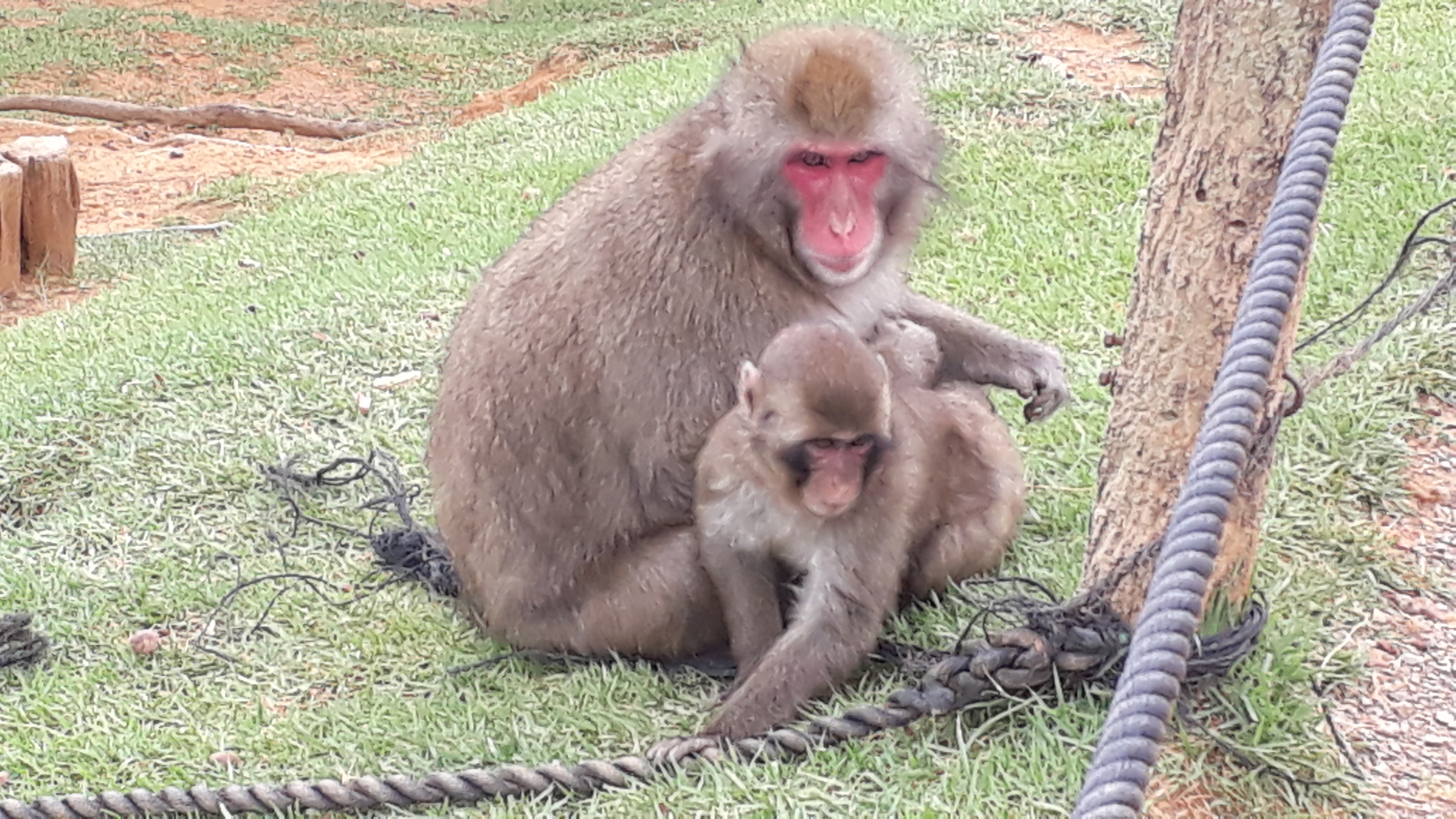
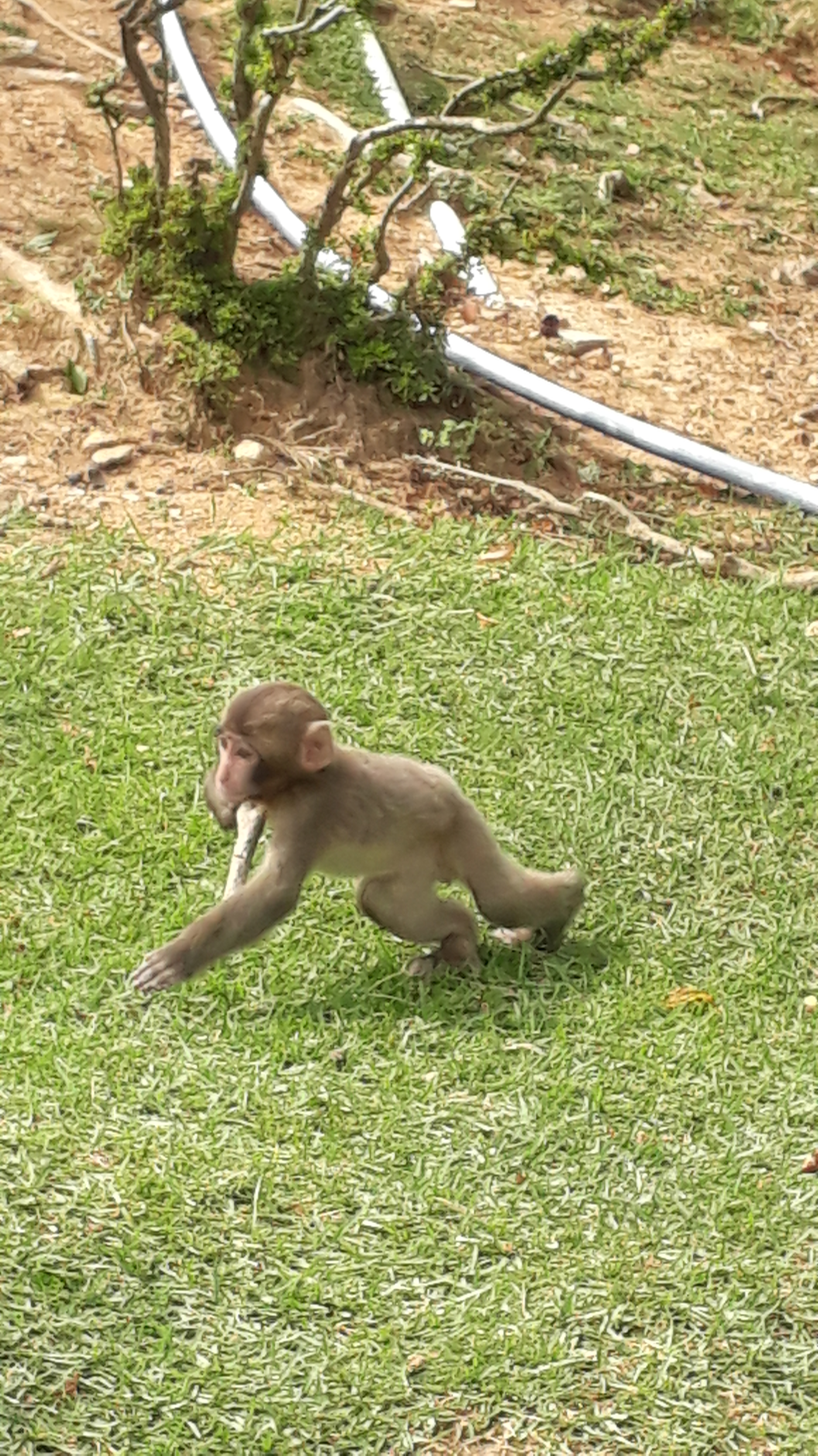
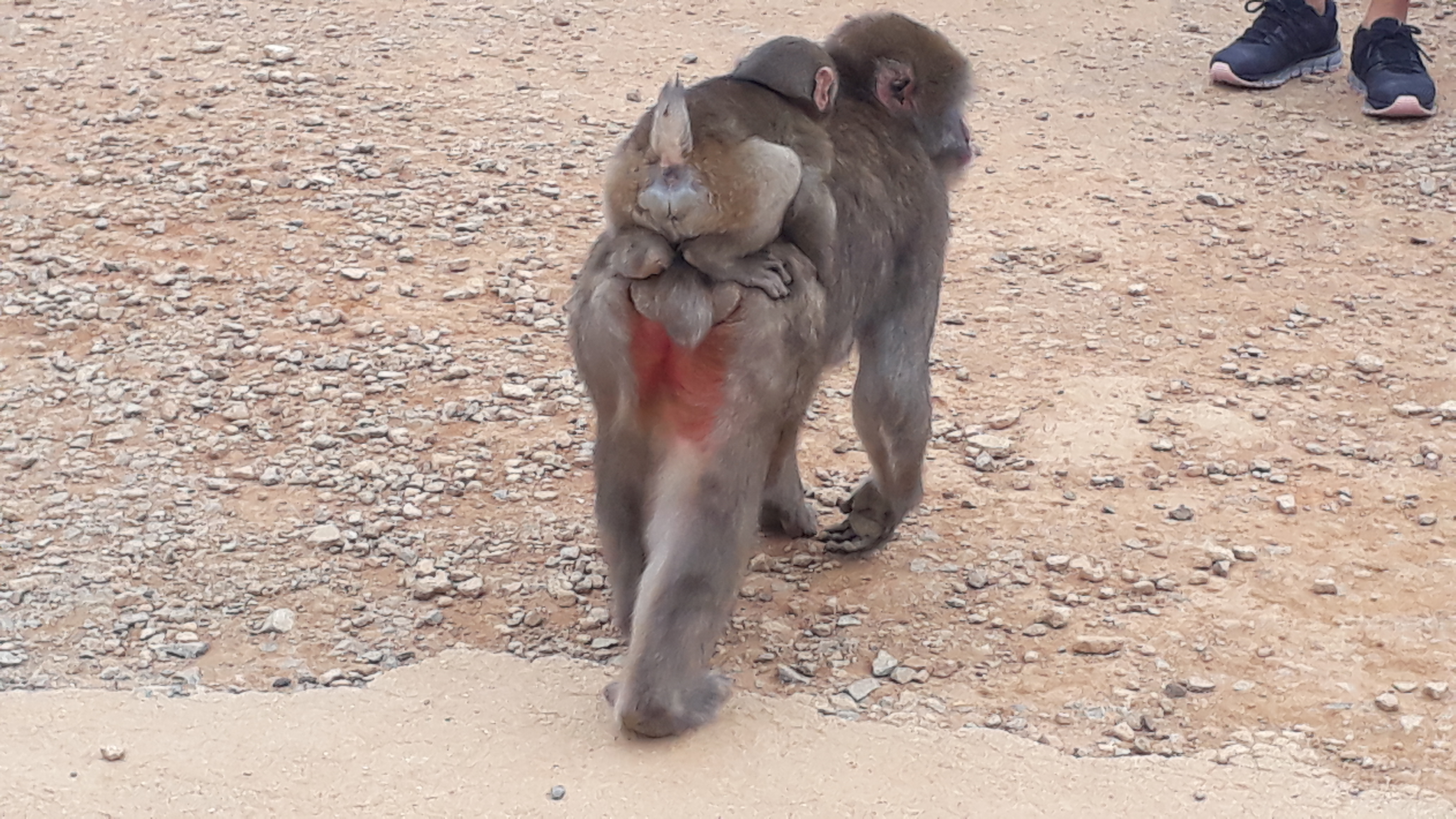
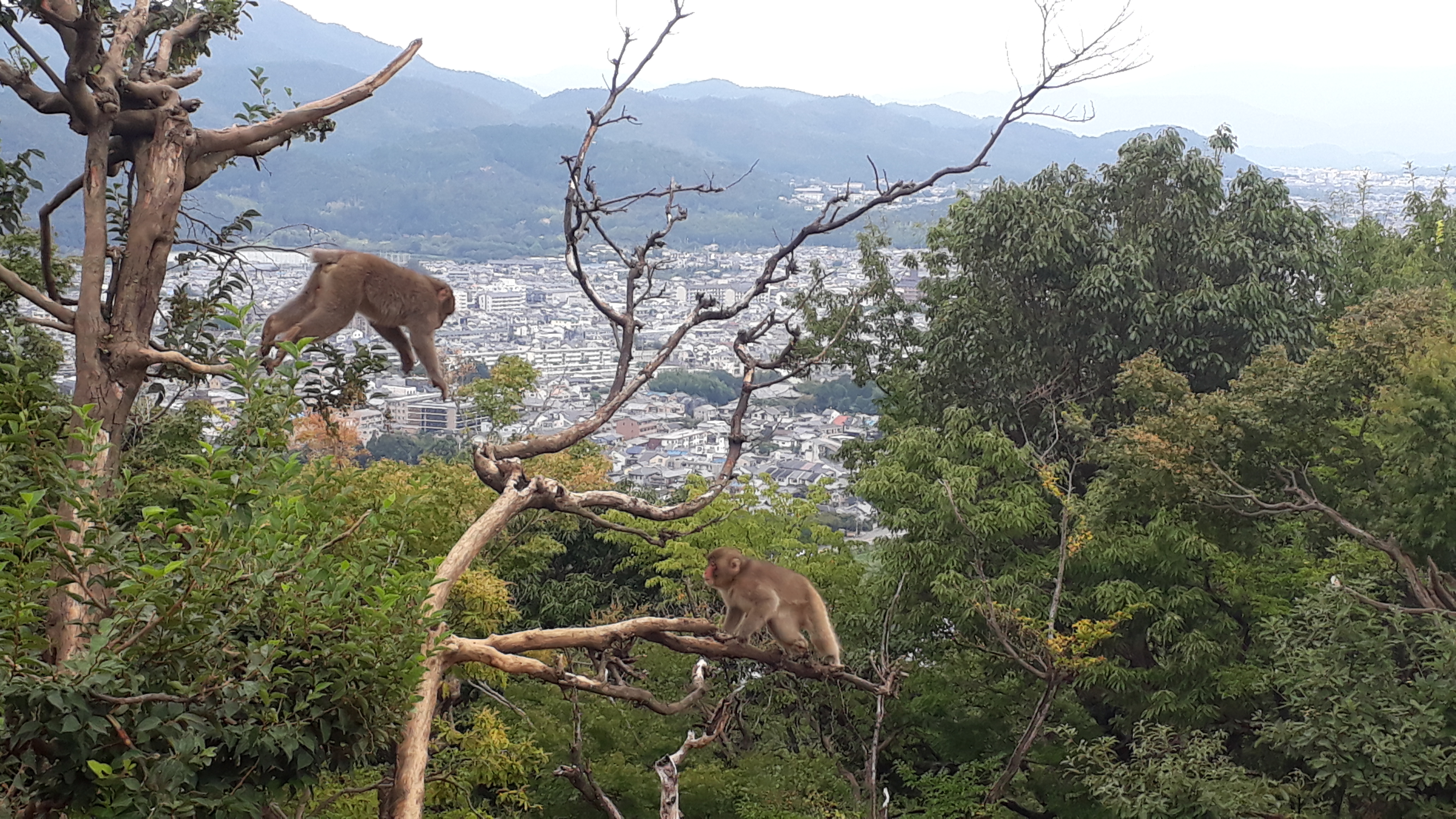
We settled with a visit to the Arashiyama Monkey Park which proved an excellent choice and earned Claire’s ‘best thing about Kyoto’ award (furry animals vs thousands of years of human history – no contest really!!!). After a steep climb we were rewarded with a hillside filled will hundreds of semi-wild monkeys who were completely unconcerned with the gawping tourists. It was so fun watching the baby monkeys play and fall out of trees before rushing back to monkey mums for a hug and clean. You honestly had to be careful not to tread on them, they were so close! The hill site overlooked Kyoto which offered some fantastic photos of monkeys swinging through the trees to a city backdrop. If it wasn’t for rumbling stomachs and a strict rule not to have open human food in sight of monkey eyes, we could have stayed all day. Instead we headed back to the river bank to eat lunch and watch the local school children perform a drumming ceremony that we didn’t understand!
That afternoon we headed back to central Kyoto to the Daitokiyi temple complex; home to tens of temples and zen gardens and the headquarters of the Rinzai Daitoku school of Zen Buddhism. It was incredibly peaceful and tourist free considering it’s city locations and felt like it’s own little world. From here we decided to walk back through the city to the imperial palace gardens. These are vast, but despite a pretty bridge and pagoda in the far south of the gardens, the rest was slightly underwhelming as it was limited to trees and gravel paths. In hindsight we wished we had instead continued northwest to Kinkaku-ji (the ‘Golden Pavilion’) – one of Japan’s best known sights and sadly missed in our Kyoto visit. Oh well – can’t get it right all the time! Oh the plus side we had our first Okonomiyaki (or Om-nom-nomiyaki as Claire refers to it) experience for our evening meal.
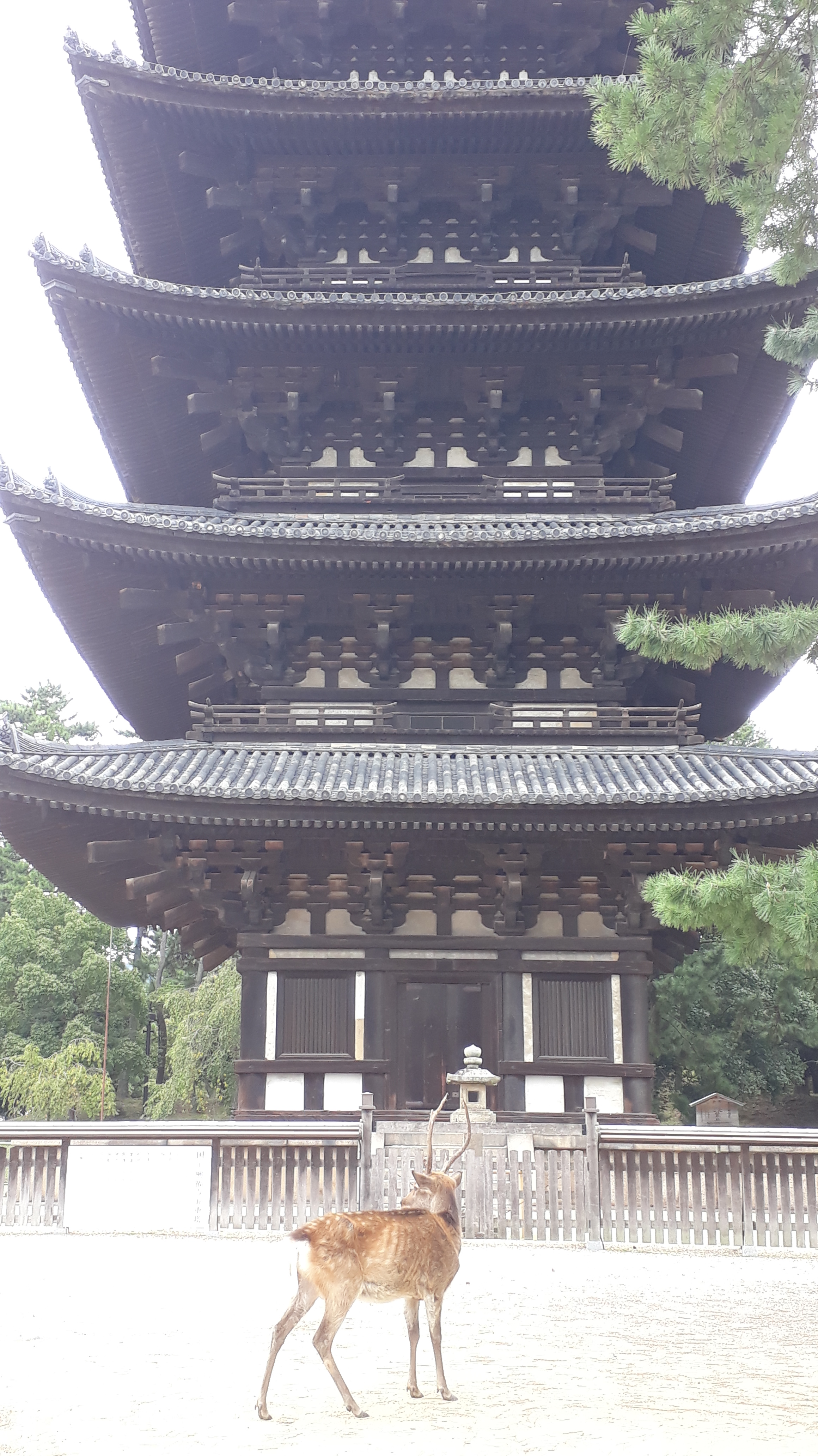
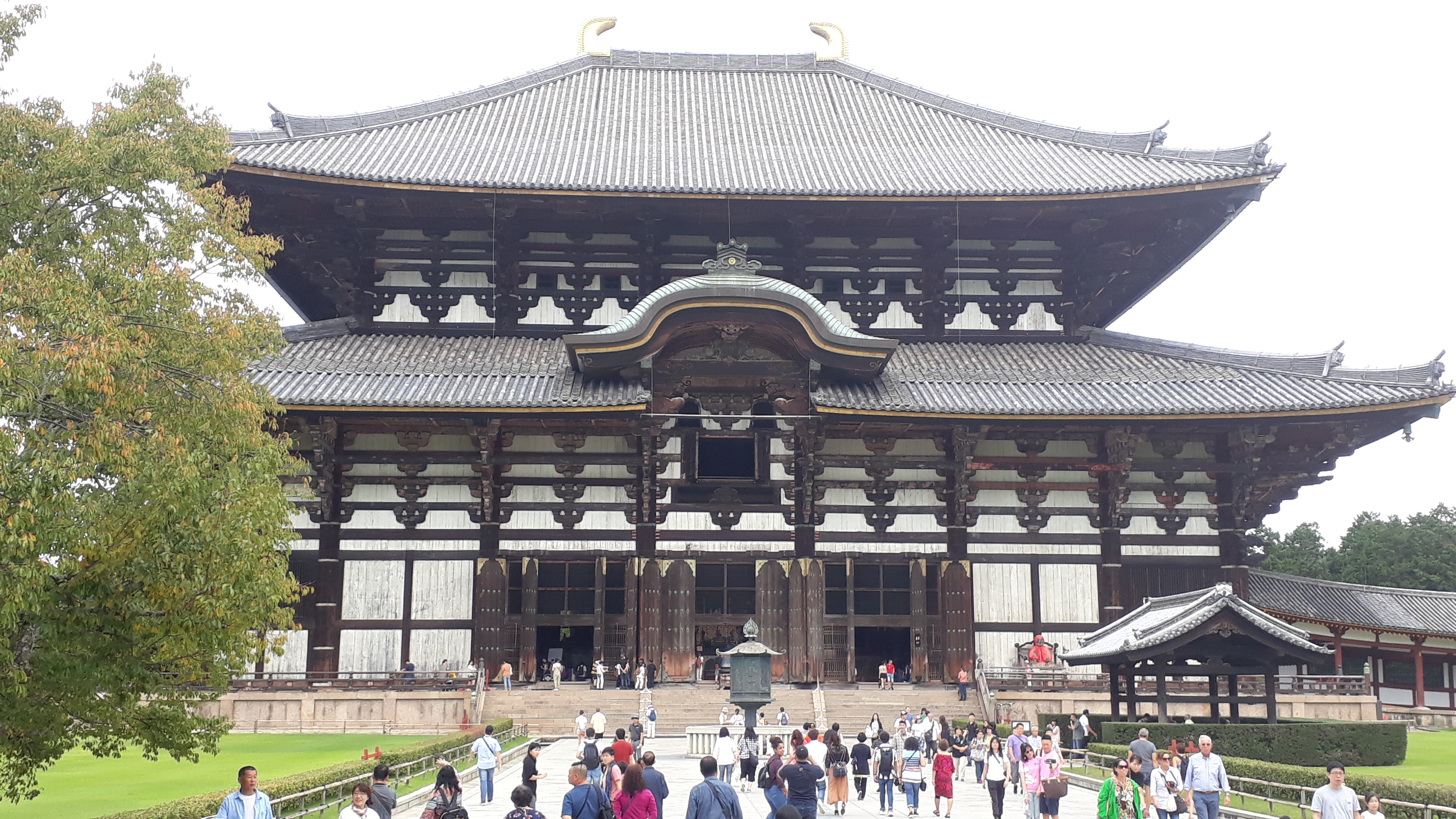
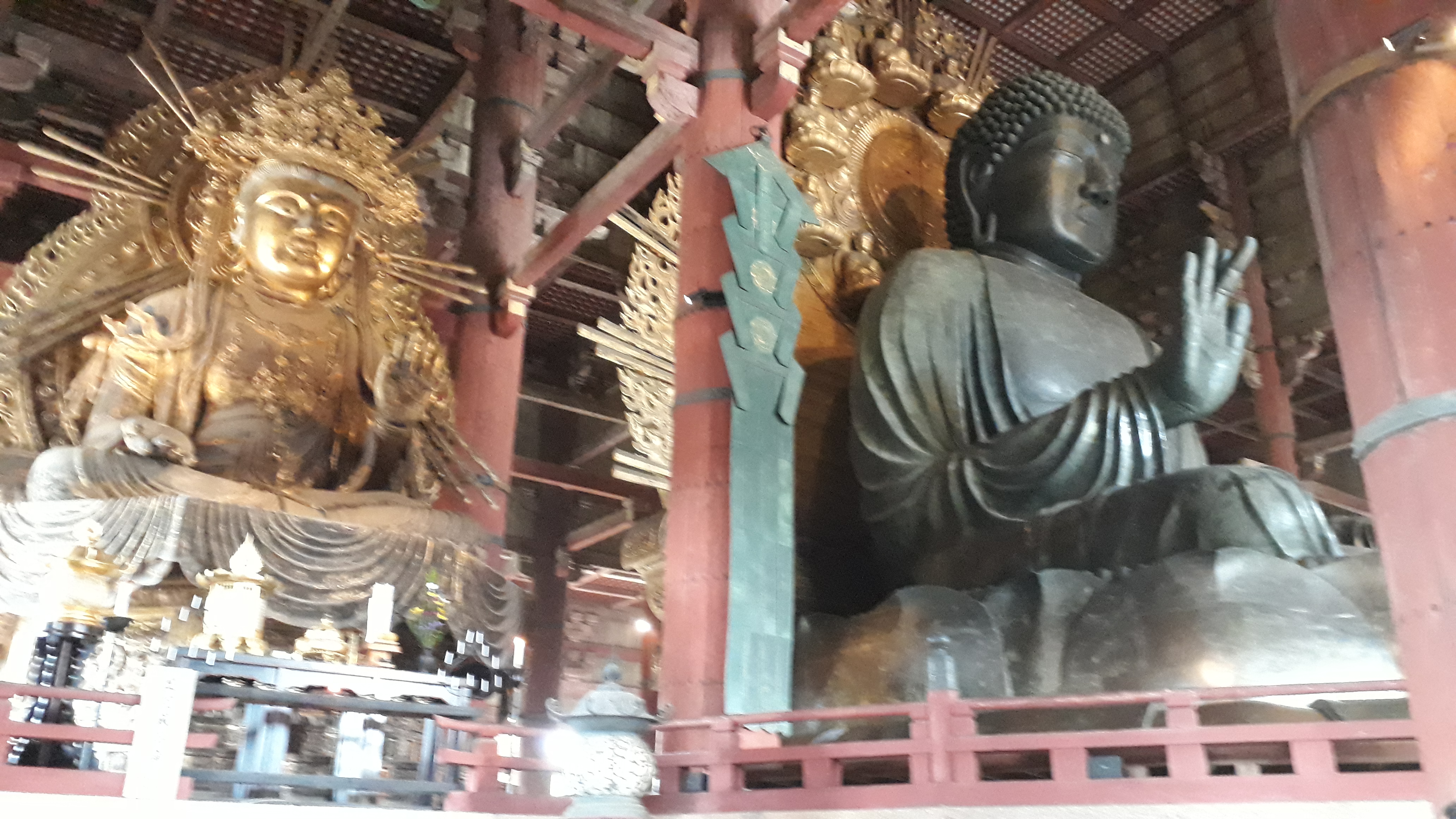
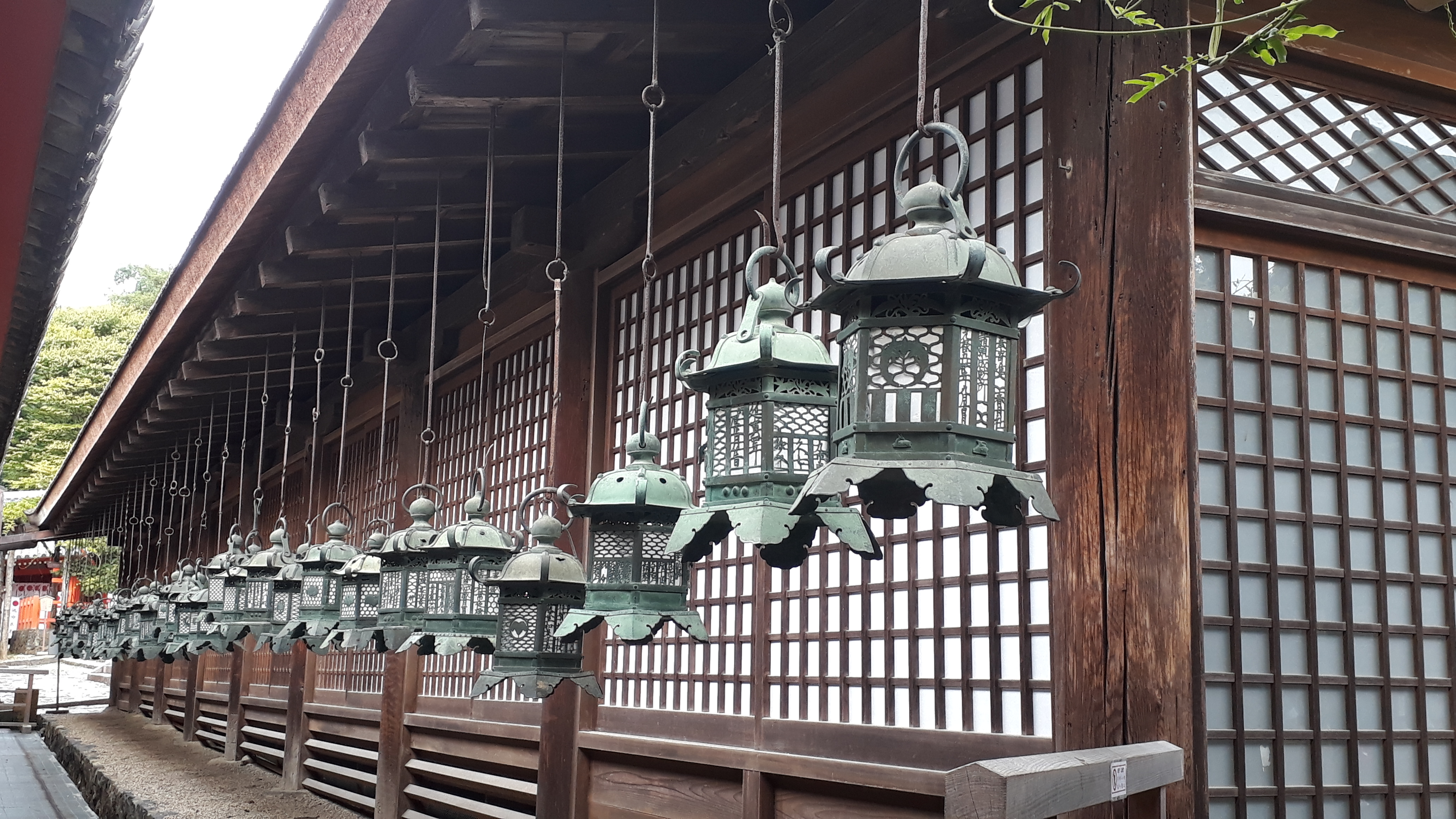
The next morning we were up bright and early to catch the morning train to Nara, a city 45 minutes south which is home to the famous giant gold and bronze Buddha (and approximately a zillion deer). We followed a half day 5km lonely planet itinerary through beautiful gardens (instead of the recommended Isui-en gardens the equally beautiful Yoshikien gardens are next door and free for foreign tourists) and on into Nara-koen park. Along with over 1200 deer and the Todai-ji temple (home of the giant Buddha) the park is home to many other pagodas, temples and Nio Guardians, along with thousands of tombstones. Wandering round the garden complex felt somehow more meaningful than dipping into temples within a city environment. The 15m Buddha is certainly impressive and also well worth the trip.
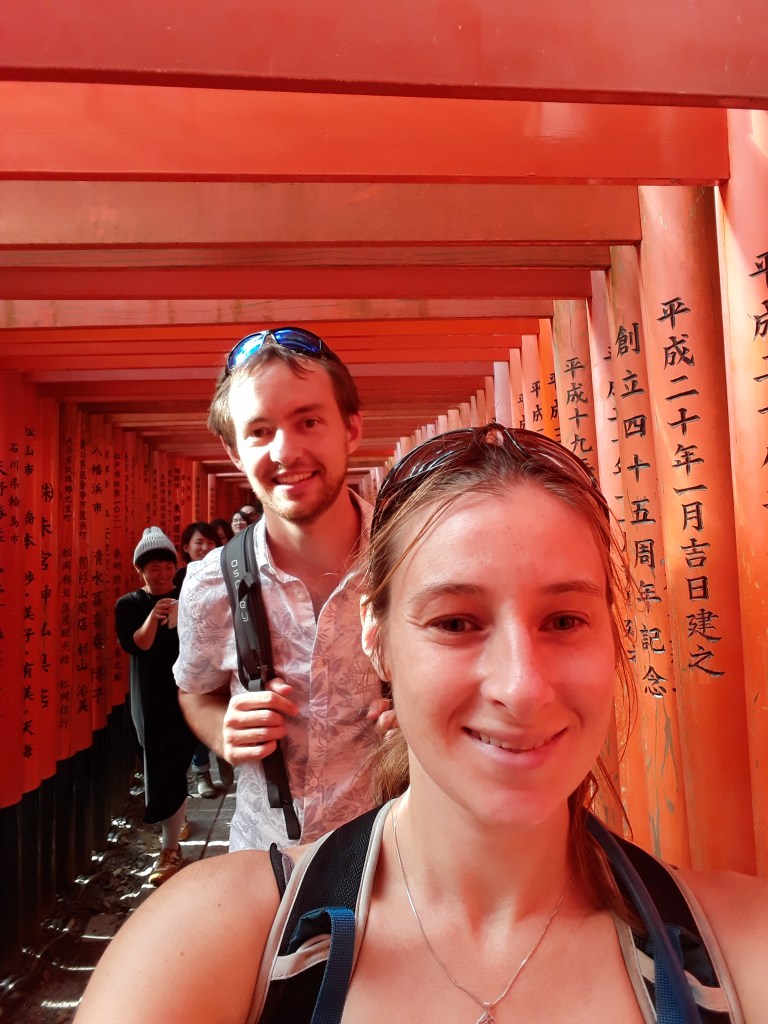
We took an early afternoon train back to Kyoto, stopping just outside the city proper at Fushimi-Inari Taisha, where thousands (quite literally) of bright red Torii gates line 4km of path up the mountainside, interspersed with many stone fox statues, considered to be the messengers of Inari (the god of cereals and sake). We thoroughly enjoyed the first 20 minutes of this hike, but an hour in when we finally reached the top we were disappointed by the lack of a view and Gareth was sure he would be having nightmares about getting lost in endless red archways. Our advice would be to definitely come here (it’s spectacular and unique), but don’t fall into the trap of having to get to the top just in case there’s something extra special to see – there isn’t and its a super sweaty climb on a hot day. There is a good view point over the city just past half way and that is probably far enough.
Rather than heading straight back to our hotel, we spent some time exploring the Kyoto station building itself, which includes light display staircases and viewing platforms across the city before catching the end of a stunning win for Japan over Ireland in the Rugby, and having a tasty, daring meal (including deep fried chicken skin crisps, cold tofu and chicken hearts) at a tiny traditional Japanese restaurant called Yakitori Bar.
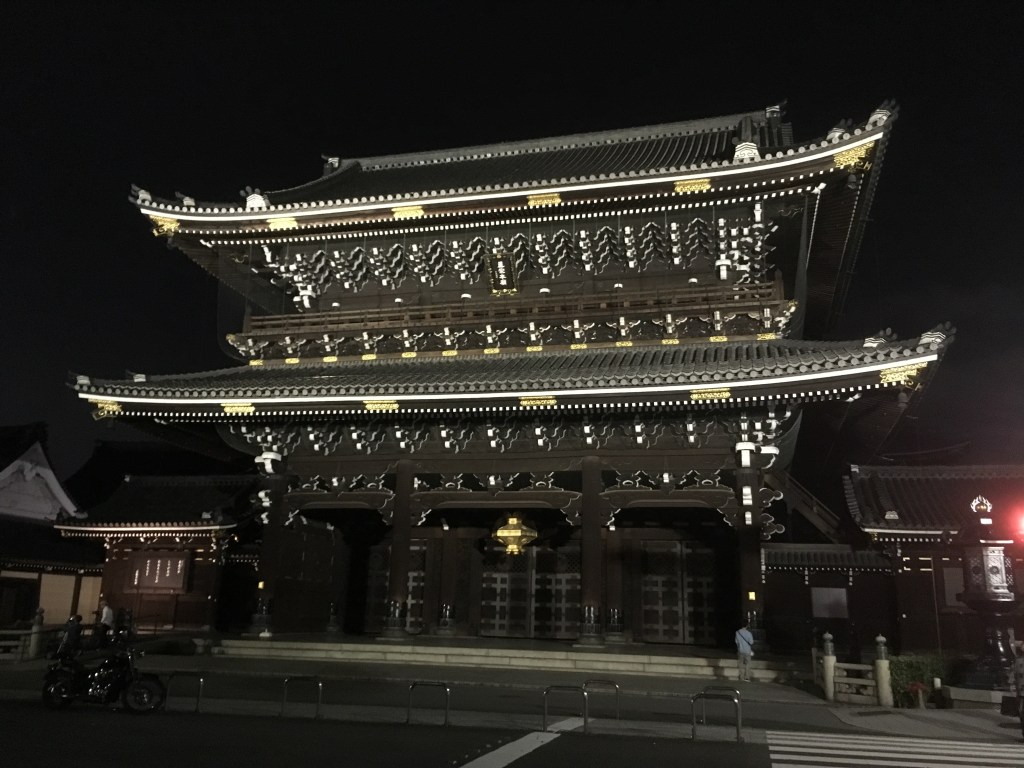
Our final morning in Kyoto was spent in the Southern Higashiyama district, which is generally considered to be the near the top of the Kyoto to-do list. The gardens and temples are certainly beautiful in this area. The streets just about manage to walk the right side of the line between traditional culture and crafts vs tourist trap but it is a close run thing at times. Friends had recommended we headed to the Kiyomizu-dera and descend into the Tainai-meguri so this was first on our list. The Tainai-meguri truly is an experience; it’s not everyday you descend into pitch-black passageways, guided by a string of buddhist prayer beads in order to isolate yourself from distractions and make a wish!
We might have wished for fewer interruptions, as we were accosted twice by different groups on the same school trip from Tokyo to help with a questionnaire for an English assignment. The children were very nice and the questions weren’t too hard, so we were quite happy to help really. We even got given presents by one of the groups – so an A+ from us!
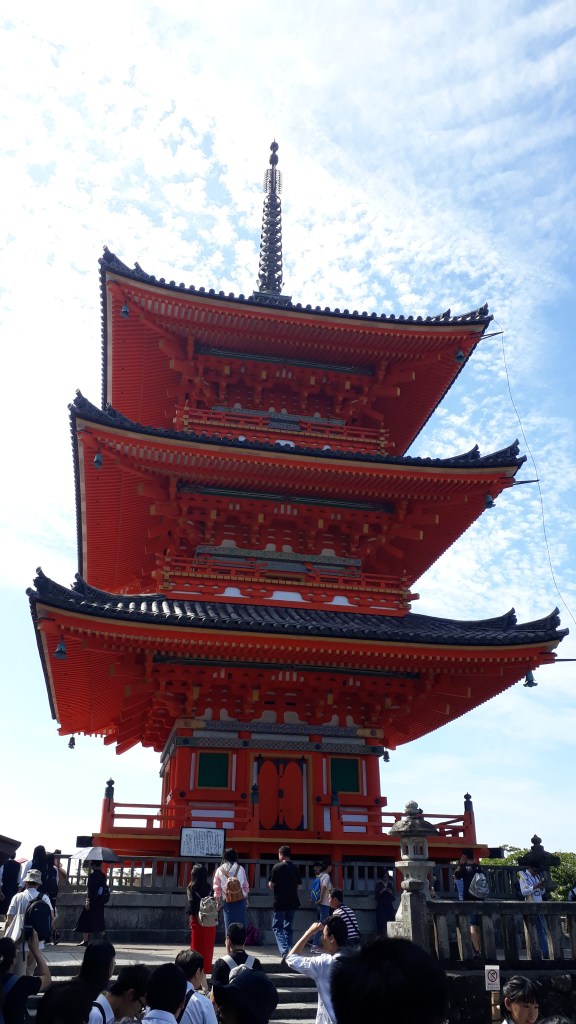
The rest of our morning was spent walking through Kyotos ‘most beautiful street’ and into the Maruyama-koen park via a variety of different picturesque temples. With that we waved Kyoto goodbye and set off for Osaka.
 Claire and Gareth go travelling!